
Bathroom Interior Design: to Smart, Luxury and Functional Spaces
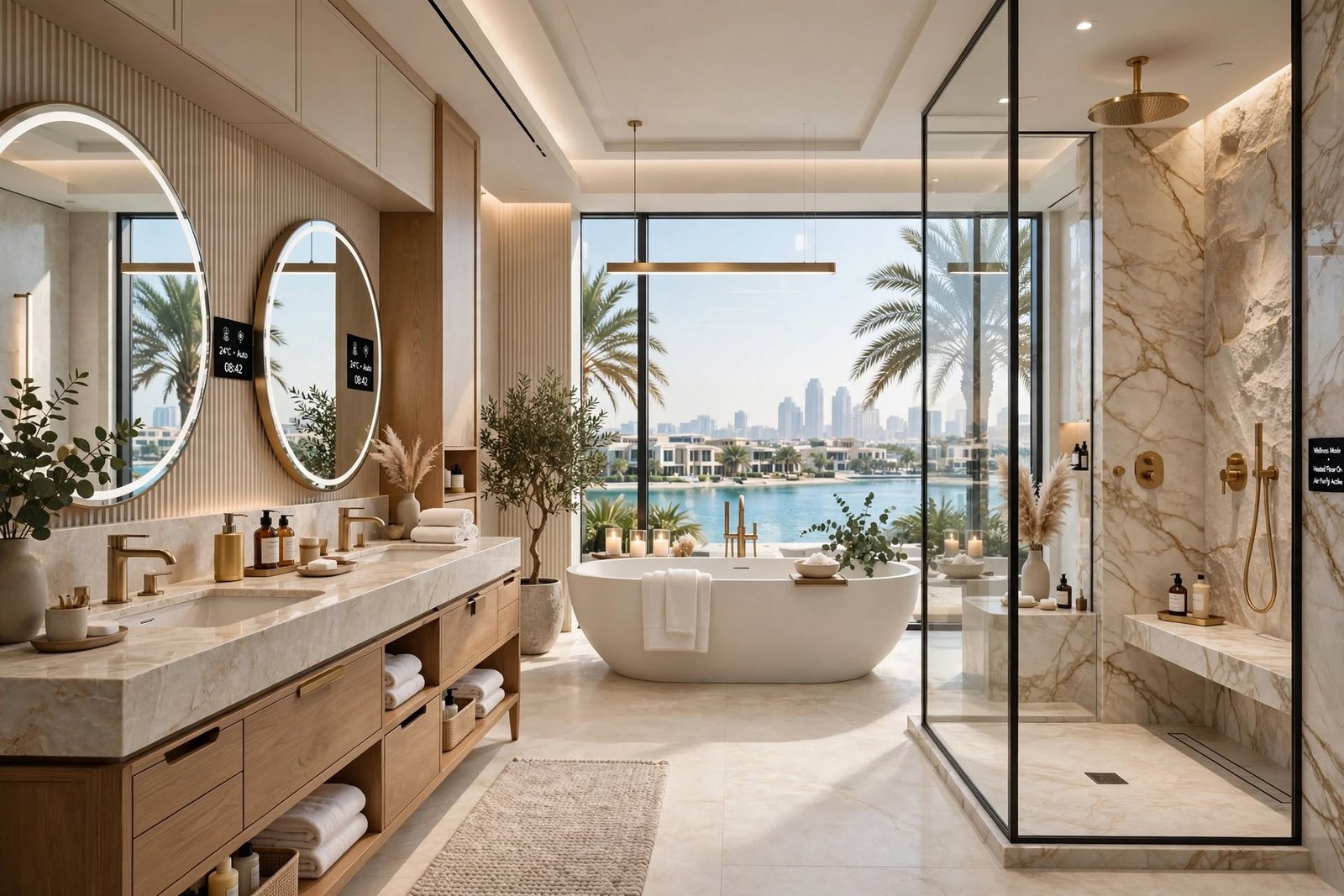
A bathroom has evolved from a purely practical room into an important part of modern residential and hospitality design. Today, homeowners expect bathrooms to provide comfort, efficient storage, easy maintenance, attractive finishes, good lighting, and a sense of relaxation. Luxury bathrooms increasingly resemble private wellness spaces, combining sophisticated materials with smart technology and carefully planned layouts.
Bathroom interior design therefore requires more than choosing tiles and sanitaryware. A successful bathroom considers spatial planning, plumbing, ventilation, waterproofing, lighting, fixtures, storage, accessibility, material durability, and the relationship between aesthetics and everyday use.
In Dubai and across the UAE, bathroom design is also influenced by contemporary villa architecture, luxury apartments, hospitality standards, climate conditions, water efficiency, and changing lifestyle preferences. From compact apartment bathrooms in Downtown Dubai, Business Bay, Dubai Marina, and Jumeirah Lake Towers to spacious master bathrooms in Palm Jumeirah, Emirates Hills, Arabian Ranches, and Dubai Hills Estate, each property requires a design strategy suited to its architecture and occupants.
What Makes a Good Bathroom Interior Design?
A successful bathroom should balance three major principles: functionality, comfort, and visual quality.
The layout needs to provide practical access to the shower, bathtub, vanity, toilet, storage, and entrance without creating unnecessary congestion. At the same time, the finishes, lighting, colours, and fixtures should create a cohesive visual environment.
Important design elements include:
Bathroom layout, sanitaryware, shower enclosure, bathtub, vanity, mirrors, storage, flooring, wall tiles, lighting, plumbing fixtures, ventilation, waterproofing, drainage, and accessories.
The strongest designs treat these elements as one integrated system rather than selecting each component separately.
Luxury Bathroom Interior Design
Luxury does not simply mean using expensive materials. A genuinely luxurious bathroom usually combines quality, proportion, detailing, comfort, and visual consistency.
Luxury bathrooms may incorporate:
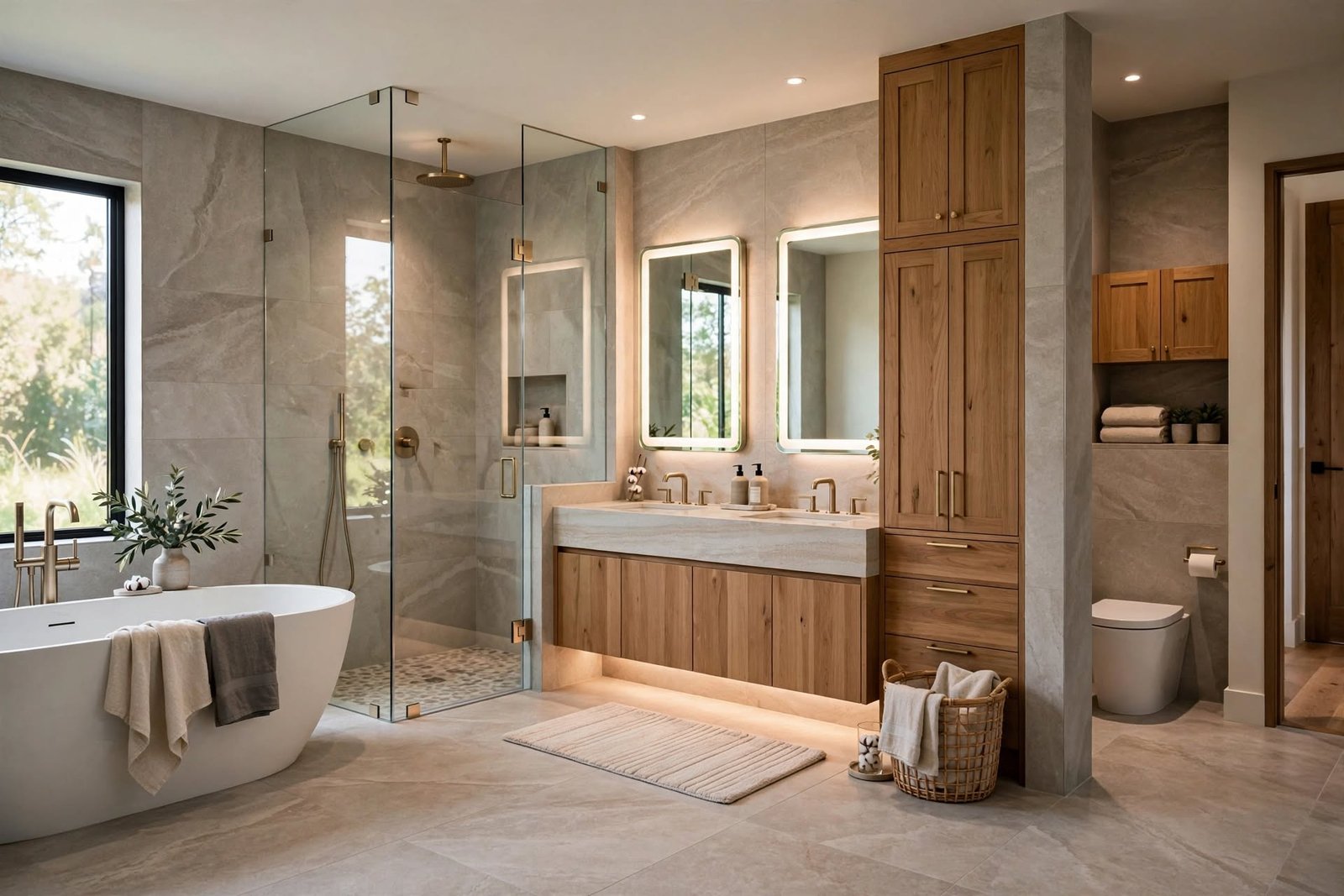
Natural marble, porcelain slabs, engineered stone, brushed brass, concealed mixers, freestanding bathtubs, frameless glass showers, custom vanities, illuminated mirrors, under-cabinet lighting, and bespoke storage.
The material palette should remain coordinated.
For example, large-format stone-effect porcelain can be paired with warm timber cabinetry and brushed metal fixtures to create a sophisticated contemporary appearance without making the space feel excessive.
Modern Bathroom Design
Modern bathrooms generally prioritize clean lines and uncluttered surfaces.
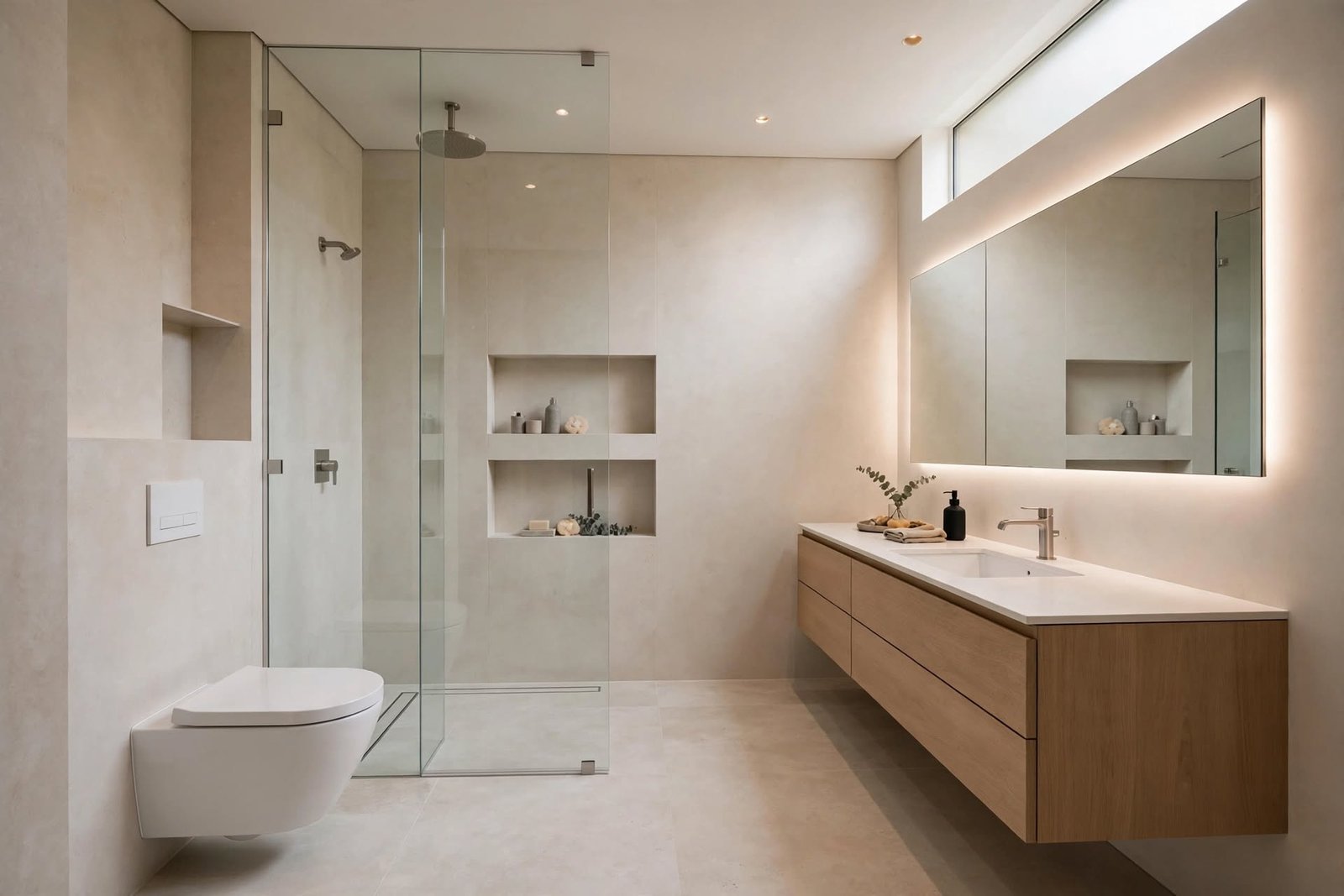
Wall-mounted sanitaryware, concealed cisterns, frameless shower glass, floating vanities, recessed niches, linear drains, and integrated mirrors can create a streamlined appearance.
Neutral colours such as:
Warm white, beige, taupe, grey, charcoal, natural stone, and muted earth tones
are frequently used in contemporary interiors.
Modern design does not mean that every surface must be plain. Texture can be introduced through fluted panels, stone patterns, textured tiles, timber finishes, or architectural lighting.
Smart Bathroom Interior Design
Technology is becoming an increasingly important part of residential bathroom design.
Smart bathroom features can include:
Sensor lighting, smart mirrors, heated floors, digital showers, thermostatic controls, automated ventilation, water-monitoring systems, touchless taps, and smart toilets.
These technologies can improve convenience while also reducing visual clutter.
For example, a smart mirror can integrate lighting and demisting functions, while a digital shower can allow users to control temperature and water flow more precisely.
Smart technology should be integrated during the planning stage because many systems require appropriate electrical connections, control wiring, plumbing provisions, or network connectivity.
Bathroom Layout and Space Planning
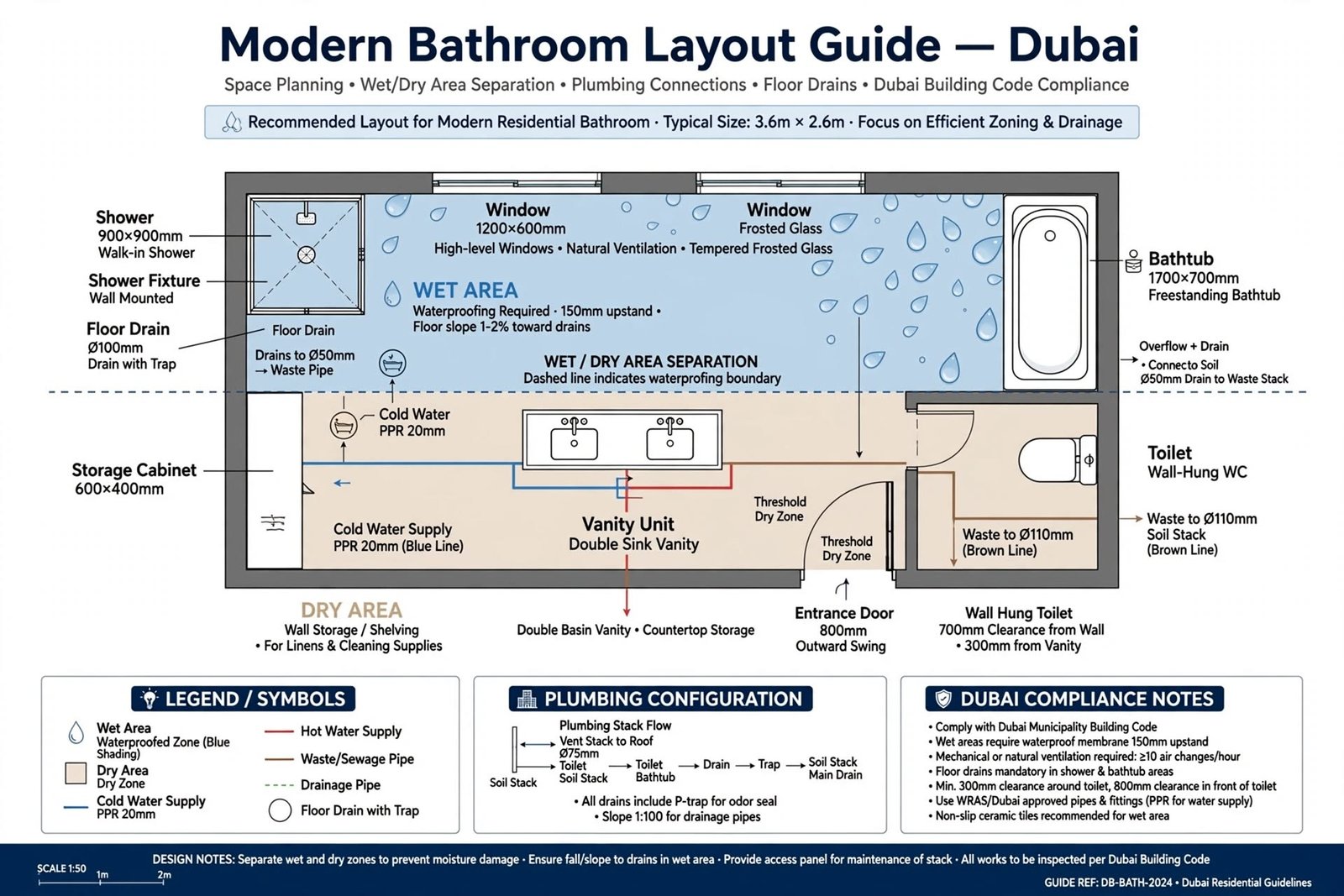
Layout is one of the most important decisions in bathroom design.
Before choosing finishes, the designer should establish the position of:
Toilet, vanity, shower, bathtub, door, windows, storage, floor drains, and plumbing connections.
The existing plumbing configuration can influence renovation costs and construction complexity.
A layout that keeps wet areas close to existing drainage and water connections may reduce unnecessary pipework, although the best design should still prioritize functionality.
Small Bathroom Interior Design
Compact bathrooms are common in apartments and smaller residential properties.
A small bathroom does not necessarily need to feel cramped.
Useful strategies include:
Wall-mounted sanitaryware, floating vanities, frameless glass, large-format tiles, recessed storage niches, mirrored cabinets, wall-mounted taps, sliding shower doors, and light colours.
Using fewer visual breaks can make the space appear more continuous.
Large mirrors can also increase the perception of depth.
However, mirrors should be positioned carefully to avoid creating excessive glare or awkward reflections.
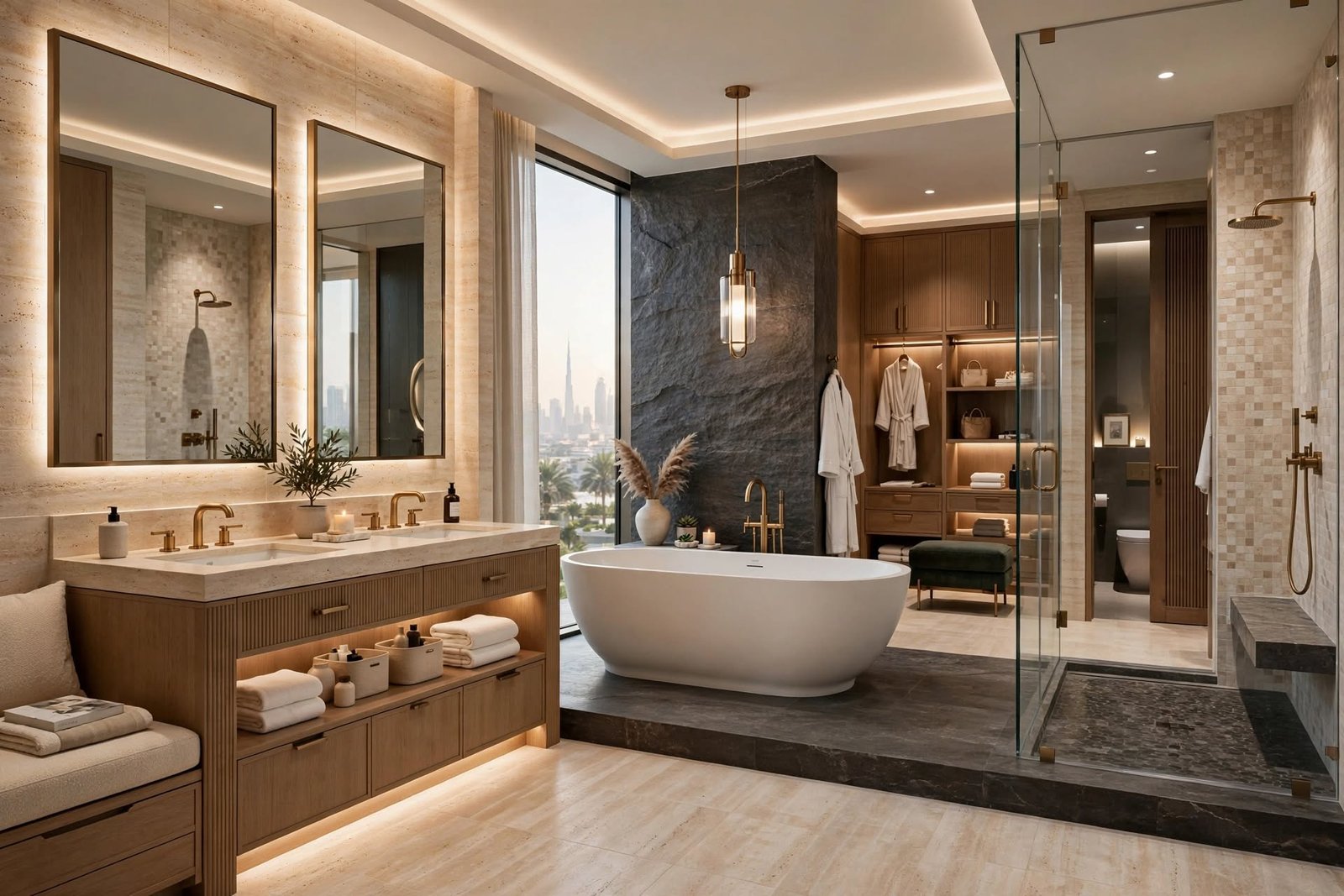
Master Bathroom Design
A master bathroom can function as a private residential retreat.
Depending on available space, it may include:
Double vanity, walk-in shower, freestanding bathtub, private toilet zone, dressing connection, large mirrors, built-in storage, and seating.
The design should establish clear zones without making the room feel fragmented.
A spacious master bathroom may use different materials or lighting levels to visually distinguish the vanity, bathing, and shower areas.
Walk-In Shower Design
Walk-in showers are popular in contemporary bathroom interiors because they create a clean and spacious appearance.
A modern walk-in shower may include:
Frameless glass, concealed shower mixers, overhead rain showers, handheld showerheads, recessed niches, bench seating, linear drainage, and wall-mounted controls.
The shower floor should provide appropriate drainage and slip resistance.
The glass enclosure should also be properly detailed to minimize water escaping into the dry areas.
Bathtub Design
Bathtubs can become a major architectural feature.
Freestanding bathtubs are particularly effective in larger luxury bathrooms because they can act as a visual focal point.
Other options include:
Built-in bathtubs, corner tubs, soaking tubs, and integrated stone surrounds.
The surrounding clearance should be considered before installation.
A beautiful bathtub that restricts circulation or makes cleaning difficult may not provide a successful long-term solution.
Bathroom Vanity Design
The vanity combines storage, washing facilities, lighting, and visual identity.
Modern vanity options include:
Floating cabinets, double basins, natural stone countertops, porcelain surfaces, integrated sinks, timber finishes, mirrored cabinets, and under-counter lighting.
The vanity should provide enough counter space for everyday items while maintaining an uncluttered appearance.
In a master bathroom, a double vanity can improve functionality for couples.
Bathroom Storage Solutions
Storage is often overlooked during bathroom renovation.
A functional bathroom may require space for:
Towels, toiletries, cosmetics, cleaning products, hair tools, personal-care items, and spare supplies.
Storage solutions can include:
Recessed niches, mirrored cabinets, tall storage units, vanity drawers, under-sink cabinets, wall-mounted shelving, and concealed cabinets.
Built-in storage is particularly useful because it can reduce countertop clutter.
Bathroom Lighting Design
Lighting has a significant impact on bathroom appearance and functionality.
A good lighting strategy usually combines:
Ambient lighting, task lighting, accent lighting, and decorative lighting.
Recessed ceiling lights can provide general illumination.
Mirror lighting should provide balanced facial illumination for grooming activities.
Accent lighting can highlight architectural details, wall textures, niches, or feature materials.
Mirror Lighting
Poorly positioned lighting can create shadows across the face.
A better approach is to provide even illumination around or alongside the mirror.
LED mirrors and backlit mirrors can create a contemporary appearance while providing practical lighting.
The colour rendering quality of the light is also important, particularly for grooming and makeup.
High-quality LED lighting can provide more natural-looking skin tones.
Bathroom Colour Schemes
Colour selection can influence the perceived size and atmosphere of a bathroom.
Light neutral colours can make compact bathrooms appear more spacious.
Darker colours can create a dramatic luxury environment in larger rooms.
Popular combinations include:
Beige and ivory, white and timber, grey and marble, charcoal and brass, warm stone and black, and earthy neutral palettes.
Rather than following trends too closely, homeowners should select a palette that complements the property’s wider interior design.
Bathroom Tile Selection
Tiles must perform in a demanding environment.
Important factors include:
Water resistance, slip resistance, durability, cleaning requirements, size, texture, colour, and compatibility with the substrate.
Large-format porcelain tiles can reduce the number of visible grout lines and create a more continuous appearance.
Smaller tiles can be useful for curved surfaces, shower floors, feature walls, or decorative patterns.
The appropriate tile depends on the specific application.
Large-Format Tiles and Porcelain Slabs
Large porcelain surfaces can create a premium appearance with fewer joints.
They can be used on:
Bathroom floors, walls, shower surrounds, vanity backsplashes, and feature walls.
Large surfaces can visually expand a bathroom because fewer grout lines interrupt the design.
However, installation requires careful handling, substrate preparation, cutting, and alignment.
Natural Stone in Bathrooms
Natural stone such as marble, travertine, limestone, and granite can create a distinctive luxury appearance.
However, natural stone requires appropriate selection, sealing, cleaning, and maintenance.
Some stones are more porous or sensitive to certain cleaning products than porcelain.
For homeowners seeking the appearance of natural stone with potentially simpler maintenance, high-quality porcelain alternatives can provide another option.
Waterproofing: The Foundation of a Bathroom
A beautiful bathroom can quickly become a serious problem if waterproofing is inadequate.
Wet areas require a properly designed waterproofing system beneath the finished surfaces.
Waterproofing is particularly important around:
Showers, bathtubs, floor drains, wet-room floors, and plumbing penetrations.
The waterproofing system should be installed according to the relevant product specifications and project requirements.
Tile itself should not be treated as the complete waterproofing system.
Bathroom Drainage
Effective drainage is essential for preventing standing water.
The bathroom floor should be appropriately graded toward the drainage point.
Modern bathrooms may use:
Linear drains, point drains, concealed drains, and shower channel systems.
Linear drains can work particularly well with large-format tiles because they allow more flexible tile layouts.
Incorrect slope can lead to water pooling and maintenance problems.
Bathroom Ventilation
Ventilation is essential for controlling moisture.
Bathrooms generate humidity from:
Showers, baths, hot water, and everyday use.
Without adequate ventilation, moisture can contribute to condensation, unpleasant odours, mould growth, and deterioration of finishes.
Mechanical exhaust systems should be properly sized and positioned.
In the UAE’s climate, ventilation also needs to be coordinated with the wider HVAC strategy.
HVAC and Bathroom Comfort
Air-conditioning and ventilation systems should be coordinated with bathroom architecture.
Vent positions should not interfere with:
Shower enclosures, ceiling features, lighting, mirrors, or decorative elements.
Proper ventilation helps manage humidity while maintaining indoor comfort.
For luxury residential projects, concealed HVAC and ventilation systems can be integrated into ceilings and joinery to maintain a clean visual appearance.
Water-Efficient Bathroom Fixtures
Water efficiency is becoming increasingly relevant in modern residential design.
Water-saving fixtures may include:
Low-flow showerheads, aerated taps, dual-flush toilets, sensor faucets, and efficient sanitaryware.
These technologies can reduce water consumption while maintaining practical performance.
The right products should be selected based on performance, quality, maintenance, and compatibility with the property’s plumbing system.
Smart Showers and Digital Controls
Digital shower systems can provide more precise control over water temperature and flow.
Depending on the product, users may be able to create preset settings or control the system electronically.
These systems can enhance convenience in luxury bathrooms.
However, they require careful coordination between plumbing and electrical requirements.
Heated Bathroom Floors
Underfloor heating can provide additional comfort, particularly in colder climates.
Although Dubai generally has a warm climate, heated floors may still be selected as a luxury feature in premium residential projects.
Electric or hydronic systems require appropriate design and installation.
Floor height, waterproofing, tile compatibility, electrical load, and control systems should be considered before installation.
Bathroom Accessories and Hardware
Small details can influence the overall appearance of a bathroom.
Hardware may include:
Towel rails, robe hooks, toilet-roll holders, shower shelves, soap dispensers, and cabinet handles.
These should coordinate with the tapware and other metal finishes.
Common finishes include:
Chrome, brushed nickel, matte black, brushed brass, bronze, and stainless steel.
Using too many different finishes can make a bathroom look inconsistent.
Luxury Bathroom Lighting and Materials
Lighting can enhance premium finishes dramatically.
Backlighting translucent stone, illuminating recessed niches, washing textured walls, and highlighting architectural features can create a sophisticated environment.
For example, a marble vanity wall with concealed LED illumination can become a focal point without requiring decorative objects.
This is particularly effective in minimalist luxury interiors.
Bathroom Design for Dubai Apartments
Apartment bathrooms often have fixed plumbing locations and limited floor area.
Properties in Downtown Dubai, Dubai Marina, Business Bay, Jumeirah, Dubai Hills Estate, and Jumeirah Lake Towers may have different layouts and building constraints.
Renovation planning should therefore begin with an accurate survey.
Existing drainage, plumbing, ventilation shafts, structural walls, electrical routes, and ceiling heights can influence what changes are practical.
Bathroom Design for Dubai Villas
Villas typically provide greater flexibility.
Large master bathrooms may accommodate:
Double vanities, separate shower and bathtub areas, walk-in wardrobes, dressing spaces, and custom storage.
In luxury villa projects in Palm Jumeirah, Emirates Hills, Arabian Ranches, and Al Barari, bathroom design can be developed as part of a larger architectural concept.
Materials can be coordinated across bedrooms, bathrooms, dressing rooms, and corridors.
Sustainable Bathroom Design
Sustainable bathroom design involves more than water-saving fixtures.
It can include:
Durable materials, efficient lighting, low-VOC finishes, water-efficient sanitaryware, smart controls, long-lasting fixtures, and responsible material selection.
Durability itself contributes to sustainability because materials that remain functional for many years do not need to be replaced frequently.
Bathroom Design and Accessibility
Accessibility should be considered where required by the property’s occupants or applicable standards.
Potential features include:
Walk-in showers, grab-bar provisions, wider circulation areas, slip-resistant flooring, appropriate vanity heights, accessible controls, and clear movement zones.
Universal design can also make a bathroom more comfortable for people of different ages and abilities.
Coordinating Bathroom Design With the Rest of the Home
A bathroom should feel like part of the home’s overall design rather than an isolated space.
Material colours, flooring transitions, cabinetry finishes, lighting temperatures, and hardware can create visual continuity.
For example, timber tones used in a bedroom can be repeated through the bathroom vanity.
Stone used in the living area can inspire the bathroom’s feature surfaces.
This creates a more coherent residential experience.
The same principle applies to other functional areas of the home. A coordinated approach to bathrooms, kitchens, bedrooms, living areas, and circulation spaces can create a stronger overall result, especially when planning modern kitchen renovations alongside wider residential improvements.
Common Bathroom Interior Design Mistakes
Several mistakes can compromise an otherwise attractive bathroom.
One common issue is insufficient storage.
Another is poor lighting around mirrors.
Other problems include:
Inadequate ventilation, insufficient waterproofing, incorrect floor slope, slippery flooring, poor shower drainage, overcrowded layouts, incompatible materials, limited electrical outlets, and inadequate access for maintenance.
These problems are easier and less expensive to address during design than after construction.
How to Plan a Bathroom Renovation
A bathroom renovation should begin with an assessment of the existing space.
The designer should document:
Room dimensions, plumbing locations, drainage points, electrical connections, ventilation, ceiling height, windows, doors, structural conditions, and existing waterproofing.
The next stage is developing the layout and selecting sanitaryware.
After that, the project can move into material selection, lighting design, plumbing coordination, waterproofing details, cabinetry design, and construction planning.
A detailed specification can help contractors understand exactly what needs to be installed.
Bathroom Interior Design Trends
Current bathroom design is moving toward calmer, more architectural environments.
Popular approaches include:
Warm minimalism, natural stone aesthetics, floating vanities, concealed plumbing fixtures, large-format surfaces, smart technology, integrated lighting, walk-in showers, natural materials, and spa-inspired layouts.
However, trends should not override functionality.
A bathroom designed purely around a temporary trend may become visually dated.
A better strategy is to use durable architectural finishes and introduce changing trends through replaceable accessories, lighting, mirrors, or decorative details.
Frequently Asked Questions
What is the most important part of bathroom interior design?
The layout is one of the most important aspects because it affects circulation, plumbing, storage, shower access, lighting, and everyday usability.
What makes a bathroom look luxurious?
A coordinated material palette, high-quality fixtures, custom cabinetry, layered lighting, good proportions, concealed services, and refined detailing can create a luxury appearance.
Are large-format tiles good for bathrooms?
They can be an excellent option when properly installed. They reduce visible grout lines and can create a continuous architectural appearance.
How can a small bathroom look larger?
Use appropriate-scale fixtures, frameless glass, floating vanities, large mirrors, integrated storage, continuous tile surfaces, and light or coordinated colours.
Is waterproofing necessary under bathroom tiles?
Yes. Tiles and grout should not be relied upon as the sole waterproofing layer in wet areas. A properly specified waterproofing system is essential.
What lighting is best for a bathroom?
A combination of ambient ceiling lighting, mirror/task lighting, accent lighting, and optional decorative illumination usually provides better results than a single central fixture.
Can smart technology be used in bathrooms?
Yes. Smart mirrors, digital showers, sensor taps, automated lighting, ventilation controls, and other connected systems can be integrated into modern bathroom designs.
Conclusion
Modern bathroom interior design combines architecture, functionality, technology, materials, lighting, plumbing, and comfort into a carefully coordinated environment.
A successful bathroom should look beautiful, but it should also be easy to use and maintain. Every element—from the shower drainage and waterproofing to the vanity storage and lighting—has a practical role.
Luxury bathrooms in Dubai increasingly incorporate natural stone, sophisticated porcelain, custom joinery, smart controls, frameless glass, concealed fixtures, and layered lighting. At the same time, compact apartment bathrooms can achieve equally strong results through efficient layouts, integrated storage, appropriate-scale fixtures, and thoughtful material selection.
The most effective approach is to design around the user rather than around a collection of products. Consider how people move through the room, where they need storage, how the space will be cleaned, how moisture will be controlled, how lighting will change throughout the day, and how the bathroom relates to the rest of the property.
Whether the project is a compact apartment renovation, a contemporary villa, a luxury master suite, or a complete residential transformation, careful planning can create a bathroom that remains comfortable, functional, visually sophisticated, and relevant for many years.