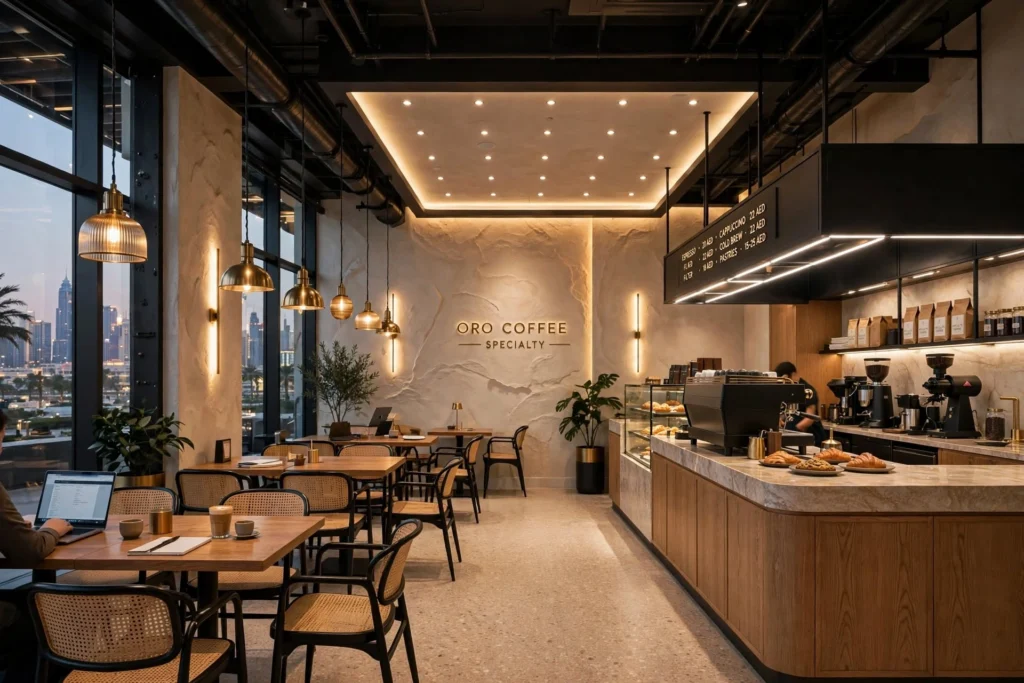
Coffee Shop Interior Design: Creating Profitable and Memorable Spaces
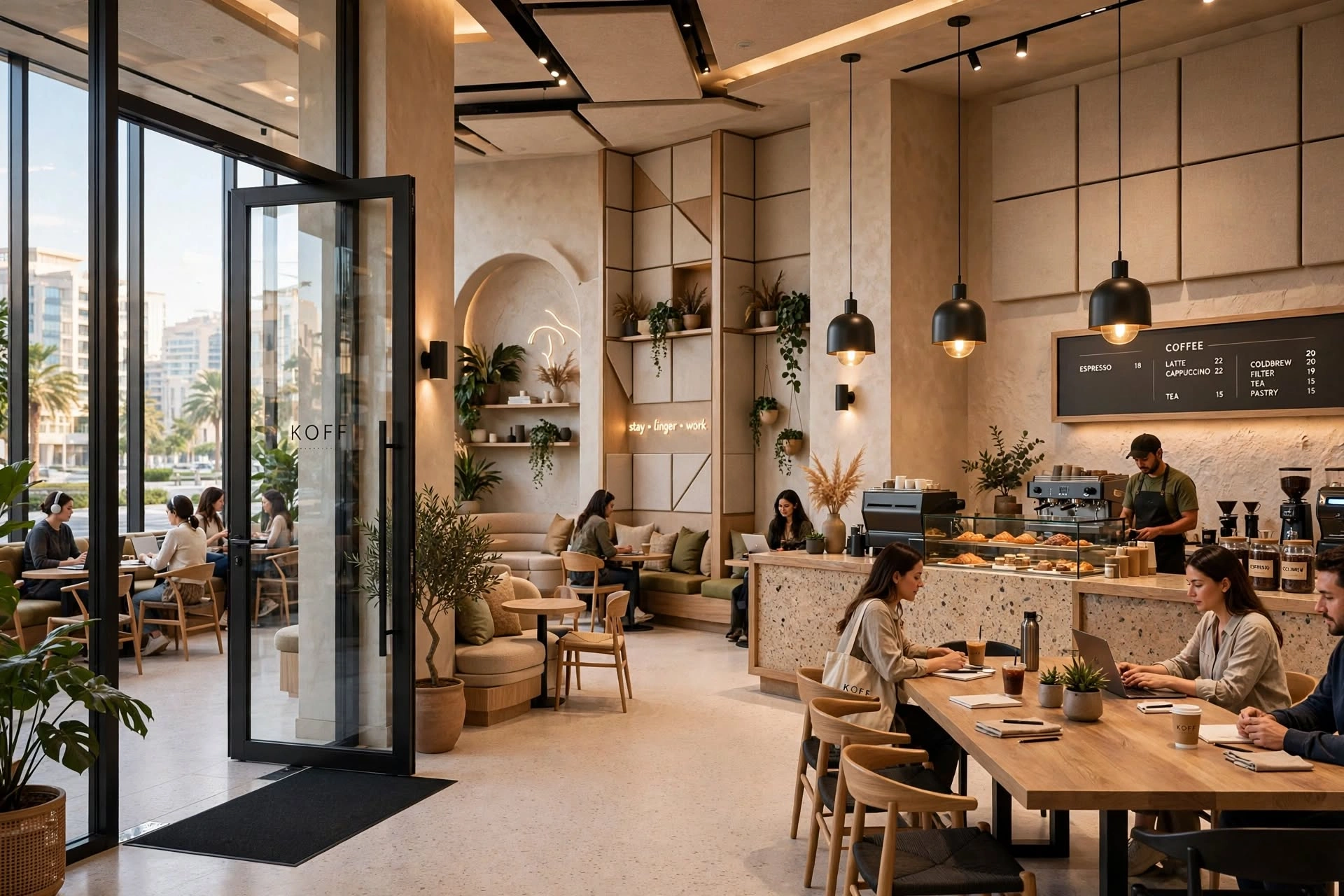
Coffee shop interior design is no longer limited to choosing attractive furniture, colours, and decorative elements. A successful café needs an interior that supports customer comfort, efficient operations, strong branding, staff productivity, and profitable use of space. In a competitive market such as Dubai, where independent cafés, specialty coffee shops, hotel cafés, and international chains compete for customers, thoughtful interior planning can become an important part of a business strategy.
From the entrance and counter to seating layouts, lighting, acoustics, materials, and customer circulation, every design decision can influence how visitors experience the coffee shop. The best café interiors balance aesthetics with functionality, creating spaces where customers want to stay, return, work, meet friends, or share their experience online.
Why Coffee Shop Interior Design Matters
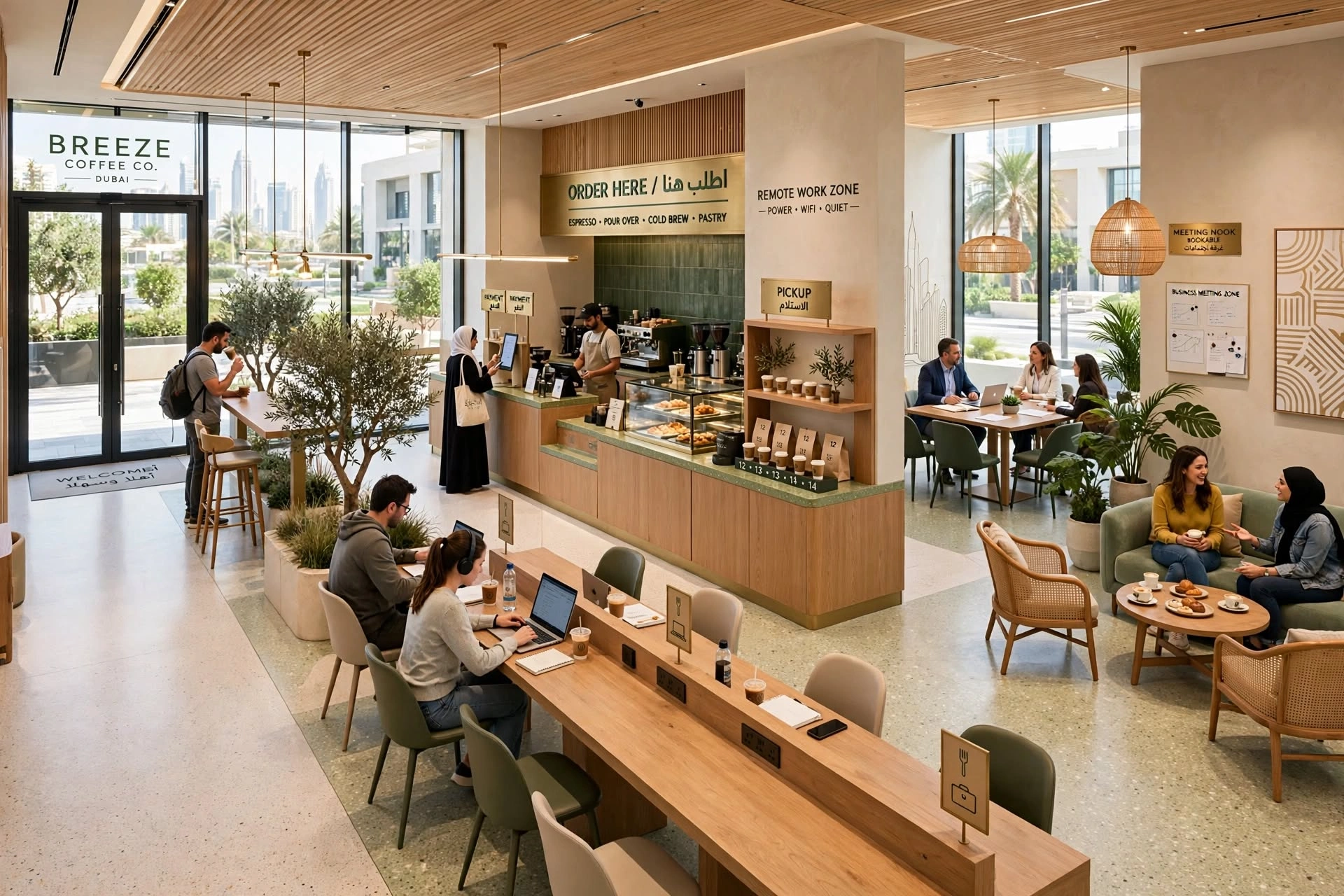
A coffee shop often serves multiple customer groups at the same time. Some visitors may want a quick takeaway coffee, while others may stay for breakfast, meetings, remote work, or social occasions. The interior therefore needs to accommodate different behaviours without making the space feel crowded.
An effective design considers customer flow from the entrance to the ordering counter, payment area, pickup point, seating zones, washrooms, and exit. Clear circulation reduces congestion and makes the customer journey more comfortable.
The interior also communicates the identity of the coffee brand. Materials, furniture, colours, lighting, signage, artwork, and architectural details can create a recognisable environment that differentiates one café from another.
Understanding the Dubai Coffee Shop Market
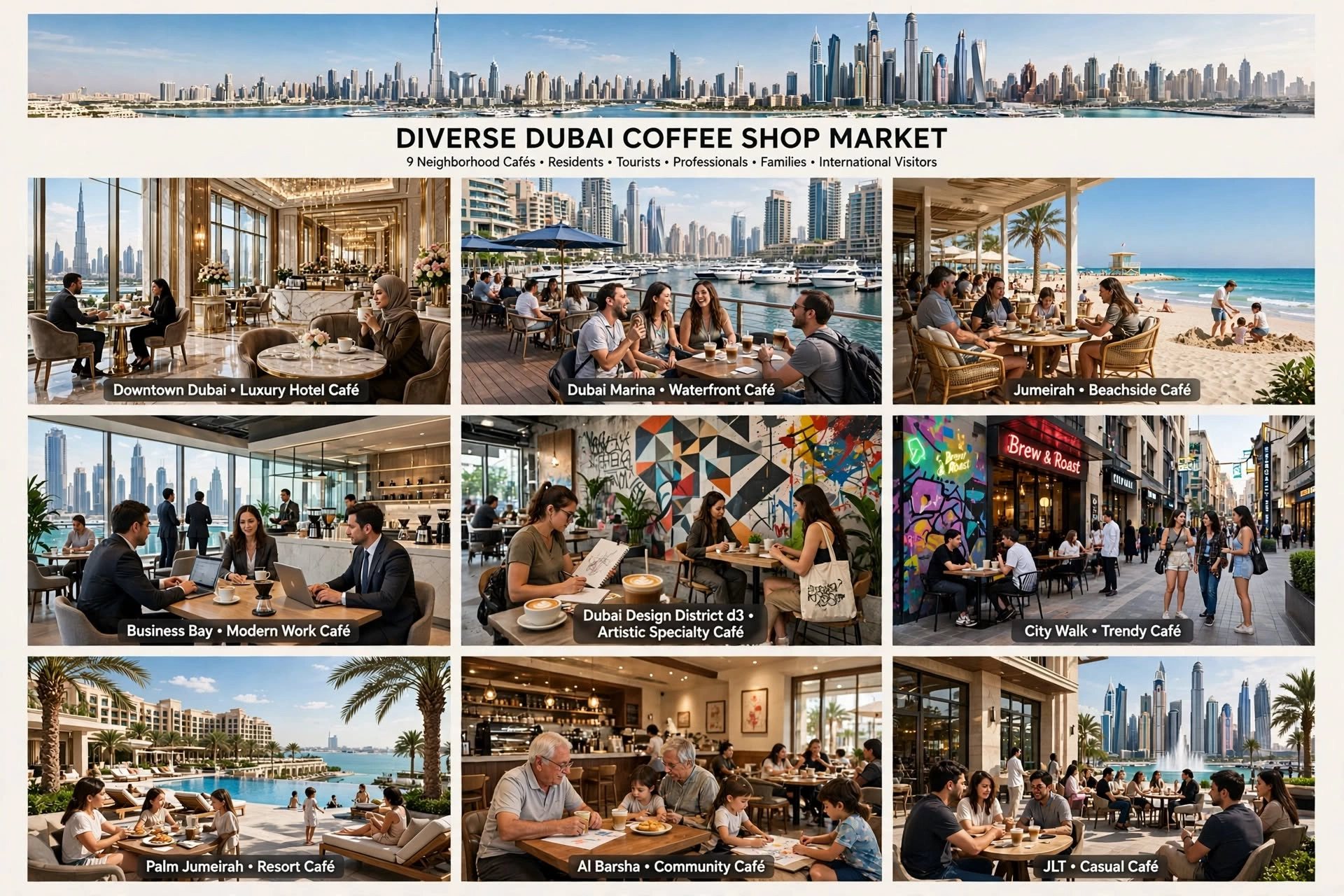
Dubai has a diverse hospitality environment influenced by residents, tourists, professionals, families, and international visitors. Areas such as Downtown Dubai, Dubai Marina, Jumeirah, Business Bay, Dubai Design District (d3), City Walk, Palm Jumeirah, Al Barsha, and Jumeirah Lake Towers (JLT) contain different types of cafés and dining destinations.
A coffee shop in a business district may prioritise fast service, comfortable workstations, charging points, and efficient seating. A destination café in a lifestyle neighbourhood may focus more heavily on atmosphere, social seating, photography-friendly interiors, and longer customer dwell times.
Understanding the location and target audience should therefore come before selecting a design style.
Creating an Efficient Coffee Shop Layout
Space planning is one of the most important stages of café interior design. A relatively small floor area can still feel spacious when the layout is carefully organised.
The designer needs to consider:
Customer circulation, seating capacity, counter placement, kitchen access, storage, staff movement, service areas, washrooms, accessibility, and emergency routes.
The ordering counter should be easy to identify from the entrance. Customers should understand where to queue, order, pay, and collect their drinks without crossing unnecessarily through occupied seating areas.
Behind the counter, baristas require an efficient workflow between the espresso machine, grinders, refrigerators, sinks, preparation surfaces, storage, and pickup area.
Designing the Coffee Counter
The coffee counter is often the operational and visual centre of the café.
Its design should reflect the brand while supporting efficient service. Counter height, equipment placement, lighting, materials, storage, menu boards, and customer-facing displays all need to work together.
A specialty coffee shop may want the espresso preparation area to remain visible, allowing customers to observe the barista and coffee-making process. This can strengthen the sense of craftsmanship and create an engaging experience.
Durable materials are particularly important around high-use preparation areas because counters are exposed to moisture, heat, cleaning products, and constant customer activity.
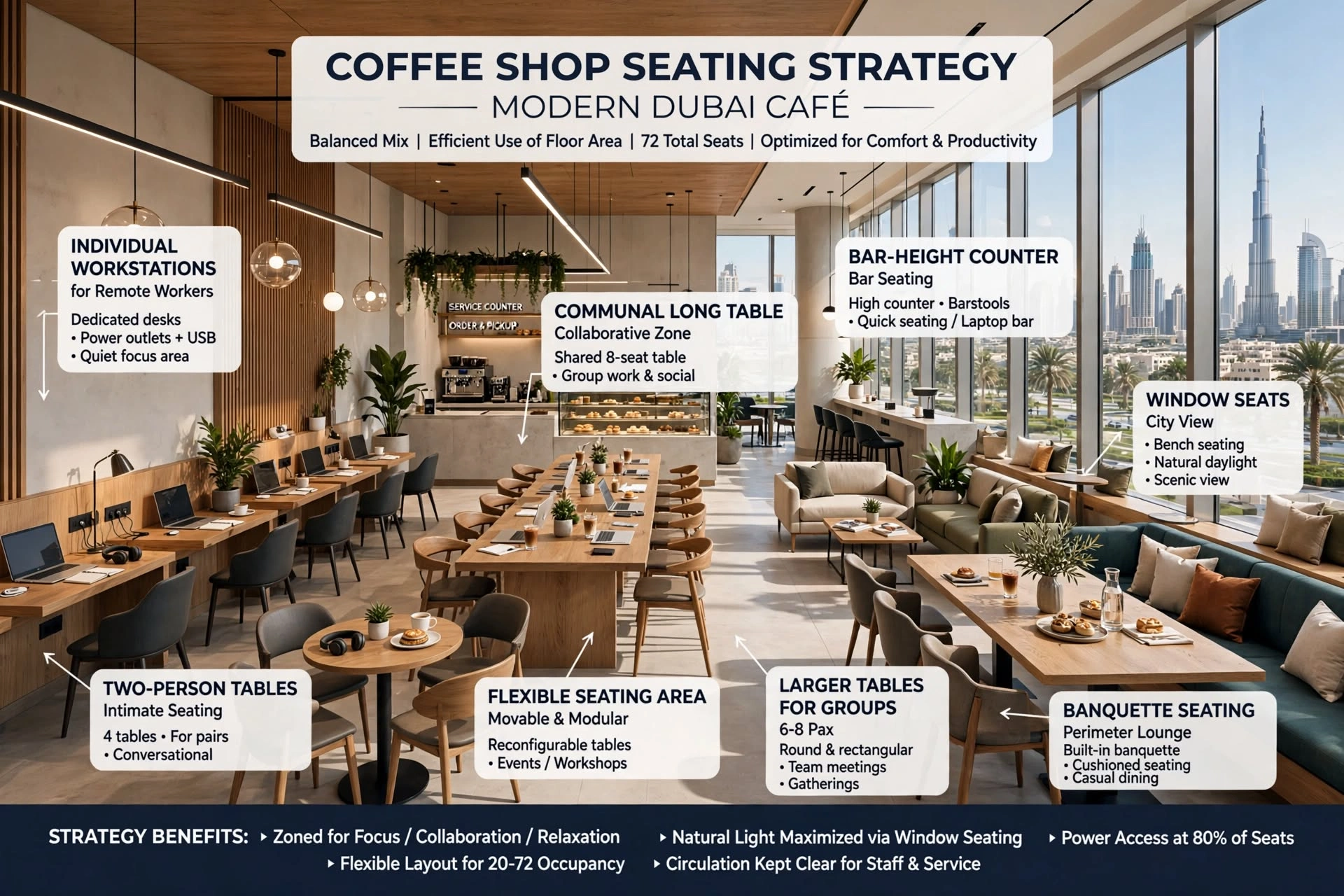
Choosing the Right Seating Strategy
Seating should respond to different customer needs rather than using identical tables throughout the café.
A balanced coffee shop may include:
Two-person tables, communal tables, lounge seating, window seats, bar-height counters, and flexible seating areas.
Individual workstations can appeal to remote workers, while larger tables can accommodate groups.
Banquette seating can make efficient use of perimeter walls while creating a comfortable visual feature.
The ideal arrangement depends on the available floor area, target audience, expected customer turnover, and operational model.
Lighting for Coffee Shop Interiors
Lighting has a major influence on how customers perceive a café.
A layered lighting strategy can combine ambient, task, accent, and decorative lighting.
Pendant fixtures can highlight tables or the counter. Recessed lighting can provide general illumination, while wall lighting and decorative fixtures can add visual character.
Colour temperature should also be considered. A warmer atmosphere can create a relaxed hospitality environment, while brighter task lighting may be useful around service and preparation areas.
Lighting should support the brand without creating excessive glare for customers working on laptops or phones.
Materials, Colours and Brand Identity
Materials help establish the personality of a coffee shop.
Wood can create warmth, stone can communicate quality, metal can introduce an industrial character, while textured surfaces can provide visual depth.
Colour selection should connect with the brand identity and intended customer experience.
A minimalist specialty coffee shop might use neutral tones, natural textures, clean lines, and understated signage. A contemporary urban café might use stronger contrasts, graphic walls, statement furniture, and architectural lighting.
Consistency across the interior, packaging, menus, signage, staff uniforms, and digital presence can strengthen brand recognition.
Creating Instagrammable Café Interiors
Social media has made visual identity increasingly important for hospitality businesses.
Customers frequently photograph:
Feature walls, coffee counters, branded signs, artwork, lighting installations, distinctive furniture, ceilings, and architectural details.
A memorable design can encourage user-generated content and provide organic exposure for the business.
However, creating an attractive photo opportunity should not come at the expense of functionality. A strong feature should complement the overall interior rather than becoming an isolated decorative element.
Acoustic Comfort in Coffee Shops
Cafés can become noisy because of conversations, coffee machines, grinders, music, kitchen equipment, and customer movement.
Hard surfaces such as glass, concrete, stone, and large areas of exposed metal can increase sound reflection.
Acoustic materials can help control reverberation.
Depending on the concept, designers may incorporate:
Acoustic ceiling treatments, upholstered furniture, wall panels, curtains, timber elements, rugs, and other sound-absorbing surfaces.
Better acoustic comfort can make conversations easier and create a more pleasant environment for customers who stay for longer periods.
Designing for Remote Workers
Coffee shops increasingly serve customers who use laptops for work or study.
A work-friendly café can incorporate:
Comfortable seating, accessible power outlets, reliable Wi-Fi infrastructure, suitable task lighting, practical tables, and quieter zones.
However, the design should balance remote-working requirements with the needs of customers who visit for short coffee breaks.
Different seating zones can help accommodate both groups.
Sustainable Coffee Shop Interiors
Sustainability can be integrated into café design through material selection, energy-efficient lighting, efficient HVAC systems, durable finishes, and responsible construction practices.
Long-lasting materials can reduce the need for frequent replacement. Energy-efficient LED lighting can reduce electricity consumption compared with older lighting technologies.
Efficient HVAC planning is also important in Dubai because cooling demand can be substantial for much of the year.
Sustainable design should focus on long-term performance rather than simply adding environmentally themed decorative elements.
HVAC and Indoor Comfort
A comfortable coffee shop needs appropriate temperature, ventilation, and air distribution.
HVAC planning should consider customer density, kitchen heat, entrance doors, glazing, equipment loads, and outdoor conditions.
Air-conditioning diffusers should be positioned to provide comfortable airflow without creating unpleasant drafts over seating areas.
Kitchen and food-preparation areas may require dedicated ventilation and exhaust systems.
Coordinating HVAC with the ceiling, lighting, sprinklers, and architectural elements during the design stage can prevent conflicts during construction.
Café Kitchen and Back-of-House Planning
Customers primarily see the front-of-house area, but back-of-house planning has an equally important operational role.
The kitchen and preparation areas may need space for:
Coffee equipment, refrigeration, food preparation, dishwashing, storage, waste management, staff circulation, and cleaning.
A compact but well-organised back-of-house layout can improve staff productivity and reduce unnecessary movement.
Food-service requirements should be considered alongside applicable health, safety, and building regulations.
Choosing Furniture for Commercial Use
Coffee shop furniture needs to withstand significantly more use than typical residential furniture.
Important considerations include:
Durability, cleanability, ergonomics, dimensions, maintenance, fire performance where applicable, and visual consistency.
Furniture should also allow adequate circulation between tables.
Overcrowding the café with additional seats may increase theoretical capacity but can reduce comfort and negatively affect the overall customer experience.
Combining Design With Commercial Performance
A profitable coffee shop interior should support business operations.
Design decisions can influence:
Customer flow, table turnover, seating capacity, average dwell time, service efficiency, brand perception, and repeat visits.
For example, a takeaway-focused café may require a prominent ordering and pickup area with limited seating. A destination café may benefit from comfortable seating and an environment designed for longer visits.
The right approach depends on the business model.
Professional Café Fit-Out Planning
Turning a design concept into a functioning hospitality environment requires coordination between interior designers, architects, MEP consultants, contractors, lighting specialists, kitchen suppliers, and signage professionals.
Professional cafe and bistro fit-outs can integrate interior architecture, furniture planning, lighting, finishes, MEP services, kitchen requirements, branding, and construction coordination into one cohesive project.
This integrated approach can help reduce design conflicts and ensure that the finished café reflects both the visual concept and operational requirements.
Designing Coffee Shops for Long-Term Success
A successful coffee shop interior should not be designed solely around current trends.
Trends can change quickly, while the physical fit-out represents a significant investment.
A stronger approach is to create a timeless base and introduce flexible elements that can be updated more easily.
Furniture, artwork, graphics, decorative lighting, and merchandise displays can often be changed without rebuilding the entire interior.
This provides flexibility as the coffee brand evolves.
Final Thoughts
Coffee shop interior design is a combination of hospitality, architecture, branding, operational planning, and customer experience. The most successful spaces are not necessarily the most expensive or visually complicated. They are the ones where every element has a purpose.
In Dubai, designers need to consider the location, climate, customer demographics, commercial model, available floor area, HVAC requirements, lighting, acoustics, kitchen operations, accessibility, and local development requirements.
A well-planned coffee shop can create a memorable first impression while making everyday operations easier for staff. Comfortable seating can encourage customers to stay, efficient circulation can improve service, strong lighting can enhance the atmosphere, and consistent branding can make the business more recognisable.
Whether the concept is a compact neighbourhood café, specialty coffee shop, hotel café, premium destination venue, or high-volume takeaway outlet, interior design should ultimately support the commercial goals of the business.
By combining smart space planning, durable materials, effective lighting, comfortable seating, strong brand identity, efficient MEP coordination, and practical hospitality design, coffee shop owners can create environments that attract customers, encourage repeat visits, and remain functional as the business grows.