
Sustainable & Eco Interior Design in Dubai
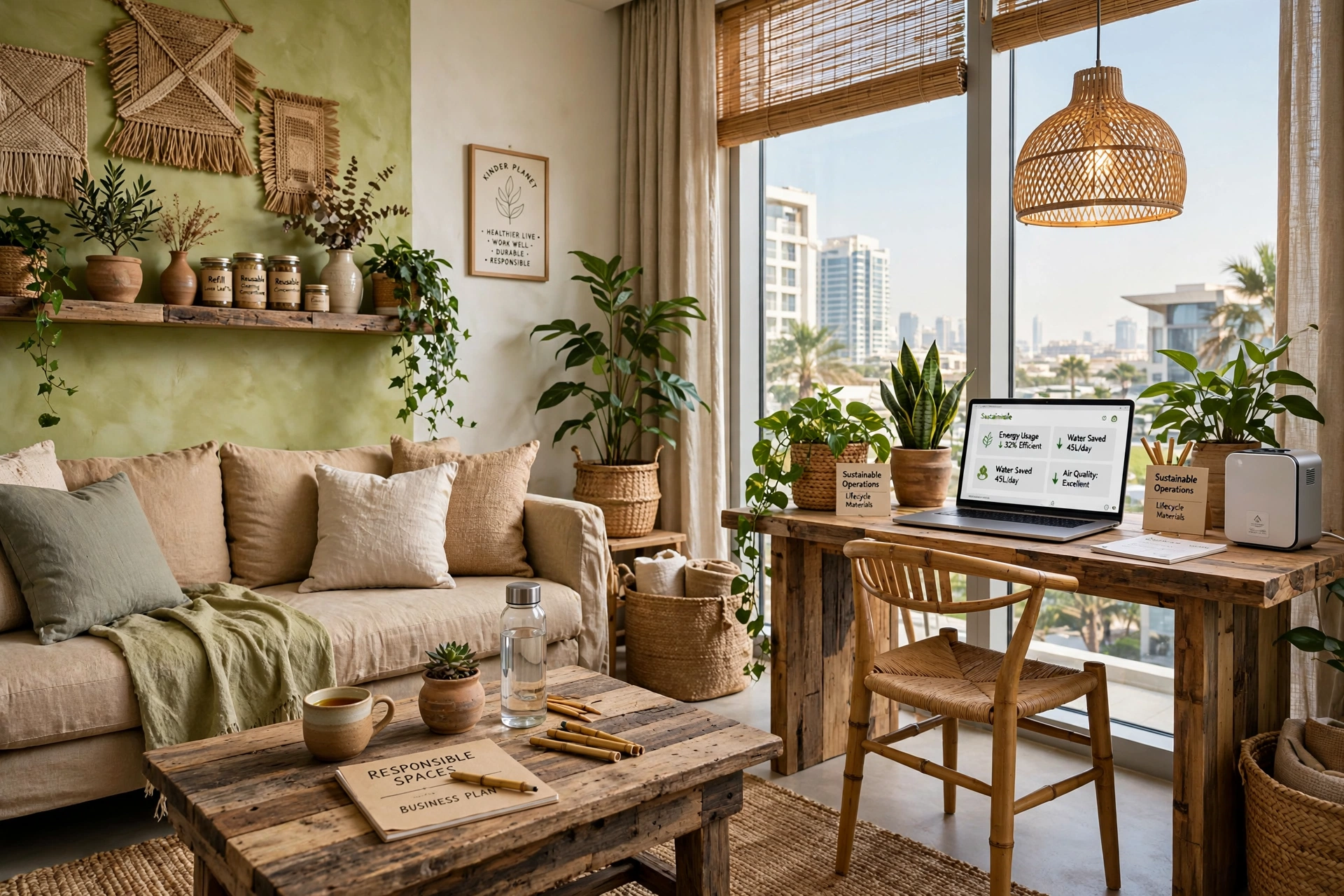
Sustainable and eco interior design in Dubai is becoming an increasingly important part of modern residential, commercial, hospitality, and workplace projects. As property owners, developers, businesses, and homeowners become more conscious of energy consumption, material choices, indoor air quality, and long-term operating costs, sustainable interiors are moving beyond being a design trend and becoming a practical approach to creating better spaces.
Dubai’s rapidly developing built environment provides significant opportunities for sustainable interior design. From luxury villas in Palm Jumeirah, Emirates Hills, Dubai Hills Estate, and Jumeirah to offices in Business Bay, Downtown Dubai, and Dubai International Financial Centre (DIFC), sustainable design can be incorporated into properties of almost every type and scale.
Eco-friendly interior design does not mean sacrificing luxury, comfort, or visual appeal. Modern sustainable interiors can combine premium finishes, sophisticated lighting, custom furniture, natural materials, smart technology, efficient cooling, water-saving fixtures, and biophilic design to create spaces that are attractive while reducing their environmental impact.
The most successful approach considers the entire lifecycle of an interior, from material sourcing and manufacturing to installation, maintenance, energy consumption, indoor environmental quality, and eventual replacement or reuse.
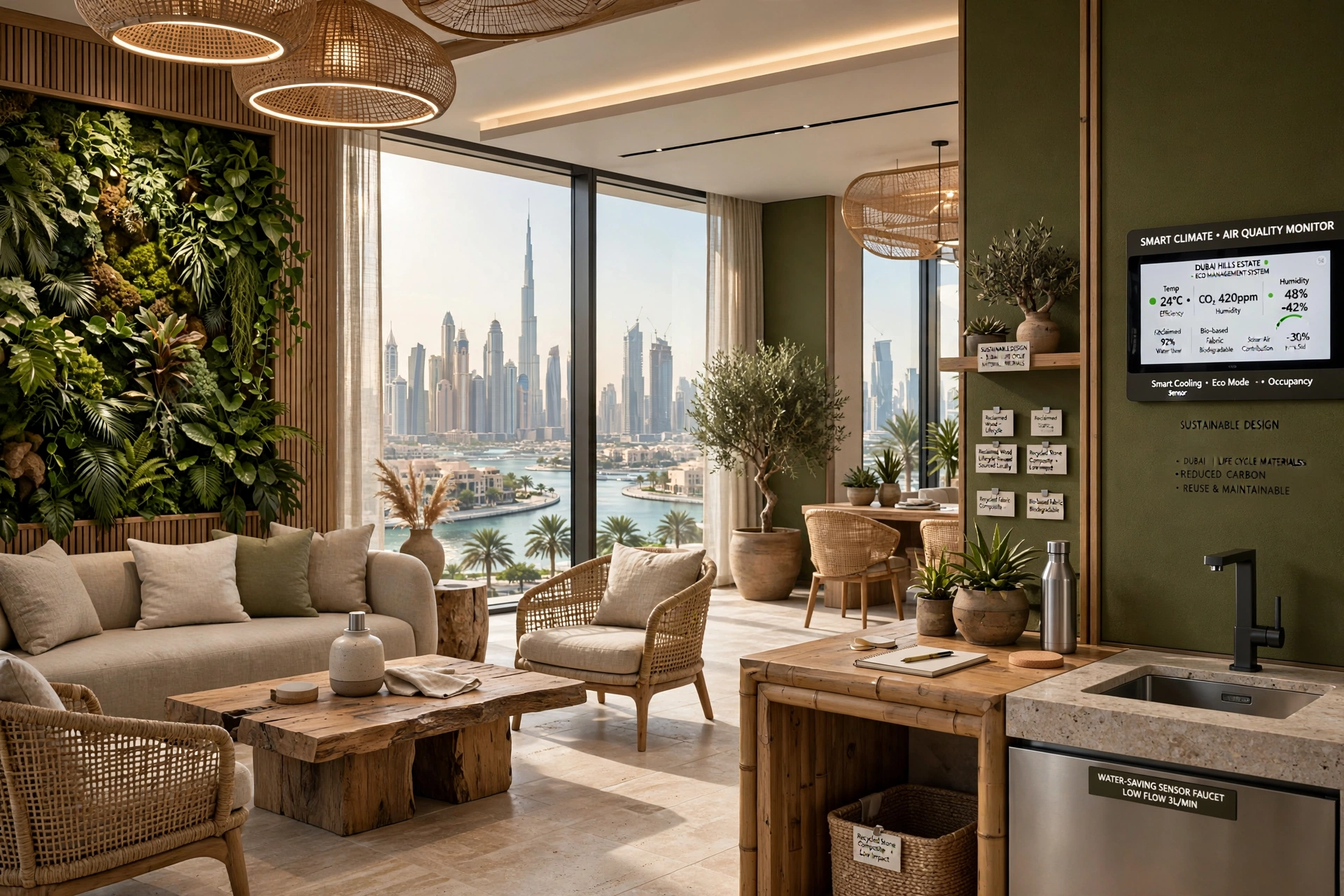
What Is Sustainable Interior Design?
Sustainable interior design is an approach to planning and creating interior environments that minimize unnecessary environmental impact while improving occupant comfort, health, functionality, and long-term value.
It considers several interconnected factors, including energy efficiency, responsible material selection, waste reduction, water conservation, indoor air quality, natural lighting, ventilation, durability, and efficient space planning.
Instead of choosing materials purely because they look attractive, sustainable design considers where they came from, how they were manufactured, how long they are expected to last, how they affect indoor air quality, and what happens when they eventually need to be replaced.
This lifecycle approach can result in interiors that are not only environmentally responsible but also more durable and economical over time.
Why Sustainable Interior Design Matters in Dubai
Dubai has a unique environmental context that makes energy-efficient interior design particularly valuable. The region experiences high temperatures for significant portions of the year, meaning air conditioning can represent a major component of building energy consumption.
Interior design decisions can influence how much cooling a space requires and how efficiently occupants use energy.
Window treatments, glazing strategies, insulation considerations, lighting systems, furniture layouts, material selection, and smart controls can all contribute to a more efficient interior environment.
A sustainable interior should therefore work alongside the building’s HVAC system, electrical infrastructure, lighting controls, building management system (BMS), and architectural envelope rather than treating interior design as an isolated discipline.
Sustainable Interior Materials
Material selection is one of the most visible aspects of eco-friendly interior design.
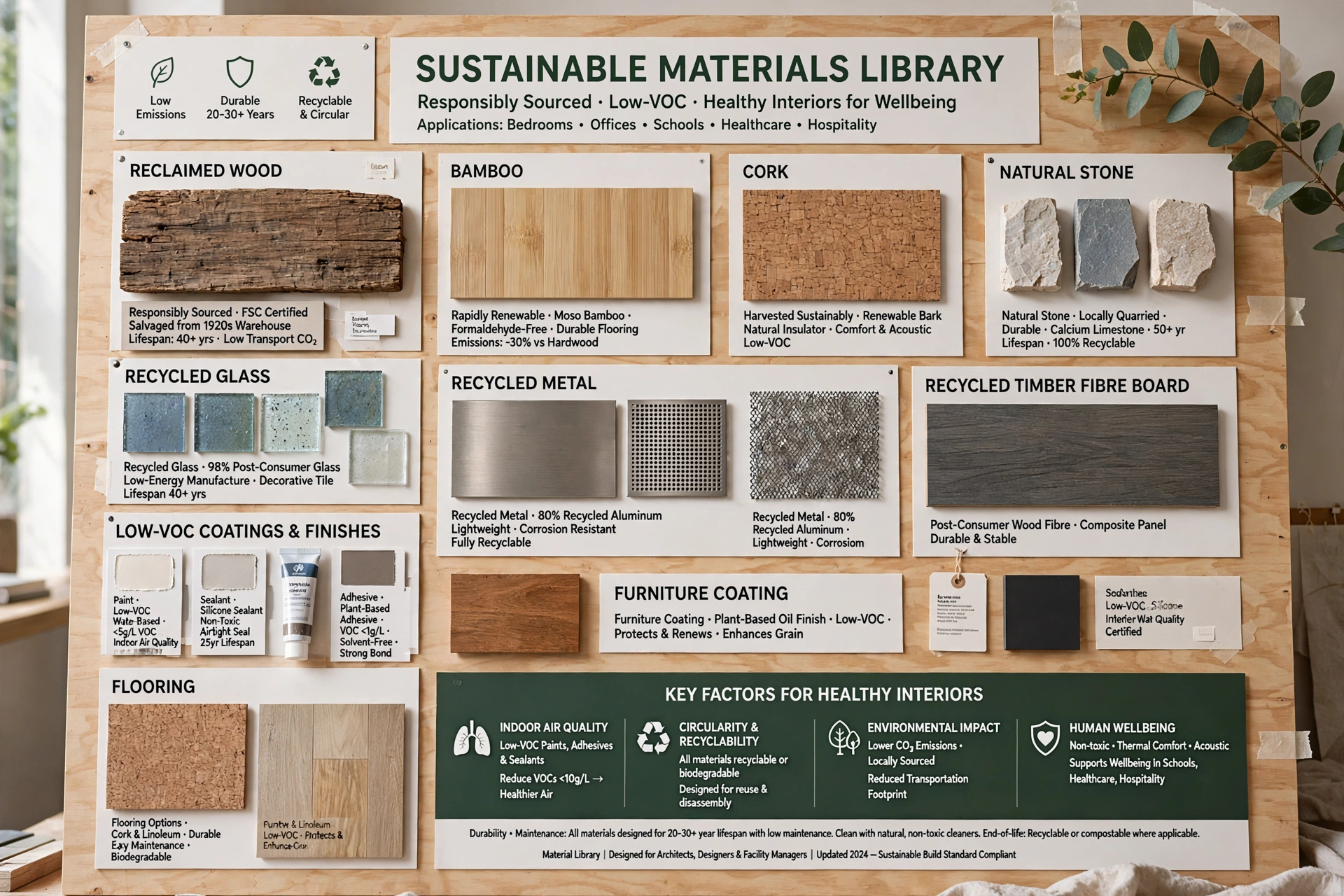
Sustainable interiors can incorporate responsibly sourced timber, recycled materials, reclaimed wood, natural stone, recycled metal, low-emission finishes, recycled glass, bamboo, cork, and other materials selected according to the project’s requirements.
The objective is not to use one particular “green” material everywhere.
Instead, designers should evaluate durability, maintenance requirements, manufacturing processes, transportation, recyclability, emissions, and expected lifespan.
A highly durable material that remains attractive for decades may sometimes be a more sustainable choice than a cheaper material that needs frequent replacement.
Low-VOC Materials and Indoor Air Quality
Indoor air quality is an important component of healthy interior design.
Certain paints, adhesives, sealants, flooring products, furniture materials, and coatings can release volatile organic compounds, commonly known as VOCs.
Choosing low-VOC or low-emission products can help reduce unnecessary pollutants within enclosed environments.
This is particularly relevant in bedrooms, offices, schools, healthcare facilities, hospitality environments, and other spaces where occupants spend significant amounts of time indoors.
Sustainable interior design therefore considers environmental impact and human wellbeing together.
Natural Light in Sustainable Interiors
Natural daylight can significantly improve the experience of an interior.
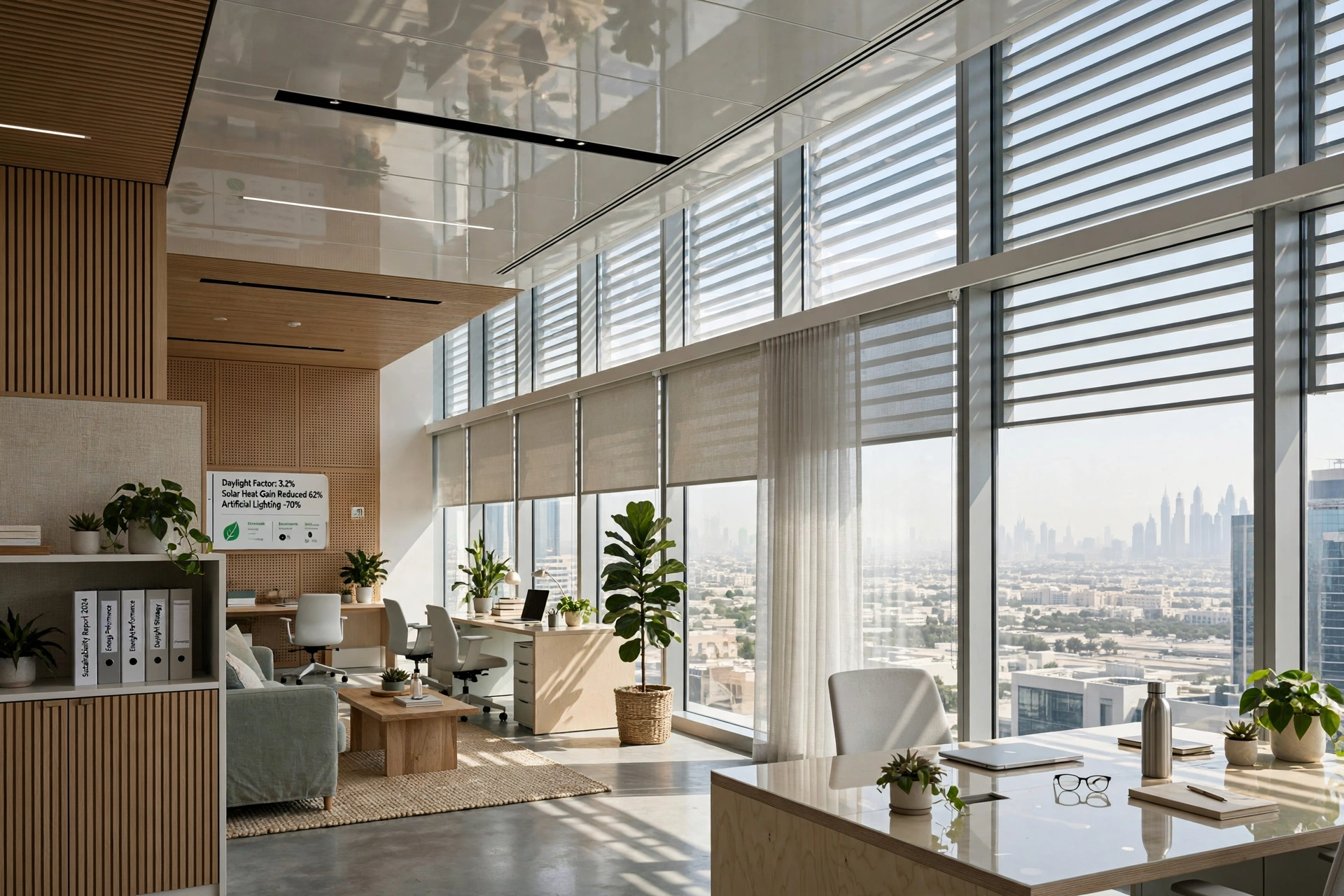
Large windows, carefully positioned openings, reflective surfaces, suitable layouts, and appropriate shading can help bring daylight deeper into a space.
Using natural light effectively can reduce reliance on artificial lighting during suitable periods.
However, Dubai’s intense sunlight means daylight must be carefully controlled.
Unmanaged solar heat gain can increase cooling requirements and create glare.
Sustainable design therefore combines daylight with solar shading, blinds, curtains, glazing strategies, reflective surfaces, and efficient artificial lighting.
The goal is not simply to maximize sunlight but to introduce useful daylight while managing heat and glare.
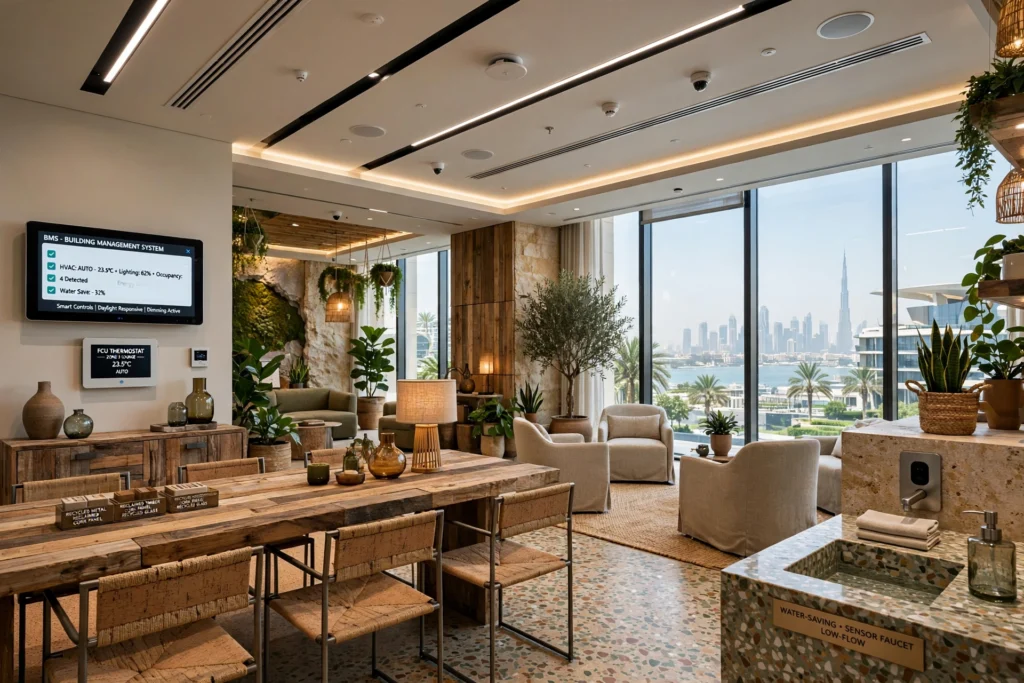
Energy-Efficient Interior Lighting
Lighting is another major opportunity for improving sustainability.
Modern LED lighting can provide high-quality illumination while generally using less electricity than older lighting technologies.
A sustainable lighting plan can combine ambient lighting, task lighting, accent lighting, decorative fixtures, daylight-responsive controls, occupancy sensors, dimming systems, and smart lighting controls.
Instead of illuminating every area at maximum brightness, lighting levels can be adjusted according to activity and occupancy.
A meeting room, corridor, reception area, bedroom, kitchen, and workspace have different lighting requirements.
Designing lighting around actual usage can improve both energy efficiency and occupant comfort.
Smart Lighting and Building Automation
Technology can make sustainable interiors more responsive.
Smart lighting systems can use occupancy sensors, timers, daylight sensors, dimming controls, and centralized management to reduce unnecessary energy consumption.
In commercial properties, lighting can potentially be integrated with the building management system.
HVAC and lighting can also be coordinated around occupancy schedules where appropriate.
For example, a meeting room that is not being used does not necessarily need the same lighting and cooling levels as an occupied workspace.
Automation can therefore support sustainability without requiring occupants to constantly adjust systems manually.
Energy-Efficient HVAC and Interior Design
In Dubai, interior design and air conditioning are closely connected.
Furniture layouts, partitions, ceilings, lighting, windows, finishes, and occupancy patterns can all influence how an HVAC system performs.
A sustainable interior should allow adequate air distribution and avoid unnecessarily obstructing air-conditioning diffusers, return-air grilles, FCUs, AHUs, thermostats, and ventilation systems.
Efficient ceiling planning is particularly important in offices, hotels, retail environments, and large villas.
Interior designers should coordinate with MEP professionals to ensure that design decisions support rather than compromise HVAC performance.
Sustainable Furniture Selection
Furniture can have a significant environmental footprint, particularly in large commercial and hospitality projects.
Sustainable furniture selection can consider recycled or responsibly sourced materials, durable construction, repairability, modularity, and long service life.
Furniture that can be repaired or reconfigured may have greater long-term value than products designed for short-term use.
Modular workstations are particularly useful in offices because layouts can change without requiring complete furniture replacement.
In residential interiors, timeless furniture designs can also reduce the tendency to replace pieces whenever aesthetic trends change.
Reclaimed and Recycled Materials
Reclaimed materials can give interiors distinctive character while reducing demand for new resources.
Reclaimed timber, recycled metal, recycled glass, and other recovered materials can be incorporated into feature walls, furniture, decorative elements, flooring, partitions, and architectural details.
These materials can be particularly effective in restaurants, cafés, boutique hotels, retail spaces, and luxury residences where individuality is part of the design concept.
The key consideration is quality, safety, durability, and suitability for the intended application.
Sustainable Flooring Choices
Flooring is a major surface area within most interiors and should therefore be considered carefully.
Options can include responsibly sourced timber, recycled-content flooring, natural stone, terrazzo incorporating recycled materials, cork, bamboo, and selected low-emission resilient flooring products.
The correct material depends on the property’s use.
A hotel corridor experiences different levels of foot traffic from a private bedroom.
A restaurant requires flooring that can withstand intensive cleaning.
A luxury villa may prioritize natural stone and long-term durability.
A sustainable decision therefore considers both environmental credentials and actual performance.
Natural Stone and Sustainable Luxury
Luxury interior design does not automatically conflict with sustainability.
Natural stone such as marble, granite, limestone, and other stone products can have a long service life when correctly selected, installed, and maintained.
In premium Dubai interiors, durable stone can be used for flooring, walls, countertops, bathrooms, reception areas, and feature surfaces.
Because replacement and transportation can affect environmental impact, designers should consider sourcing, thickness, waste during fabrication, maintenance requirements, and expected lifespan.
Long-lasting materials can contribute to a more sustainable interior when used thoughtfully.
Biophilic Interior Design
Biophilic design brings elements of nature into built environments.
This can involve indoor plants, natural materials, daylight, water features, natural textures, organic forms, views of greenery, and visual connections with outdoor spaces.
Dubai’s modern buildings can benefit significantly from biophilic design because natural elements can soften highly engineered environments.
Indoor plants can contribute to visual comfort and wellbeing, while natural wood, stone, textured surfaces, and daylight can create a more calming atmosphere.
Biophilic design is especially valuable in offices, hospitality environments, healthcare spaces, residential interiors, and wellness facilities.
Sustainable Office Interior Design in Dubai
Office environments are ideal candidates for sustainable interior strategies because employees spend substantial amounts of time within them.
An environmentally conscious workplace can incorporate energy-efficient lighting, ergonomic furniture, low-emission materials, acoustic solutions, daylight, indoor greenery, efficient space planning, and smart environmental controls.
Flexible workspaces can also reduce the need for frequent renovation.
Modular partitions, adaptable furniture, movable storage, and multipurpose meeting areas allow companies to adjust their workplace as operational requirements change.
This approach can reduce material waste while supporting employee productivity and comfort.
A carefully planned Green Workplace Design strategy can combine environmental responsibility with practical workplace performance.
Sustainable Villa Interior Design in Dubai
Luxury villas can incorporate sustainability without compromising sophisticated aesthetics.
Energy-efficient lighting, smart home controls, efficient HVAC operation, natural materials, durable flooring, water-efficient fixtures, solar shading, and intelligent space planning can all contribute to a more responsible residential environment.
In areas such as Palm Jumeirah, Emirates Hills, Jumeirah, Dubai Hills Estate, Arabian Ranches, and Al Barari, sustainable design can also strengthen the relationship between indoor and outdoor spaces.
Large windows, landscaped courtyards, shaded terraces, and indoor greenery can create a seamless connection with the surrounding environment.
Sustainable Hotel and Hospitality Interiors
Hotels have unique sustainability requirements because they operate continuously and serve large numbers of guests.
Guest rooms, corridors, restaurants, kitchens, spas, lobbies, conference areas, and service spaces all have different operational demands.
Durable finishes are particularly important because high guest turnover can result in significant wear.
Energy-efficient lighting, smart room controls, water-saving bathroom fixtures, low-emission materials, durable furniture, and efficient HVAC systems can help reduce resource consumption.
Hospitality operators can also benefit financially from sustainability because lower energy, water, and maintenance requirements can contribute to reduced operating expenses.
Water Conservation in Interior Design
Sustainability is not limited to electricity and materials.
Water efficiency is particularly important in the UAE.
Interior projects can incorporate water-efficient faucets, showerheads, dual-flush toilets, sensor-controlled fixtures, and other appropriately specified plumbing products.
Bathrooms, kitchens, hospitality spaces, and commercial facilities can all benefit from water-conscious design.
Leak prevention is equally important.
Even highly efficient fixtures cannot compensate for hidden plumbing leaks that continuously waste water.
Interior designers should therefore coordinate with plumbing and MEP teams during renovation and construction projects.
Sustainable Commercial Interior Design
Retail stores, restaurants, clinics, salons, offices, and other commercial spaces can use sustainable design to improve operational efficiency.
Commercial interiors frequently undergo renovations, making durability and adaptability especially important.
Instead of designing a space that only works for a short-term brand concept, designers can use flexible layouts and durable materials that allow future changes.
Energy-efficient lighting, modular displays, recyclable materials, efficient HVAC systems, and smart controls can contribute to lower operating costs.
Sustainability can therefore become part of both the environmental strategy and the commercial strategy.
Waste Reduction During Interior Renovation
Interior renovation can generate substantial quantities of construction waste.
Materials may be removed from walls, ceilings, floors, kitchens, bathrooms, and partitions.
A sustainable renovation approach evaluates which existing elements can be retained, repaired, refurbished, repurposed, or recycled before automatically replacing them.
For example, existing doors, cabinetry, flooring, lighting fixtures, or furniture may sometimes be restored rather than discarded.
Careful measurements and procurement planning can also reduce unnecessary material waste during construction.
Sustainable Interior Design and Circular Economy Principles
The circular economy encourages materials and products to remain useful for as long as possible.
Interior design can support this concept through repairable furniture, reusable partitions, modular systems, reclaimed materials, recycling, refurbishment, and adaptive reuse.
A commercial office may be redesigned without discarding every existing component.
A hotel can refurbish furniture rather than replacing it entirely.
A retail space can reuse display systems across different locations.
These approaches can reduce waste while creating more flexible design strategies.
Certifications and Green Building Standards
Sustainable interior projects may also align with broader green building frameworks.
In the UAE, projects can be influenced by standards and initiatives such as Estidama, Dubai Green Building Regulations and Specifications, and internationally recognized systems such as LEED.
These frameworks can address areas including energy efficiency, water efficiency, materials, indoor environmental quality, waste, and building performance.
The specific requirements depend on the project type and applicable regulations.
Interior designers should coordinate with architects, sustainability consultants, MEP engineers, and project managers where certification or regulatory compliance is required.
Sustainable Interior Design for Dubai’s Climate
Dubai’s climate makes solar heat gain, cooling demand, dust, and outdoor conditions important considerations.
Window treatments can help manage solar exposure.
Efficient lighting can reduce unnecessary internal heat generation.
Appropriate materials can support durability and maintenance.
Smart controls can optimize energy use.
Outdoor and semi-outdoor spaces can incorporate shading, landscaping, and appropriate materials to improve comfort.
Sustainability should therefore be adapted to the local climate rather than copying design approaches developed for completely different environmental conditions.
Sustainable Interior Design in Abu Dhabi and Sharjah
The same principles apply across other UAE markets.
In Abu Dhabi, sustainable interiors can support luxury residences, offices, hotels, retail environments, and government or institutional spaces.
Sharjah has a diverse built environment that includes residential properties, offices, cultural facilities, hospitality projects, and commercial developments.
Local building requirements, project type, climate exposure, occupant needs, and existing infrastructure should always be considered when developing a sustainability strategy.
Long-Term Financial Benefits of Eco Interior Design
Sustainable interior design is often discussed in environmental terms, but financial benefits can be equally important.
Energy-efficient lighting can reduce electricity consumption.
Water-efficient fixtures can reduce water usage.
Durable flooring and finishes can reduce replacement costs.
Modular furniture can reduce the cost of future workplace changes.
Better indoor environmental quality can support occupant comfort.
Efficient HVAC operation can reduce unnecessary energy use.
These benefits accumulate over the lifetime of a property.
The initial investment in better materials, technology, and planning can therefore produce long-term operational value.
How to Plan a Sustainable Interior Project
A sustainable interior project should begin before material selection.
The design team should understand the property’s existing condition, energy usage, HVAC system, lighting, plumbing, natural daylight, occupancy, materials, and future requirements.
A sustainability strategy can then identify opportunities for improvement.
For a renovation, this may involve retaining existing elements wherever practical.
For a new interior, it may involve specifying efficient lighting, low-emission materials, durable furniture, efficient plumbing fixtures, and smart controls from the beginning.
Coordination between interior designers, architects, MEP consultants, contractors, lighting suppliers, furniture manufacturers, and facility management teams is essential.
The Future of Sustainable Interior Design in Dubai
Dubai’s interior design market continues to evolve toward smarter, healthier, and more efficient environments.
Future interiors are likely to place greater emphasis on material transparency, energy monitoring, smart building technology, circular design, biophilic principles, low-emission materials, adaptive reuse, and occupant wellbeing.
Technology will also become increasingly important.
Smart sensors can monitor occupancy and environmental conditions.
Connected lighting can respond to daylight and usage.
Building management platforms can help facility teams understand energy consumption.
Material selection tools can provide more information about environmental performance.
The result will be interiors where sustainability is integrated into everyday operation rather than treated as a decorative feature.
Conclusion
Sustainable and eco interior design in Dubai is not about choosing a few environmentally friendly products and calling a project sustainable. It is a comprehensive approach that considers materials, energy, water, indoor air quality, lighting, HVAC performance, furniture, waste, durability, technology, occupant wellbeing, and the entire lifecycle of the interior.
For villas in Palm Jumeirah and Emirates Hills, offices in Business Bay and DIFC, hotels in Downtown Dubai and Dubai Marina, and commercial properties throughout the UAE, sustainable design can be adapted to different architectural styles and budgets.
Natural materials, low-VOC finishes, energy-efficient LED lighting, smart controls, water-saving fixtures, durable furniture, biophilic elements, daylight, efficient HVAC coordination, and responsible material sourcing can all contribute to healthier and more efficient spaces.
Most importantly, sustainable design does not require a compromise between responsibility and luxury. A well-designed eco interior can be sophisticated, comfortable, technologically advanced, visually distinctive, and highly functional.
As Dubai continues to develop as a global destination for business, hospitality, real estate, and luxury living, sustainable interior design provides an opportunity to create spaces that perform better today while remaining valuable and adaptable for many years to come.