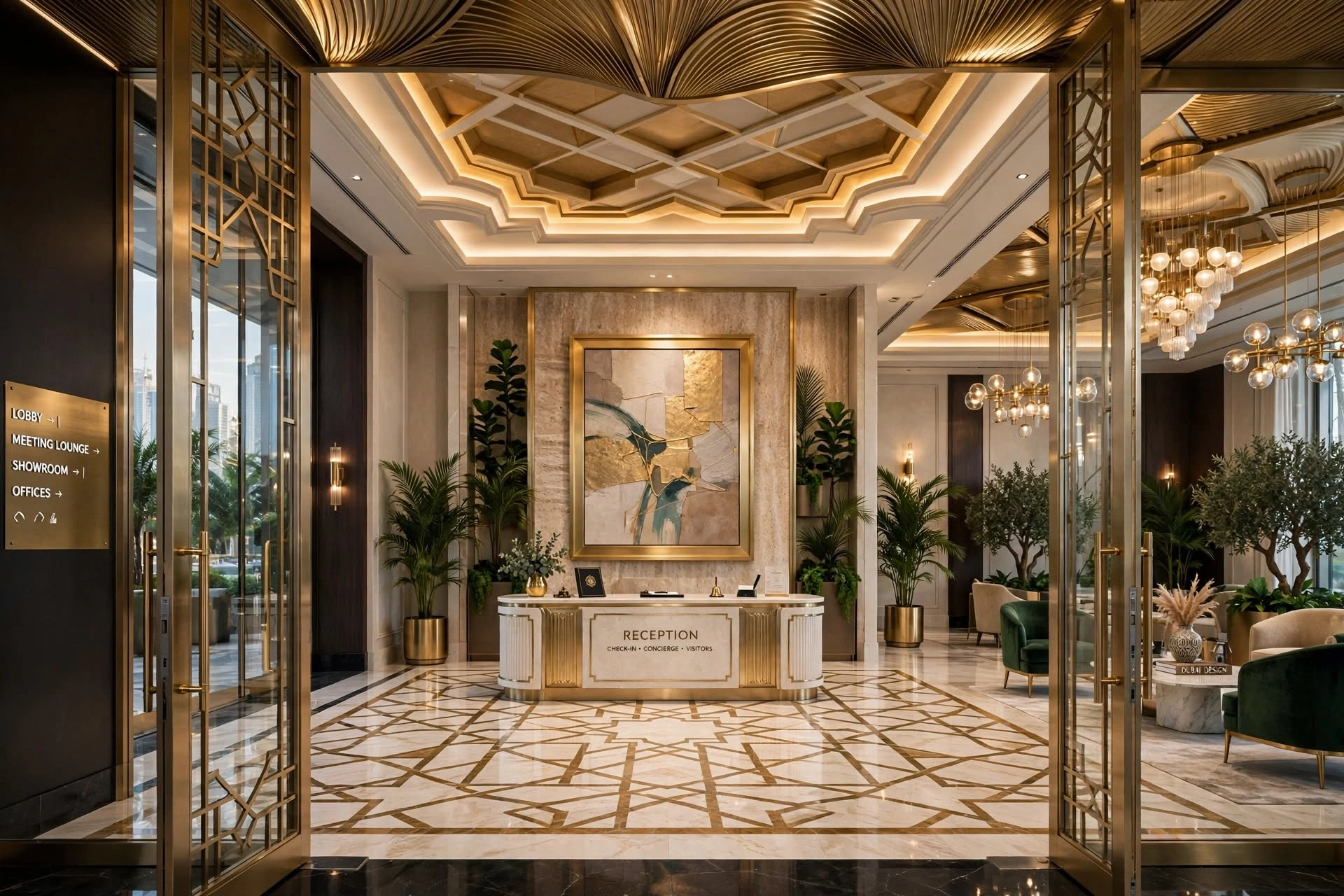
Grand Interior Design in Dubai: Strategy, Scale, and Commercial Intelligence

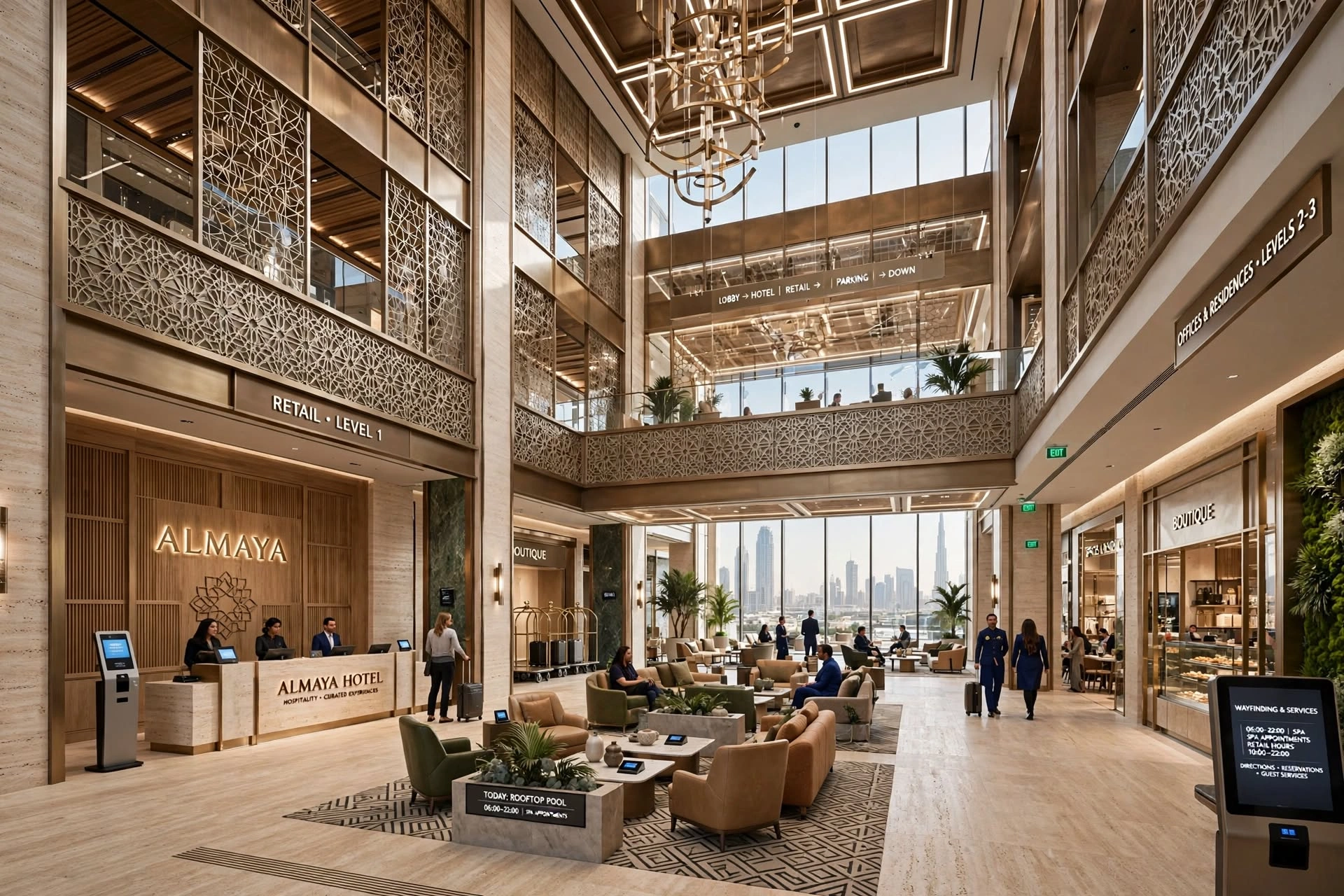
Grand interior design in Dubai is about more than creating visually impressive spaces. At its best, it combines architectural character, spatial planning, hospitality principles, operational efficiency, brand identity, material selection, lighting, technology, and long-term commercial performance. Large interiors must feel memorable without becoming impractical, and luxury must be balanced with durability, maintenance, safety, and user experience.
Dubai’s built environment provides a unique setting for ambitious interior projects. From luxury residences and five-star hotels to corporate headquarters, restaurants, retail destinations, healthcare facilities, and mixed-use developments, the city is known for large-scale architecture and sophisticated commercial interiors.
A successful grand interior therefore needs a clear strategy from the beginning. The objective is not simply to make a space look expensive. It is to create an environment where architecture, interior design, business objectives, customer expectations, and operational requirements work together.
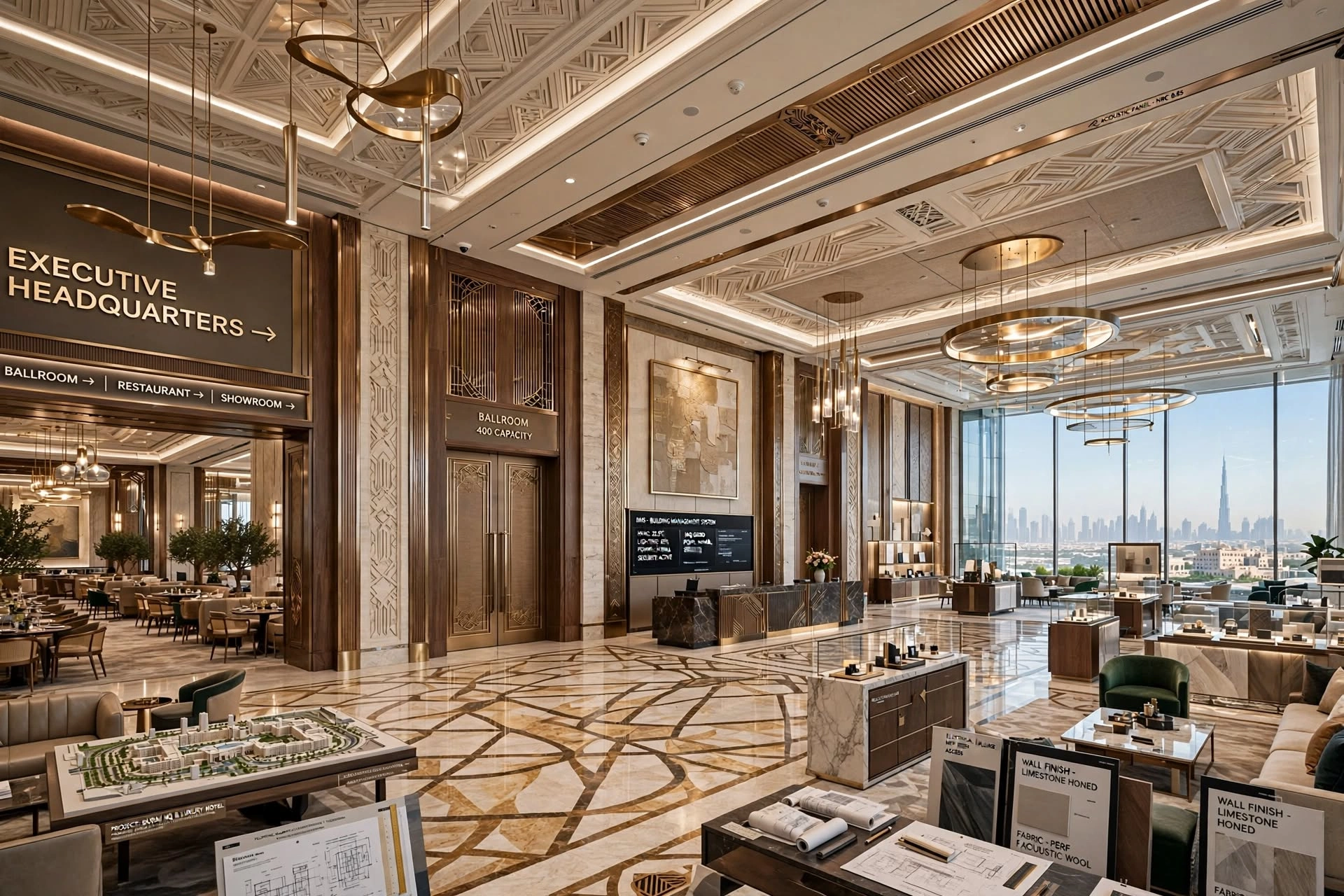
What Makes an Interior Design Project Grand?
A grand interior can be defined by scale, complexity, architectural ambition, or the importance of the space rather than simply by its size.
A large lobby, luxury hotel, executive headquarters, ballroom, restaurant, showroom, villa, or retail destination may all require grand interior design principles.
These projects typically involve multiple interconnected elements, including:
Spatial planning, architectural detailing, custom joinery, furniture, lighting, flooring, ceilings, wall finishes, artwork, signage, acoustics, HVAC, electrical systems, plumbing, technology, and building management systems.
The challenge is coordinating these elements so that the finished environment feels unified.
The Importance of Strategy in Dubai Interior Design
The most successful interiors begin with strategy rather than decoration.
Before selecting marble, furniture, chandeliers, colours, or decorative features, designers need to understand the purpose of the property.
A hotel has different requirements from a private villa. A corporate headquarters has a different circulation pattern from a restaurant. A retail showroom needs strong product visibility, while a healthcare facility prioritises hygiene, accessibility, privacy, and controlled circulation.
The design strategy should therefore consider the property’s function, target users, brand positioning, budget, programme, maintenance requirements, and expected lifespan.
Creating a Strong Design Concept
A grand interior needs a concept capable of guiding hundreds of individual design decisions.
The concept may be inspired by:
Local architectural heritage, contemporary minimalism, biophilic design, geometric forms, natural landscapes, cultural references, modern luxury, Art Deco influences, or futuristic technology.
The concept should not be limited to a colour palette.
It should influence the spatial sequence, material language, lighting, furniture, ceiling design, architectural details, artwork, and customer experience.
A strong concept creates visual consistency across different areas while allowing each space to have its own identity.
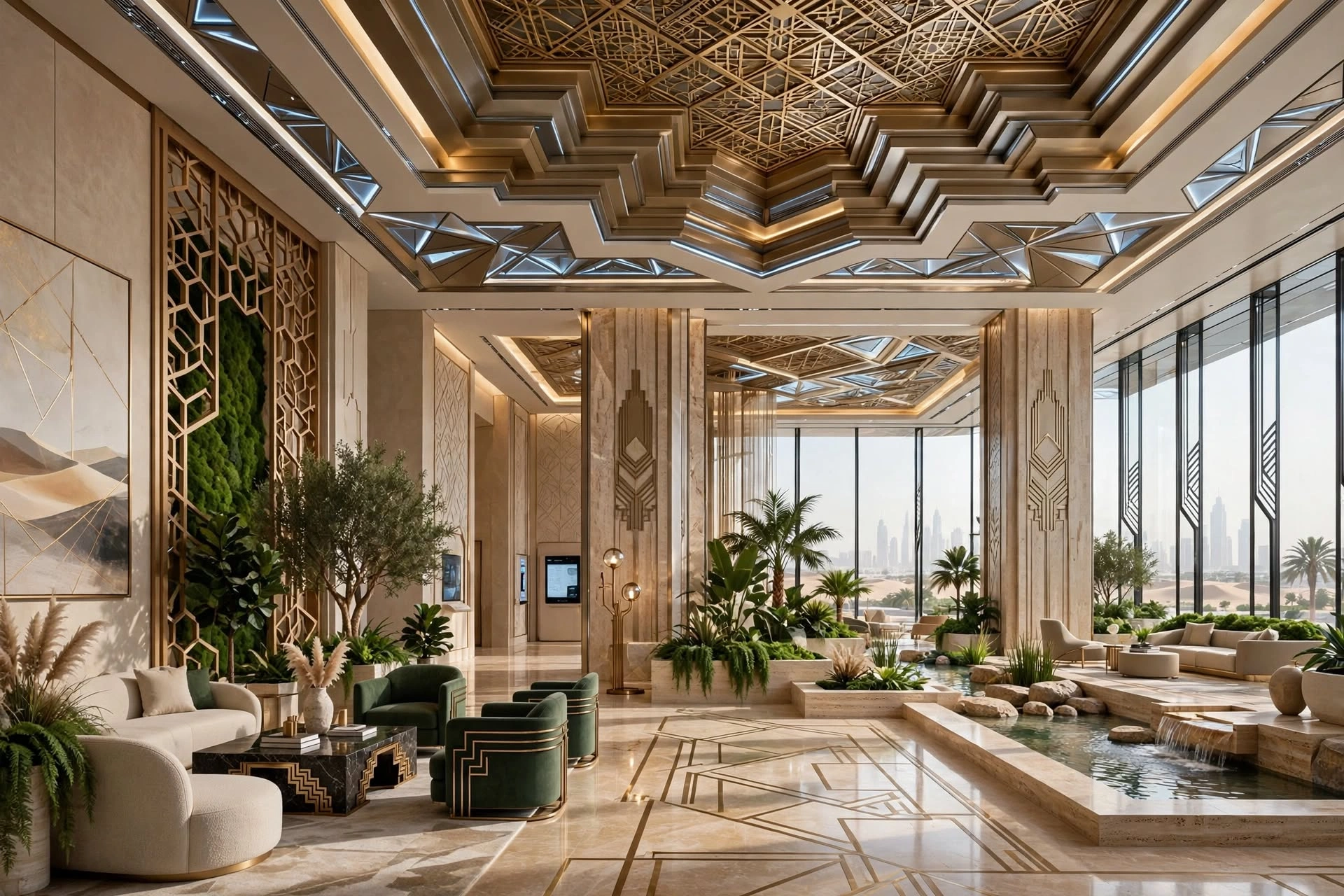
Balancing Opulence With Comfort
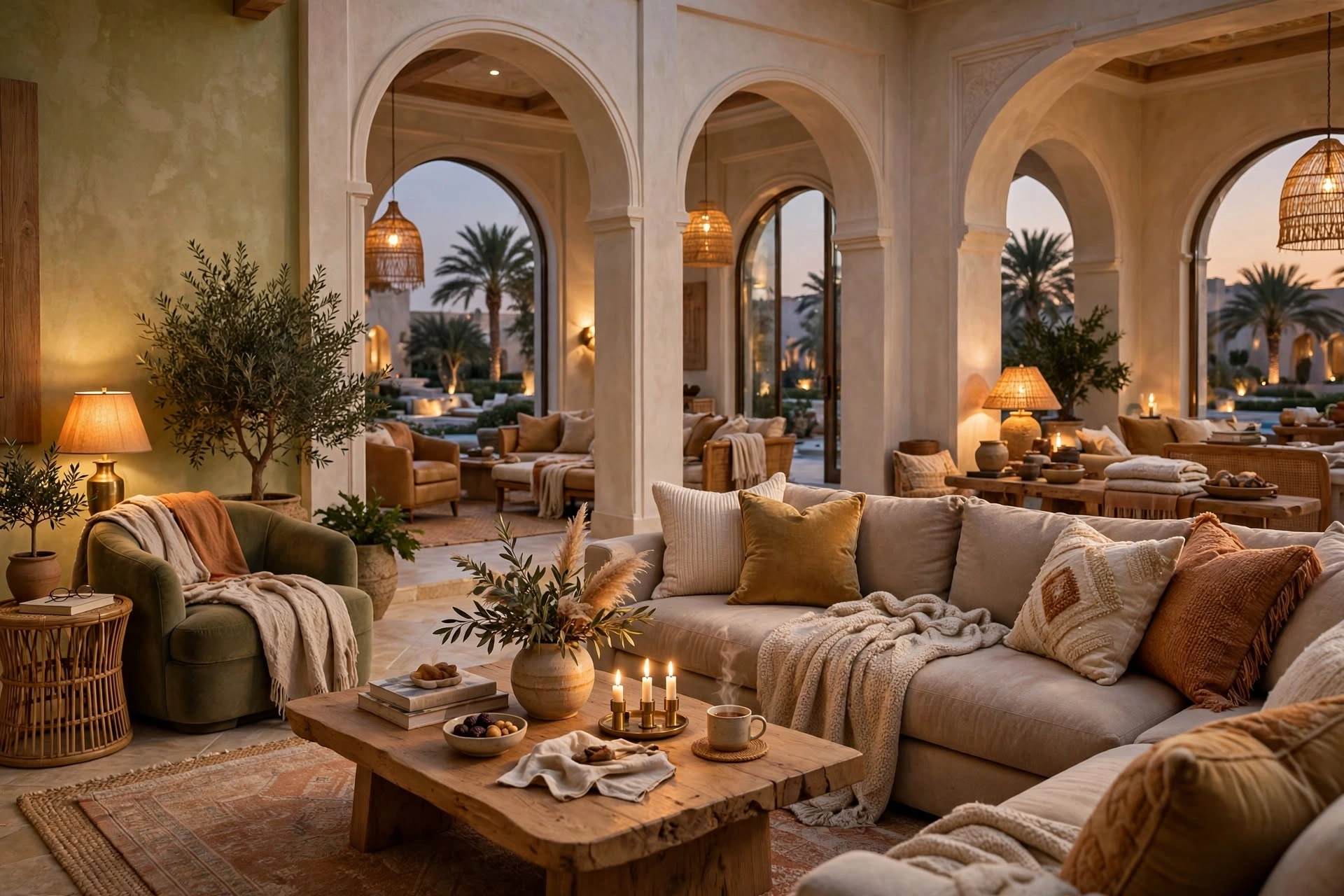
The finest grand interiors never feel cold or museum-like. While they impress with scale and luxury, they remain warm, welcoming, and entirely comfortable to live in. Plush seating, tactile textiles, and intimate zones within larger rooms ensure the home feels inviting as well as impressive.
Striking this balance is an art. Layering soft furnishings, introducing warmth through materials and lighting, and creating human-scaled moments within grand volumes keeps a luxury home liveable. The result is a residence that feels both spectacular and genuinely like home, designed for everyday enjoyment as much as for making an impression.
Creating a Memorable Arrival Experience
The arrival sequence is one of the most important components of a grand interior.
Whether the visitor enters a hotel, office, restaurant, showroom, or private residence, the entrance establishes the first impression.
Elements such as:
Entrance doors, reception desks, feature walls, ceilings, flooring patterns, lighting, artwork, landscaping, signage, and architectural proportions
can work together to create a sense of arrival.
In hospitality and luxury commercial environments, this first impression can influence how visitors perceive the quality and positioning of the entire property.
Grand Lobby Interior Design
Large lobbies require careful spatial planning.
A lobby that is simply oversized can feel empty, while one filled with too many decorative elements can become visually chaotic.
The designer needs to establish zones for:
Arrival, reception, waiting, circulation, seating, concierge services, elevators, retail or display areas, and access to other facilities.
Furniture groupings, flooring changes, lighting, ceiling heights, artwork, and architectural screens can help define these zones without making the space feel fragmented.
Luxury Materials and Finishes
Materials play a significant role in creating a sense of quality.
Common materials in premium Dubai interiors include:
Natural stone, marble, porcelain, timber, veneers, metal, glass, decorative plaster, textured wall finishes, leather, fabric, and engineered surfaces.
Material selection should consider both aesthetics and performance.
For example, a beautiful material may not be suitable for a high-traffic area if it scratches easily or requires excessive maintenance.
A commercially intelligent interior considers the complete lifecycle of each finish.
Marble and Natural Stone in Grand Interiors
Natural stone can create a strong architectural presence.
Marble is frequently associated with luxury because of its distinctive veining, surface quality, and timeless appearance.
However, stone selection should consider:
Slip resistance, porosity, staining, cleaning requirements, traffic levels, maintenance, thickness, installation method, and availability.
Large-format porcelain and engineered stone can provide alternative solutions where specific performance characteristics are required.
The goal is to use premium materials where they contribute meaningfully to the design rather than using expensive materials everywhere.
Lighting as an Architectural Tool
Lighting can transform the perception of scale and architecture.
A successful grand interior may use several layers:
Ambient lighting, architectural lighting, task lighting, accent lighting, decorative lighting, façade lighting, and feature illumination.
Linear LED systems can emphasise architectural geometry.
Pendant fixtures can create focal points over reception desks or dining areas.
Wall washers can highlight artwork or textured surfaces.
Integrated lighting can also make ceilings and joinery appear more refined.
Lighting design should be coordinated with the architecture from the beginning rather than added at the end.
Ceiling Design and Spatial Drama
Ceilings are often overlooked despite their significant influence on large interiors.
A grand ceiling can become an architectural feature through:
Layered forms, timber detailing, suspended elements, acoustic treatments, linear lighting, concealed services, decorative panels, or bespoke structures.
In large lobbies, restaurants, ballrooms, and hospitality spaces, the ceiling can help establish scale and create a strong visual identity.
However, ceiling design must remain coordinated with HVAC diffusers, sprinklers, smoke detectors, speakers, access panels, and lighting.
Furniture and Bespoke Joinery
Furniture should support both comfort and the overall design language.
In premium interiors, bespoke furniture and joinery can be designed specifically around the dimensions and functions of the space.
Custom elements may include:
Reception desks, wall panelling, wardrobes, bars, display units, storage systems, media walls, counters, seating, and decorative partitions.
Bespoke joinery allows designers to control proportions, materials, finishes, lighting integration, and storage more precisely than standard furniture.
Spatial Planning for Commercial Performance
Grand interiors should never sacrifice functionality for appearance.
Commercial spaces must support the movement of people, goods, employees, and equipment.
A hotel requires efficient relationships between guest rooms, reception, restaurants, kitchens, service corridors, housekeeping, elevators, and back-of-house areas.
A corporate workplace needs logical connections between workstations, meeting rooms, collaboration areas, executive spaces, breakout areas, and support facilities.
A restaurant needs efficient relationships between dining areas, kitchen, storage, service stations, toilets, and staff circulation.
Good spatial planning improves operational efficiency while creating a better user experience.
Hospitality Design and Guest Experience
Hospitality projects require particular attention to emotional experience.
Guests evaluate a property through multiple touchpoints, including:
Arrival, reception, corridors, rooms, restaurants, lounges, spa facilities, public areas, signage, lighting, acoustics, and service environments.
The design should create a consistent journey from one space to another.
This is where luxury hospitality principles become especially valuable. Carefully designed luxury hotel interiors can combine brand identity, comfort, spatial storytelling, operational requirements, and premium detailing into a cohesive guest experience.
Corporate Interior Design
Corporate interiors have evolved beyond rows of conventional workstations.
Modern workplaces may include:
Open work areas, private offices, meeting rooms, boardrooms, collaboration spaces, lounges, breakout areas, wellness rooms, training rooms, cafés, and flexible work zones.
The interior should reflect organisational culture while supporting productivity and employee experience.
Acoustics, lighting, ergonomics, indoor air quality, technology, and workplace flexibility are increasingly important components of office design.
Grand Residential Interior Design
Luxury villas and large residences require a different interpretation of grandeur.
The focus may be on privacy, personalisation, family lifestyle, entertainment, material quality, and seamless movement between indoor and outdoor areas.
Large residential interiors may incorporate:
Formal living rooms, family lounges, dining rooms, home offices, entertainment rooms, walk-in wardrobes, wellness areas, private cinemas, majlis spaces, kitchens, guest suites, and landscaped terraces.
A successful residential concept should feel sophisticated while remaining comfortable enough for everyday living.
Restaurants and Dining Destinations
Restaurant interiors need to combine atmosphere with operational efficiency.
The design should consider table layouts, customer circulation, service routes, kitchen access, lighting, acoustics, furniture, branding, and food-service requirements.
Different seating types can create different experiences.
Banquettes can maximise perimeter seating. Communal tables encourage group interaction. Private dining rooms can support premium occasions.
Lighting should complement the food and atmosphere without compromising visibility.
Retail and Showroom Interiors
Retail design is closely connected to customer behaviour.
A showroom needs to guide visitors through products and create logical visual priorities.
Grand retail interiors can use:
Feature displays, branded walls, illuminated shelving, digital screens, product islands, material contrasts, and carefully controlled circulation.
Technology can also play a role through interactive displays, digital signage, touchscreens, and immersive experiences.
The objective is to integrate technology into the design without allowing screens to overpower the physical environment.
Acoustics in Large Interiors
Large spaces can create acoustic challenges because sound travels and reflects across extensive surfaces.
This is especially relevant for:
Hotels, restaurants, offices, reception halls, conference facilities, shopping environments, and entertainment spaces.
Acoustic strategies may include ceiling treatments, wall panels, upholstered furniture, curtains, carpets, timber systems, and architectural partitions.
The best solutions integrate acoustic performance into the visual concept rather than treating acoustic products as an afterthought.
HVAC and Indoor Environmental Quality
HVAC is an important part of large-scale interior design in Dubai.
The interior must accommodate:
Air-conditioning equipment, ductwork, diffusers, return-air grilles, ventilation, thermostats, sensors, and building management systems.
Poor coordination can result in visible services, uncomfortable airflow, excessive noise, or conflicts with ceilings and lighting.
HVAC design should therefore be coordinated with architecture and interior design at an early stage.
Dubai’s hot climate also makes energy-efficient cooling particularly important for large buildings.
Smart Technology in Modern Interiors
Technology can improve functionality, convenience, and operational management.
Depending on the property, smart systems may include:
Automated lighting, motorised blinds, occupancy sensors, smart access control, room controls, digital signage, audiovisual systems, energy monitoring, and BMS integration.
In hospitality environments, technology can support personalised room controls and efficient facility management.
In offices, smart systems can help manage meeting rooms, lighting, temperature, and occupancy.
Technology should be integrated discreetly so that it supports the architecture instead of competing with it.
Sustainability and Commercial Intelligence
Grand design does not have to mean excessive consumption.
Sustainable strategies can include:
Energy-efficient LED lighting, efficient HVAC systems, durable finishes, responsibly sourced materials, water-saving fixtures, daylight optimisation, intelligent controls, and adaptable layouts.
Durability is particularly important.
Replacing expensive finishes and furniture frequently can create additional financial and environmental costs.
A commercially intelligent design considers initial investment, operational costs, maintenance, replacement cycles, and long-term adaptability.
Value Engineering Without Losing Design Quality
Large interior projects often require careful budget management.
Value engineering should not simply mean choosing the cheapest materials.
Instead, it should identify where investment creates the greatest value.
For example, a project might prioritise high-quality materials in reception areas and major guest-facing spaces while using durable, cost-effective alternatives in service areas.
This allows the design to maintain its intended character while controlling unnecessary expenditure.
Coordination With MEP Services
MEP coordination is essential for complex interior projects.
Mechanical, electrical, plumbing, fire protection, lighting, audiovisual systems, security, and interior architecture all compete for limited ceiling and service space.
Building Information Modelling (BIM) and coordinated technical drawings can help identify conflicts before construction.
Early coordination can reduce rework, delays, material waste, and unexpected site modifications.
Compliance and Approvals in Dubai
Interior projects in Dubai may involve requirements from relevant authorities and development entities depending on the property type and location.
Projects may need to consider:
Building regulations, fire and life safety, accessibility, electrical requirements, mechanical systems, ventilation, emergency routes, health requirements, and landlord or development guidelines.
Professional design and project teams should identify applicable requirements during the planning stage.
Compliance should be integrated into the design rather than treated as a final-stage exercise.
The Role of Interior Designers and Fit-Out Specialists
A sophisticated interior project requires collaboration between creative and technical professionals.
Interior designers establish the concept, spatial strategy, materials, furniture, lighting direction, and visual language.
Architects and consultants address technical coordination and regulatory requirements.
Fit-out specialists translate drawings into physical construction through joinery, finishes, MEP coordination, installation, testing, and handover.
The stronger the communication between these disciplines, the more successfully the final environment can reflect the original vision.
Measuring Commercial Success
A grand interior should ultimately create measurable value.
Depending on the property, performance can be assessed through:
Customer satisfaction, occupancy, dwell time, revenue per available space, employee utilisation, operational efficiency, maintenance costs, energy consumption, brand perception, and repeat business.
This perspective changes the role of interior design.
Instead of asking only whether a space looks impressive, property owners can ask whether the design helps the business operate better and deliver a stronger customer experience.
Designing for Long-Term Relevance
Dubai’s design landscape changes quickly, but a successful interior should remain relevant beyond the opening period.
Timeless proportions, durable materials, adaptable furniture, flexible technology, and carefully controlled decorative elements can extend the useful life of an interior.
Trend-based elements can still be incorporated, but they should ideally be easy to replace or update.
This creates an interior that can evolve without requiring a complete renovation.
Final Thoughts
Grand interior design in Dubai requires a balance between ambition and intelligence. Scale alone does not create luxury, and expensive materials alone do not guarantee a successful project.
The strongest interiors are strategically planned around the building, users, brand, location, operational requirements, climate, technology, and long-term commercial objectives.
From a dramatic lobby and bespoke reception desk to sophisticated lighting, carefully selected materials, efficient HVAC coordination, acoustic comfort, smart technology, and flexible furniture, every component should contribute to the overall experience.
Dubai’s diverse property market creates opportunities for highly specialised interior environments across hospitality, residential, retail, corporate, healthcare, and dining sectors. Yet the fundamental principle remains the same: great interior design should look exceptional, work efficiently, and create lasting value.
When creative vision is combined with technical expertise and commercial thinking, grand interiors can become more than beautiful spaces. They can become powerful assets that strengthen a brand, improve user experience, support operations, and contribute to the long-term success of the property.