Hotel Interior Design Dubai: Transforming Hospitality Spaces with Elegance
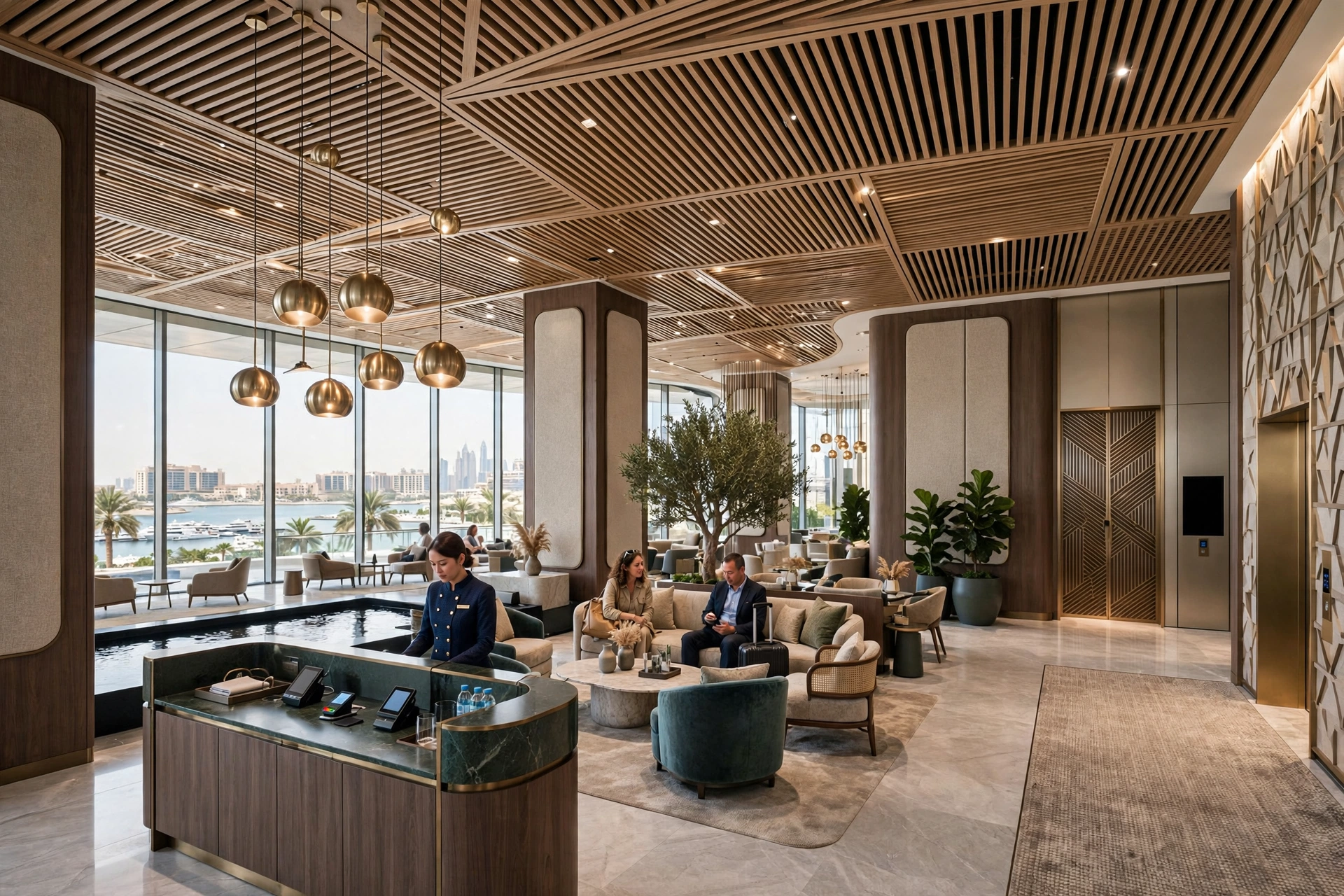
Dubai’s hotel industry is defined by luxury, innovation, distinctive architecture, and high expectations from international travellers. In this competitive environment, hotel interior design is not simply about selecting attractive furniture or decorative finishes. It involves creating a complete guest experience through space planning, lighting, materials, colour, acoustics, wayfinding, technology, and carefully coordinated architectural details.
From luxury resorts on Palm Jumeirah to business hotels in Business Bay and boutique properties in Jumeirah, each hotel requires an interior concept that reflects its location, target guests, brand identity, and operational requirements. A successful hotel interior design strategy combines aesthetics with functionality so that guests experience comfort while staff can operate the property efficiently.
The Importance of Hotel Interior Design in Dubai
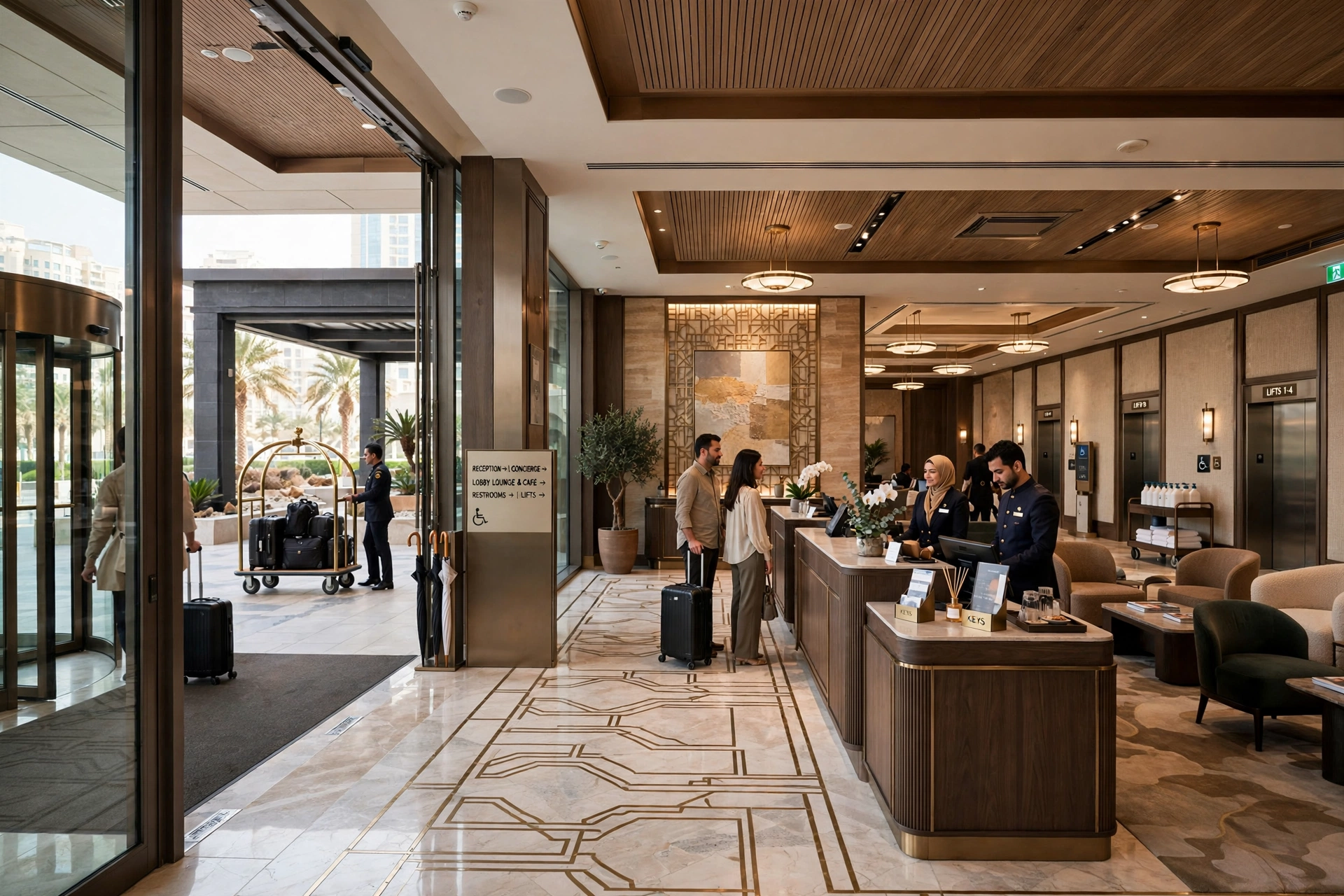
A hotel’s interior is often the first physical expression of its brand. Guests begin forming impressions from the entrance, reception lobby, flooring, lighting, furniture, scent, artwork, and circulation routes.
In Dubai, where hospitality properties compete with internationally recognized hotel brands, interiors need to provide a memorable experience while remaining practical for daily operations. Materials must withstand high foot traffic, housekeeping activities, luggage movement, humidity, and continuous use.
Hotel design therefore involves much more than decoration. Space planning, interior architecture, FF&E, lighting design, material selection, joinery, acoustics, wayfinding, accessibility, and MEP coordination all contribute to the finished environment.
Hotel Bathroom Design
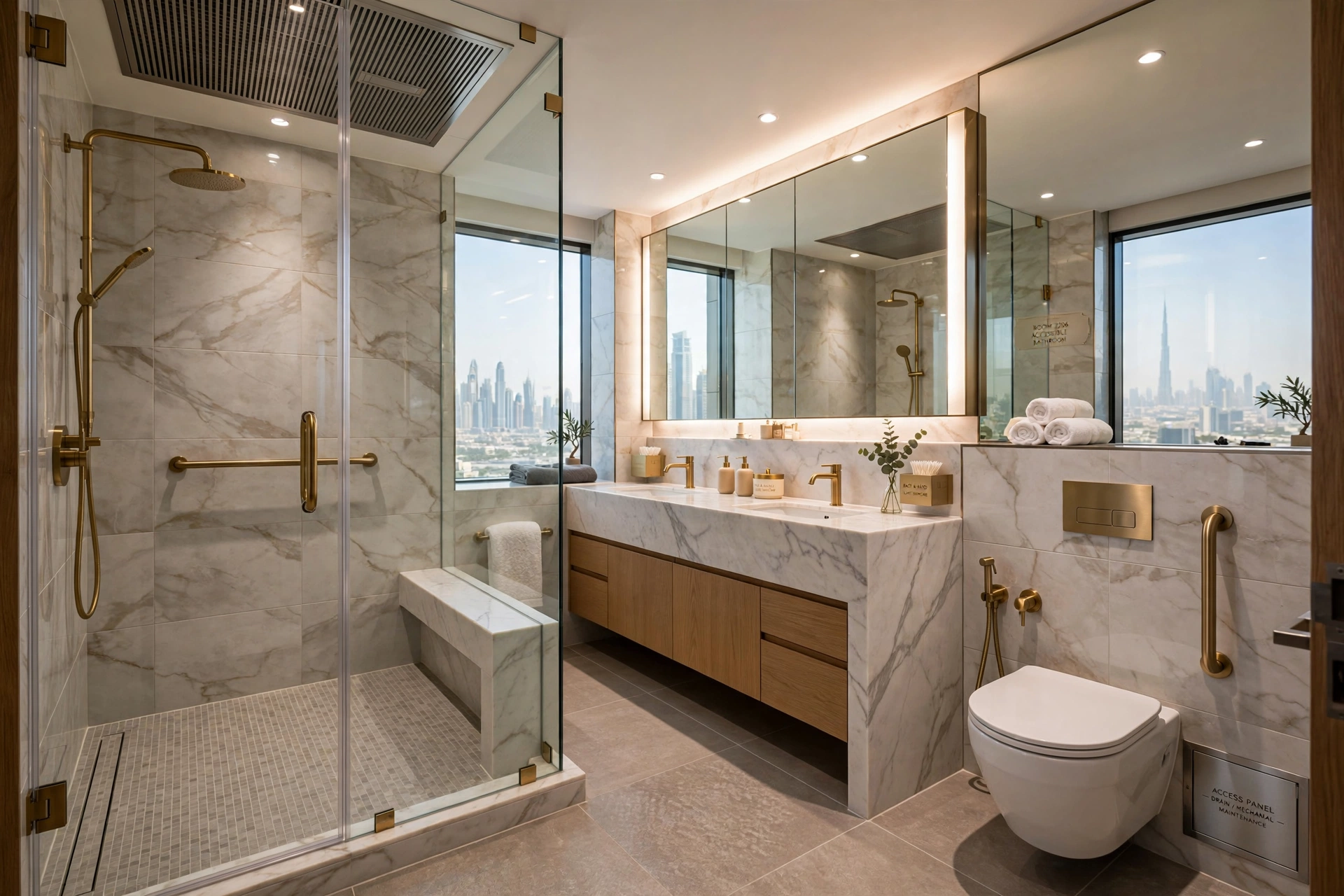
Hotel bathrooms are an important part of the guest experience. Premium materials and thoughtful lighting can transform a functional bathroom into a visually sophisticated space.
Common materials include porcelain tiles, marble, engineered stone, glass, metal finishes, ceramic sanitaryware, and moisture-resistant surfaces. Lighting should combine general illumination with task lighting around mirrors and vanity areas.
Waterproofing, drainage, ventilation, accessibility, maintenance access, and slip resistance should be considered alongside aesthetics.
The best hotel bathroom designs make luxury practical by combining attractive finishes with easy cleaning and long-term durability.
Hotel Bathroom Design
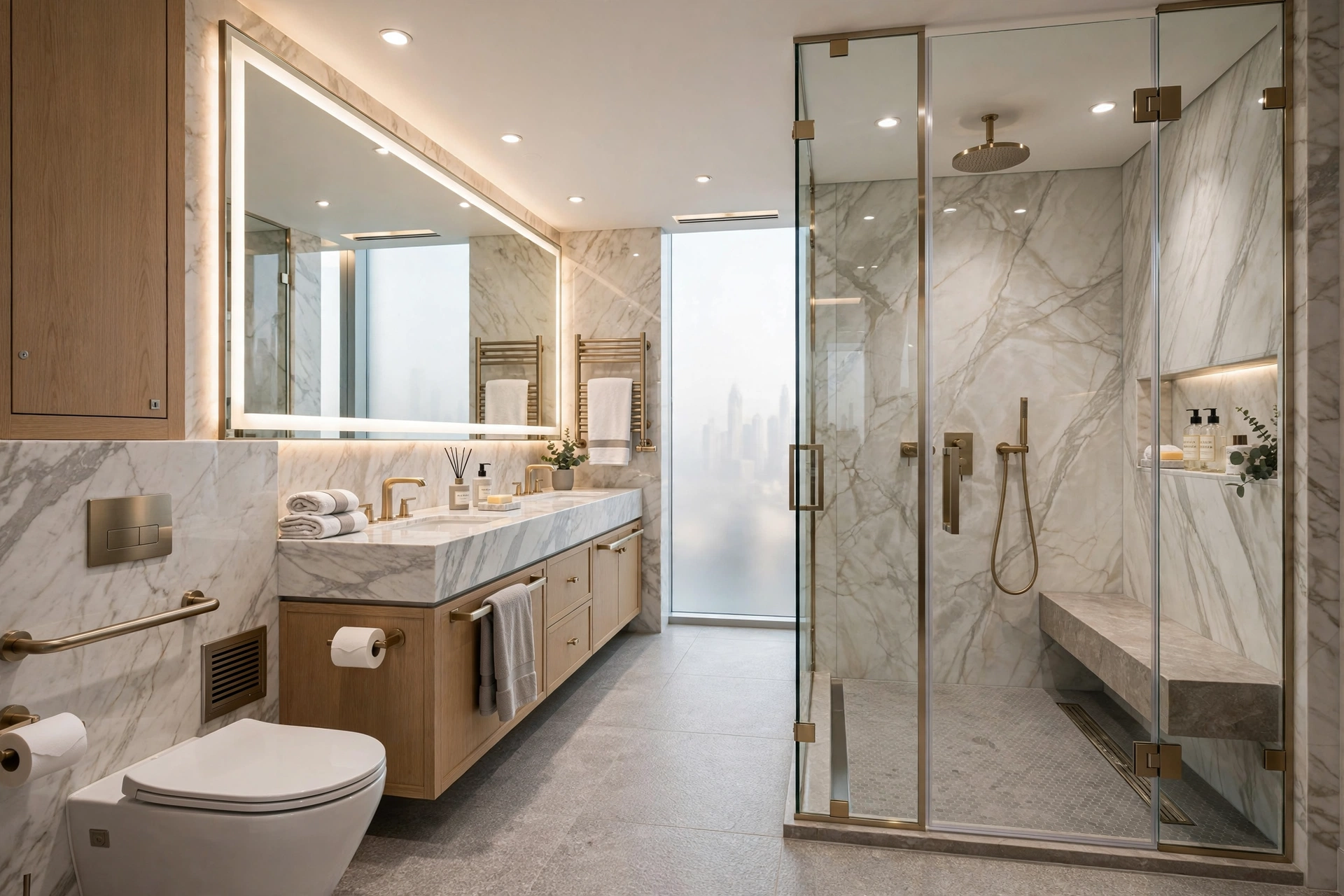
Hotel bathrooms are an important part of the guest experience. Premium materials and thoughtful lighting can transform a functional bathroom into a visually sophisticated space.
Common materials include porcelain tiles, marble, engineered stone, glass, metal finishes, ceramic sanitaryware, and moisture-resistant surfaces. Lighting should combine general illumination with task lighting around mirrors and vanity areas.
Waterproofing, drainage, ventilation, accessibility, maintenance access, and slip resistance should be considered alongside aesthetics.
The best hotel bathroom designs make luxury practical by combining attractive finishes with easy cleaning and long-term durability.
Hospitality Spaces and Guest Experience
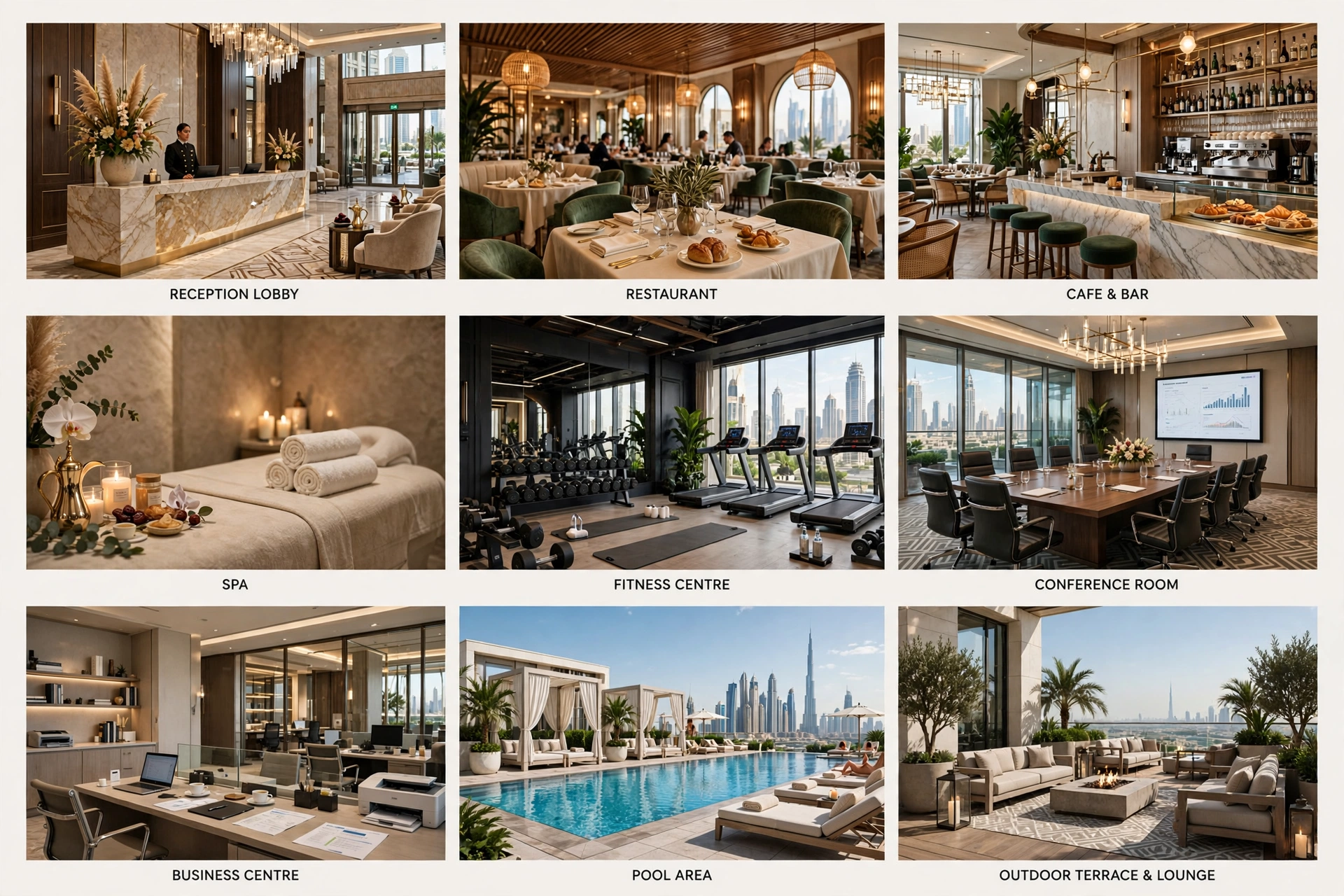
Hotels contain many different environments, each with a distinct purpose. A property may include a reception lobby, restaurant, café, bar, spa, fitness centre, conference rooms, business centre, pool area, corridors, lounges, and outdoor terraces.
Every area should feel connected to the hotel’s overall design language while maintaining its own functional identity.
Professional hospitality venue design can help create cohesive environments where architecture, furniture, lighting, materials, branding, and guest circulation work together rather than appearing as separate design decisions.
This consistency is particularly important for hotels where guests move through several spaces during one visit.
Restaurant and Dining Interiors
Restaurants are among the most experiential areas within a hotel. Dining interiors need to support food service while creating an atmosphere that encourages guests to stay, interact, and return.
Lighting plays a major role. Warm ambient lighting can create intimacy, while focused illumination can highlight tables, architectural features, artwork, or food presentation.
Furniture spacing, circulation, acoustic treatment, ceiling design, flooring, wall finishes, and service routes should be planned together. Staff need efficient access between kitchens, service stations, storage, and dining areas without disrupting guests.
For hotel restaurants, professionally planned restaurant dining interiors can establish a distinctive identity while maintaining consistency with the wider hospitality concept.
Hotel Lighting Design
Lighting is one of the most powerful elements in hospitality interiors. Different lighting layers can establish different moods throughout a hotel.
Ambient lighting provides general illumination, while accent lighting emphasizes artwork, architectural details, furniture, and decorative features. Task lighting supports reception desks, work areas, mirrors, and service zones.
LED technology provides flexibility through dimming, colour temperature selection, concealed linear lighting, decorative fixtures, downlights, wall washers, and architectural profiles.
Smart lighting controls can also allow hotels to create different lighting scenes for daytime, evening, events, and low-occupancy periods.
Material Selection for Dubai Hotels
Hotel materials must look sophisticated while surviving intensive use. Designers should consider durability, stain resistance, cleaning requirements, fire performance, moisture resistance, maintenance, and replacement availability.
High-traffic corridors may require particularly durable flooring and wall protection. Public bathrooms need moisture-resistant finishes and easy-to-clean surfaces. Restaurants may require materials capable of handling food spills and frequent cleaning.
Natural stone can provide luxury, while porcelain and engineered surfaces can offer practical alternatives. Timber, metal, glass, fabrics, acoustic panels, and decorative laminates can then be layered to create visual depth.
Acoustics in Hotel Interiors
Acoustic comfort is often overlooked during interior design, but it can strongly influence guest satisfaction.
Hotels contain multiple potential noise sources, including conversations, elevators, doors, HVAC equipment, restaurants, events, housekeeping activities, and external traffic.
Acoustic solutions can include carpet, acoustic wall panels, upholstered furniture, ceiling treatments, curtains, sound-absorbing materials, and appropriate room layouts.
Guest rooms require particular attention to privacy and noise transmission. Restaurants and lounges may also benefit from acoustic treatments that reduce excessive reverberation while maintaining an elegant appearance.
Hotel Interior Design for Different Dubai Locations
Dubai’s hospitality market includes very different architectural contexts.
Hotels around Downtown Dubai may require contemporary interiors that complement high-rise urban environments and luxury tourism. Properties on Palm Jumeirah can incorporate resort-inspired materials, natural textures, expansive glazing, and coastal colour palettes.
Dubai Marina hotels may emphasize modern urban design, while properties in Jumeirah can adopt more residential or boutique-inspired concepts. Business Bay hotels often cater to business travellers alongside leisure guests and may therefore require flexible meeting, dining, and co-working environments.
Location should influence the design narrative rather than simply determining the colour palette.
Sustainable Hotel Interior Design
Sustainability is becoming increasingly relevant to hospitality projects. Interior designers can incorporate durable materials, energy-efficient LED lighting, water-efficient fixtures, responsibly sourced materials, and intelligent building controls.
Long-lasting furniture and finishes can also reduce replacement frequency. Modular elements can make future refurbishment easier without requiring complete reconstruction.
Sustainable design should consider the entire lifecycle of materials, including manufacturing, transportation, installation, maintenance, and eventual replacement.
Technology and Smart Hotel Interiors
Modern hotels increasingly incorporate technology into the guest experience. Smart room controls can allow guests to manage lighting, temperature, curtains, entertainment, and other functions from integrated interfaces.
From a design perspective, technology should be integrated discreetly rather than becoming visually dominant.
Hotel interior designers may need to coordinate with BMS, HVAC, lighting controls, access control, audiovisual systems, networking infrastructure, and room management systems during the design stage.
Early coordination helps prevent visible cables, poorly positioned controls, or conflicts between technology and architectural finishes.
Why Professional Hotel Interior Design Matters
Hotel projects involve numerous disciplines and stakeholders. Architects, interior designers, MEP consultants, contractors, lighting specialists, furniture suppliers, kitchen consultants, and hotel operators may all contribute to the project.
A professional interior design process coordinates these requirements from concept development through detailed design and implementation.
This can include concept design, space planning, material boards, 3D visualization, FF&E selection, lighting coordination, joinery design, technical drawings, procurement support, and site coordination.
The result is a hotel environment where aesthetics and operational requirements are considered together.
Conclusion
Hotel interior design in Dubai requires a balance of luxury, functionality, technology, durability, and local identity. From the arrival experience and reception lobby to guest rooms, bathrooms, restaurants, lounges, spas, and outdoor spaces, every area contributes to the overall perception of a hotel.
A successful design uses architectural planning, premium materials, carefully controlled lighting, acoustic comfort, smart technology, and distinctive furniture to create memorable hospitality environments.
Whether developing a luxury resort on Palm Jumeirah, a business hotel in Business Bay, a contemporary property near Downtown Dubai, or a boutique hotel in Jumeirah, the design should respond to both the guest experience and the operational realities of hospitality.
The strongest hotel interiors are not simply visually impressive. They are comfortable, durable, efficient, recognizable, and easy to operate, creating an environment that supports the hotel’s brand while giving guests a memorable reason to return.