
Arabic Majlis Interior Design: Modern, Affordable & Premium Interior Designs
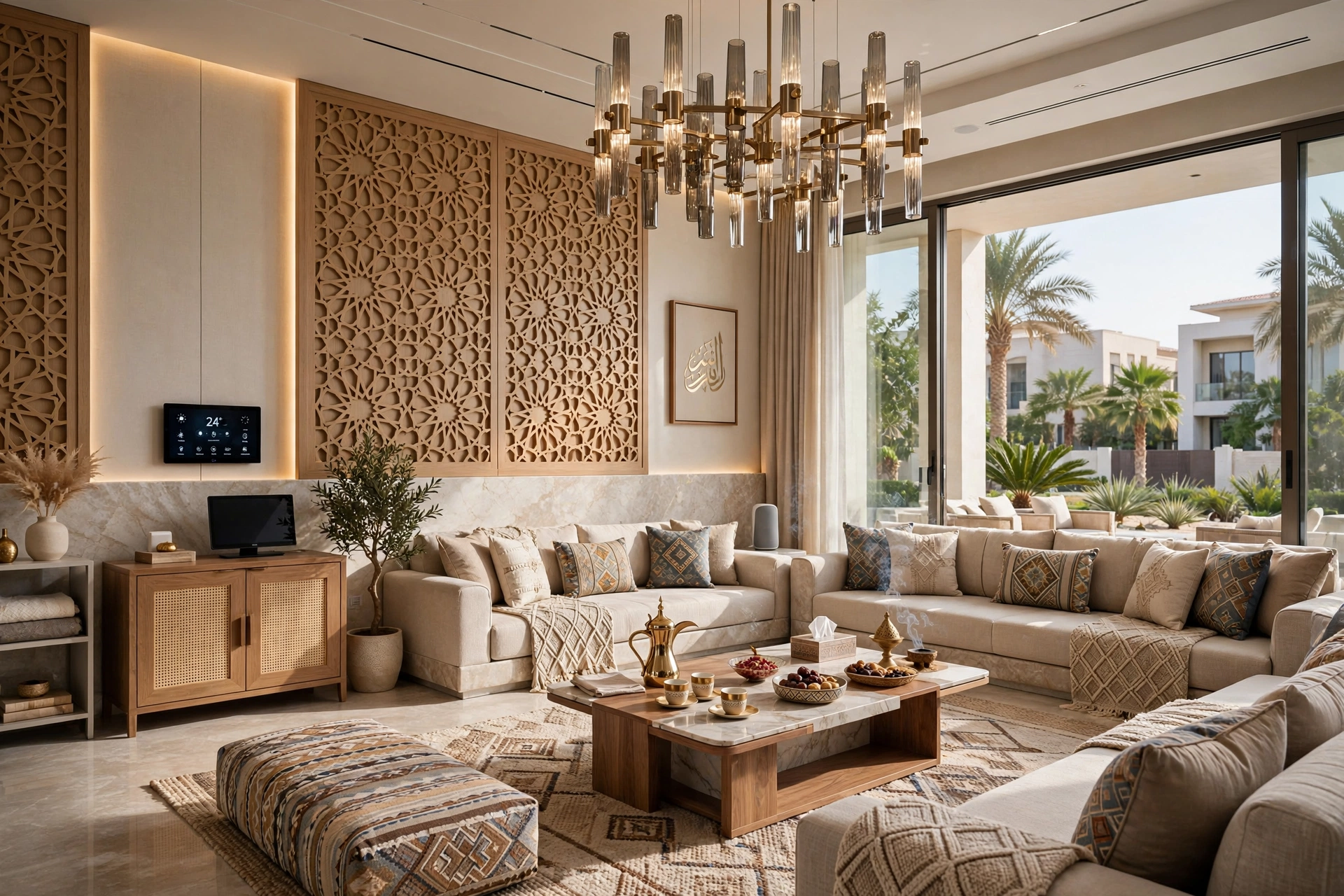
The Arabic Majlis is more than a sitting room. It is an important part of Arab hospitality, family life, social gatherings, and cultural identity. Traditionally designed for welcoming guests, a Majlis can range from a simple, comfortable room to an elaborate luxury space featuring handcrafted furniture, decorative walls, statement lighting, marble, wood, textiles, and traditional patterns.
In Dubai and across the UAE, Majlis interior design is evolving. Homeowners increasingly want interiors that preserve the character of an Arabic Majlis while incorporating modern comfort, contemporary architecture, smart technology, and practical materials. This has created demand for designs that can be affordable, modern, luxurious, culturally appropriate, and functional at the same time.
Whether the project is a villa in Emirates Hills, Arabian Ranches, Dubai Hills Estate, Palm Jumeirah, Jumeirah, Al Barari, or Mirdif, the best Majlis design responds to the architecture of the property and the lifestyle of its occupants.
What Makes an Arabic Majlis Different?
An Arabic Majlis traditionally provides a dedicated space for receiving visitors and spending time with family or friends. Its design is therefore closely connected with hospitality, privacy, comfort, and social interaction.
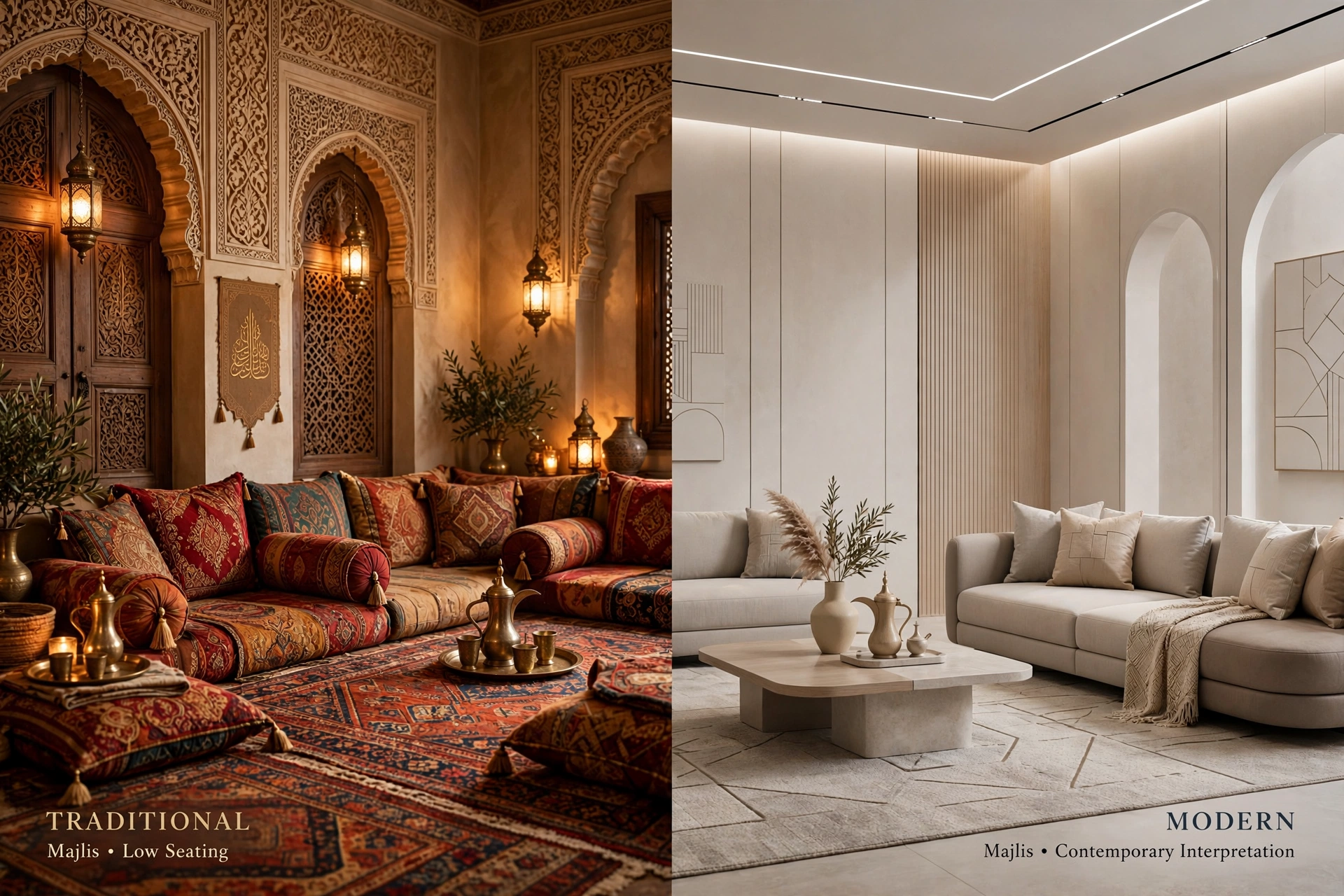
Traditional Majlis interiors often feature low seating, continuous sofas, cushions, carpets, decorative textiles, arches, carved wood, ornamental plasterwork, and warm lighting. Modern interpretations may replace some traditional elements with streamlined furniture, contemporary wall panels, minimalist ceilings, integrated lighting, and sophisticated neutral colour palettes.
The important point is that modernisation does not require removing cultural identity. A designer can preserve recognizable Arabic characteristics while making the space feel contemporary.
Modern Arabic Majlis Interior Design
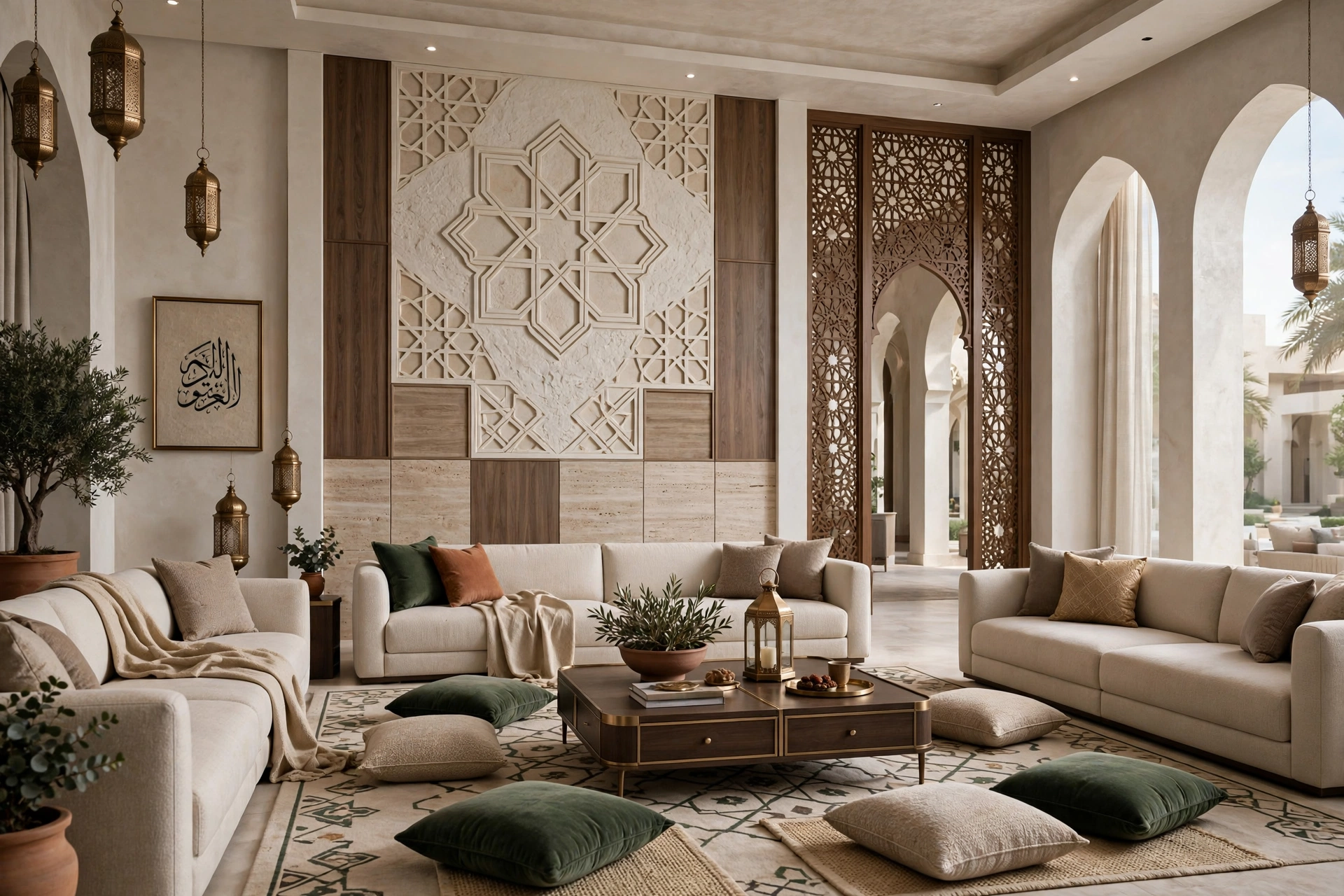
A modern Majlis can combine clean architectural lines with selected traditional details. Instead of covering every wall with ornamentation, designers may use one feature wall with geometric Arabic patterns, textured plaster, natural stone, wood veneer, or decorative panels.
Furniture can also be updated. Contemporary sofas with elegant upholstery can replace highly ornate seating while retaining the generous arrangement required for social gatherings.
Neutral colours such as beige, cream, taupe, sand, warm grey, and off-white can create a sophisticated base. Gold, bronze, dark wood, terracotta, or deep green can then be introduced as accent colours.
This approach creates a space that feels culturally familiar without looking outdated.
Traditional Arabic Elements in a Contemporary Majlis
Traditional design elements can be incorporated selectively to create authenticity.
Common features include:
- Arabic geometric patterns
- Mashrabiya-inspired screens
- Arched openings
- Decorative plaster
- Carved wood
- Brass and bronze details
- Traditional carpets
- Floor cushions
- Ornamental lanterns
- Calligraphy
- Natural stone
- Rich textiles
- Islamic geometric motifs
These elements do not all need to appear together. Over-decoration can make a room feel visually heavy. Instead, designers can identify two or three strong cultural features and build the rest of the interior around them.
For example, a contemporary Majlis may feature a large geometric feature wall, a traditional carpet, and brass lighting while keeping the furniture and ceiling design modern.
Choosing the Right Majlis Layout
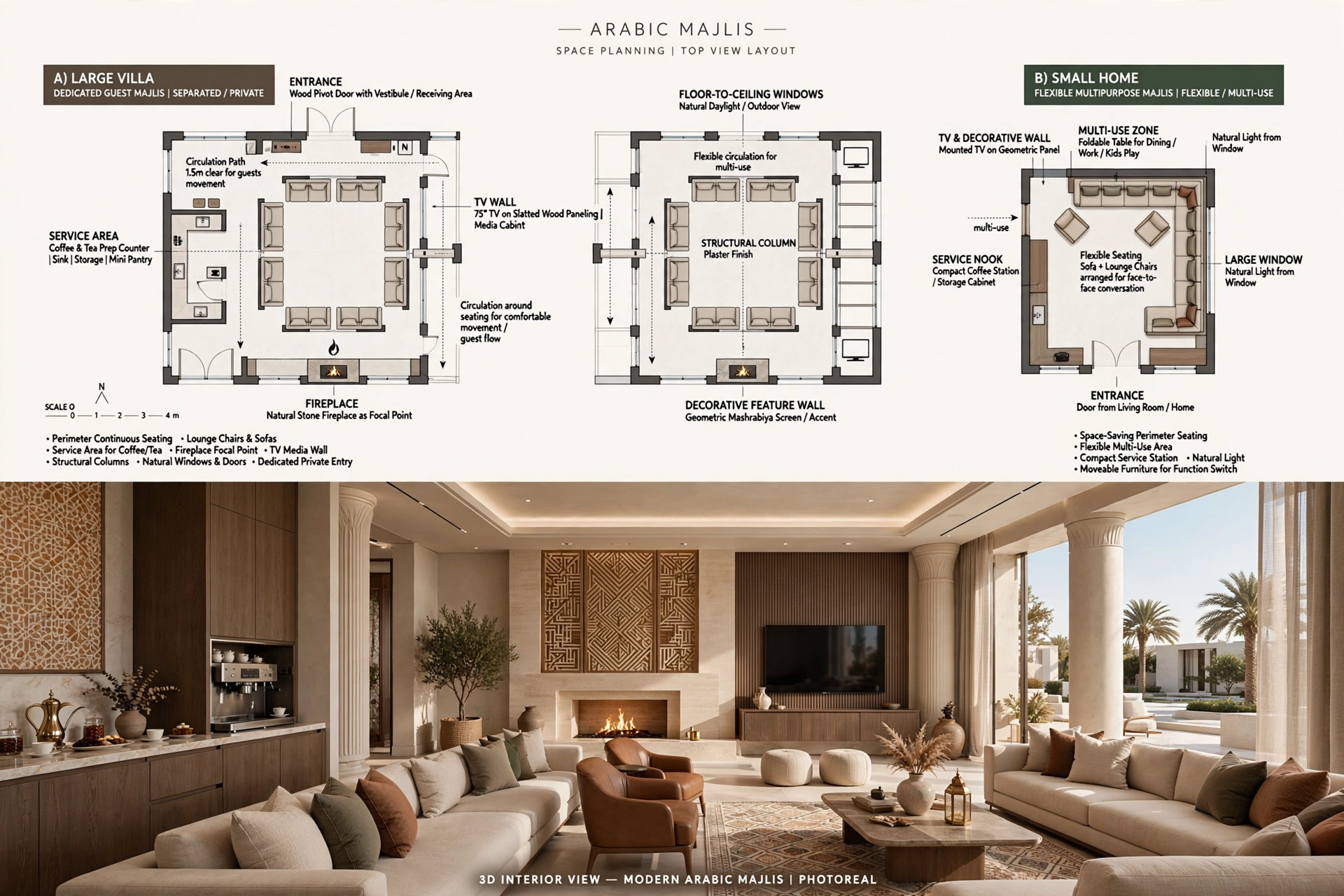
Space planning is one of the most important parts of Majlis design. The room should allow guests to move comfortably while maintaining a clear relationship between seating, entrance, serving areas, and focal points.
A traditional Majlis often uses perimeter seating, allowing guests to face each other during conversations. Modern designs can combine continuous seating with individual lounge chairs or contemporary sofas.
The location of doors, windows, columns, television screens, fireplaces, decorative walls, and service areas should be considered before furniture is selected.
For large villas, a dedicated guest Majlis can be separated from family living areas to provide greater privacy. Smaller homes may use flexible furniture arrangements to create a multipurpose social room.
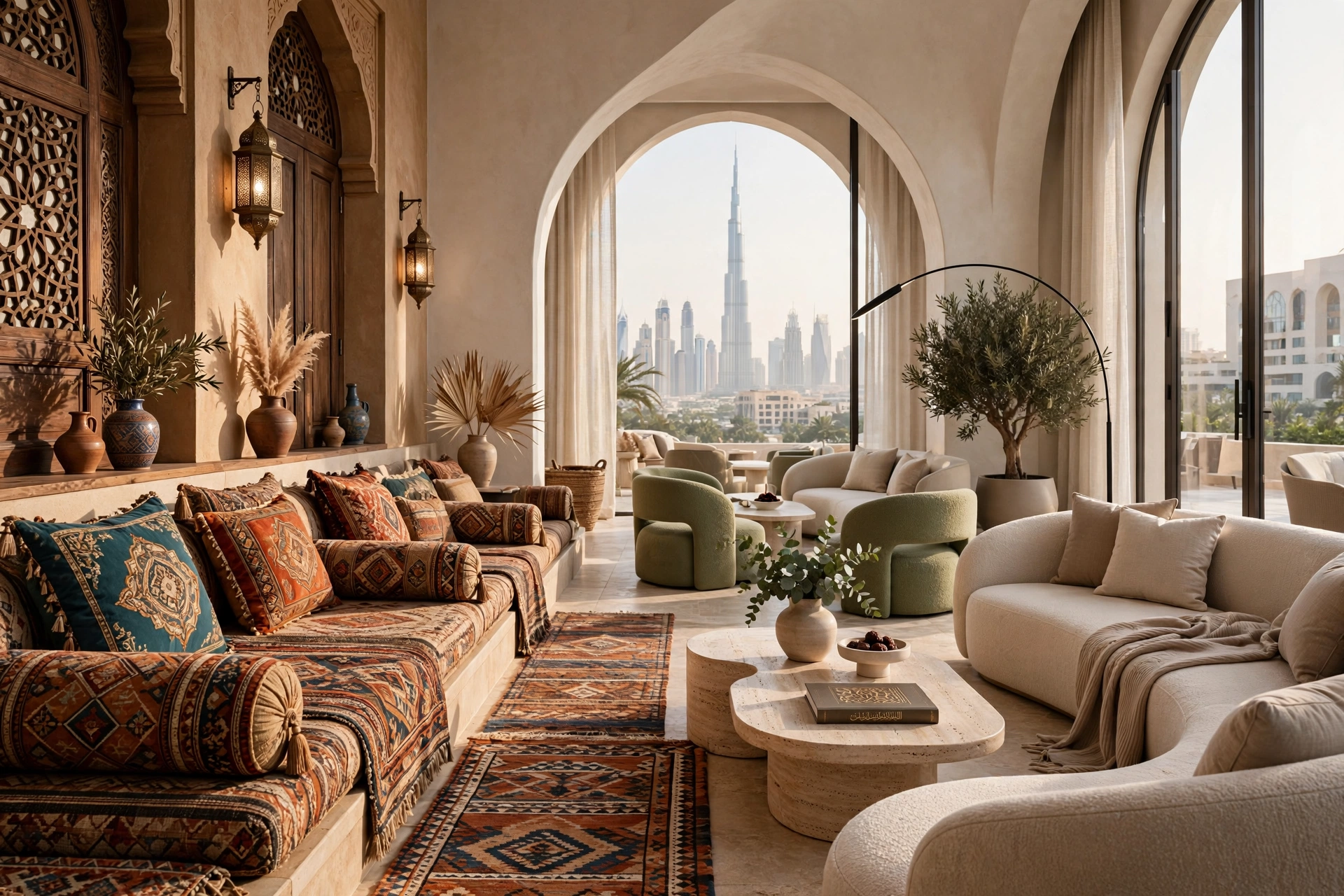
Majlis Seating Design
Seating determines both comfort and visual character.
Traditional Majlis seating may include long upholstered benches, mattresses, cushions, bolsters, and floor seating. Contemporary designs can reinterpret these elements using built-in sofas, modular seating, curved furniture, or elegant lounge chairs.
The seating height should be appropriate for the intended style and the comfort of guests. Upholstery should also be selected for durability and ease of maintenance.
For a premium Majlis, custom-made seating can follow the exact dimensions of the room. This allows designers to use corners efficiently and create a more integrated appearance.
Affordable Arabic Majlis Design Ideas
A sophisticated Majlis does not necessarily require an unlimited budget. Cost can be controlled by deciding where investment will create the greatest visual impact.
Instead of using expensive finishes throughout the room, homeowners can select one feature wall and combine it with high-quality paint, decorative lighting, and carefully chosen furniture.
Other affordable options include:
- Laminated wood finishes instead of expensive solid timber
- Porcelain tiles that replicate natural stone
- Ready-made decorative lighting
- Upholstered modular furniture
- Decorative wall mouldings
- Printed or machine-made Arabic patterns
- Selective brass accents
- Simple false-ceiling details
- Durable engineered surfaces
The goal is not to make every component luxurious. It is to create visual balance so that selected premium details attract attention.
Premium Arabic Majlis Interior Design
A luxury Majlis can become a major architectural feature within a villa. Premium interiors often use custom joinery, natural marble, high-quality wood veneers, bespoke furniture, handcrafted carpets, decorative metalwork, statement chandeliers, and detailed ceiling treatments.
Luxury design can also involve architectural modifications such as feature arches, double-height spaces, decorative screens, built-in shelving, concealed storage, and integrated lighting.
A premium Majlis should still feel comfortable. Luxury does not mean filling the room with expensive objects. It means achieving consistency between materials, proportions, craftsmanship, lighting, furniture, and architectural details.
Majlis Ceiling Design
The ceiling is an important opportunity to introduce architectural character.
A contemporary Majlis may use a simple gypsum-board ceiling with recessed downlights and concealed LED strips. A more traditional concept might incorporate geometric patterns, decorative mouldings, timber details, or a central chandelier.
Large Majlis rooms can benefit from layered ceiling design. A central decorative element can establish a focal point while perimeter lighting provides softer illumination.
Ceiling height should also influence the design. High ceilings can accommodate larger chandeliers, architectural details, and vertical decorative features, while lower ceilings usually benefit from simpler treatments.
Lighting for Arabic Majlis Interiors
Lighting strongly influences the atmosphere of a Majlis.
A successful lighting plan generally combines several layers. Ambient lighting provides general illumination, while accent lighting highlights artwork, architectural details, niches, and decorative objects. Decorative lighting contributes to the visual identity of the room.
Warm-white LED lighting is often suitable for creating a welcoming residential atmosphere. Dimming systems can provide additional flexibility for daytime gatherings, evening visits, family occasions, and special events.
Wall washers, concealed LED strips, pendant lights, chandeliers, recessed downlights, and decorative Arabic lanterns can all be used according to the design concept.
Majlis Wall Design
Walls can establish the visual identity of the entire room.
A modern Majlis might feature a large textured wall behind the main seating area. Materials such as marble, travertine, microcement, wood veneer, decorative plaster, fluted panels, or textured paint can create depth.
Arabic geometric patterns can be incorporated through laser-cut metal panels, CNC woodwork, wall mouldings, wallpaper, or custom plaster.
For a premium design, a combination of natural stone and integrated lighting can create a sophisticated focal point.
Arabic Patterns and Geometric Details
Islamic geometric patterns are strongly associated with Arabic architecture and decorative arts. Their use can add cultural identity without making the room appear old-fashioned.
Patterns can be incorporated into screens, carpets, wall panels, ceilings, doors, furniture, metalwork, and lighting fixtures.
The scale of the pattern matters. Large geometric patterns can create a bold architectural statement, while smaller repeated motifs can provide subtle decorative texture.
A designer should also consider how patterns interact with other surfaces. Too many competing patterns can make the interior feel busy.
Choosing Colours for a Majlis
Colour selection should reflect both cultural identity and the desired atmosphere.
Traditional interiors may use rich reds, burgundy, gold, brown, green, or deep blue. Contemporary Majlis designs often use neutral backgrounds with selected darker or warmer accents.
A beige and cream palette can be combined with walnut wood, bronze, and textured fabrics. Alternatively, a monochromatic grey interior can be warmed with brass details and natural timber.
The size and natural lighting of the room should influence the final palette. Dark colours can create intimacy in large spaces but may make small rooms feel visually smaller.
Flooring for Arabic Majlis
Flooring needs to support both aesthetics and frequent use.
Natural marble provides a premium appearance and works particularly well in large villas. Porcelain tiles can provide similar visual effects while offering a wider range of finishes and potentially easier maintenance.
Large-format tiles can make the room feel more spacious because they reduce visible grout lines.
Carpets remain important in many Majlis designs because they add softness, warmth, pattern, and cultural character. A carefully selected rug can define the seating arrangement and visually connect the furniture.
Doors and Entrance Design
The entrance to a Majlis can establish expectations before guests enter the room.
Traditional designs may use carved timber doors, decorative metalwork, or arched openings. Modern concepts can use tall minimalist doors with wood veneer, bronze hardware, or fluted glass.
Privacy should also be considered. The Majlis entrance should ideally prevent visitors from seeing directly into private family areas where the architectural layout allows.
An entrance vestibule or decorative screen can provide separation while creating a strong visual transition.
Majlis and Family Home Design
A Majlis should not necessarily feel disconnected from the rest of the property. Materials, colours, flooring, lighting, and architectural details can create a relationship between the guest space and the wider residence.
A carefully coordinated approach to family home interiors can allow the Majlis to maintain its own identity while still feeling like part of the same home.
For example, the home’s overall material palette might use warm wood, cream stone, and bronze. The Majlis can then use these same materials with stronger Arabic geometric details and more formal furniture.
This creates consistency without making every room identical.
Majlis Design in Luxury Villas
Luxury villas across Dubai often provide enough space for a dedicated formal Majlis. In these properties, the room can be designed as a complete hospitality environment rather than simply another living room.
A large villa Majlis may include a formal entrance, separate washroom access, serving pantry, built-in storage, guest seating, display niches, and dedicated lighting scenes.
Properties in Emirates Hills, Palm Jumeirah, Dubai Hills Estate, Al Barari, Arabian Ranches, and Jumeirah can have very different architectural styles, so the Majlis should respond to the villa rather than use a generic template.
Grand Residential Design and Majlis Spaces
For larger villas, the Majlis can become part of a wider architectural narrative.
A coordinated grand residential design approach can connect the Majlis with entrance halls, staircases, dining rooms, formal lounges, guest suites, outdoor terraces, and other important spaces.
This is particularly valuable in large residences where visitors move through multiple areas during gatherings. Consistent materials, lighting language, proportions, and detailing create a sense of continuity throughout the property.
The Majlis can remain culturally distinctive while still fitting naturally into the overall residence.
Smart Technology in Modern Majlis Design
Technology can be incorporated without compromising traditional aesthetics.
Smart controls can manage lighting scenes, curtains, air conditioning, audiovisual systems, and other residential functions. Concealed speakers can provide entertainment without disrupting the visual design.
A home automation system can allow homeowners to create different settings for daytime, evening gatherings, formal events, or private family use.
Sockets, USB charging points, television connections, networking infrastructure, and other technology requirements should be planned before the walls and joinery are completed.
Acoustics and Comfort
A Majlis is designed for conversation, so acoustic comfort matters.
Hard surfaces such as marble, glass, and stone can create sound reflections. Soft furnishings, curtains, rugs, upholstered seating, acoustic panels, and decorative wall treatments can help create a more comfortable acoustic environment.
In large Majlis rooms, acoustic planning becomes particularly important because high ceilings and large reflective surfaces can increase reverberation.
The objective is to create an environment where guests can communicate comfortably without excessive background noise.
Majlis Design for Dubai’s Climate
Dubai’s climate should be considered during material selection and interior planning.
High temperatures and intensive air-conditioning use mean that interior materials should be appropriate for the local environment. Fabrics, wood products, adhesives, paints, and other finishes should be selected according to their intended application and maintenance requirements.
The HVAC system should also be coordinated with ceiling design, lighting, joinery, and furniture placement.
Good interior design is therefore connected with technical planning. Attractive finishes should not interfere with ventilation, access panels, air distribution, or maintenance.
Contemporary Arabic Majlis Trends
Current Majlis design is moving toward a combination of traditional references and modern minimalism.
Popular approaches include:
Neutral luxury: Beige, cream, stone, wood, and bronze with subtle Arabic detailing.
Modern heritage: Contemporary furniture combined with traditional patterns and handcrafted features.
Biophilic Arabic interiors: Natural stone, timber, plants, natural textures, and filtered lighting.
Minimalist Majlis: Clean lines, limited decoration, concealed storage, and carefully selected cultural accents.
Luxury contemporary: Large-format stone, bespoke furniture, architectural lighting, metallic accents, and custom joinery.
These approaches allow homeowners to maintain cultural relevance while creating interiors suited to modern lifestyles.
Common Arabic Majlis Design Mistakes
One common mistake is using too many decorative elements. Arabic design can be rich and detailed, but every pattern, colour, and material does not need to compete for attention.
Another issue is ignoring proportions. Furniture that is too large can restrict circulation, while furniture that is too small may make a large Majlis feel empty.
Poor lighting can also undermine an otherwise attractive design. A single central light source rarely provides enough flexibility for a modern hospitality environment.
Finally, choosing materials based solely on appearance can create maintenance problems. A Majlis should be designed for actual use rather than photography alone.
How to Plan an Arabic Majlis Interior Design Project
The design process should begin by understanding how the room will be used.
Questions include how many guests are normally expected, whether the Majlis is formal or family-oriented, whether food and drinks will be served, whether a television or entertainment system is required, and whether the room needs a separate entrance.
The designer can then develop a space plan, concept, colour palette, material selection, furniture layout, lighting strategy, ceiling design, wall treatments, and technical coordination.
3D visualisation can help homeowners understand how the final space may look before construction begins.
During implementation, coordination between the designer, contractor, joinery team, lighting supplier, and MEP specialists is important to achieve the intended result.
Frequently Asked Questions
What is an Arabic Majlis?
An Arabic Majlis is a traditional social and hospitality space used for receiving guests, family gatherings, conversations, and social occasions. Modern Majlis interiors can combine traditional cultural elements with contemporary design.
How can I create a modern Arabic Majlis?
Use a clean architectural base and introduce selected Arabic elements through geometric patterns, textiles, lighting, decorative screens, artwork, or custom joinery. This creates cultural character without excessive ornamentation.
Can an Arabic Majlis be designed on a limited budget?
Yes. A strong design can prioritize high-impact elements such as one feature wall, attractive lighting, quality upholstery, and carefully selected decorative details while using cost-effective materials elsewhere.
What colours work best for an Arabic Majlis?
Neutral tones such as beige, cream, sand, taupe, and warm grey work well for contemporary interiors. Rich colours such as burgundy, green, navy, brown, or gold can be introduced as accents.
What materials are suitable for a luxury Majlis?
Natural stone, marble, timber, brass, bronze, glass, premium fabrics, decorative plaster, engineered stone, and high-quality porcelain are commonly suitable when selected according to the project’s functional requirements.
Is smart technology suitable for a Majlis?
Yes. Smart lighting, curtains, climate control, audiovisual systems, and other automation can be integrated discreetly into modern Majlis interiors.
Conclusion
Arabic Majlis interior design continues to evolve as UAE homeowners seek spaces that respect cultural traditions while meeting contemporary expectations for comfort, luxury, technology, and functionality.
A successful Majlis does not need to choose between traditional and modern design. Carefully selected Arabic patterns, geometric details, arches, natural materials, warm lighting, custom furniture, textiles, and decorative elements can preserve cultural identity while contemporary space planning and technology make the room more practical.
From affordable apartment-style concepts to premium villa Majlis interiors in Dubai, Abu Dhabi, Sharjah, Emirates Hills, Palm Jumeirah, Arabian Ranches, Dubai Hills Estate, Jumeirah, and Al Barari, the strongest designs begin with the homeowner’s lifestyle and the architecture of the property.
Ultimately, a well-designed Majlis should feel welcoming, comfortable, elegant, and unmistakably connected to its cultural purpose. When interior architecture, furniture, lighting, materials, acoustics, technology, and craftsmanship are coordinated properly, the Majlis becomes more than a guest room—it becomes a memorable expression of Arabic hospitality and contemporary UAE living.