
Minimalist and Japandi Interior Design Dubai Marina
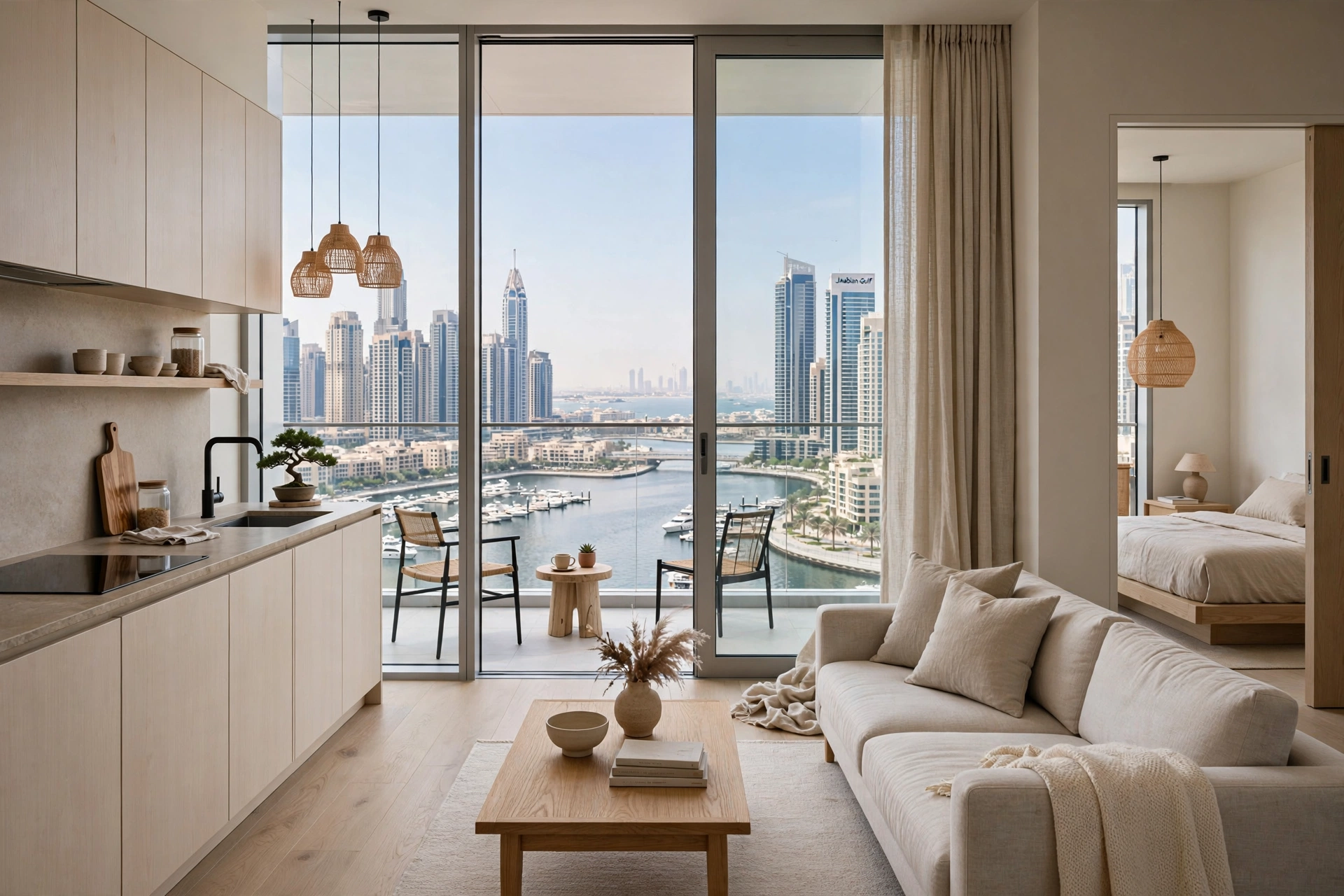
Dubai Marina is one of the UAE’s most recognizable waterfront residential communities, with high-rise apartments, penthouses, serviced residences, restaurants, retail spaces, and views across the marina and Arabian Gulf. These properties often have contemporary architectural features such as floor-to-ceiling glazing, open-plan layouts, compact bedrooms, modern kitchens, balconies, and expansive views.
For this type of environment, minimalist and Japandi interior design can create a strong balance between contemporary architecture and a warmer, more comfortable residential atmosphere. Japandi combines Japanese minimalism with Scandinavian functionality, natural materials, restrained colours, and comfortable furnishings. The result is an interior that feels calm, uncluttered, practical, and refined.
The approach is particularly relevant to Dubai Marina apartments because the design does not need to compete with the surrounding architecture or waterfront scenery. Instead, the interior can become a quiet backdrop that emphasizes natural light, views, proportion, texture, and everyday functionality.
What Is Minimalist and Japandi Interior Design?
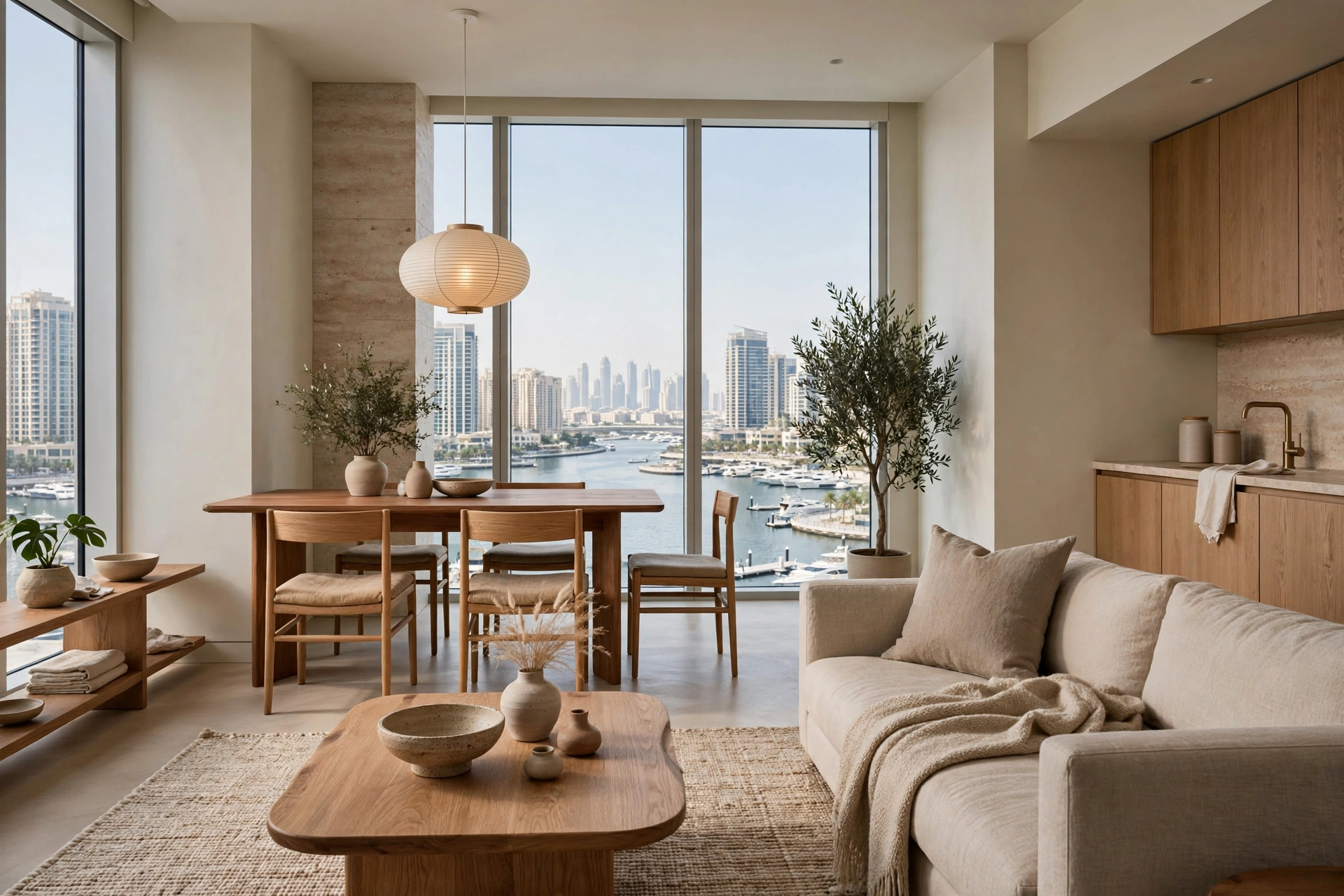
Minimalist interior design focuses on simplicity, purposeful furniture, clean architectural lines, visual balance, and the elimination of unnecessary clutter. Japandi takes these principles further by combining them with Japanese ideas of restraint and natural beauty and Scandinavian ideas of warmth, comfort, and functionality.
Japandi is often associated with natural wood, neutral colours, low-profile furniture, organic forms, tactile fabrics, natural stone, simple lighting, greenery, and carefully selected decorative objects. Its connection with Japanese wabi-sabi and Scandinavian hygge helps explain why the style can feel simultaneously understated and comfortable.
For Dubai Marina properties, this combination can be adapted to modern apartments, studios, one-bedroom apartments, family residences, penthouses, holiday homes, and investment properties.
Why Japandi Works Well in Dubai Marina Apartments
Dubai Marina apartments already provide many of the characteristics that minimalist design requires. Large windows create natural light, open-plan living areas provide flexibility, and contemporary architecture supplies clean geometric forms.
However, modern apartments can sometimes feel visually cold when they contain too much glass, polished stone, metal, and glossy cabinetry.
Japandi introduces warmth without making the space visually heavy.
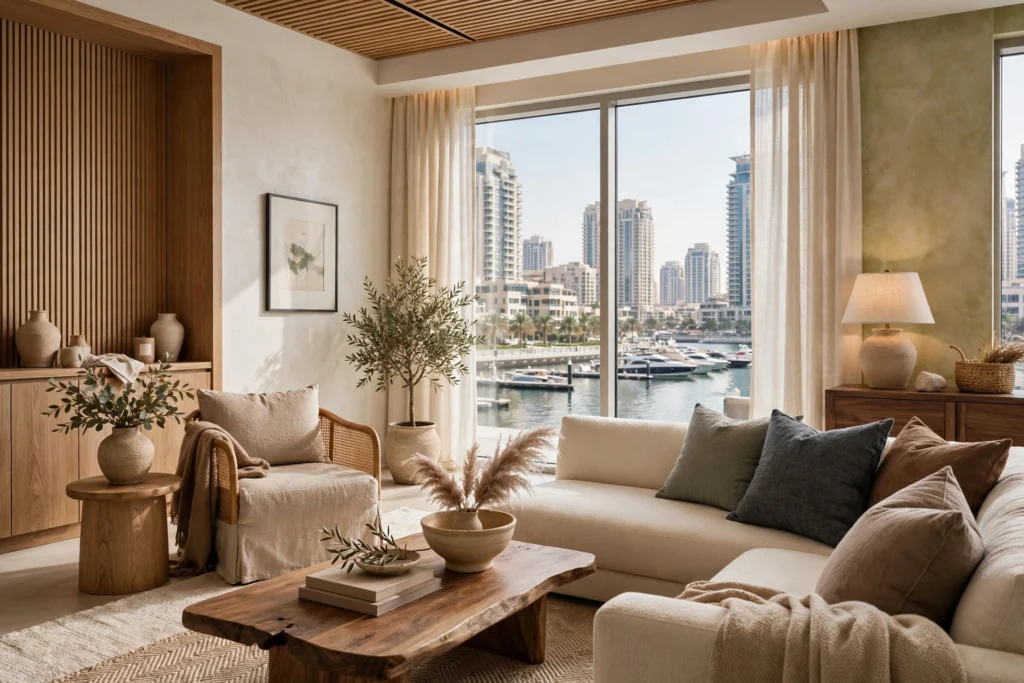
Natural oak, walnut, linen, cotton, textured rugs, ceramic accessories, warm lighting, indoor plants, and earthy colours can soften contemporary architecture while maintaining a sophisticated appearance.
A recent Dubai Marina Japandi project demonstrates this relationship particularly well, using a restrained palette, optimized space planning, natural materials, and sea views to create a calm residential environment.
Minimalism Is About Intentional Design
Minimalist design does not mean removing everything from a room.
The real objective is to ensure that every element has a purpose.
A sofa should provide comfort. A coffee table should support the living area. Storage should solve an organizational requirement. Lighting should improve visibility and atmosphere. Artwork should contribute meaning or visual balance.
This approach is particularly valuable in Dubai Marina because apartment sizes vary considerably and some studios and one-bedroom properties require careful space planning.
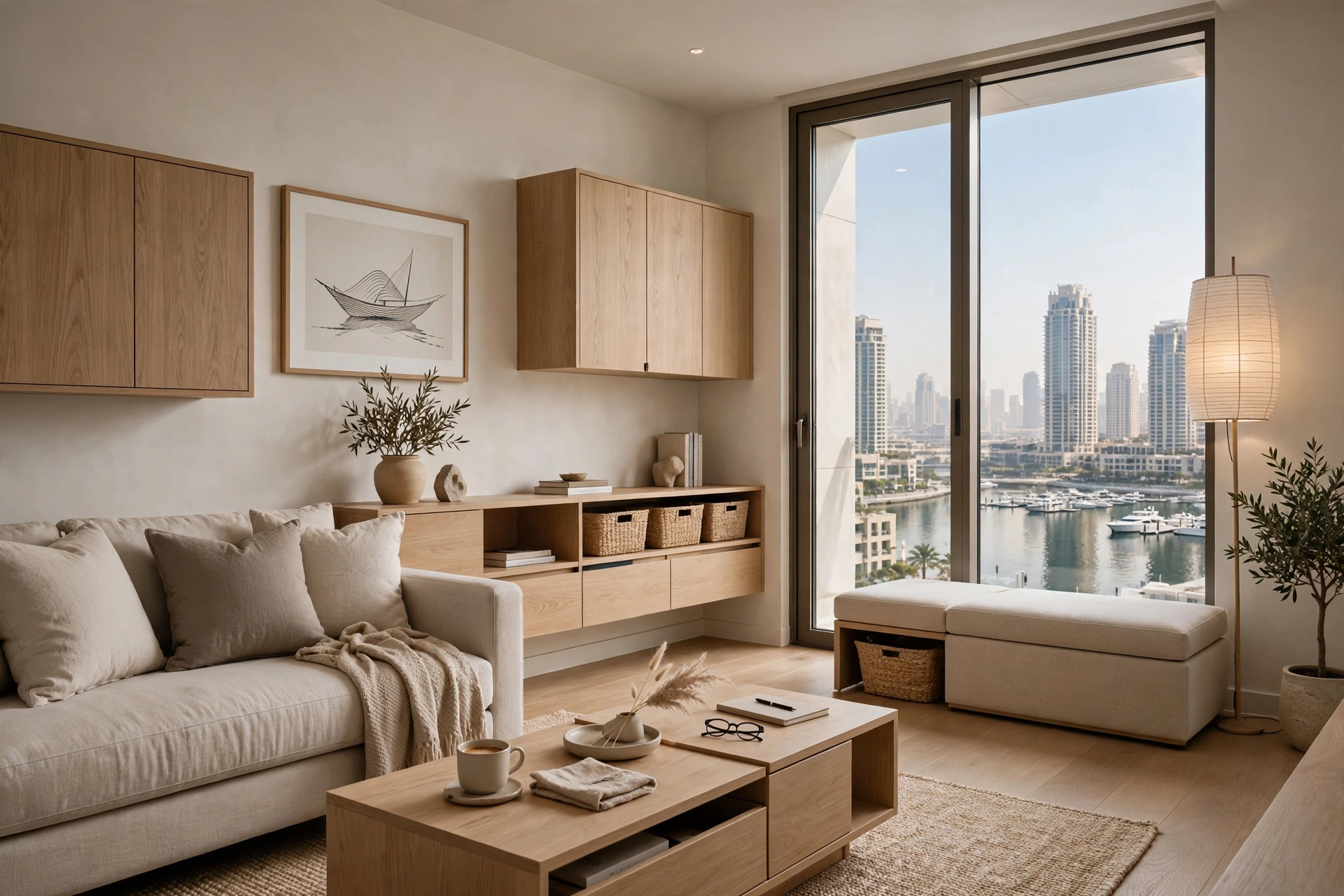
Instead of filling the room with furniture, designers can use built-in storage, multifunctional furniture, concealed cabinetry, floating units, and appropriately scaled pieces.
The result is an interior that feels spacious without appearing unfinished.
Creating a Warm Japandi Colour Palette
Colour plays a major role in creating a successful Japandi interior.
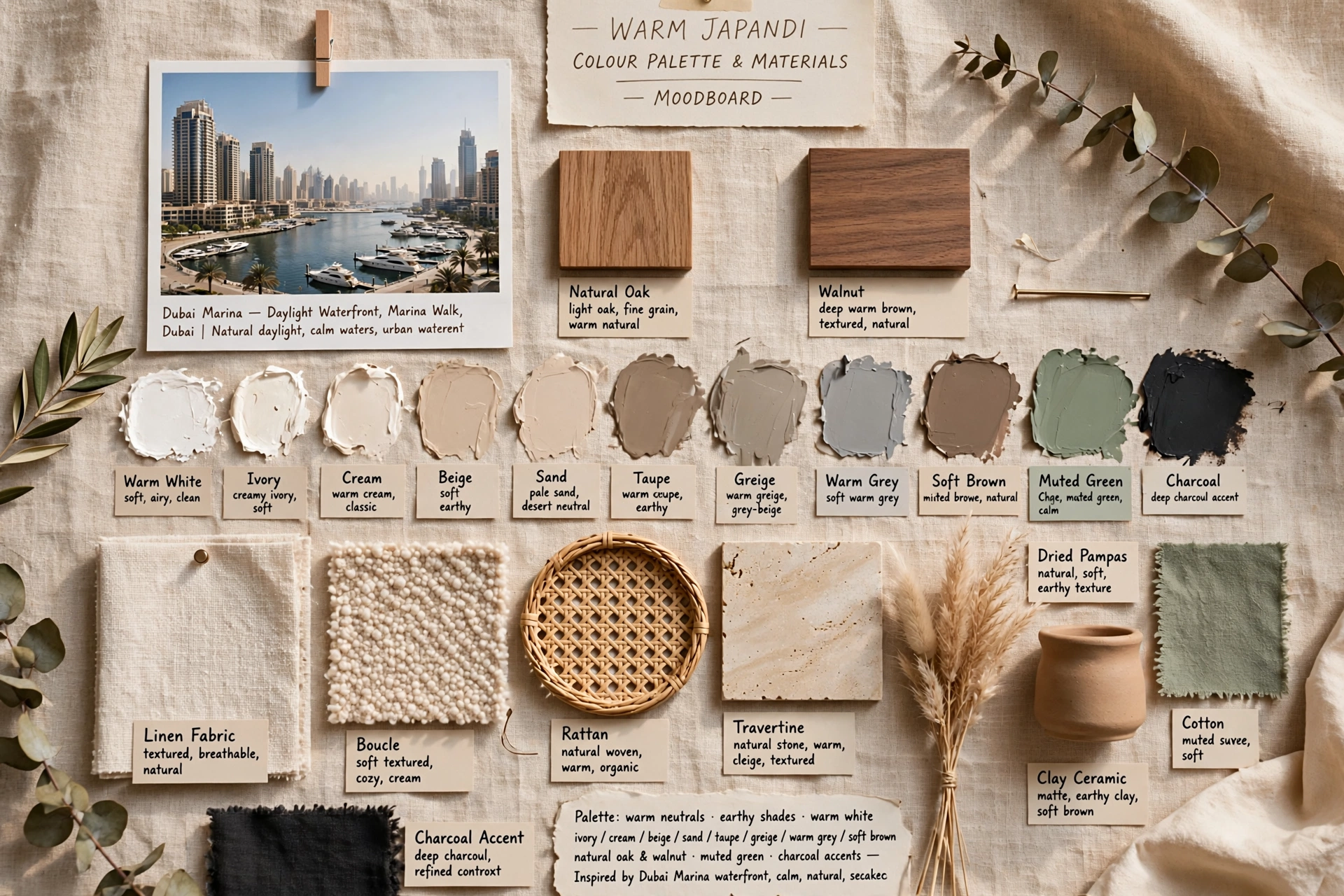
Instead of highly saturated colours, the palette generally focuses on warm neutrals and earthy shades.
Suitable combinations can include:
- Warm white
- Ivory
- Cream
- Beige
- Sand
- Taupe
- Greige
- Warm grey
- Soft brown
- Natural oak
- Walnut
- Muted green
- Charcoal accents
These colours work especially well alongside Dubai Marina’s daylight and waterfront views.
A neutral palette does not have to look boring. Variation can be introduced through different textures and materials.
Natural Wood in Japandi Interior Design
Wood is one of the most important materials in a Japandi interior.
Natural timber adds warmth to spaces dominated by glass, concrete, metal, and stone.
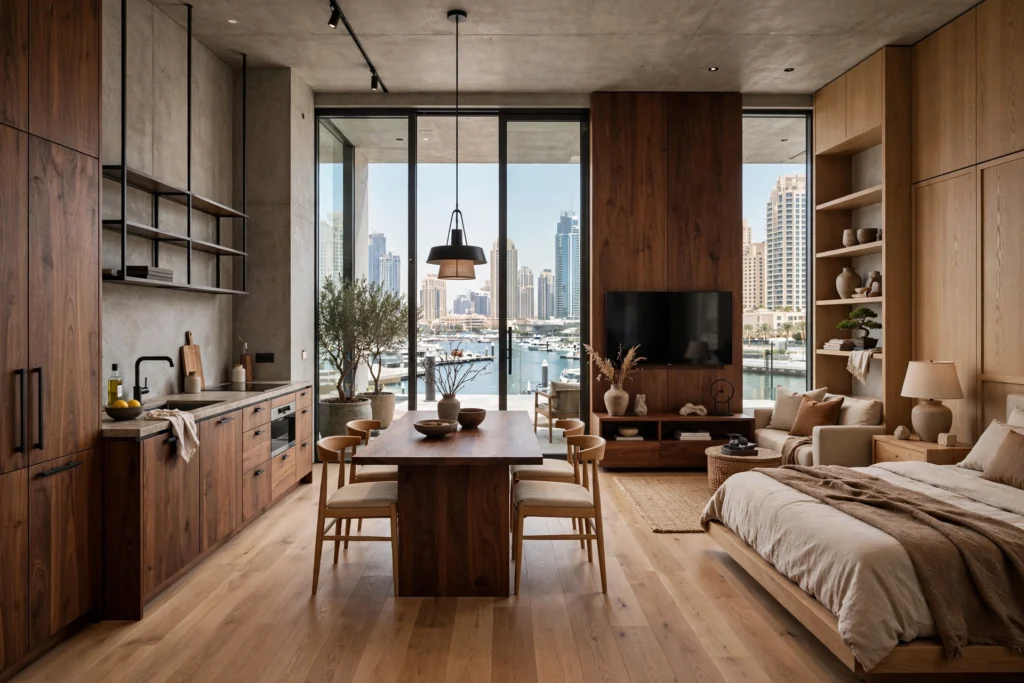
Oak can create a light and contemporary appearance, while walnut introduces deeper tones and a more sophisticated character. Other timber finishes can also be selected depending on the desired aesthetic and project requirements.
Wood can be incorporated into:
- Flooring
- Kitchen cabinetry
- Wall panels
- TV units
- Wardrobes
- Dining tables
- Bedside tables
- Shelving
- Doors
- Custom joinery
The important factor is consistency.
Using too many unrelated timber colours can make a room look fragmented. A controlled wood palette creates greater visual harmony.
Natural Stone and Tactile Surfaces
Stone provides another connection with nature.
Marble, travertine, limestone, terrazzo, and other stone finishes can be used for countertops, flooring, bathroom surfaces, coffee tables, feature walls, and decorative elements.
In luxury Dubai interiors, natural stone can provide sophistication without requiring excessive decoration.
A large travertine coffee table, for example, can become a focal point without introducing visual clutter.
The natural variations in stone also complement the Japandi appreciation for authenticity and material character.
Soft Textures Make Minimalism More Comfortable
One potential problem with minimalist design is that too many hard surfaces can make a space feel cold.
Japandi solves this through tactile materials.
Linen curtains, cotton upholstery, wool rugs, bouclé furniture, woven baskets, textured cushions, timber, ceramics, and natural fibres can introduce softness.
These textures become particularly important in living rooms and bedrooms.
A restrained colour palette combined with several tactile materials can create visual depth without relying on excessive decoration.
Furniture Selection for Dubai Marina Homes
Furniture should be proportional to the apartment.
Oversized furniture can restrict movement and make smaller Marina apartments appear cramped.
Low-profile sofas, simple dining tables, sculptural lounge chairs, rounded coffee tables, platform beds, floating consoles, and streamlined storage can work effectively.
The goal is to maintain clear circulation.
This becomes especially important in open-plan apartments where the living room, dining area, and kitchen occupy a single continuous space.
Furniture can be used to define zones without constructing additional walls.
Curved Furniture and Organic Forms
Japandi does not require every object to have a sharp geometric shape.
Organic curves can soften the straight architectural lines commonly found in Dubai’s high-rise apartments.
A rounded coffee table, curved sofa, circular mirror, sculptural chair, arched doorway, or organically shaped pendant light can create subtle visual movement.
The combination of straight architectural lines and soft organic forms often produces a more sophisticated interior than relying exclusively on either approach.
Lighting for Japandi Interiors
Lighting should be considered an architectural element rather than simply a functional requirement.
A single bright ceiling fixture can make a minimalist interior feel flat.
Layered lighting creates a more comfortable atmosphere.
Ambient lighting can provide general illumination, while task lighting supports activities such as reading or cooking. Accent lighting can highlight artwork, architectural features, shelving, or materials.
Warm lighting is particularly effective with timber, stone, beige fabrics, and earthy colours.
LED strip lighting can be integrated into wardrobes, kitchen cabinets, shelving, niches, and architectural details to create subtle illumination without adding visual clutter.
Working With Dubai Marina’s Natural Light
Floor-to-ceiling glazing is one of the defining characteristics of many Dubai Marina residences.
Instead of treating windows simply as openings, a Japandi design can treat the outdoor view as part of the interior composition.
Furniture can be positioned to preserve important sightlines.
Neutral finishes can prevent the interior from competing with the skyline.
Sheer curtains can filter daylight, while heavier window treatments can provide additional privacy and light control when needed.
Solar exposure and glare should also be considered, particularly in apartments with large west-facing or highly exposed windows.
A successful interior balances aesthetics with thermal and visual comfort.
Japandi Living Room Design
The living room is often the main focal point of a Dubai Marina apartment.
A typical Japandi living room might include a neutral sofa, natural wood coffee table, textured rug, simple side table, soft curtains, indoor plant, and carefully selected artwork.
Rather than placing numerous decorative objects throughout the room, one or two strong pieces can provide visual interest.
The Marina view can remain an important part of the composition.
At night, layered lighting can transform the same space into a warmer and more intimate environment.
Japandi Bedroom Design
Bedrooms benefit naturally from Japandi’s calm character.
A low-profile bed, timber bedside tables, linen bedding, neutral curtains, soft rug, warm bedside lighting, and concealed storage can create a restful atmosphere.
Built-in wardrobes are especially useful because they reduce visual clutter.
Instead of using numerous decorative pieces, designers can introduce personality through one artwork, a textured headboard, a ceramic object, or a carefully selected light fixture.
For apartments exposed to strong morning sunlight, blackout curtains can be combined with softer sheer curtains to provide both functionality and aesthetic control.
Japandi Kitchen Design
A Japandi kitchen emphasizes organization and simplicity.
Handleless cabinetry, integrated appliances, natural wood finishes, stone countertops, understated hardware, and concealed storage can create a clean appearance.
The kitchen should also be designed around everyday usability.
Frequently used appliances and utensils should remain accessible, while less frequently used items can be stored away.
Open shelving can be attractive but should be used selectively because excessive visible storage can undermine the uncluttered appearance.
Natural timber combined with warm stone is particularly effective for creating a contemporary Japandi kitchen.
Japandi Bathroom Design
Bathrooms can become one of the most successful areas for this design style.
Natural stone, timber-effect finishes, neutral tiles, simple sanitaryware, minimalist faucets, warm lighting, and frameless glass can create a calm, spa-inspired environment.
Large-format tiles can reduce visual interruptions.
Floating vanities can make the floor appear more open.
Concealed storage can keep toiletries organized.
However, aesthetics should never replace technical requirements. Waterproofing, drainage, ventilation, plumbing coordination, and appropriate material specifications remain essential in any Dubai bathroom renovation.
Biophilic Elements and Indoor Plants
Japandi interiors frequently incorporate natural elements.
Indoor plants can provide colour and life against neutral backgrounds.
The goal is not to fill every corner with greenery but to use plants intentionally.
A large indoor tree can anchor a living room.
A small plant can soften a bedside table.
A simple branch arrangement can become a dining table centerpiece.
Natural stone, timber, ceramics, water-inspired artwork, and greenery can also strengthen the connection between the apartment and nature.
Wabi-Sabi and Material Authenticity
The Japanese concept of wabi-sabi provides an important philosophical connection to Japandi.
It encourages appreciation for simplicity, natural variation, imperfection, and the passage of time.
In interior design, this can be expressed through handmade ceramics, textured stone, natural timber variations, imperfect decorative objects, handcrafted furniture, and materials that reveal rather than conceal their natural character.
This approach prevents minimalism from becoming overly clinical.
Instead, the interior develops personality through subtle imperfections and authentic materials.
Storage Solutions for Minimalist Apartments
Storage is fundamental to successful minimalist design.
Without sufficient storage, everyday possessions quickly become visible and create clutter.
Custom joinery can provide integrated solutions for:
- Wardrobes
- Shoes
- Luggage
- Books
- Electronics
- Kitchen equipment
- Cleaning supplies
- Home-office equipment
Built-in storage can also make a small apartment feel larger because fewer standalone cabinets are required.
In Dubai Marina studios and compact apartments, multifunctional furniture can provide additional value.
A storage bench, built-in TV wall, platform bed with drawers, or integrated dining storage can combine several functions within one design element.
Japandi Design for Small Dubai Marina Apartments
Japandi is particularly effective for compact urban residences.
A restrained colour palette creates visual continuity.
Furniture with exposed legs maintains a sense of openness.
Mirrors can reflect daylight and expand the visual perception of the room.
Sliding doors can reduce the space required for door swings.
Built-in cabinetry can use vertical space efficiently.
Multifunctional furniture can reduce the number of individual objects in the room.
The key is not simply to make the apartment look minimal. It is to make every square metre perform a useful function.
Japandi Luxury Without Excess
Luxury does not require excessive ornamentation.
In a high-end Japandi interior, luxury can come from craftsmanship, proportions, natural materials, custom joinery, lighting, furniture quality, and tactile finishes.
A custom oak wall can communicate more sophistication than a heavily decorated feature wall.
A carefully selected stone surface can create more impact than numerous decorative objects.
Bespoke furniture can be designed specifically around the room’s dimensions.
This understated approach is particularly suitable for premium Dubai Marina residences where architecture and views already provide strong visual identity.
Sustainable Materials and Japandi Interiors
Japandi’s focus on natural materials and long-lasting design also makes it compatible with sustainable interior principles.
Where appropriate, projects can incorporate responsibly sourced timber, durable stone, low-emission finishes, recycled materials, natural textiles, and long-lasting furniture.
The most sustainable decision is not necessarily the material marketed as the “greenest.” Durability, repairability, maintenance, sourcing, transportation, and expected lifespan should also be considered.
Choosing fewer, better-quality pieces can reduce the frequency of replacement.
This supports the broader philosophy behind minimalist living.
Adapting Japandi to Dubai’s Climate
Japandi design must be adapted to Dubai rather than copied directly from Scandinavian or Japanese residential projects.
The UAE’s climate creates specific requirements around cooling, sunlight, humidity, dust, and material maintenance.
Interior planning should therefore consider:
Solar control: Appropriate curtains, blinds, and glazing solutions can help manage heat and glare.
HVAC coordination: Furniture, ceilings, partitions, and joinery should not interfere with air distribution.
Lighting efficiency: LED lighting and appropriate controls can support lower energy consumption.
Material durability: Finishes should be suitable for the property’s usage and maintenance requirements.
Easy cleaning: Textiles, flooring, and surfaces should be selected according to the actual lifestyle of the occupants.
Japandi Interior Design for Investment Properties
Dubai Marina is also an important market for furnished apartments, holiday homes, and investment properties.
A minimalist Japandi concept can provide a strong visual identity for rental accommodation because it photographs well and avoids excessive personalization.
One Dubai Marina studio project, for example, specifically approached minimalist design around space efficiency and the requirements of a short-term rental property.
A successful investment-oriented interior should consider durability, guest usability, maintenance, storage, lighting, photography, and the overall experience.
The objective is not simply to create a beautiful apartment but a practical property that can remain attractive through repeated occupancy.
Combining Japandi With Clean Modern Aesthetics
Japandi does not need to exist as a completely isolated design style.
It can be combined with contemporary architecture, modern furniture, luxury materials, smart-home technology, and clean modern aesthetics.
For a Dubai Marina apartment, this combination can be particularly effective.
Modern architectural elements provide structure, while Japandi materials and textures provide warmth.
For example, a contemporary kitchen can incorporate oak cabinetry and warm stone. A minimalist living room can combine a sculptural sofa with a natural timber coffee table. A modern bedroom can use concealed lighting, linen upholstery, and a simple wooden bed.
The result is contemporary without feeling cold.
Designing Around Dubai Marina Views
The Marina view should be treated as an asset rather than something the interior needs to compete against.
Neutral colours can allow the skyline and water to remain visually prominent.
Furniture should be positioned carefully around windows.
Reflective surfaces should be controlled to prevent excessive glare.
Curtains should provide privacy and sunlight management without unnecessarily blocking the view.
At night, warm interior lighting can reduce reflections on glazing and improve the relationship between the apartment and the illuminated skyline.
This creates a design that responds directly to its location rather than simply applying a generic style.
Professional Interior Design for Dubai Marina Properties
Minimalist interiors may appear simple, but achieving a refined result requires careful planning.
When fewer objects and materials are present, imperfections become more visible.
Cabinet alignment, furniture proportions, lighting positions, material transitions, ceiling details, electrical points, storage, and circulation all become important.
Dubai Marina also contains many different apartment towers, each with its own architectural conditions and building requirements. Local interior design providers work across Marina properties and other Dubai communities, with some studios specifically focusing on apartment planning, fit-out, joinery, lighting, and furnishing.
Professional planning can therefore help ensure that the visual concept works with the existing architecture and technical infrastructure.
Frequently Asked Questions
Is Japandi suitable for small Dubai Marina apartments?
Yes. Its emphasis on functional furniture, neutral colours, open layouts, concealed storage, and visual simplicity can work particularly well in compact apartments.
Is Japandi an expensive interior design style?
It can be created at different investment levels. The style itself does not require expensive products. However, premium natural materials, custom joinery, bespoke furniture, and high-quality finishes can turn it into a luxury interior.
Can Japandi work with modern Dubai architecture?
Absolutely. Japandi’s clean lines and restrained palette complement contemporary architecture, while timber, textiles, stone, and organic forms add warmth.
Can Japandi interior design be sustainable?
Yes. Durable furniture, responsible materials, natural finishes, low-emission products, efficient lighting, and thoughtful space planning can support a sustainable approach.
Does Japandi work for rental apartments?
Yes. Its clean appearance, functional layouts, durable materials, and broad visual appeal can make it suitable for furnished apartments and holiday homes.
Conclusion
Minimalist and Japandi interior design offers a sophisticated way to approach contemporary living in Dubai Marina.
Rather than filling an apartment with decorative elements, the design focuses on purpose, proportion, natural materials, comfort, functionality, light, texture, and visual calm.
For Dubai Marina residences, the style can complement floor-to-ceiling windows, waterfront views, contemporary architecture, and compact urban layouts. Natural wood can soften glass and stone. Linen and textured fabrics can add comfort. Warm lighting can transform the atmosphere at night. Concealed storage can maintain visual clarity. Carefully selected furniture can maximize functionality without overwhelming the available space.
The strongest results come from adapting Japandi principles to the specific property rather than copying a predetermined look.
A studio near JBR may require different planning from a large Marina penthouse. A holiday home may prioritize durability and photography, while a family residence may require additional storage and multifunctional spaces.
Ultimately, Japandi works because it combines minimalism with warmth. It creates interiors that are visually restrained without feeling empty, luxurious without excessive decoration, and modern without becoming impersonal.
For Dubai Marina, where the city skyline and waterfront already provide a powerful visual backdrop, that balance can create an interior that feels remarkably calm, sophisticated, and timeless.