
Modern Interior Design Dubai Hills: Creating Sophisticated and Functional Homes
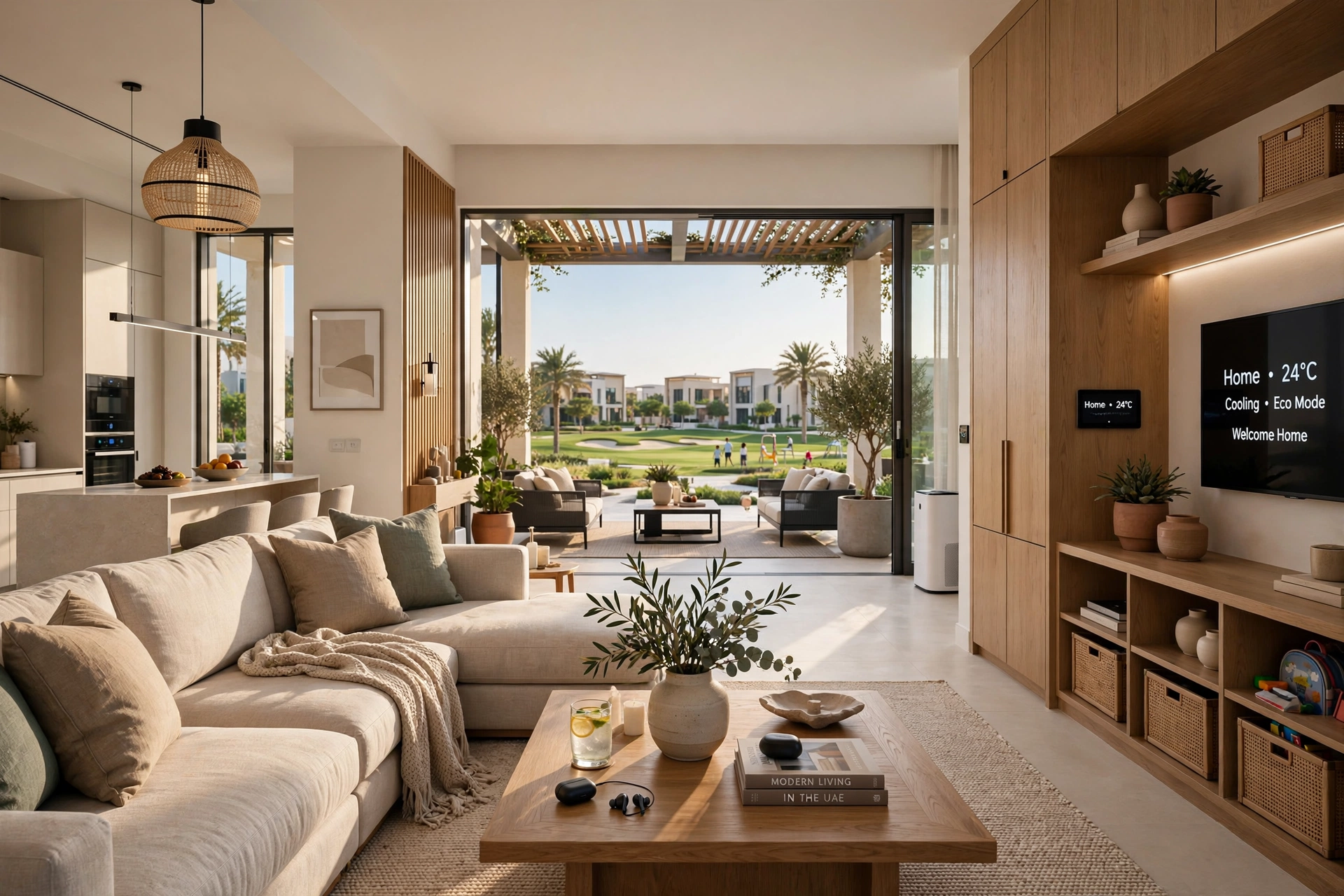
Dubai Hills Estate has become one of Dubai’s most desirable residential communities, offering contemporary villas, elegant townhouses, luxury apartments, landscaped parks, golf-course views, and family-oriented neighbourhoods. As property owners increasingly look for interiors that reflect the architecture and lifestyle of the community, modern interior design in Dubai Hills has become an important approach for creating comfortable, functional, and visually refined homes.
Modern interiors are not simply about expensive furniture or minimalist decoration. A successful modern home combines space planning, architectural details, lighting, materials, furniture, colour, technology, storage, and personal lifestyle requirements. In Dubai Hills, these elements can be adapted to villas and apartments while responding to the UAE climate and the distinctive character of the surrounding community.
A well-planned modern interior can transform an ordinary residential layout into a sophisticated environment that feels spacious, practical, comfortable, and connected to its surroundings.
What Defines Modern Interior Design in Dubai Hills?
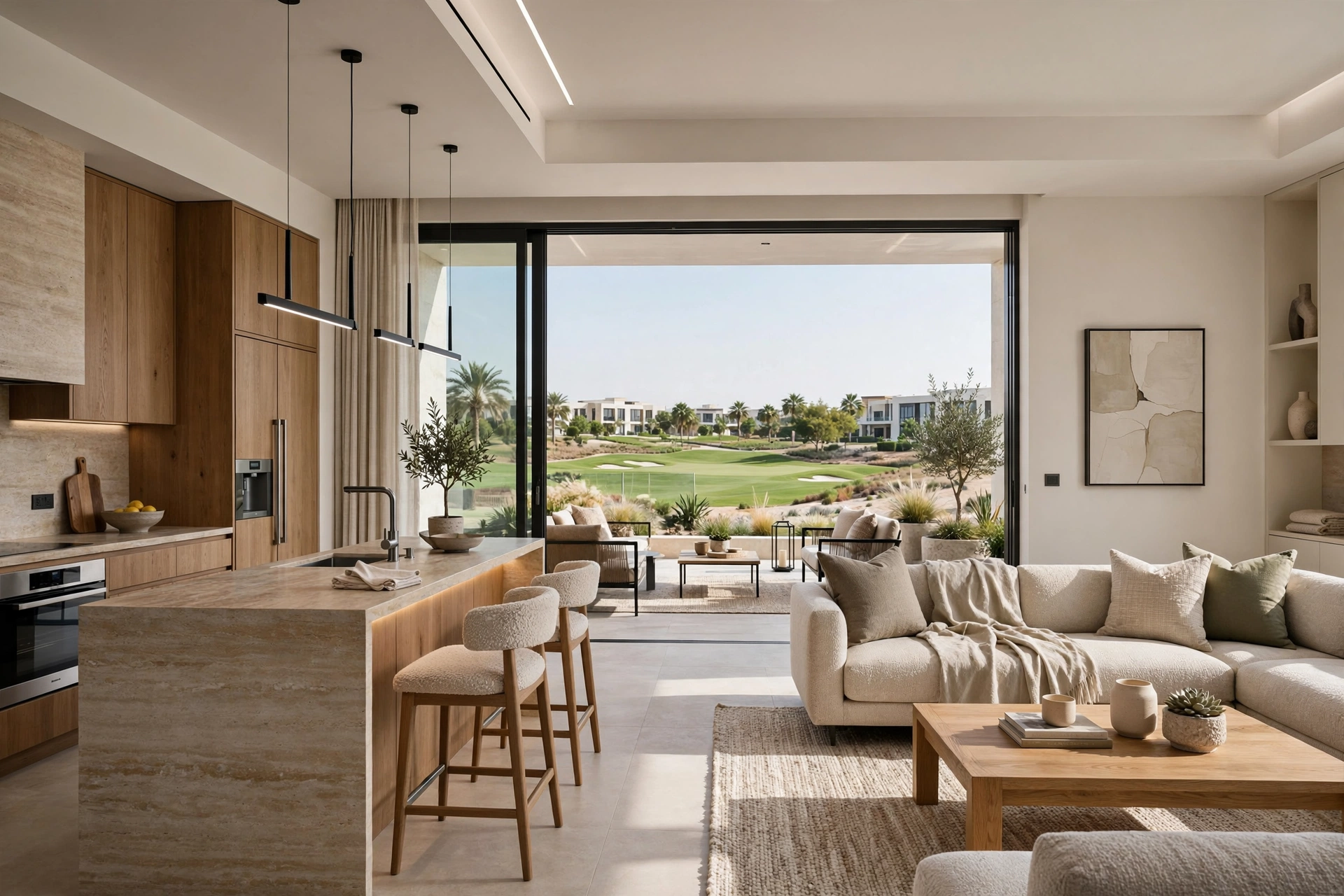
Modern interior design is based on clean architectural lines, functional layouts, carefully selected materials, balanced colours, and uncluttered spaces. Unlike highly decorative traditional interiors, modern design generally gives greater importance to proportion, natural light, functionality, and material quality.
In Dubai Hills, this approach works particularly well because many properties already feature contemporary architecture, large windows, open-plan living spaces, modern kitchens, balconies, terraces, and landscaped surroundings.
A modern interior can therefore reinforce the architectural identity of the property rather than competing with it.
Common characteristics include neutral colour palettes, natural stone, timber finishes, glass, metal, textured fabrics, integrated lighting, custom cabinetry, contemporary furniture, and carefully selected artwork.
The result should feel sophisticated but still comfortable enough for everyday family life.
Why Dubai Hills Is Suitable for Contemporary Interiors
Dubai Hills Estate is part of Mohammed Bin Rashid City and has been developed as a large mixed-use community combining residential areas, green spaces, retail, hospitality, recreation, and golf facilities.
Its residential environment is different from the dense high-rise character of areas such as Downtown Dubai or Dubai Marina.
Many Dubai Hills properties provide more generous floor areas, private gardens, terraces, balconies, and outdoor living opportunities. This creates opportunities for interior designers to develop a stronger relationship between indoor and outdoor spaces.
Large windows can frame garden or golf-course views, while open-plan kitchens and living rooms can create a continuous social environment.
This makes modern interior design particularly appropriate for Dubai Hills villas and contemporary residences.
Creating an Open and Connected Floor Plan
One of the most important principles of modern residential design is creating a sense of openness.
An open-plan living area can combine the kitchen, dining space, and family lounge while maintaining clearly defined functional zones.
Furniture placement can establish these zones without necessarily constructing additional walls.
For example, a large sectional sofa can define the living area, while a dining table establishes the dining zone and a kitchen island creates a visual transition between cooking and entertaining.
This approach improves circulation and allows natural light to travel through the space.
In larger Dubai Hills villas, open-plan layouts can also create a stronger connection between the interior and garden or terrace.
Natural Light as an Interior Design Element
Natural light should be considered during the earliest stages of interior planning.
Dubai Hills homes often benefit from large windows and glazed openings, allowing daylight to become part of the interior composition.
Furniture should be positioned to preserve important views and avoid unnecessarily blocking windows.
Light-coloured walls and reflective but controlled surfaces can help distribute daylight throughout the room.
However, Dubai’s strong sunlight also requires careful consideration of glare and solar heat.
Sheer curtains, blinds, layered window treatments, and appropriate glazing solutions can help balance daylight, privacy, and thermal comfort.
The objective is not simply to maximize light but to create comfortable and controllable illumination throughout the day.
Choosing a Modern Colour Palette
Modern interiors often begin with a restrained base palette.
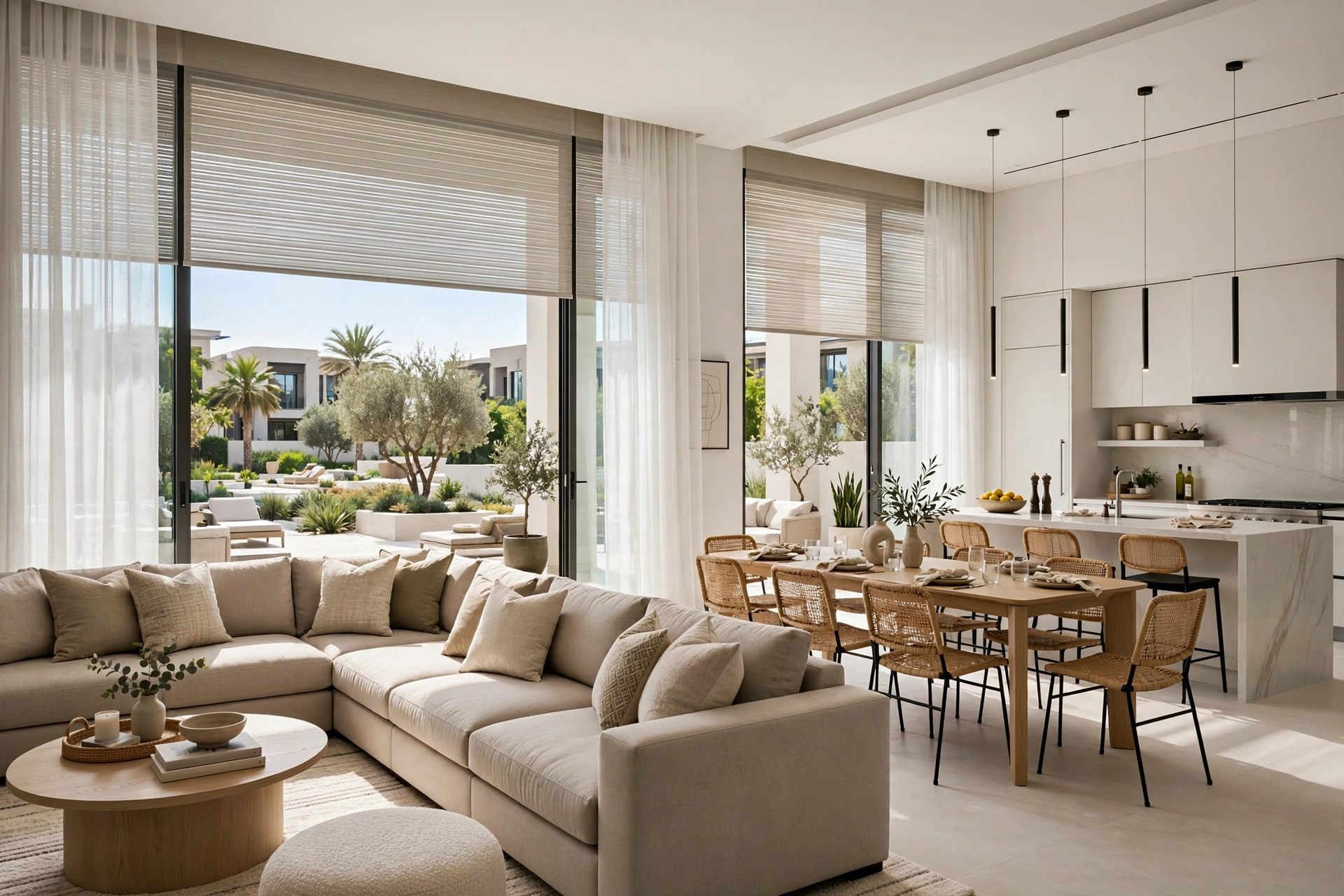
Popular combinations for Dubai homes include warm white, beige, greige, taupe, light grey, cream, natural timber, charcoal, and muted earthy tones.
These colours create a calm architectural background.
Accent colours can then be introduced through furniture, artwork, rugs, cushions, decorative objects, or plants.
For a Dubai Hills villa, earthy tones can work particularly well because they create a visual connection with landscaping and outdoor spaces.
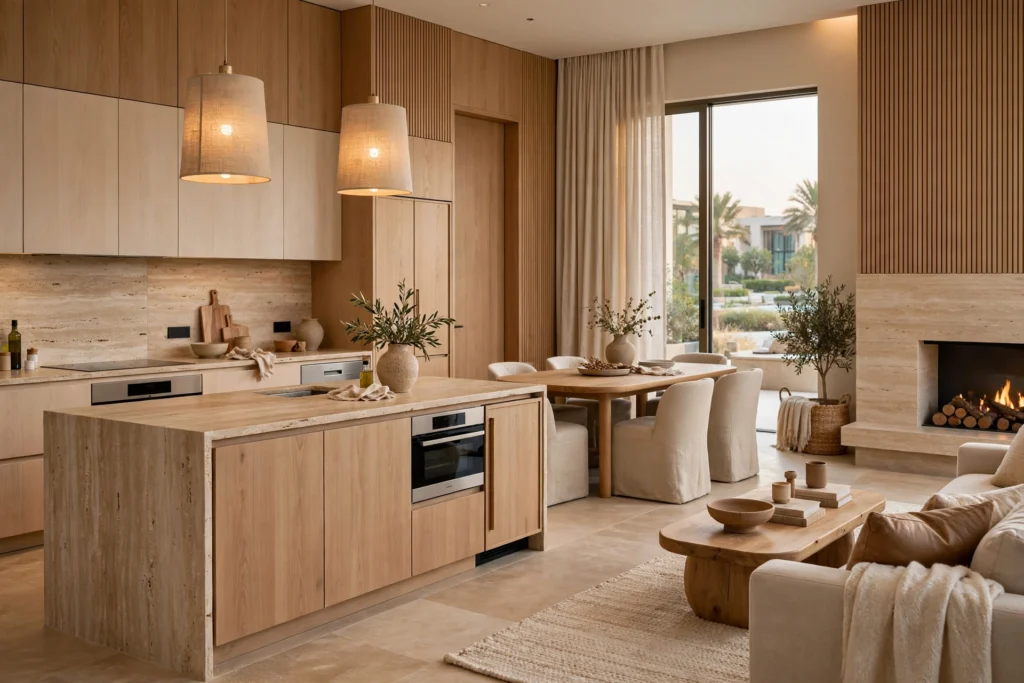
A warm neutral wall combined with oak cabinetry, stone flooring, beige upholstery, and dark metal accents can create an elegant contemporary environment without relying on excessive decoration.
Natural Materials for Modern Dubai Hills Homes
Modern design does not have to mean artificial materials.
Natural materials can introduce depth and character.
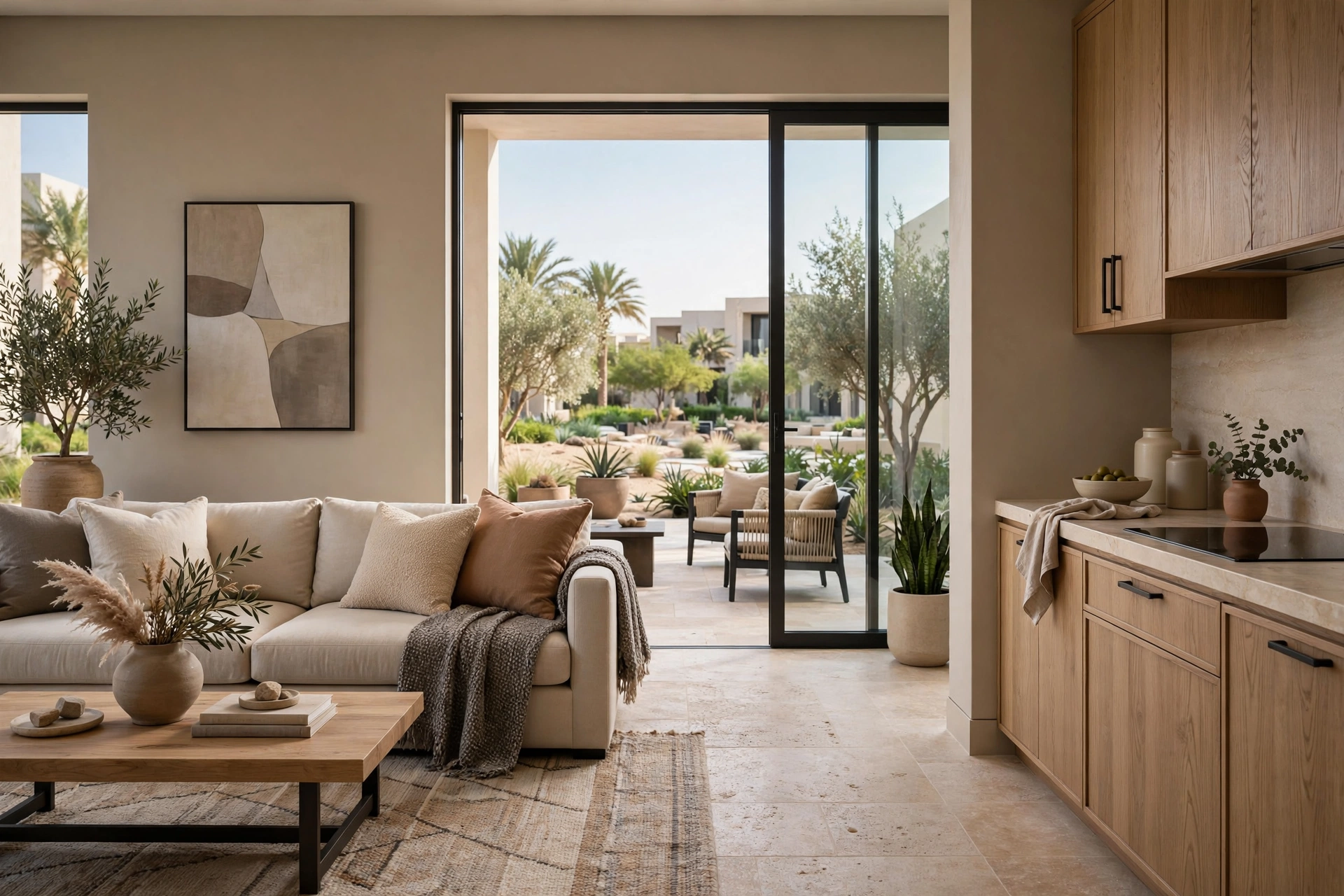
Stone, timber, marble, travertine, linen, wool, leather, ceramics, and natural fibres can all be incorporated into a contemporary interior.
Natural stone can be used for kitchen islands, bathroom walls, flooring, fireplaces, coffee tables, and feature surfaces.
Timber can soften architectural elements through cabinetry, wall panels, doors, furniture, and flooring.
The combination of hard and soft materials creates a balanced interior.
For example, a stone kitchen island can be softened with wooden cabinetry, upholstered dining chairs, linen curtains, and warm lighting.
Contemporary Kitchen Design
The kitchen is often one of the most important spaces in a modern Dubai Hills residence.
Contemporary kitchens generally prioritize clean cabinetry, efficient storage, integrated appliances, durable countertops, and practical circulation.
Handleless cabinets can create a streamlined appearance.
Large kitchen islands can provide additional preparation space while also functioning as informal dining areas or social zones.
Materials such as quartz, porcelain, natural stone, timber veneer, and matte finishes can be selected according to the project’s aesthetic and practical requirements.
Good storage planning is essential.
Appliances, cookware, small appliances, and everyday items should have designated storage locations so the kitchen can maintain its clean appearance.
Modern Living Room Design
A modern living room should balance visual simplicity with comfort.
The room might include a large contemporary sofa, sculptural coffee table, media wall, textured rug, accent chair, floor lamp, and selected artwork.
The scale of each element is important.
A large Dubai Hills villa may require larger furniture to maintain proportion, while a townhouse or apartment may benefit from more compact pieces.
Furniture should also be arranged around the room’s natural focal point.
This could be a garden view, fireplace, architectural wall, television, artwork, or large window.
The objective is to create an inviting space rather than simply filling available floor area.
Modern Dining Areas for Family Homes
Dining spaces should be positioned according to how residents use the property.
A formal dining room can provide a dedicated setting for entertaining, while an open-plan dining area can support everyday family meals.
A contemporary dining table made from timber, stone, or composite materials can become the central feature.
Pendant lighting above the table can establish a visual focal point.
Artwork, wall panelling, decorative lighting, or a feature wall can add personality without creating excessive visual complexity.
In villas with garden views, the dining area can be positioned near glazed doors to strengthen the connection between indoor and outdoor spaces.
Modern Bedroom Design in Dubai Hills
Bedrooms should prioritize comfort, privacy, storage, and lighting.
A contemporary bedroom can use a neutral palette with a statement headboard, integrated bedside lighting, built-in wardrobes, soft curtains, and natural textures.
Wall panelling can provide architectural depth without requiring elaborate decoration.
Upholstered surfaces and layered textiles can make modern bedrooms feel warmer.
Lighting should include general illumination as well as reading and bedside lighting.
For children’s bedrooms, modern design can be adapted to include flexible furniture, study areas, storage, and spaces that can evolve as children grow.
Master Bedroom and Dressing Areas
Large Dubai Hills villas can provide opportunities for dedicated dressing rooms and master suites.
A modern dressing area should combine organized storage with attractive presentation.
Full-height wardrobes can maximize vertical space.
Integrated LED lighting can illuminate shelves and hanging areas.
Mirrored doors can make the dressing space appear larger while providing practical functionality.
Where space allows, a dressing island can provide additional storage for accessories.
The design should maintain the same material language as the master bedroom to create visual continuity.
Modern Bathroom Interior Design
Contemporary bathrooms can combine functionality with a spa-inspired atmosphere.
Large-format porcelain tiles, natural stone, floating vanities, frameless shower glass, wall-mounted fixtures, recessed niches, and integrated lighting can create a clean architectural appearance.
Warm timber-effect finishes can soften the harder surfaces.
A neutral colour palette can make the bathroom feel spacious.
However, technical elements remain essential.
Waterproofing, drainage, ventilation, plumbing, moisture-resistant materials, and correct installation should all be addressed before decorative finishes are applied.
Modern design works best when aesthetic decisions are supported by sound construction.
Connecting Indoor and Outdoor Spaces
One of the major advantages of Dubai Hills villas is the availability of gardens, terraces, balconies, and outdoor areas.
Modern interior design can extend the home’s visual language outside.
Large sliding doors can create a transition between the living room and terrace.
Outdoor furniture can echo the interior colour palette.
Stone flooring can visually connect indoor and outdoor areas where technically appropriate.
Landscape design can also become part of the interior experience.
A carefully positioned tree, garden feature, water element, or planted area can act as a visual focal point from inside the home.
This creates a stronger sense of continuity.
Modern Villa Entrance Design
The entrance creates the first impression of the property.
A contemporary Dubai Hills entrance can combine a simple console, statement mirror, architectural lighting, textured wall, timber panels, stone surfaces, and carefully selected accessories.
The entrance should remain practical.
Storage for shoes, bags, keys, and everyday items can be integrated into cabinetry where appropriate.
Large villas can use double-height entrances to create a dramatic architectural statement.
In smaller homes, proportion and lighting can achieve a similar sense of sophistication without requiring excessive decoration.
Feature Walls and Architectural Details
Modern interiors can use architectural features instead of decorative clutter.
Feature walls may incorporate:
- Natural stone
- Timber panels
- Microcement
- Textured plaster
- Fluted panels
- Large-format porcelain
- Decorative paint
- Integrated shelving
The strongest feature wall is usually one that complements the architecture.
A media wall, for example, can combine a television with concealed storage, lighting, timber, and stone.
This creates functionality while also becoming an architectural focal point.
Lighting Design for Modern Interiors
Lighting is one of the most important elements in creating a sophisticated contemporary interior.
A layered lighting plan can combine ambient, task, and accent illumination.
Recessed downlights can provide general lighting.
Pendant lights can define dining or kitchen areas.
Wall lights can create softer illumination.
LED strips can highlight shelving, wardrobes, niches, ceilings, and cabinetry.
Floor lamps can add localized lighting around seating areas.
Smart lighting controls can allow homeowners to adjust brightness and scenes according to different activities.
Warm-white lighting is often effective for residential spaces because it creates a comfortable atmosphere while complementing natural materials.
Smart Home Integration
Modern Dubai homes increasingly incorporate technology.
Smart home systems can integrate lighting, climate control, curtains, security, entertainment, and other functions.
Rather than allowing technology to dominate the interior, equipment can be integrated discreetly.
Automated curtains can respond to daylight.
Smart lighting scenes can create different atmospheres.
Climate controls can improve comfort.
Security systems can provide additional protection.
Home entertainment can be incorporated into media walls with concealed wiring and equipment.
The objective is to make technology useful without creating visual clutter.
Sustainable Modern Interior Design
Contemporary design can also incorporate sustainability.
Durable materials, energy-efficient lighting, responsible timber, low-emission paints, efficient appliances, water-saving fixtures, and long-lasting furniture can contribute to a more sustainable home.
Sustainability should be considered throughout the lifecycle of the interior.
Choosing durable materials reduces replacement requirements.
Efficient lighting can reduce energy consumption.
Appropriate window treatments can help manage heat and glare.
Natural daylight can reduce reliance on artificial lighting during the day.
The most effective sustainable interiors combine environmental responsibility with practical long-term performance.
Furniture Selection for Dubai Hills Villas
Furniture should be selected according to the home’s architecture and dimensions.
Large villas can accommodate substantial sofas, dining tables, lounge chairs, and statement pieces, but scale remains important.
Too many oversized items can make even a large room feel crowded.
Modern furniture generally works best when it combines simple silhouettes with high-quality materials.
Curved sofas, sculptural chairs, minimalist tables, natural timber, textured upholstery, and contemporary metal accents can create visual interest without overwhelming the room.
Custom furniture can be particularly useful when standard pieces do not fit the property’s dimensions.
Art and Accessories
Minimalist modern design does not mean eliminating personality.
Artwork can introduce colour and individuality.
Sculptures can create focal points.
Ceramics and decorative objects can add texture.
Indoor plants can bring natural colour into neutral interiors.
The key is curation.
Instead of placing accessories on every available surface, designers can create a small number of intentional compositions.
This creates a more sophisticated appearance and keeps the architecture visible.
Modern Interior Design for Townhouses in Dubai Hills
Townhouses require a slightly different approach from large standalone villas.
Space planning becomes especially important.
Open-plan ground floors can combine living, dining, and kitchen areas.
Vertical storage can maximize available space.
Mirrors and lighter colours can increase the perception of space.
Furniture should maintain comfortable circulation paths.
Custom cabinetry can integrate storage while preserving the clean appearance associated with modern design.
The result can feel spacious without requiring structural changes.
Modern Interior Design for Dubai Hills Apartments
Apartments within and around the Dubai Hills community can also benefit from contemporary interior planning.
Smaller floor plans require greater attention to multifunctionality.
A dining area can double as a workspace.
A storage wall can incorporate a television and display shelving.
A platform bed can include integrated storage.
Sliding doors can improve circulation.
Consistent flooring and colour schemes can visually connect different zones.
These techniques help make apartments feel larger and more coherent.
Creating Contemporary Living Spaces
For homeowners looking to create contemporary living spaces, the most effective approach is to begin with the property’s architecture and the family’s lifestyle rather than selecting furniture first.
The layout should determine where furniture belongs.
The lighting plan should respond to activities.
The material palette should establish the home’s character.
Storage should be integrated from the beginning.
Furniture, artwork, accessories, and technology should then be selected to support the overall concept.
This process produces a more cohesive result than purchasing individual items without considering their relationship to the wider interior.
Modern Interior Design Around Dubai Hills Golf Course
Properties overlooking Dubai Hills Golf Course have a valuable visual asset that can become part of the interior concept.
Neutral colours can frame green landscape views.
Large windows can be kept visually open.
Furniture can be arranged toward outdoor sightlines.
Natural materials such as timber and stone can strengthen the relationship with the landscape.
The interior does not need to replicate the outdoors. Instead, it can use natural materials and colours to create a subtle connection.
This approach can make the residence feel integrated with its environment.
Modern Interior Design Near Dubai Hills Mall
Dubai Hills Mall and the surrounding retail and lifestyle environment contribute to the community’s contemporary identity.
Homes in this area can benefit from interior concepts that combine functionality with modern sophistication.
For busy families, practical storage, durable finishes, efficient kitchens, comfortable living areas, and flexible rooms are particularly important.
A modern interior should therefore consider how residents actually use the home rather than focusing exclusively on visual appearance.
Choosing Materials for Dubai’s Climate
Dubai’s climate should influence material selection.
Strong sunlight can affect some fabrics, flooring, timber finishes, and decorative surfaces.
Dust and frequent cleaning requirements should also be considered.
Materials should therefore be selected based on durability, maintenance, exposure, and the property’s specific usage.
Outdoor areas require materials suitable for heat and weather exposure.
Interior materials should be easy to maintain while preserving the desired aesthetic.
A beautiful material that is difficult to maintain may not be the right choice for a busy family home.
Why Professional Interior Planning Matters
A modern interior can appear simple, but achieving that simplicity requires considerable planning.
When there are fewer decorative elements, proportions and detailing become more visible.
A small alignment problem in cabinetry or an incorrectly positioned light can affect the entire appearance of a room.
Professional interior planning can coordinate architecture, furniture, lighting, electrical points, HVAC requirements, joinery, finishes, storage, and decorative elements.
For Dubai Hills properties, the process can also involve understanding the specific layout, building condition, community requirements, and scope of renovation or fit-out work.
Frequently Asked Questions
What is modern interior design for Dubai Hills homes?
Modern interior design for Dubai Hills homes focuses on clean lines, functional layouts, contemporary furniture, neutral colours, natural materials, integrated storage, layered lighting, and a strong connection between indoor and outdoor spaces.
Is modern design suitable for Dubai Hills villas?
Yes. Modern design complements the contemporary architecture of many Dubai Hills villas and can be adapted to large living areas, gardens, terraces, family rooms, kitchens, and private bedrooms.
What colours work best in modern Dubai interiors?
Warm white, beige, greige, taupe, cream, soft grey, natural wood, and earthy tones are versatile choices. Stronger colours can be introduced through artwork and accessories.
How can I make a Dubai Hills home feel more spacious?
Use appropriate furniture proportions, open circulation, integrated storage, consistent materials, light colours, mirrors, large windows, and multifunctional furniture.
Can modern interior design be sustainable?
Yes. Durable materials, energy-efficient lighting, responsible sourcing, low-emission finishes, efficient appliances, water-saving fixtures, and long-lasting furniture can support a more sustainable design.
Conclusion
Modern interior design in Dubai Hills is about much more than creating an attractive home. It is about understanding the architecture, lifestyle, climate, available space, natural light, views, and practical requirements of the property and bringing these elements together into one cohesive design.
Dubai Hills Estate provides an excellent setting for contemporary residential interiors because its villas, townhouses, apartments, green spaces, golf-course surroundings, and modern community infrastructure naturally support a clean architectural language.
The strongest homes combine neutral colours with natural materials, open layouts with practical zoning, contemporary furniture with comfortable textures, and sophisticated lighting with smart technology. Storage is integrated rather than added as an afterthought, while gardens and terraces are treated as extensions of the interior.
Whether designing a family villa, townhouse, apartment, master suite, kitchen, bathroom, or complete residence, the goal should always be the same: create a home that looks refined while remaining comfortable and practical for everyday life.
When modern design is carefully adapted to Dubai Hills, the result is a residence that feels contemporary without becoming cold, luxurious without becoming excessive, and highly personalized without losing architectural simplicity.