
Restaurant Fit Out Dubai: High-Performance Restaurant Interiors in the UAE
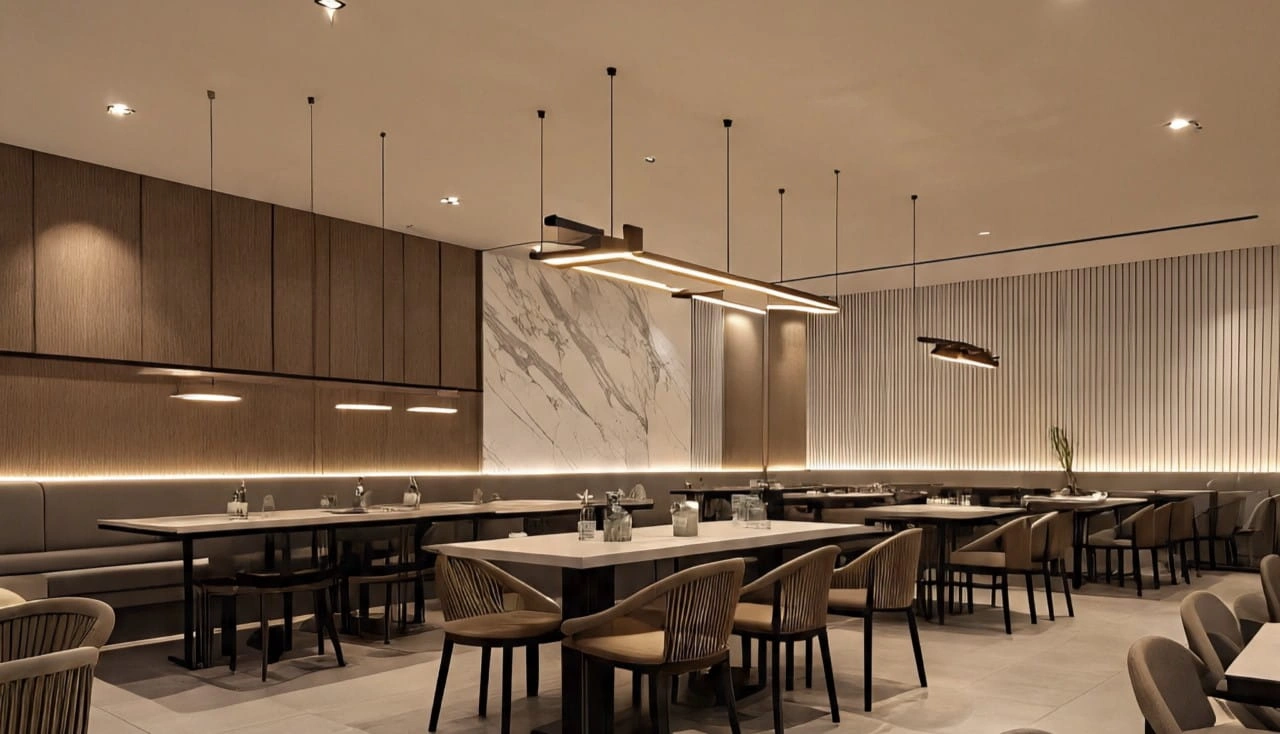
A restaurant fit-out is where a culinary concept becomes a complete experience. In Dubai’s vibrant and fiercely competitive dining scene, the interior is just as important as the menu, shaping how guests feel, how long they stay, and whether they return and recommend. A professional fit-out brings together atmosphere, efficiency, and brand identity to create a venue that delights diners and performs commercially.
A great restaurant interior balances front-of-house ambience with back-of-house functionality. The dining room must captivate and comfort guests, while the kitchen and service areas must support fast, consistent, high-volume operation. Getting both sides right is the foundation of a successful, profitable venue.
From fine dining and casual eateries to cafes and speciality concepts, every fit-out is unique. Understanding the cuisine, the brand, the target audience, and the operational needs ensures the finished space looks stunning, runs smoothly, and stands out in a crowded market.
Designing the Dining Experience
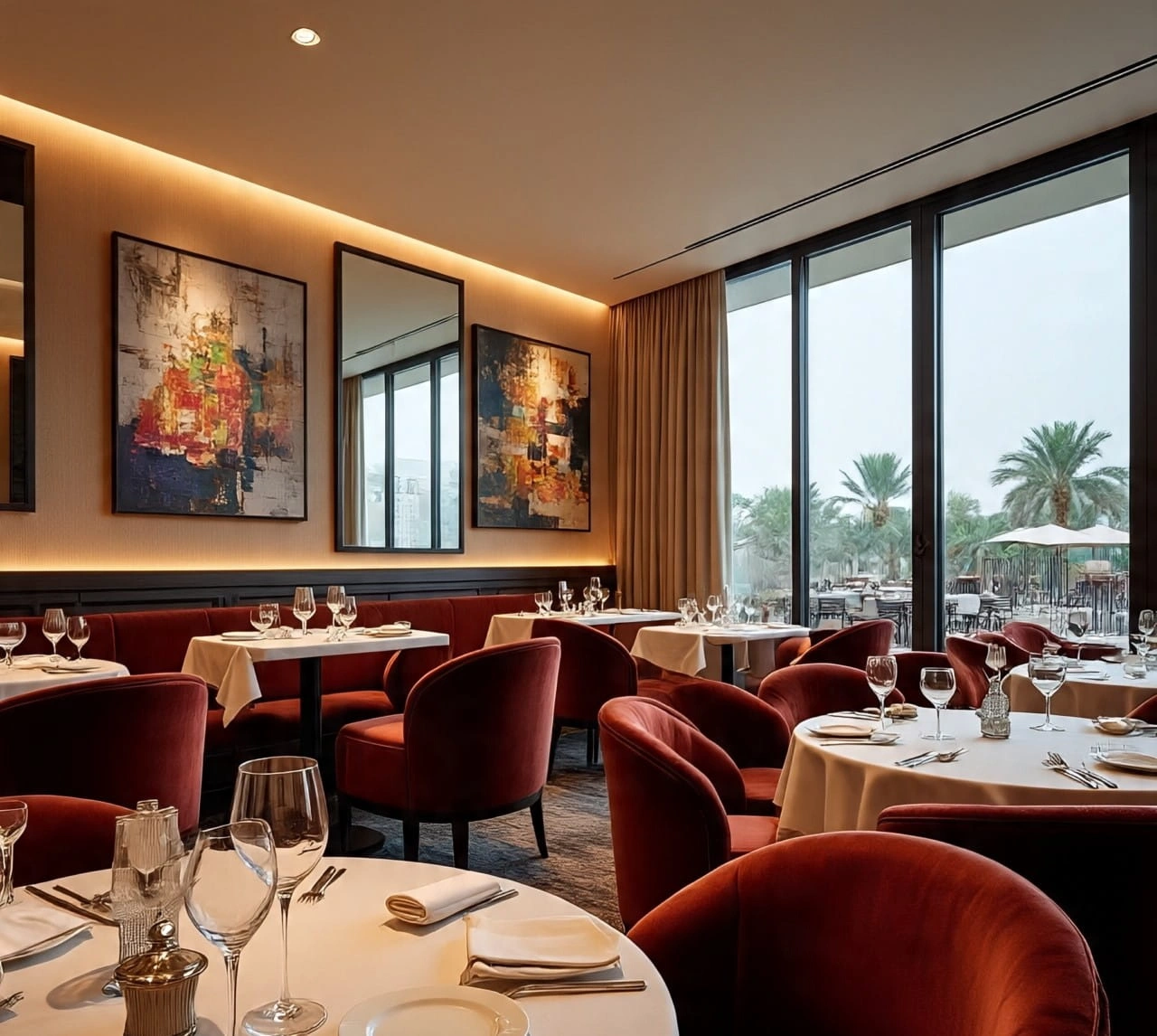
The dining room is where the restaurant’s concept comes alive. Every element, from seating and lighting to materials and layout, works together to create an atmosphere that matches the cuisine and brand. Whether intimate and refined or vibrant and social, the right ambience makes the experience memorable.
Comfort and atmosphere drive guest satisfaction. Well-chosen seating, considered spacing, and a strong sense of identity encourage diners to relax, stay longer, and spend more. A thoughtfully designed dining space turns a meal into an experience guests want to repeat and share.
Layout and Seating Capacity
Smart layout design balances capacity with comfort. Maximising covers is essential to profitability, but cramped seating undermines the experience. The right plan optimises the number of tables while maintaining comfortable spacing, clear circulation, and an inviting atmosphere.
A variety of seating adds flexibility and appeal. Combining booths, banquettes, communal tables, and bar seating suits different group sizes and occasions, from intimate dinners to large gatherings. Considered zoning keeps the space functional and engaging throughout service.
The Commercial Kitchen
Behind every great restaurant is a well-designed commercial kitchen. Efficient workflow, correct equipment placement, adequate ventilation, and compliance with strict health and safety standards are essential to fast, consistent service. The kitchen is the engine of the venue and must be planned with precision.
Coordination between kitchen and dining areas is critical. Smooth service routes, well-positioned pass areas, and logical flow ensure food reaches guests quickly and staff work efficiently. A professionally designed kitchen underpins both the quality of the food and the profitability of the business.
Lighting and Ambience
Lighting is one of the most powerful tools in restaurant design. Warm, layered lighting creates intimacy and flatters both guests and food, while adjustable schemes allow the venue to transition from a bright daytime setting to an atmospheric evening mood. The right lighting transforms the dining experience.
Considered lighting also reinforces the brand and highlights key features. Statement fixtures, accent lighting, and carefully positioned sources guide the eye and shape the atmosphere, ensuring the space feels inviting and on-concept at every time of day.
Branding and Concept
A restaurant’s interior is a powerful expression of its concept and brand. Colours, materials, signage, and detailing should all reflect the identity and cuisine, creating a cohesive, recognisable experience that guests connect with. A distinctive, photogenic interior also drives valuable social media exposure.
Consistency strengthens the brand at every touchpoint. From the entrance to the table setting, a unified design language creates a memorable impression that sets the venue apart. A strong concept, expressed through the interior, is key to standing out in Dubai’s crowded dining market.
Materials and Durable Finishes
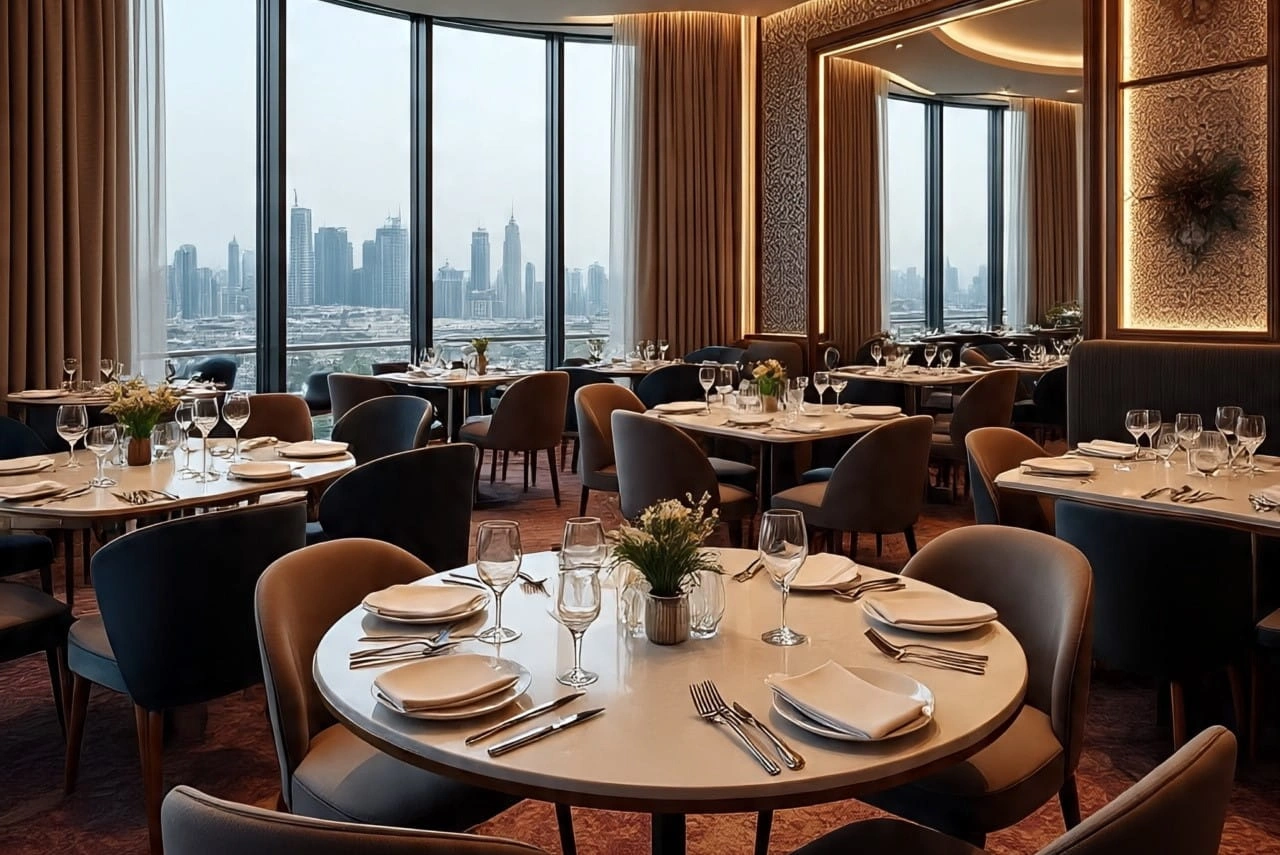
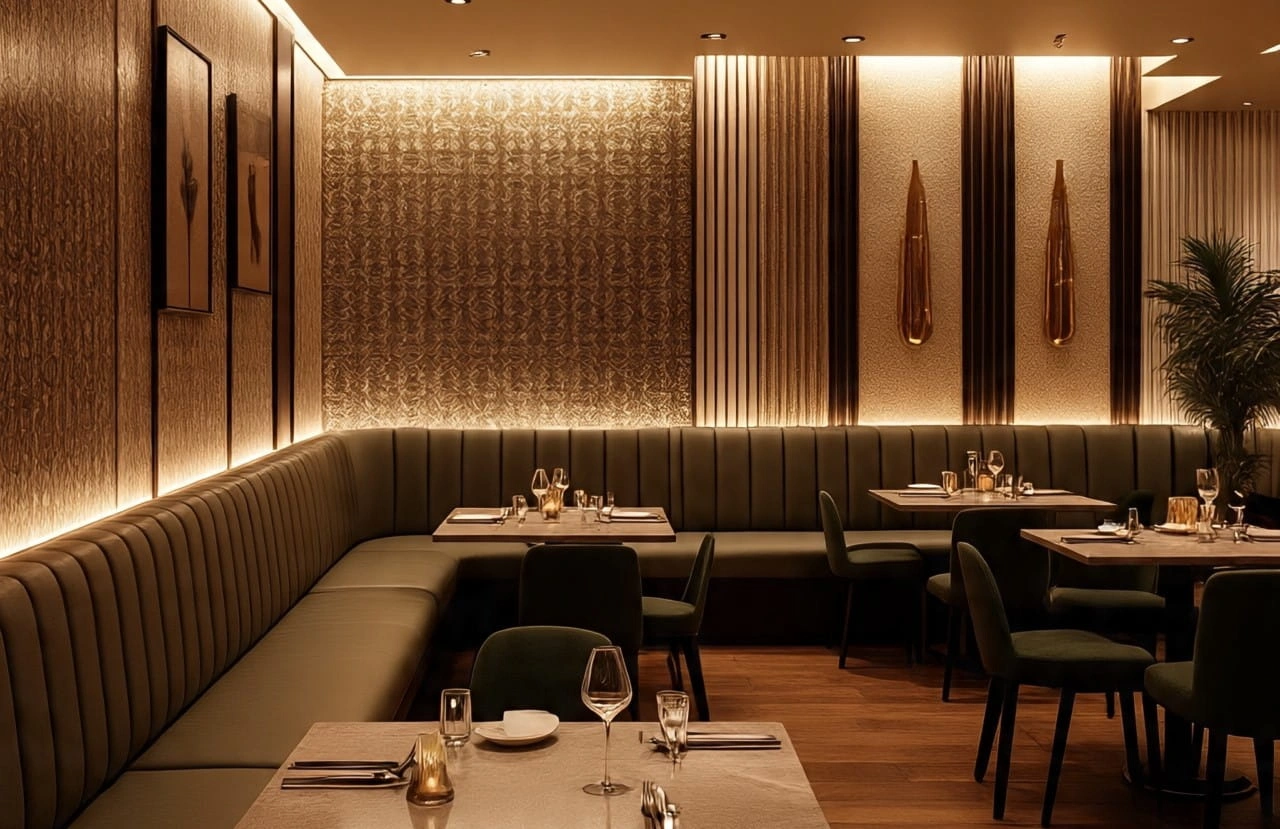
Restaurants endure intense daily use, so materials must combine style with exceptional durability. Hard-wearing flooring, stain-resistant upholstery, and robust surfaces keep the venue looking polished despite heavy footfall, spills, and constant cleaning. Quality materials protect both the experience and the investment.
Hygiene and maintenance are equally important in a food and beverage setting. Surfaces that are easy to clean and sanitise maintain high standards and reduce downtime. Selecting finishes that balance beauty with practicality ensures the restaurant stays impressive for years.
Acoustics and Comfort
Acoustics have a major impact on the dining experience. Excessive noise can spoil even the finest restaurant, so acoustic planning is essential. Soft furnishings, acoustic panels, and considered layouts control sound levels, allowing guests to converse comfortably while maintaining a lively atmosphere.
Comfort keeps guests returning. Ergonomic seating, comfortable temperatures, and generous spacing make diners feel at ease and encourage them to linger. These comfort factors directly influence satisfaction, spend, and the likelihood of repeat visits.
The Bar and Beverage Areas
For many venues, the bar is a focal point and a key revenue driver. A well-designed bar combines striking visual impact with an efficient working layout, showcasing drinks while supporting fast, smooth service. It often sets the tone for the whole venue.
Bar design must balance show and function. Attractive display, considered lighting, and comfortable seating draw guests in, while practical placement of equipment and storage keeps service efficient. A great bar enhances both the atmosphere and the profitability of the restaurant.
Casual and Cafe-Style Dining
Casual dining and cafe-style venues call for a relaxed, welcoming atmosphere that encourages all-day trade. Comfortable seating, warm materials, and flexible layouts suit everything from quick visits to longer stays, appealing to a broad and loyal customer base.
These venues share much with coffee shop concepts, where atmosphere, comfort, and efficient service combine to keep customers coming back. Applying that sensibility to casual dining creates inviting spaces that perform well across the whole day.
Outdoor and Terrace Dining
Dubai’s climate makes outdoor dining a valuable asset, especially through the cooler months. Terraces, courtyards, and rooftop settings offer memorable experiences that command premium appeal. Designing these areas with shade, cooling, durable furnishings, and atmospheric lighting extends their usability and charm.
A well-designed outdoor space becomes a signature feature that draws guests and increases capacity. Connecting it seamlessly with the interior creates a cohesive experience and maximises the venue’s overall earning potential.
Part of the Wider Hospitality Picture
A restaurant rarely exists in isolation; it is part of the broader hospitality landscape, whether standalone or within a hotel, mall, or leisure destination. Designing it with this context in mind ensures it complements its surroundings while maintaining a strong, distinct identity.
This perspective draws on wider expertise in hospitality venue interiors, where guest experience and operational excellence are paramount. Applying that knowledge ensures a restaurant succeeds both as a dining destination and as a commercial operation.
Technology in Modern Restaurants
Technology increasingly shapes the restaurant experience. Integrated point-of-sale, digital ordering, smart lighting and climate control, and considered AV all enhance both service efficiency and atmosphere. The best implementations feel seamless and remain visually discreet.
Planning this infrastructure from the outset keeps the interior clean and the operation smooth. Concealed wiring and intuitive systems ensure technology supports the experience rather than detracting from it, keeping the focus on the food and the guests.
Maximising Compact Venues
Many restaurants operate in compact spaces, but smart design makes small venues highly effective. Efficient layouts, clever zoning, mirrors, and considered lighting create an impression of generosity while maximising covers. Every centimetre is planned to contribute to both atmosphere and revenue.
A well-designed small restaurant can feel intimate and characterful rather than cramped. Thoughtful planning and quality detailing ensure a compact venue delivers a memorable experience and strong commercial performance.
Designing for Different Cuisines
The cuisine should inform the entire design. A fine-dining French restaurant, a vibrant Asian eatery, a rustic Italian trattoria, and a contemporary fusion concept each call for a distinct atmosphere, palette, and detailing. Aligning the interior with the food creates an authentic, immersive experience.
This alignment strengthens the brand and guest connection. When the space genuinely reflects the cuisine and culture behind it, diners feel transported, and the venue becomes more memorable and shareable. Tailoring design to concept is key to standing out.
Restrooms and Guest Facilities
Guest facilities are an often underestimated part of the restaurant experience. Well-designed, immaculately maintained restrooms signal quality and care, leaving a strong impression. Quality finishes, good lighting, and thoughtful detailing extend the brand experience into every corner of the venue.
Practicality matters alongside style. Durable, easy-clean materials, good ventilation, and accessible design ensure these spaces remain pristine and welcoming throughout busy service. Attention to these details reflects the overall standard of the restaurant.
Sustainability in Restaurant Design
Sustainability is increasingly valued by diners and operators alike. Energy-efficient kitchen equipment and lighting, responsibly sourced materials, and durable finishes reduce environmental impact and running costs. Many guests actively favour venues that demonstrate genuine environmental responsibility.
Sustainable choices also support long-term value. Efficient systems that lower bills and quality materials that last contribute to a restaurant that performs well financially and environmentally, while reinforcing a positive, modern brand image.
Managing the Fit-Out Process
A restaurant fit-out involves many trades and strict deadlines, so professional project management is essential. Coordinating design, approvals, construction, kitchen installation, and finishing keeps the project on schedule and on budget, which is critical when an opening date is fixed.
Strong management protects both quality and timeline. Careful oversight of every stage, clear communication, and attention to compliance ensure the venue opens ready to perform. A well-managed fit-out delivers a polished, fully functional restaurant on time.
Adding Value to Your Restaurant Business
A professionally designed fit-out is a direct investment in commercial success. An interior that attracts guests, encourages longer visits, and reflects the brand strongly contributes to higher footfall, repeat custom, and increased spend per cover, delivering measurable returns.
Quality design also protects the value of the fit-out over time. Durable materials and a distinctive, well-executed concept keep the venue feeling fresh and on-brand for years, maximising the return on investment and supporting long-term growth.
Frequently Asked Questions
What does a restaurant fit-out involve? It covers the complete design and build of the dining and service spaces, including layout, kitchen, lighting, materials, branding, and the technical systems that make the venue function.
How important is the kitchen design? Crucial. An efficient, compliant kitchen underpins fast, consistent service and profitability, and must be coordinated closely with the dining areas.
How do you maximise seating without losing comfort? Smart layout, varied seating types, and considered spacing balance capacity with comfort, ensuring the venue is both profitable and inviting.
Why Professional Fit-Out Matters
A restaurant fit-out combines concept, atmosphere, kitchen engineering, operational efficiency, compliance, and durability into one demanding project, so expertise is essential. Professional teams coordinate every discipline, balance front and back of house, and ensure the result is both beautiful and built to perform.
With extensive experience across Dubai’s hospitality sector, a skilled team translates a concept and brand into a venue that attracts diners, supports staff, and drives revenue. The outcome is a restaurant that delivers a memorable experience and lasting commercial success.