
Choosing Materials for Residential Interiors
Choosing the right materials is one of the most important decisions in residential interior design. The materials used for floors, walls, ceilings, kitchens, bathrooms, furniture, doors, wardrobes, countertops, and decorative features influence far more than the appearance of a home. They affect durability, maintenance, comfort, indoor air quality, acoustics, lighting, functionality, and the overall character of the space.
A successful residential interior combines aesthetics with practical performance. Marble may create a luxurious appearance, but it may require more maintenance than porcelain. Natural timber can introduce warmth and texture, while engineered wood may provide greater dimensional stability in certain environments. Similarly, quartz, porcelain slabs, compact surfaces, laminates, veneers, glass, metal, stone, and engineered boards each have different characteristics.
For homeowners in Dubai and the wider UAE, material selection also needs to account for climate, humidity, air conditioning, dust, sunlight, lifestyle, and the specific requirements of villas and apartments. A material that performs well in one environment may not be the best choice for another.
Understanding the characteristics of different materials can help homeowners make informed decisions and create interiors that remain attractive and functional for years.
Why Material Selection Matters in Residential Interior Design
Materials form the physical foundation of an interior. They determine how surfaces look, feel, age, and respond to everyday use.
Consider a family kitchen. Countertops need to withstand spills, heat, cleaning, food preparation, and frequent contact. Flooring needs to handle foot traffic while remaining easy to clean. Cabinet finishes should resist stains and moisture. Bathroom surfaces need to tolerate humidity and water exposure.
The same principle applies throughout a home.
A living room may prioritise comfort, texture, acoustics, and visual warmth. A bedroom may benefit from soft finishes and natural materials. A bathroom requires moisture-resistant surfaces and appropriate waterproofing. A villa entrance may use stone, timber, metal, or decorative wall panels to establish a particular design statement.
Good material selection therefore begins with understanding how each space will be used.
For homeowners working with a Residential Interiors Company, discussing lifestyle, maintenance expectations, budget, children, pets, cooking habits, entertaining requirements, and preferred design styles can help establish appropriate material specifications.
Consider the Function of Each Room
There is no single material that is perfect for every part of a home. The appropriate choice depends on the function and environmental conditions of each room.
Living rooms typically require flooring that balances durability with visual appeal. Bedrooms may benefit from warmer surfaces and softer textures. Kitchens need durable cabinetry, practical countertops, and easy-to-clean backsplashes. Bathrooms require water-resistant materials and carefully sealed surfaces.
Entrance areas and corridors often experience greater foot traffic and may require more durable flooring than bedrooms.
Outdoor areas such as terraces, balconies, pool decks, and villa landscaping require materials designed for exterior exposure, temperature changes, moisture, and sunlight.
Dividing a residential project into functional zones makes material selection more logical. Instead of choosing materials solely because they look attractive in a showroom, homeowners can evaluate whether they are appropriate for the intended application.
Natural Stone for Luxury Residential Interiors
Natural stone remains popular in luxury residential design because each piece has unique patterns, colours, and textures.
Marble is frequently used for flooring, feature walls, bathroom surfaces, countertops, staircases, and decorative elements. Its veining can create a sophisticated and high-end appearance.
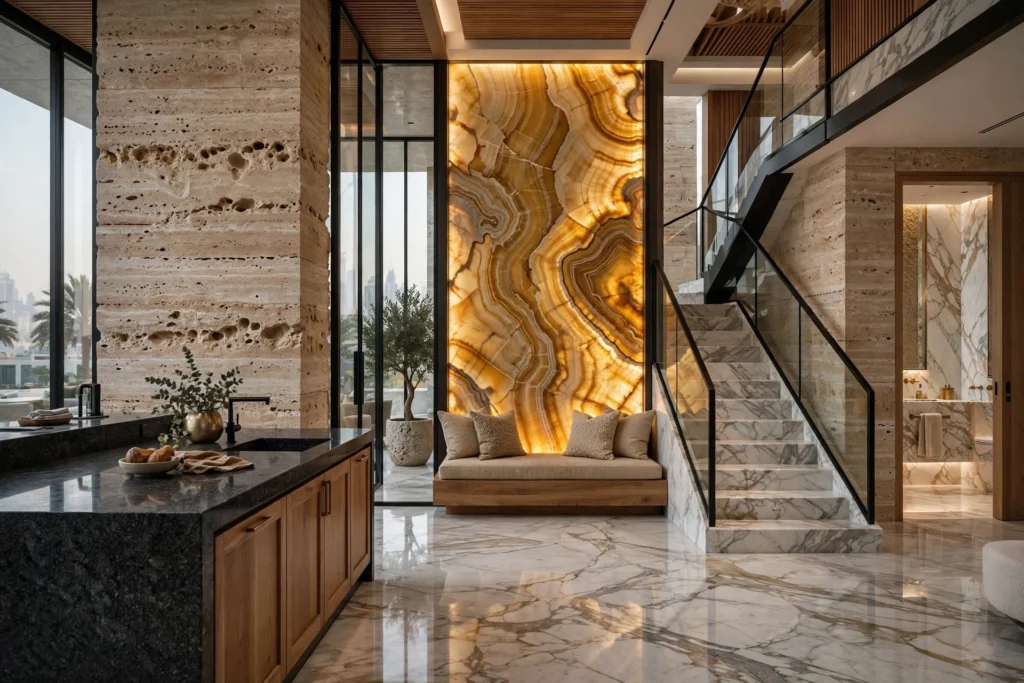
Granite is known for its durability and can be suitable for countertops and other demanding applications. Limestone and travertine offer more natural and earthy textures, while onyx can create dramatic feature surfaces, particularly when backlit.
However, natural stone requires appropriate specification and maintenance. Some stones are more porous than others and may require sealing to reduce staining and moisture absorption.
In Dubai villas and luxury apartments, natural stone can be particularly effective when used selectively rather than covering every surface. Combining stone with timber, metal, glass, or textured finishes can create a more balanced interior.
Porcelain and Ceramic Tiles
Porcelain and ceramic tiles offer a wide range of colours, patterns, textures, and sizes, making them versatile choices for residential interiors.
Porcelain is generally dense and has low water absorption, which makes it suitable for areas such as bathrooms, kitchens, entrances, and high-traffic zones. Large-format porcelain slabs can also create a continuous visual effect across floors and walls.
Modern tile manufacturing can reproduce the appearance of marble, timber, concrete, terrazzo, and natural stone. This gives homeowners more design flexibility while potentially reducing some of the maintenance associated with natural materials.
Tile size also influences the visual perception of a room. Large-format tiles can reduce the number of visible grout lines, while smaller tiles can introduce pattern and detail.
For Dubai homes, porcelain can be a practical flooring option because smooth, durable surfaces are generally easy to maintain and clean.
Timber and Engineered Wood
Wood introduces warmth, texture, and natural character into residential interiors.
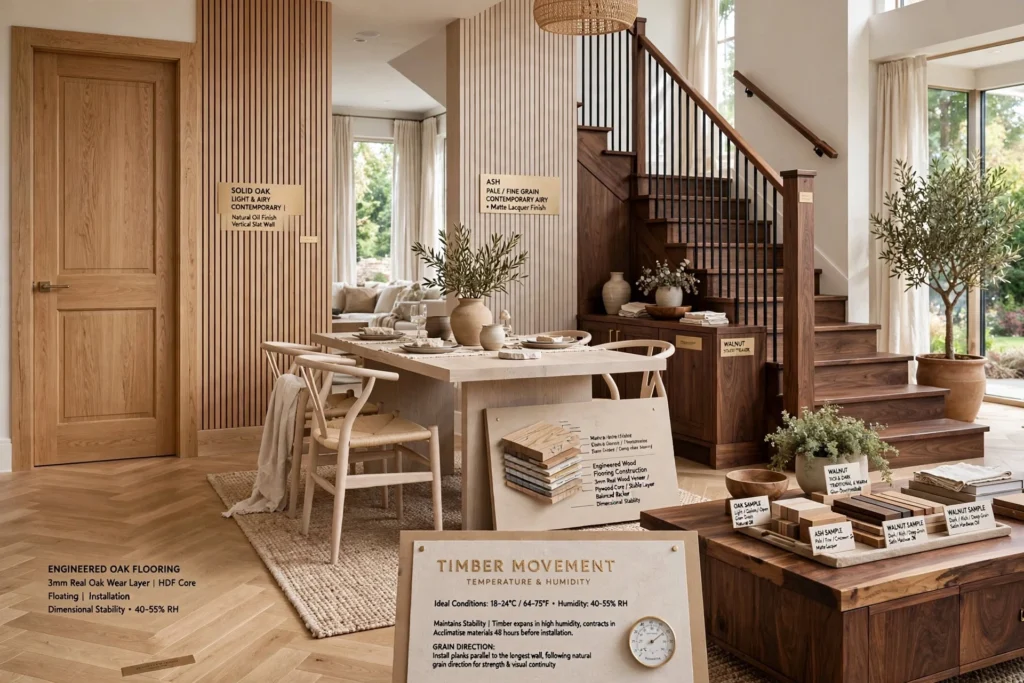
Solid timber can be used for doors, furniture, flooring, wall features, stair components, and decorative applications. Engineered wood flooring combines a real-wood surface with a constructed base and can offer greater dimensional stability than some solid-wood applications.
The choice of timber species, grain direction, finish, colour, and installation method can dramatically affect the interior.
Oak, walnut, ash, and other timber species can create different visual impressions. Light woods can contribute to a contemporary and airy appearance, while darker woods can create a richer and more traditional atmosphere.
Wood also needs appropriate environmental consideration. Temperature and humidity fluctuations can influence timber movement, so material selection and installation should take the property’s conditions into account.
Laminates and Veneers for Joinery
Residential cabinetry and built-in furniture often use engineered boards finished with laminate or veneer.
Laminate is available in many colours, patterns, textures, and wood-look finishes. It can be practical for wardrobes, kitchen cabinets, storage units, entertainment walls, and other joinery applications.
Wood veneer consists of a thin layer of real wood applied to a substrate. It can provide the visual character of natural timber while allowing greater consistency across larger furniture components.
Both materials can be combined with different edge treatments, handles, hardware, and internal configurations.
For custom joinery, the substrate, edge banding, adhesive, surface finish, and hardware should all be considered as part of the specification. A beautiful exterior finish cannot compensate for weak construction or unsuitable internal materials.
Choosing Kitchen Countertop Materials
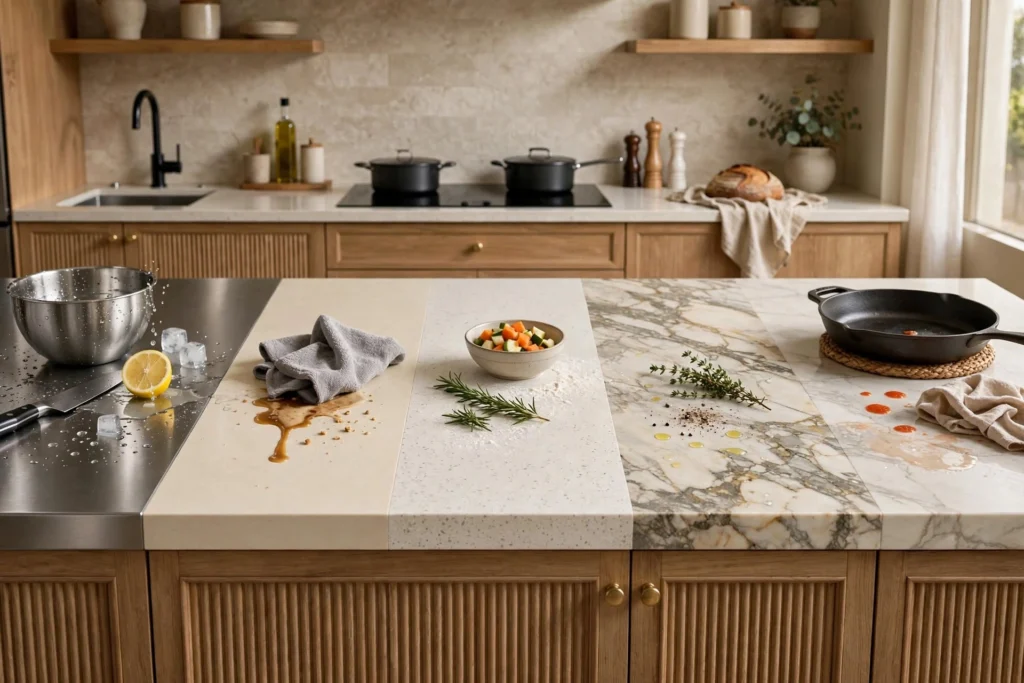
Kitchen countertops experience some of the most demanding conditions in a home.
They need to withstand food preparation, spills, cleaning, heat exposure, impact, and frequent use. Common materials include natural stone, quartz, porcelain, solid surfaces, stainless steel, and other engineered products.
Quartz surfaces are popular because they provide a wide range of colours and patterns while offering a relatively consistent appearance. Natural stone provides unique veining and texture. Porcelain can offer high resistance to many forms of wear and can imitate natural stone or other materials.
The best countertop depends on how the kitchen is used.
A homeowner who cooks extensively may prioritise stain resistance, heat performance, durability, and easy cleaning. Someone focused on design may place greater emphasis on veining, colour continuity, and edge detailing.
The countertop should also coordinate with cabinetry, backsplash materials, flooring, appliances, and lighting.
Selecting Materials for Bathrooms
Bathrooms require particularly careful material selection because they combine water, humidity, cleaning products, and frequent use.
Porcelain and ceramic tiles are common choices for bathroom walls and floors. Natural stone can create a premium appearance but may require additional maintenance depending on the stone type and finish.
Vanity units should use materials suitable for humid conditions, while countertops should be selected according to expected exposure to water and cleaning products.
Slip resistance is another important consideration for bathroom flooring. A visually attractive tile is not necessarily the best choice if it becomes excessively slippery when wet.
Waterproofing behind finished surfaces is also critical. High-quality tiles cannot compensate for inadequate waterproofing or poor installation.
A complete bathroom specification should therefore consider the tile, substrate, waterproofing system, grout, sealant, fixtures, cabinetry, ventilation, and drainage together.
Wall Finishes and Decorative Panels
Walls provide an opportunity to introduce texture, colour, pattern, and architectural character.
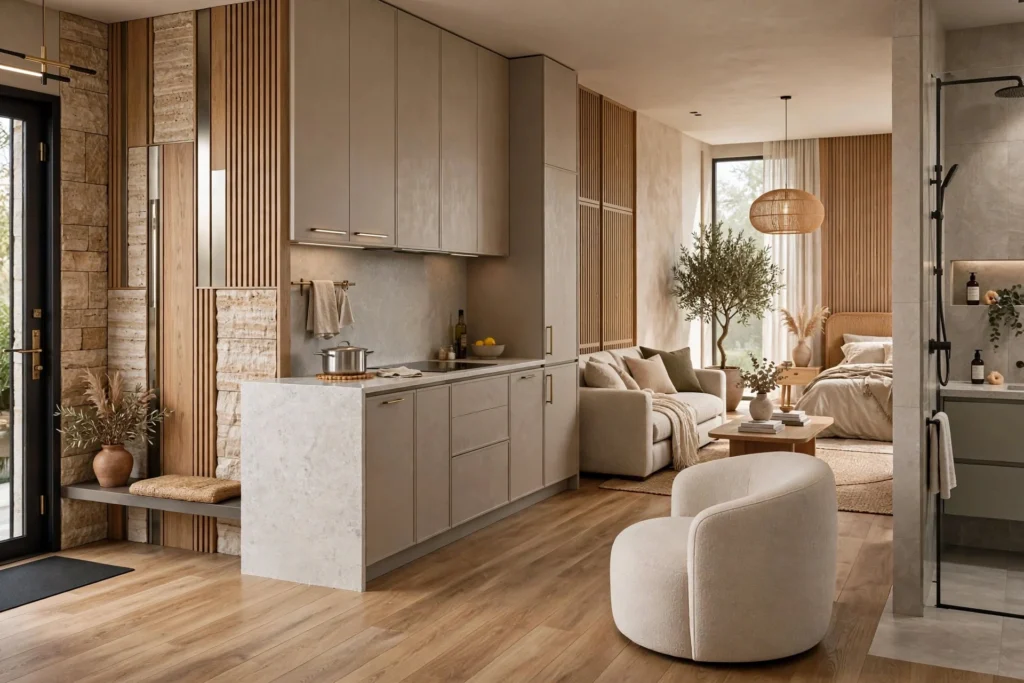
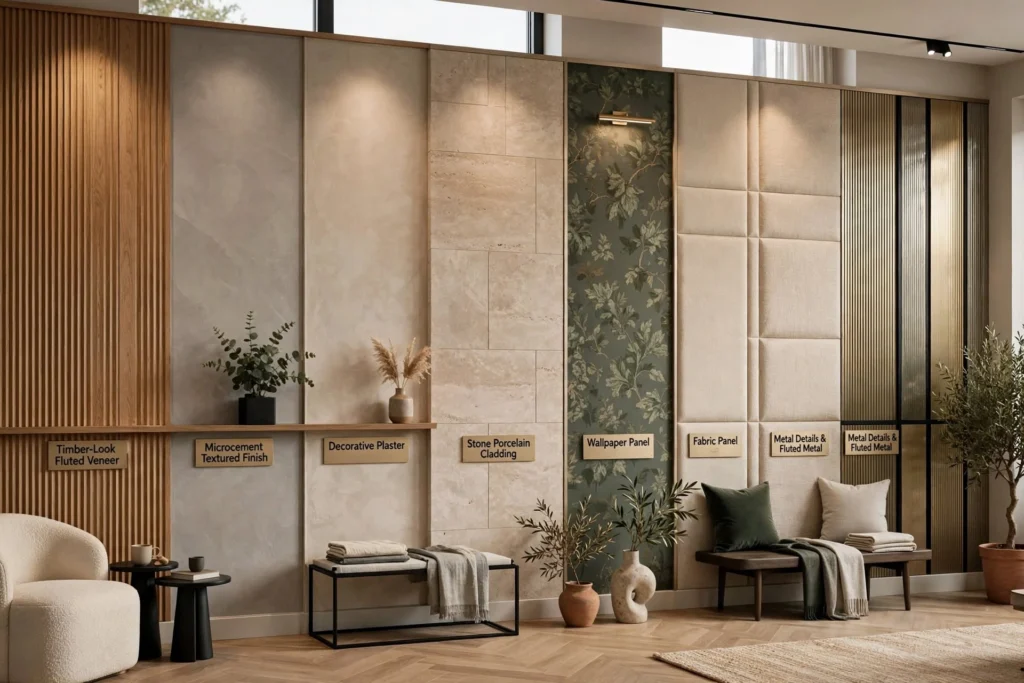
Paint remains one of the most flexible and economical finishes, but residential interiors can also incorporate timber panelling, stone cladding, wallpaper, microcement, decorative plaster, fluted panels, fabric panels, metal details, and textured surfaces.
Feature walls can help define living rooms, bedrooms, dining spaces, entrances, and entertainment areas.
Wall panelling is particularly useful for adding architectural depth without making major structural changes. Timber-look panels, fluted surfaces, and veneer can introduce warmth, while stone and porcelain can create a more substantial visual statement.
The choice should consider cleaning requirements, moisture exposure, lighting, furniture placement, and the overall design language of the home.
Glass and Metal in Contemporary Interiors
Glass and metal can provide contrast against warmer materials such as timber and stone.
Glass can be used for partitions, doors, balustrades, shower enclosures, display cabinets, and decorative features. It can help maintain visual openness and allow light to travel between spaces.
Metal elements may include stainless steel, aluminium, brass, bronze, blackened metal, and other finishes. They can be incorporated into stair details, handles, lighting, furniture, partitions, kitchen features, and decorative trims.
Metal finishes should be coordinated carefully. Mixing too many unrelated finishes can make an interior feel visually inconsistent, while a controlled combination can create sophisticated contrast.
For example, warm brass hardware can complement walnut cabinetry, while black metal can work effectively with lighter timber and stone.
Material Selection and Dubai’s Climate
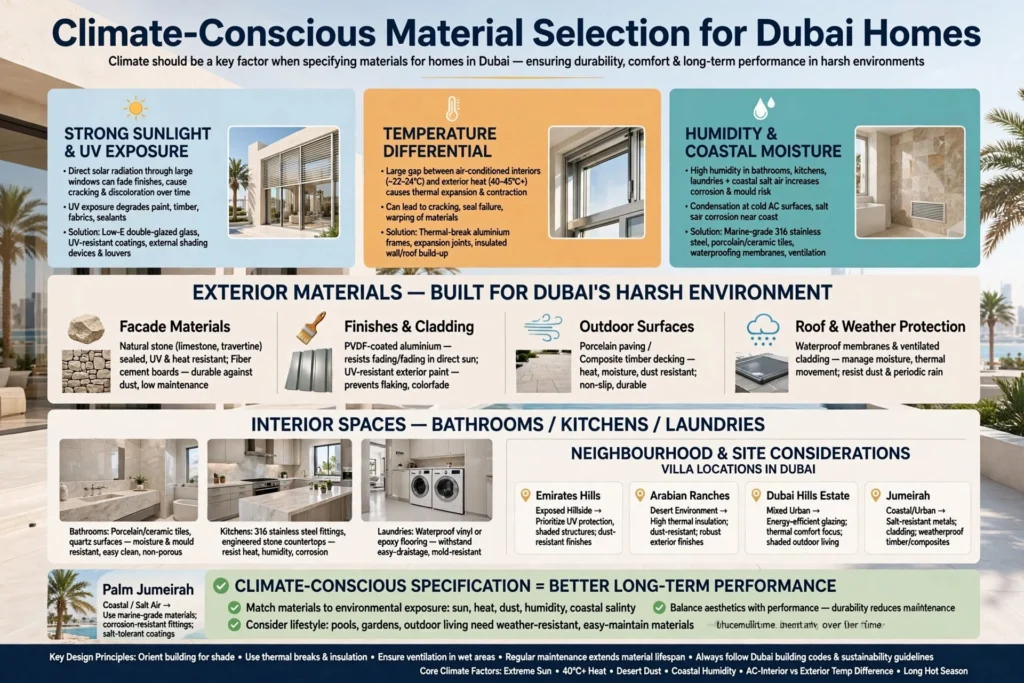
Climate should be an important consideration when specifying materials for homes in Dubai.
Strong sunlight can affect certain finishes over time, particularly where surfaces are exposed to direct solar radiation through large windows. Temperature differences between air-conditioned interiors and exterior environments can also influence certain materials.
Humidity can be relevant in bathrooms, kitchens, laundry rooms, and properties close to coastal areas. Materials should therefore be selected according to their intended environmental exposure.
Exterior materials require additional consideration because they may experience direct sunlight, dust, temperature changes, and moisture.
For villas in areas such as Palm Jumeirah, Emirates Hills, Arabian Ranches, Dubai Hills Estate, and Jumeirah, material selection may vary depending on the property’s architecture, outdoor spaces, exposure, and lifestyle requirements.
Climate-conscious specification can contribute to better long-term performance.
Flooring Materials for Different Residential Spaces
Flooring has a major influence on the appearance and functionality of a home.
Porcelain tiles are suitable for many high-traffic areas and can provide a durable, easy-to-clean surface. Natural stone offers unique character and luxury. Engineered wood can add warmth to living areas and bedrooms. Vinyl and other resilient flooring systems may provide practical solutions for selected applications.
The choice should consider traffic, moisture, cleaning, acoustic requirements, underfloor conditions, pets, children, and personal preferences.
A consistent flooring material can make a home feel visually larger, while carefully selected transitions can help define different zones.
Large-format tiles can create a contemporary appearance, whereas patterned flooring can become a design feature in its own right.
Sustainability and Responsible Material Choices
Sustainability is becoming increasingly relevant to residential interior design.
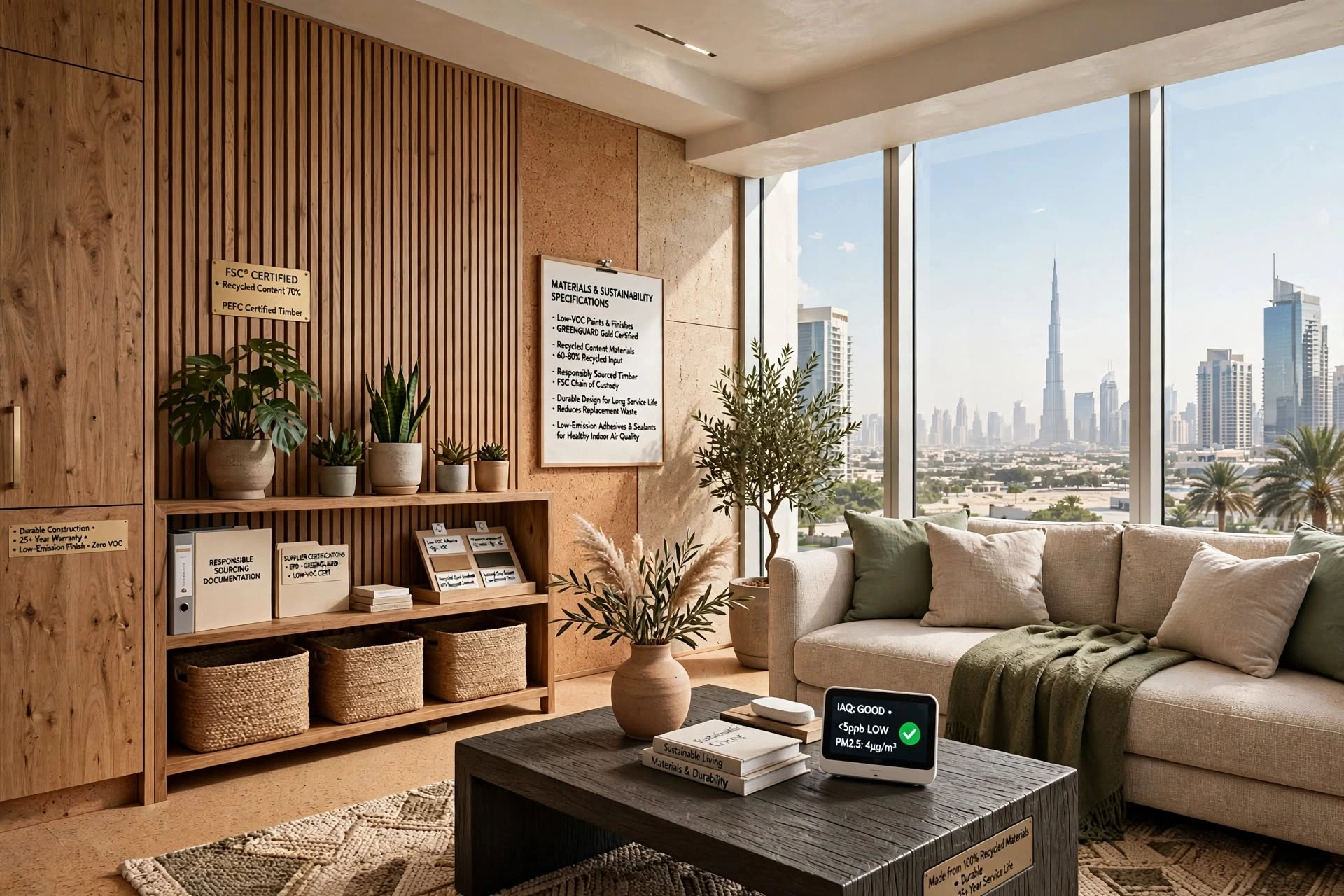
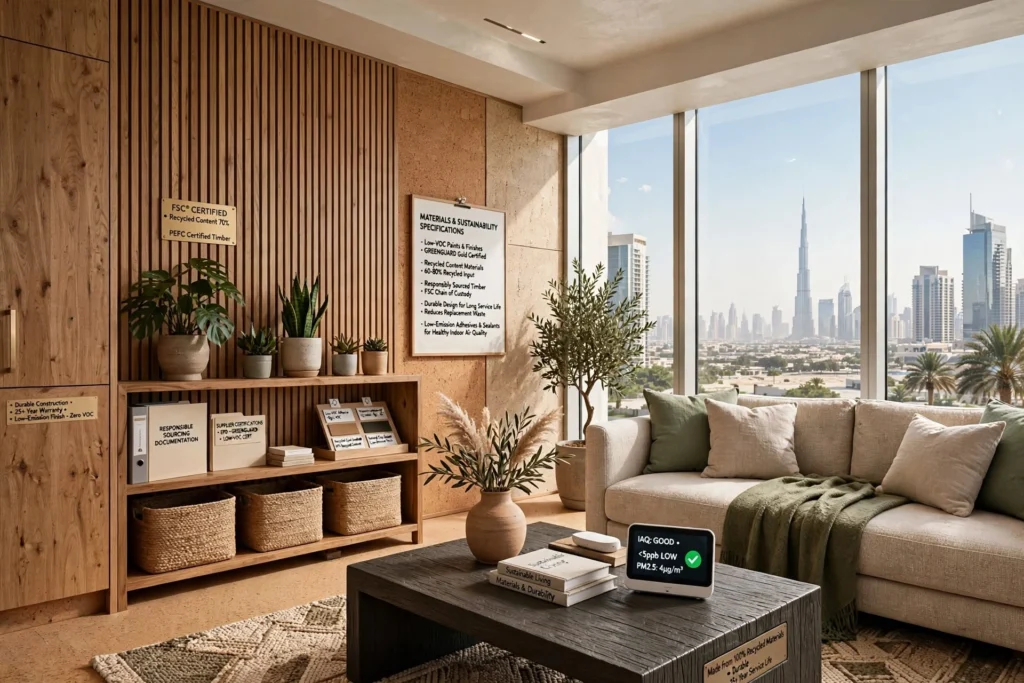
Homeowners may consider materials with recycled content, responsibly sourced timber, durable construction, low-emission finishes, and products designed for longer service life.
Durability itself is an important sustainability consideration. A material that lasts significantly longer may reduce the frequency of replacement and associated waste.
Low-VOC paints, adhesives, sealants, and finishes can also be considered where indoor air quality is a priority.
Responsible sourcing is another consideration for timber and natural materials. Certification systems and supplier documentation can help homeowners understand where materials originate and how they are produced.
Sustainable interior design does not necessarily mean choosing one particular aesthetic. Natural, contemporary, minimalist, traditional, and luxury interiors can all incorporate responsible material choices.
Matching Materials With Interior Design Styles
Material selection should support the overall design concept.
A minimalist interior may use a limited palette of concrete-look surfaces, light timber, neutral stone, glass, and simple metal details.
A contemporary luxury interior may combine marble, wood veneer, brushed metal, glass, and premium textiles.
A traditional interior might use natural timber, decorative mouldings, patterned stone, rich fabrics, and detailed joinery.
A modern Arabic-inspired interior can incorporate natural stone, geometric patterns, warm timber, brass, textured plaster, and carefully selected decorative elements.
The key is consistency.
Rather than choosing every material individually, homeowners should consider how the complete palette works together. Floor finishes, wall colours, cabinetry, countertops, doors, furniture, lighting, and decorative elements should create a coherent visual relationship.
Colour, Texture, and Material Samples
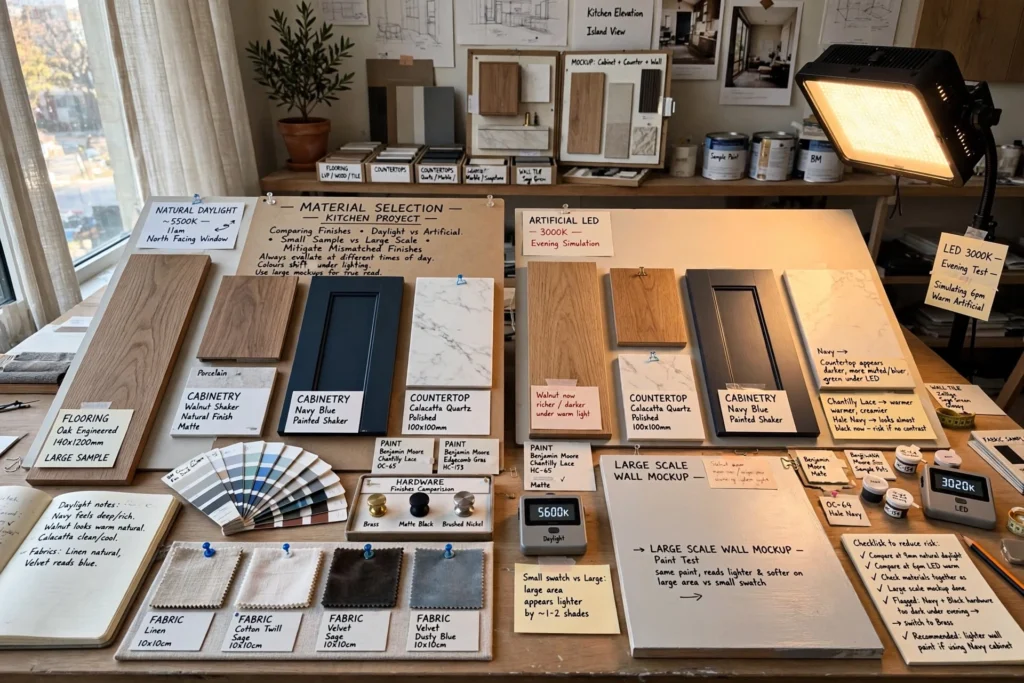
Never rely solely on digital images when selecting important materials.
Colours can appear different depending on lighting conditions, screen settings, surrounding finishes, and the scale of the application.
A material that looks attractive in a small sample may appear very different when installed across a large wall or floor.
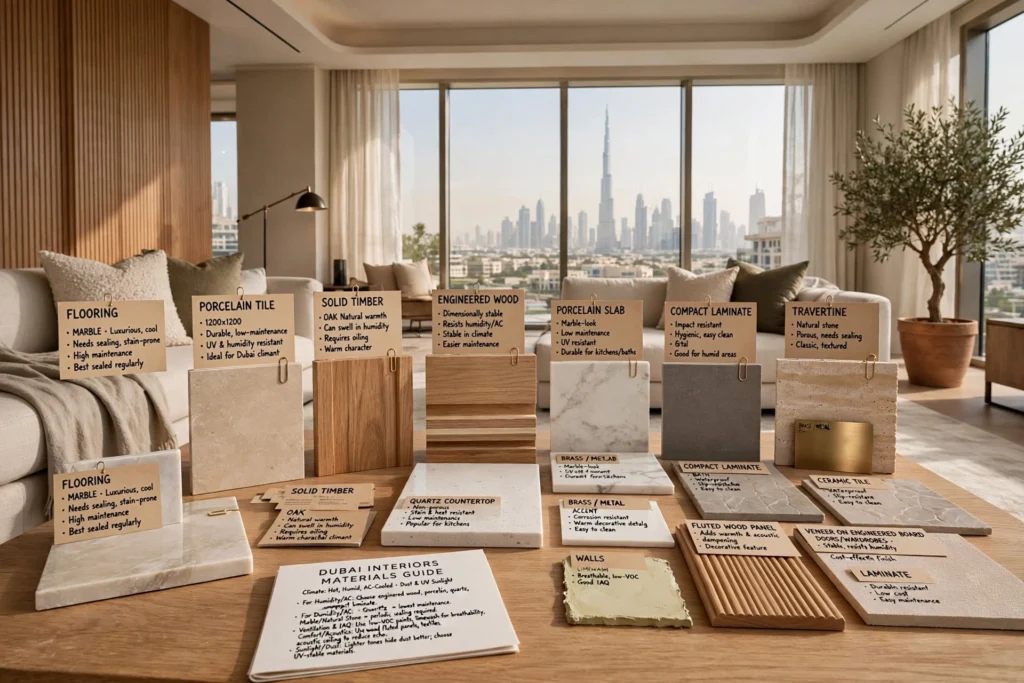
Material boards and physical samples can therefore be valuable during the design process. Homeowners can compare flooring, cabinetry, countertops, wall finishes, hardware, fabrics, and paint colours under actual project lighting.
It is also useful to evaluate samples at different times of day. Natural daylight can produce a different appearance from artificial lighting.
This process can reduce the risk of selecting finishes that look mismatched after installation.
Maintenance Should Influence Material Selection
Beautiful materials are not always practical materials.
Before choosing a finish, homeowners should understand how it needs to be cleaned, whether it requires sealing, how easily it scratches, whether stains can be removed, and how it responds to household chemicals.
A busy family home may require more durable and low-maintenance surfaces than a rarely occupied luxury property.
Similarly, a homeowner who frequently entertains may prioritise stain-resistant countertops and durable flooring, while someone designing a guest room may place greater emphasis on appearance.
Maintenance should therefore be considered from the beginning rather than after installation.
The objective is to select materials that fit the homeowner’s lifestyle rather than creating an interior that requires constant care.
Budget and Lifecycle Cost
Initial price is only one part of material selection.
A cheaper material may appear attractive from a short-term budgeting perspective, but if it requires frequent replacement or repair, its lifecycle cost may become higher.
Conversely, a premium material may provide longer service life, better performance, or lower maintenance requirements.
A balanced residential interior usually combines materials strategically. High-impact areas can use premium finishes, while practical alternatives can be selected for less visible applications.
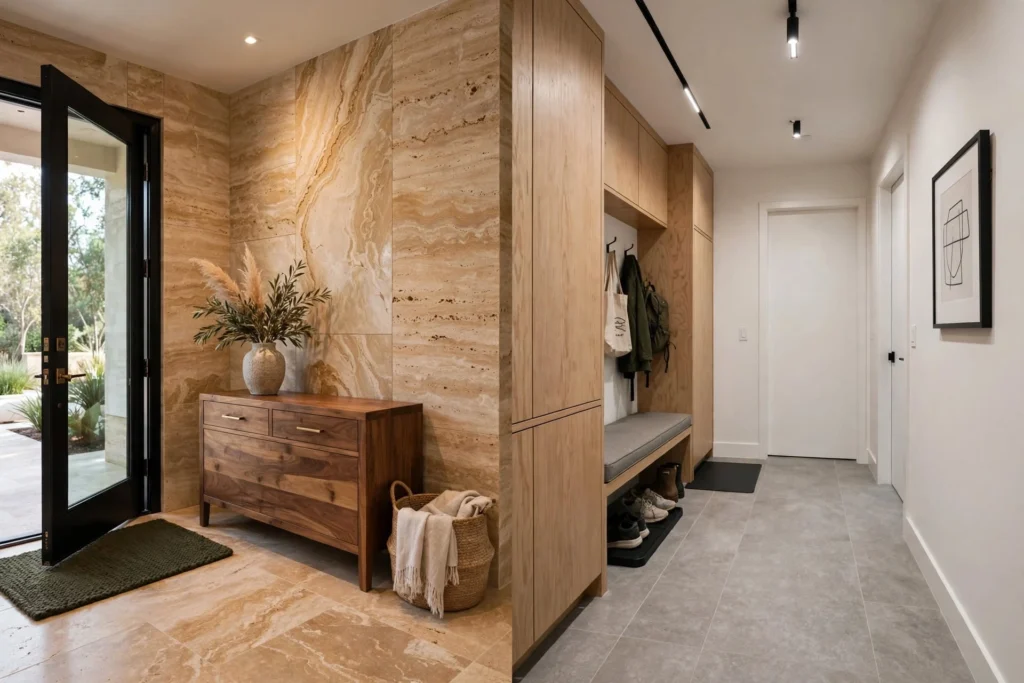
For example, a homeowner may invest in a high-quality natural stone feature in the entrance while using durable porcelain flooring throughout other areas.
This approach can create a premium appearance without unnecessarily increasing the cost of every component.
Safety and Indoor Comfort
Material selection also contributes to residential safety and comfort.
Flooring should provide appropriate slip resistance for its application. Glass should be specified and installed according to its intended use. Cabinetry and shelving should be properly anchored. Electrical and lighting components need appropriate coordination with surrounding finishes.
Acoustic performance can also influence comfort. Hard surfaces such as stone, glass, and porcelain can increase sound reflection, while rugs, upholstered furniture, timber, curtains, and acoustic panels can help soften the environment.
Thermal comfort is another consideration. Materials can influence how surfaces feel underfoot and how a room visually responds to lighting and temperature.
A successful interior therefore considers both visual design and human experience.
How Professional Interior Specialists Help With Material Selection
Material selection can become overwhelming when a residential project involves dozens or even hundreds of individual specifications.
An experienced interior design and fit-out team can simplify the process by creating a coordinated material palette.
They can assess the architectural style, room functions, lighting, dimensions, lifestyle requirements, budget, maintenance expectations, and project conditions before recommending finishes.
They can also coordinate materials with custom joinery, MEP services, lighting, furniture, doors, sanitaryware, kitchen equipment, and other elements.
For homeowners undertaking a villa renovation or apartment fit-out in Dubai, professional coordination can help reduce mismatched finishes and unnecessary changes during construction.
A Residential Interiors Company can also assist with design development, material sourcing, shop drawings, procurement coordination, installation, and final finishing depending on the scope of the project.

Final Thoughts
Choosing materials for residential interiors is a balance between aesthetics, functionality, durability, maintenance, comfort, and budget.
Natural stone can introduce luxury and individuality. Porcelain provides versatility and practical performance. Timber adds warmth and texture. Laminates and veneers offer flexible solutions for custom joinery. Glass and metal can introduce contemporary detailing, while textiles and softer surfaces can improve comfort.
The best material is not necessarily the most expensive or visually impressive option. It is the material that performs appropriately within its intended environment and contributes to the overall design.
For residential properties in Dubai, homeowners should also consider sunlight, temperature, humidity, air conditioning, dust, maintenance, and the unique requirements of villas and apartments.
By evaluating each room according to its function, comparing physical samples, considering lifecycle costs, and coordinating materials as part of the complete interior design, homeowners can create spaces that are attractive, practical, comfortable, and durable.
Whether the project involves a luxury villa in Emirates Hills, an apartment in Downtown Dubai, a family home in Arabian Ranches, or a contemporary residence in Dubai Hills Estate, thoughtful material selection can have a lasting impact on the quality and character of the finished interior.
0 comments