
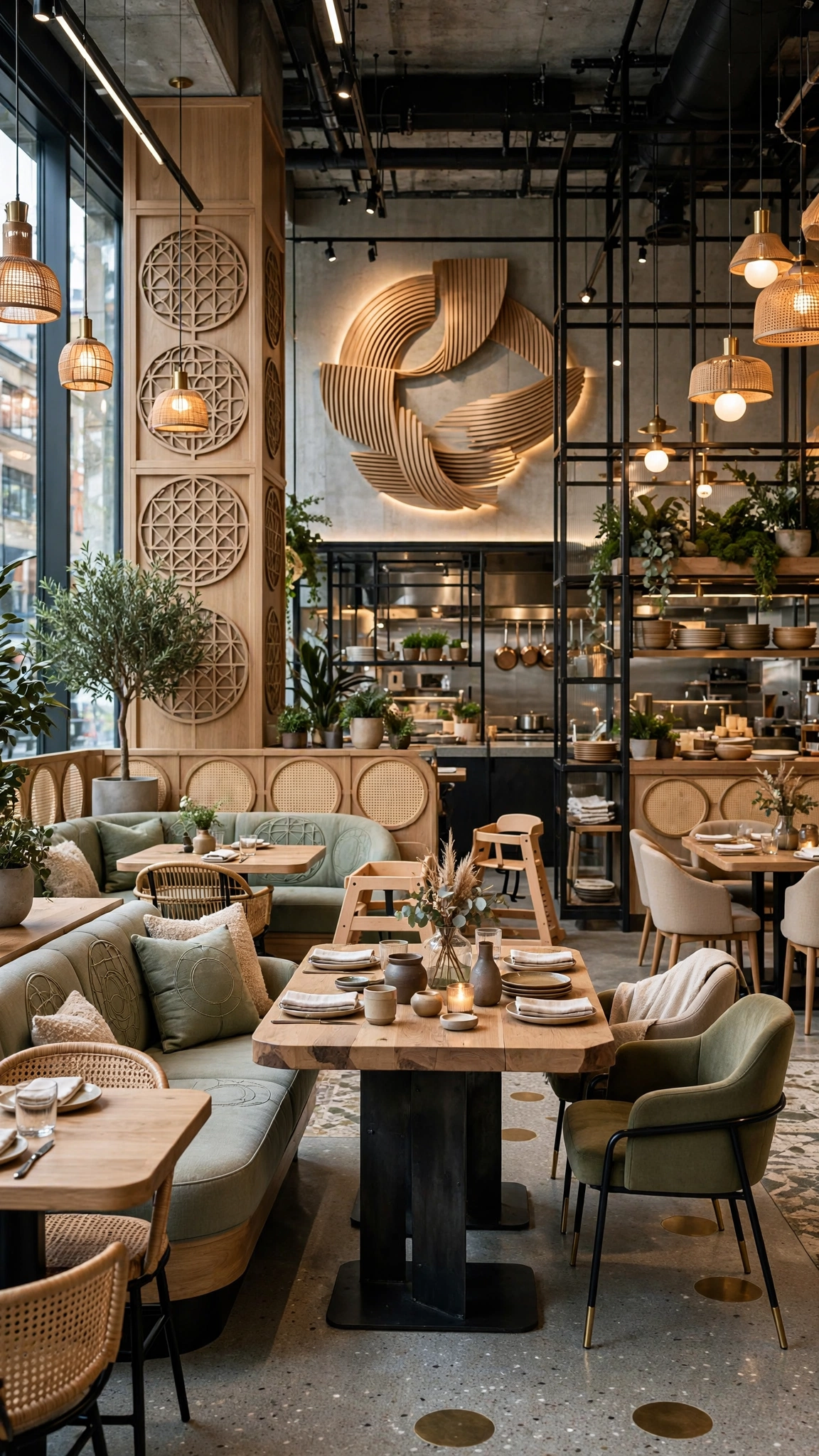
Commercial Interior Design Trends for Restaurants in Dubai
Dubai has earned a global reputation for its luxury hospitality, innovative architecture, and world-class dining experiences. From fine dining restaurants overlooking the Burj Khalifa to modern cafés in Dubai Hills and beachfront eateries on Palm Jumeirah, every successful restaurant shares one common factor—an exceptional interior design. In today’s competitive hospitality market, customers expect much more than delicious food. They seek memorable dining environments that combine aesthetics, comfort, functionality, and brand identity.
Commercial interior design has become an essential investment for restaurant owners across Dubai. Whether opening a boutique café in Jumeirah, renovating a family restaurant in Al Barsha, or developing a large dining destination in Business Bay, professional design influences customer satisfaction, operational efficiency, and long-term profitability.
Modern restaurant interiors are now designed around customer behaviour, sustainability, technology, and flexible dining experiences. Understanding these evolving trends helps restaurant owners create spaces that remain relevant while attracting both residents and tourists.
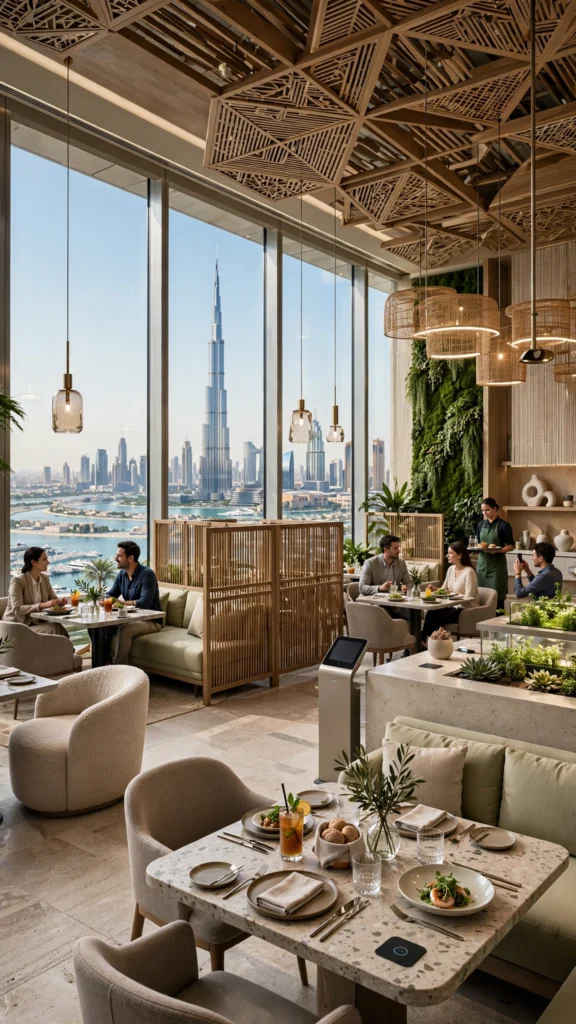
Why Commercial Interior Design Matters More Than Ever
Restaurant interiors directly influence how customers perceive food quality, service, and overall value. Studies within the hospitality industry consistently show that ambience significantly affects dining decisions, customer retention, and social media engagement.
Today’s restaurant interior design goes beyond selecting furniture or paint colours. It involves architectural planning, workflow optimisation, lighting engineering, acoustic performance, HVAC coordination, kitchen planning, accessibility, fire safety compliance, branding, and customer psychology.
Successful commercial interiors create seamless interaction between front-of-house and back-of-house operations. Every element—from seating layouts to circulation pathways—contributes to efficient service and an enjoyable dining experience.
Dubai’s highly competitive food and beverage industry demands restaurants that stand out visually while remaining practical for everyday operations.
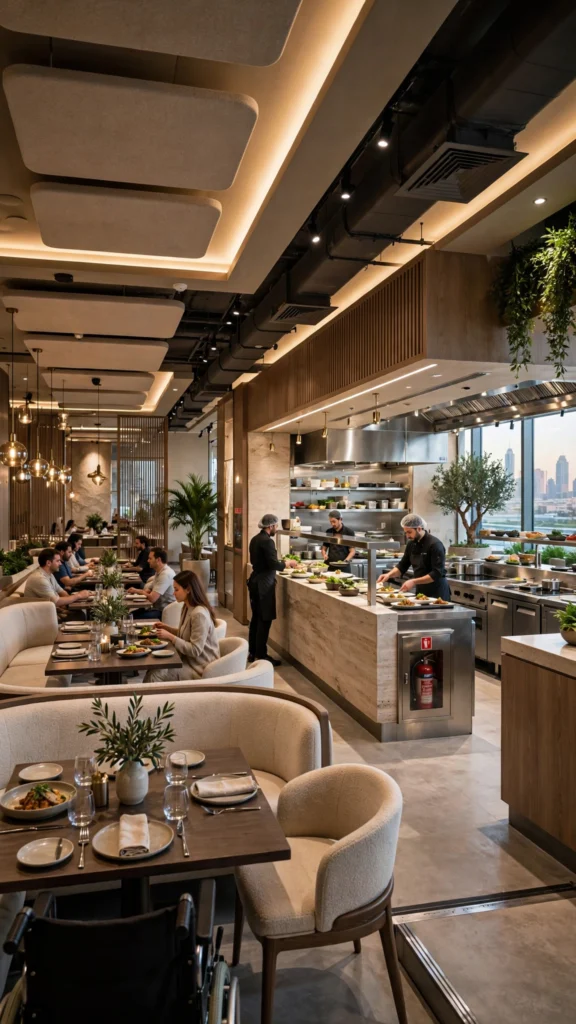
Multi-Functional Dining Spaces Continue to Domayinate
One of the biggest commercial interior design trends is the development of flexible dining environments that accommodate different customer needs throughout the day.
Restaurants increasingly feature adaptable seating arrangements for families, business meetings, private gatherings, and individual diners. Modular furniture, movable partitions, and convertible dining zones allow restaurants to maximise seating capacity without sacrificing comfort.
Many restaurants in Dubai Marina, Downtown Dubai, and City Walk transform their atmosphere from relaxed daytime cafés into elegant evening dining destinations through adjustable lighting, furniture configurations, and digital ambience controls.
Flexible commercial layouts also improve event hosting capabilities, making restaurants more profitable throughout the year.
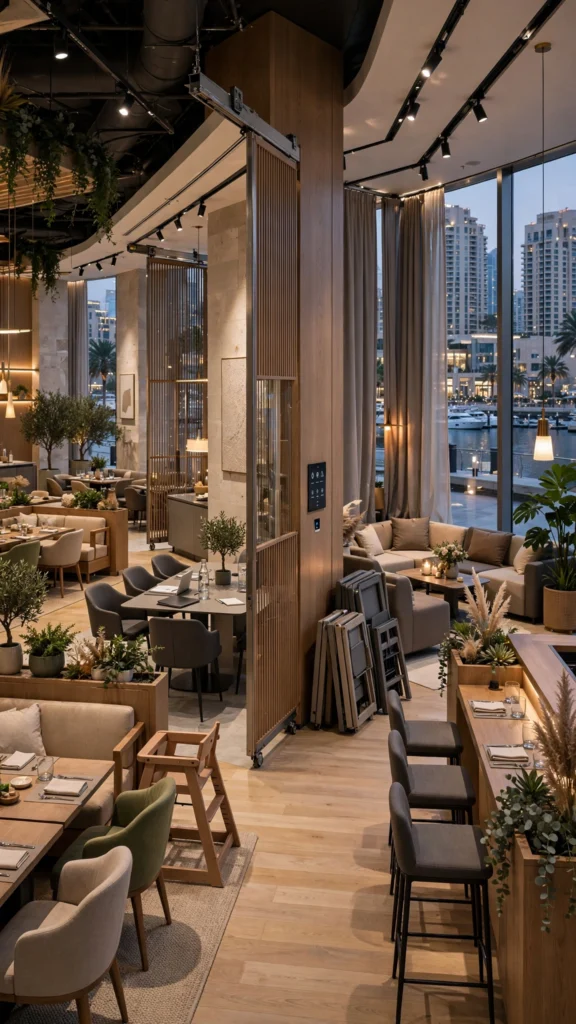
Natural Materials Create Timeless Restaurant Interiors
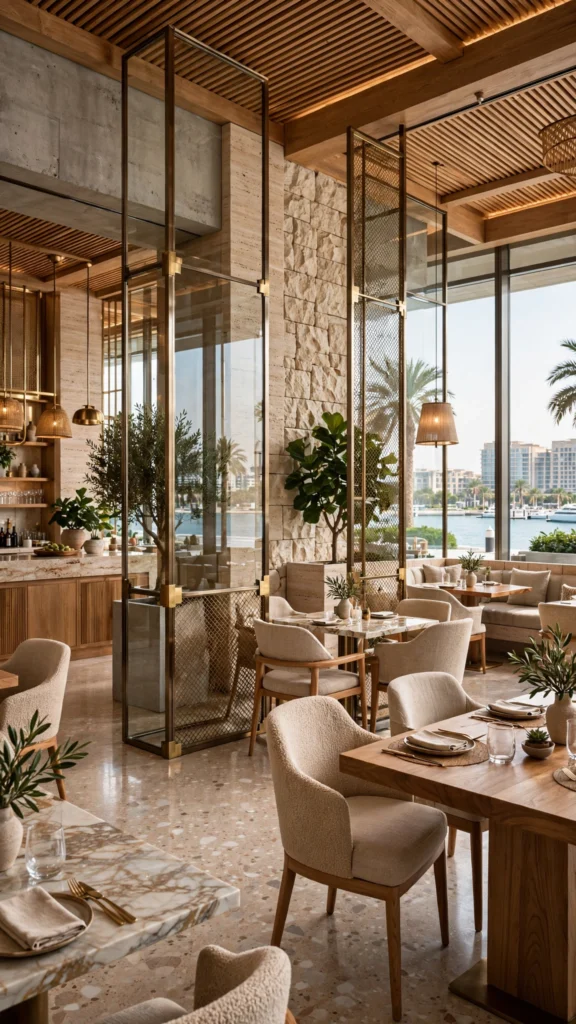
Natural finishes continue to dominate commercial hospitality design throughout Dubai.
Interior designers increasingly specify materials such as:
- Natural wood
- Marble
- Limestone
- Travertine
- Textured concrete
- Terrazzo
- Natural fabrics
- Decorative metal finishes
- Glass partitions
These materials provide durability while creating sophisticated interiors suitable for premium dining experiences.
Restaurants throughout Jumeirah Beach Residence (JBR), Bluewaters Island, Dubai Hills, and Palm Jumeirah increasingly combine warm timber textures with polished stone surfaces to balance luxury and comfort.
Natural materials also support sustainability goals by reducing reliance on synthetic finishes.
Sustainability Is Becoming a Core Design Principle
Environmental responsibility is influencing commercial interior projects across Dubai.
Restaurant owners increasingly invest in eco-friendly design solutions that reduce operating costs while improving environmental performance.
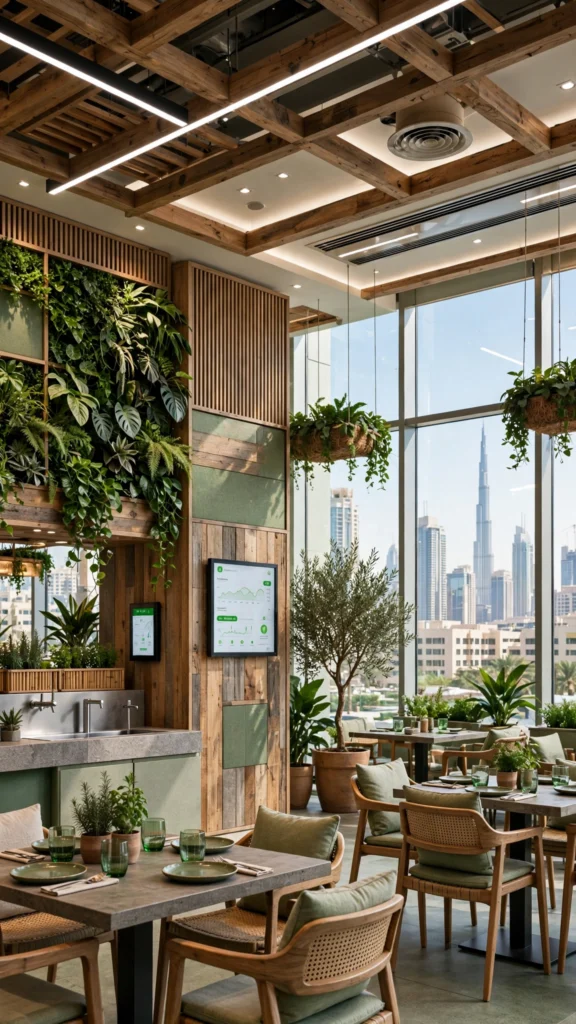
Popular sustainable design elements include energy-efficient LED lighting, water-saving fixtures, recycled materials, FSC-certified timber, low-VOC paints, high-performance glazing, intelligent HVAC systems, and energy monitoring technology.
Many restaurants pursuing LEED certification or Dubai Green Building requirements integrate sustainable materials during the design stage rather than retrofitting them later.
Sustainable interiors not only reduce operational expenses but also strengthen brand reputation among environmentally conscious customers.
Smart Lighting Shapes the Dining Experience
Lighting remains one of the most powerful elements in restaurant interior design.
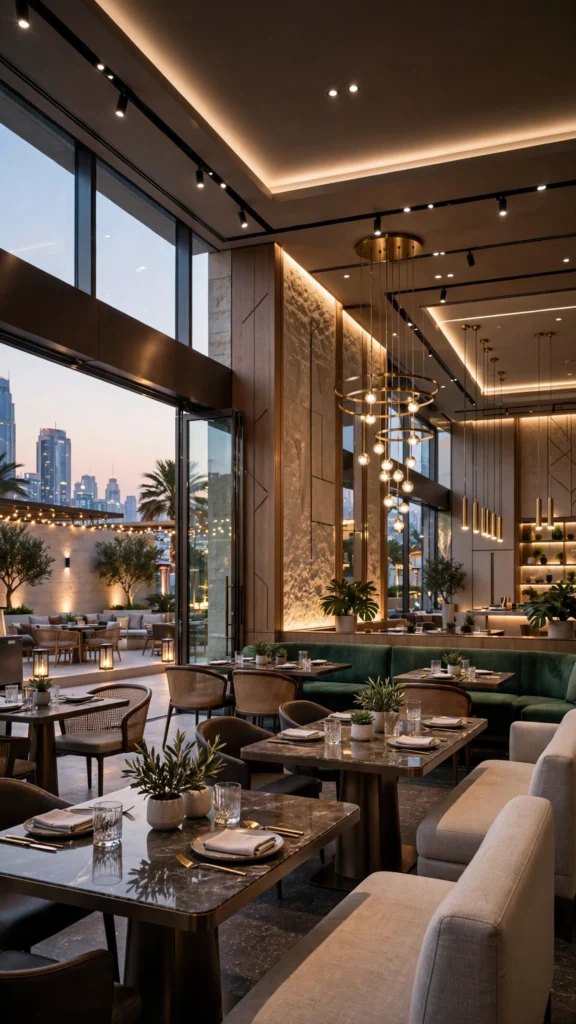
Modern commercial lighting combines decorative fixtures with layered illumination to create welcoming environments throughout different times of day.
Restaurants commonly utilise:
- Pendant lighting
- Recessed LED lighting
- Cove lighting
- Track lighting
- Feature chandeliers
- Accent lighting
- Architectural wall washing
- Outdoor terrace lighting
Smart lighting systems integrated with building automation can automatically adjust brightness according to daylight conditions, occupancy, and operating hours.
Restaurants in DIFC, Business Bay, and Dubai Design District (d3) increasingly use programmable lighting scenes to enhance customer experience while improving energy efficiency.
Open Kitchen Concepts Build Customer Trust
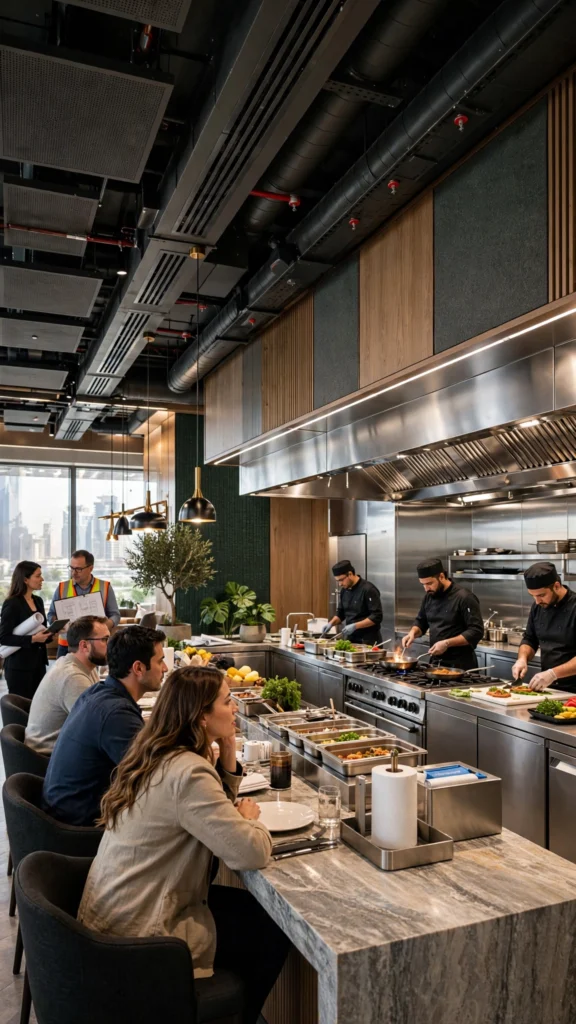
Open kitchen layouts continue gaining popularity throughout Dubai’s hospitality industry.
Customers enjoy watching chefs prepare meals, increasing confidence in hygiene, food quality, and craftsmanship.
Modern open kitchens require careful planning to address ventilation, grease extraction, kitchen exhaust systems, fire suppression, acoustic control, and customer sightlines.
Commercial interior designers collaborate closely with mechanical engineers and kitchen consultants to ensure operational efficiency without compromising aesthetics.
This approach creates an engaging dining experience while strengthening restaurant branding.
Acoustic Comfort Is Receiving Greater Attention
Restaurant noise levels significantly affect customer satisfaction.
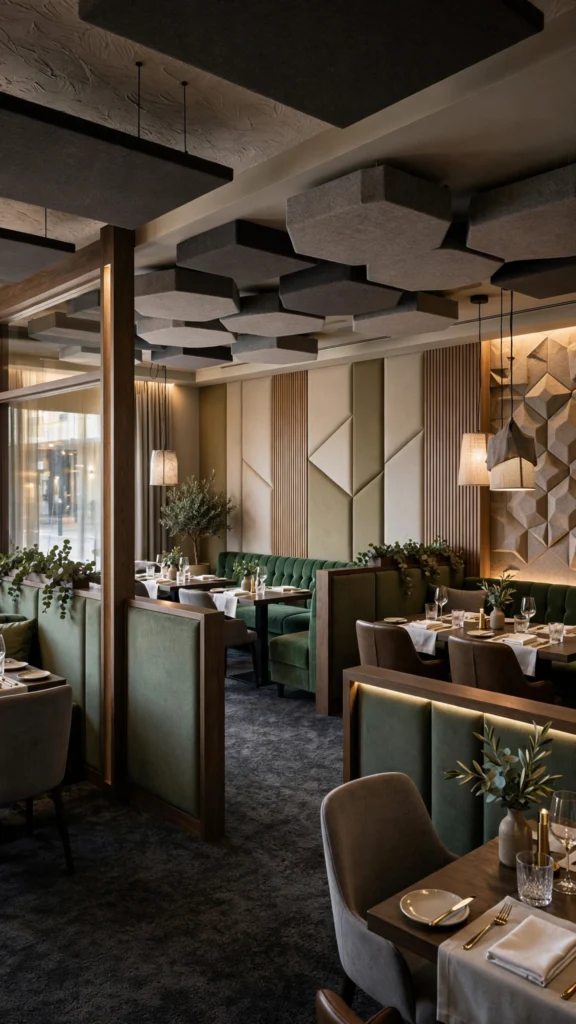
Many commercial restaurant projects now incorporate acoustic panels, upholstered seating, textured ceilings, decorative wall treatments, sound-absorbing flooring, and insulated partitions to reduce echo and background noise.
Acoustic planning is particularly important for fine dining restaurants, luxury cafés, hotel restaurants, and private dining spaces.
Creating comfortable sound environments encourages longer visits and enhances conversation quality.
Technology Integration Is Transforming Restaurant Interiors
Technology now plays a major role in modern commercial restaurant environments.
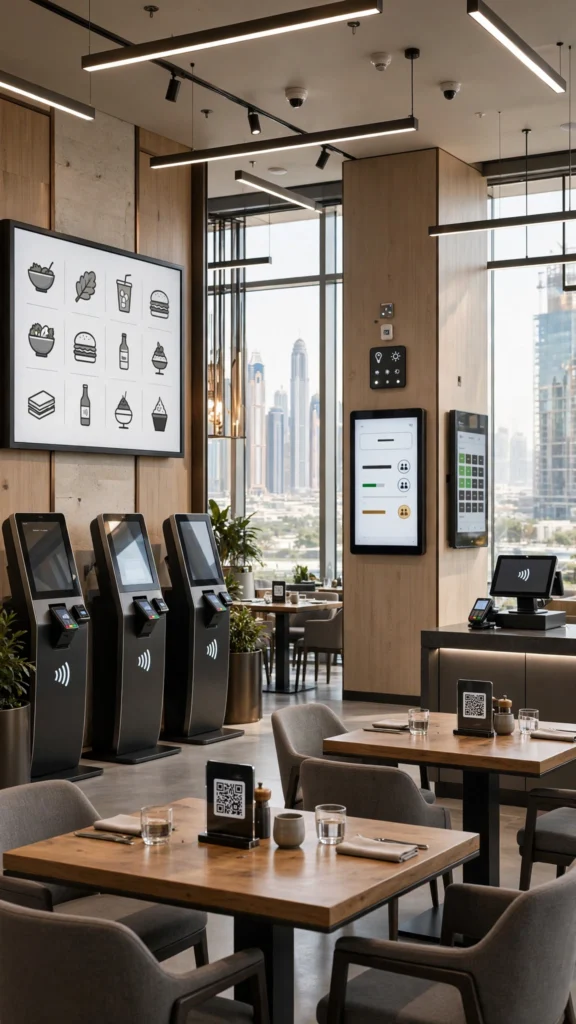
Many restaurants incorporate:
- Digital menu boards
- Self-order kiosks
- QR code ordering
- Contactless payment systems
- Smart reservation displays
- Digital signage
- Customer queue management
- Integrated POS systems
- Automated lighting controls
- Occupancy sensors
These technologies improve operational efficiency while enhancing customer convenience.
Restaurants designed with integrated technology infrastructure are better prepared for future operational requirements.
Indoor-Outdoor Dining Continues to Expand
Dubai’s favourable winter climate makes outdoor dining highly desirable.
Commercial restaurant projects increasingly feature terraces, rooftop seating, courtyards, shaded patios, retractable glazing systems, pergolas, landscape design, decorative lighting, and outdoor kitchens.
Restaurants located around Dubai Creek Harbour, The Beach JBR, Palm Jumeirah, and Bluewaters Island benefit significantly from carefully designed outdoor dining spaces.
Designers ensure exterior areas maintain visual continuity with interior spaces while providing thermal comfort and weather protection.
Brand Identity Drives Every Design Decision
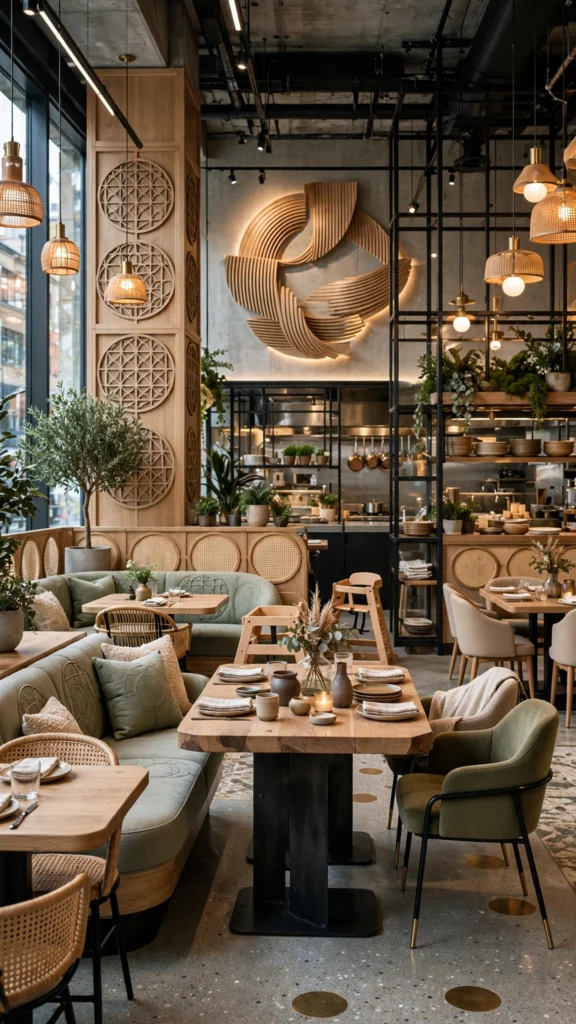
Successful restaurants communicate their brand through interior design.
Every element—from colour palettes and materials to furniture selection and lighting—should reinforce the restaurant’s personality.
Luxury restaurants often feature premium finishes, elegant detailing, bespoke furniture, and artistic focal points.
Casual cafés may embrace minimalist Scandinavian aesthetics, industrial design, or contemporary urban themes.
Family restaurants typically prioritise comfort, durability, and welcoming environments.
Strong visual branding creates memorable customer experiences and improves social media visibility.
Space Planning Improves Operational Efficiency
Effective restaurant layouts balance customer comfort with operational performance.
Commercial designers carefully analyse:
- Customer circulation
- Kitchen workflow
- Staff movement
- Service stations
- Waiting areas
- Emergency exits
- Accessibility
- Washroom locations
- Storage
- Delivery access
Efficient planning reduces congestion while improving service speed and employee productivity.
Restaurants handling high customer volumes especially benefit from professionally optimised floor plans.
Bespoke Furniture and Custom Joinery Are Growing in Popularity
Many restaurant owners now invest in custom-built furniture that reflects their unique identity.
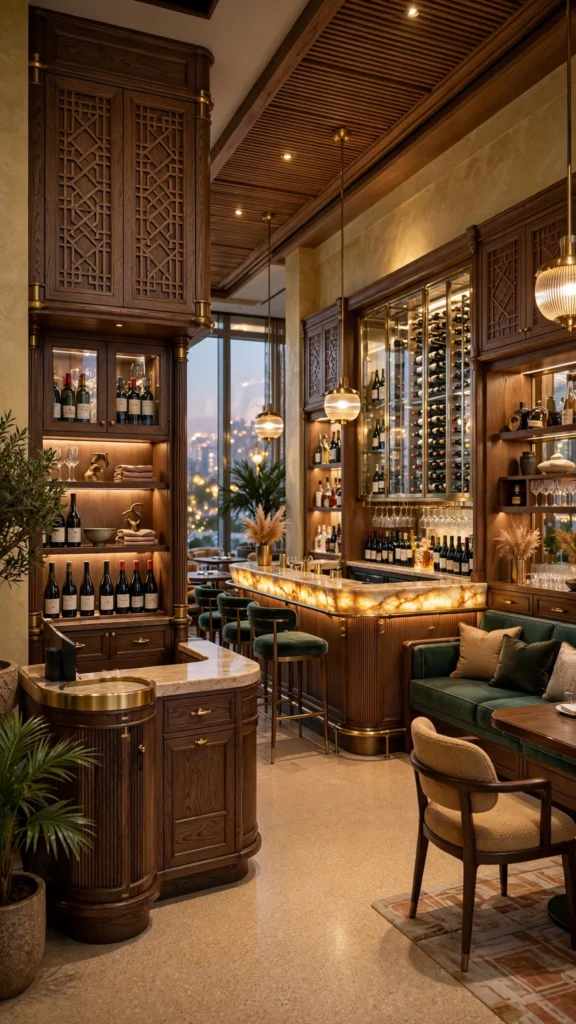
Bespoke banquette seating, feature bars, decorative shelving, wine displays, reception counters, hostess stations, and display cabinetry create distinctive interiors unavailable through standard furniture suppliers.
Custom joinery also maximises space utilisation, particularly within compact restaurant layouts.
High-quality craftsmanship contributes to long-term durability and enhances the perceived value of the dining environment.
Wellness-Focused Restaurant Design
Wellness has become an emerging consideration within commercial hospitality design.
Restaurants increasingly incorporate natural daylight, biophilic design, indoor plants, green walls, improved indoor air quality, ergonomic seating, and healthier material selections.
These design features create more relaxing environments while improving customer comfort and employee wellbeing.
Biophilic interiors also align with Dubai’s growing emphasis on sustainable urban development.
Commercial Interior Design Across Dubai’s Key Dining Destinations
Different districts across Dubai require tailored restaurant interior solutions based on customer demographics and commercial environments.
Downtown Dubai often demands luxury hospitality concepts suitable for international visitors and premium dining experiences.
Business Bay focuses on contemporary restaurants serving professionals seeking efficient lunchtime service and sophisticated evening venues.
Dubai Marina combines waterfront aesthetics with modern hospitality concepts designed for tourists and residents.
Jumeirah attracts boutique cafés, upscale restaurants, and family dining establishments that emphasise elegant interiors.
Dubai Hills has become one of the fastest-growing residential communities where stylish cafés and neighbourhood restaurants require welcoming, community-focused interiors.
City Walk encourages experiential dining with artistic interiors, outdoor seating, and immersive customer environments.
Al Barsha continues expanding with family restaurants requiring practical yet visually appealing commercial interiors.
Dubai Silicon Oasis, Motor City, Arabian Ranches, Mirdif, and Al Quoz are also witnessing increasing investment in contemporary restaurant developments.
Understanding each area’s audience allows designers to create interiors that resonate with local customers while maintaining operational efficiency.
Choosing Professional Commercial Interior Designers
Large restaurant projects involve coordination between architects, interior designers, structural engineers, MEP consultants, lighting designers, kitchen specialists, project managers, contractors, and local authorities.
Professional commercial interior designers understand Dubai Municipality regulations, Civil Defence requirements, accessibility standards, food safety considerations, and hospitality best practices.
Working with experienced professionals minimises costly redesigns while ensuring projects remain on schedule and within budget.
For restaurant owners planning a new venue or renovating an existing establishment, investing in expert Commercial Interior Design Services for Restaurants ensures every aspect of the project is carefully planned—from concept development and spatial planning to material selection, lighting design, branding, and final execution.
Future Restaurant Interior Design Trends in Dubai
Dubai continues setting global benchmarks for hospitality innovation. Future commercial restaurant interiors will increasingly embrace artificial intelligence, smart building systems, adaptive lighting, sustainable construction materials, immersive digital experiences, robotics integration, energy-efficient mechanical systems, and data-driven space planning.
Restaurants that combine innovative technology with timeless design principles will remain competitive in an ever-evolving hospitality landscape.
Commercial interior design is no longer simply about creating beautiful spaces. It has become a strategic business investment that enhances operational efficiency, strengthens brand identity, improves customer satisfaction, and supports long-term commercial success.
As Dubai’s restaurant industry continues to expand across areas such as Downtown Dubai, DIFC, Dubai Marina, Palm Jumeirah, Business Bay, Dubai Hills, City Walk, Jumeirah, Bluewaters Island, Al Barsha, and Dubai Creek Harbour, thoughtfully designed interiors will continue to shape memorable dining experiences that attract visitors from around the world.
0 comments