
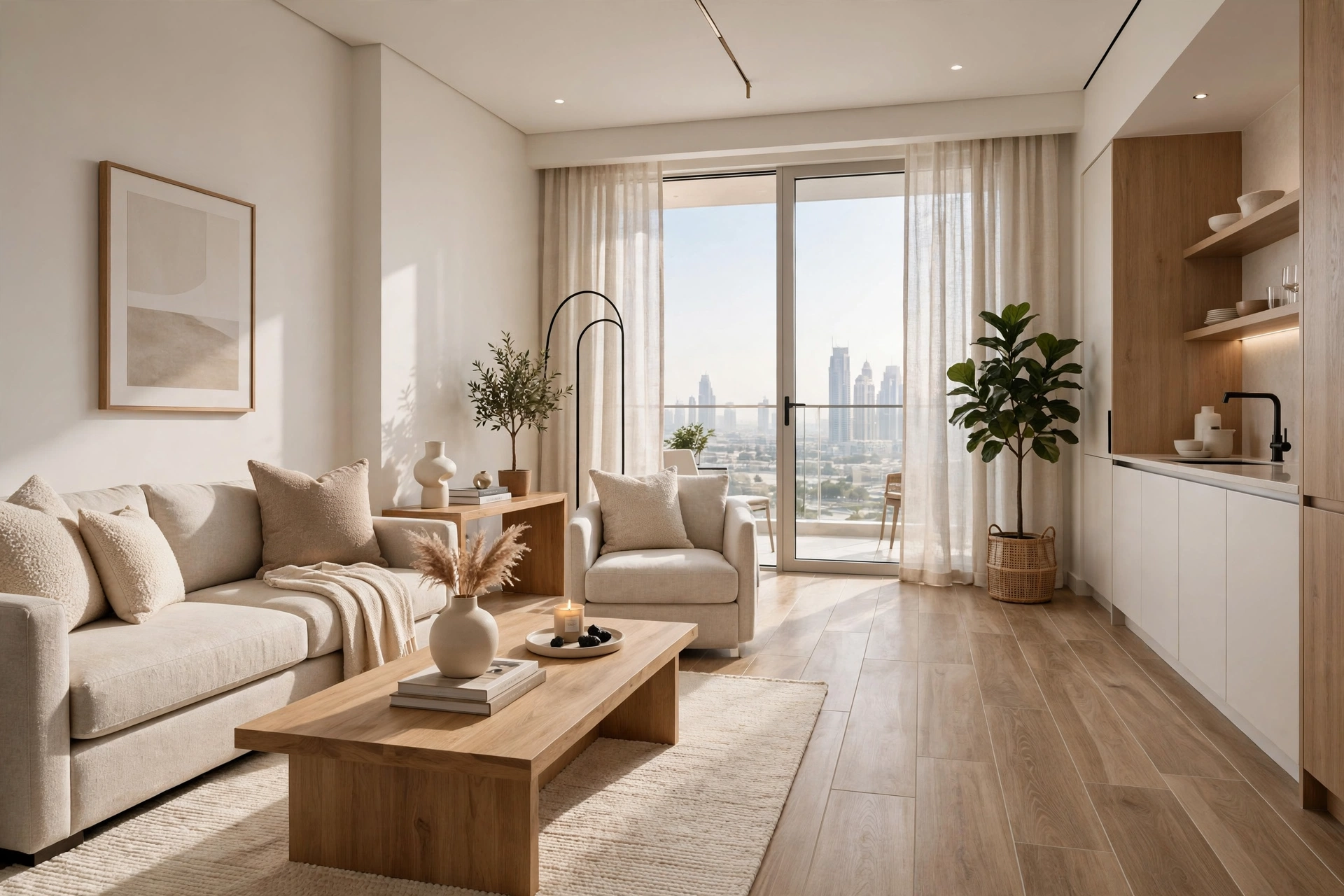
Choosing Flooring for Apartments: A Practical Guide for Comfort, Style and Durability
Choosing the right flooring for an apartment is an important decision because the floor affects much more than appearance. Flooring influences comfort, acoustics, maintenance, indoor air quality, durability, and the overall character of a living space. The right material should suit the room, lifestyle, climate, building requirements, and interior design concept.
Apartments in Dubai, Abu Dhabi, Sharjah, and other UAE locations can have specific flooring considerations because of high temperatures, air-conditioning use, dust, humidity, frequent cleaning, and different residential layouts. A flooring material that works well in a low-traffic bedroom may not be the best choice for a busy kitchen, entrance, or living room.
This guide explains how to compare flooring materials and choose an option that provides a practical balance between aesthetics, performance, maintenance, and long-term value.
Why Flooring Selection Matters in an Apartment
Apartment flooring creates the foundation for the entire interior. Wall colours, furniture, lighting, curtains, doors, and decorative elements are all visually connected to the floor. A suitable flooring material can make a compact apartment feel more spacious, create continuity between rooms, or establish different zones within an open-plan layout.
Practical performance is equally important. Floors are exposed to foot traffic, furniture movement, spills, cleaning products, sunlight, moisture, and everyday wear. Families with children or pets may require more durable surfaces, while rental properties may benefit from materials that are easy to maintain and replace.
The best choice therefore depends on both design preferences and functional requirements.
Consider the Apartment Layout Before Choosing Flooring
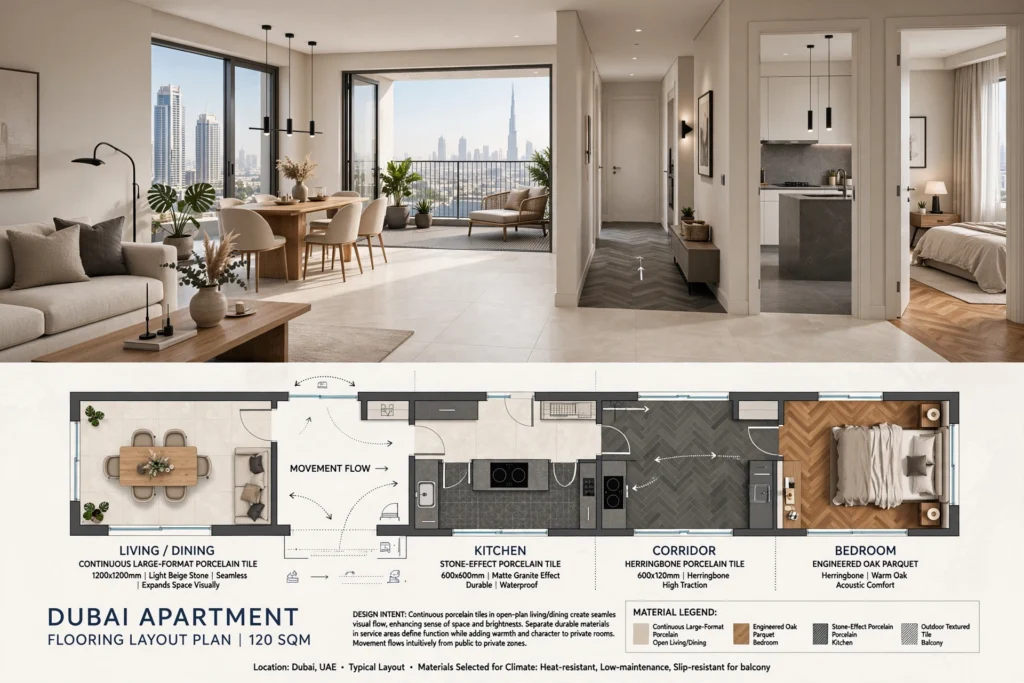
The first step is to understand the apartment’s layout. An open-plan living and dining area may benefit from one continuous flooring material because visual continuity can make the space appear larger.
In apartments with separate bedrooms, kitchens, bathrooms, corridors, and balconies, different materials can be selected according to the requirements of each area. However, excessive variation can make an apartment feel visually fragmented.
Consider the size of the rooms, natural light, ceiling height, furniture arrangement, and movement between spaces. Large-format tiles or continuous flooring can create a cleaner visual appearance, while contrasting materials can help define specific functional areas.
For homeowners planning a complete renovation, professional Apartments Interior Design Services can help coordinate flooring with furniture layouts, lighting, wall finishes, cabinetry, colour palettes, and architectural details.
Ceramic and Porcelain Tiles for Apartments
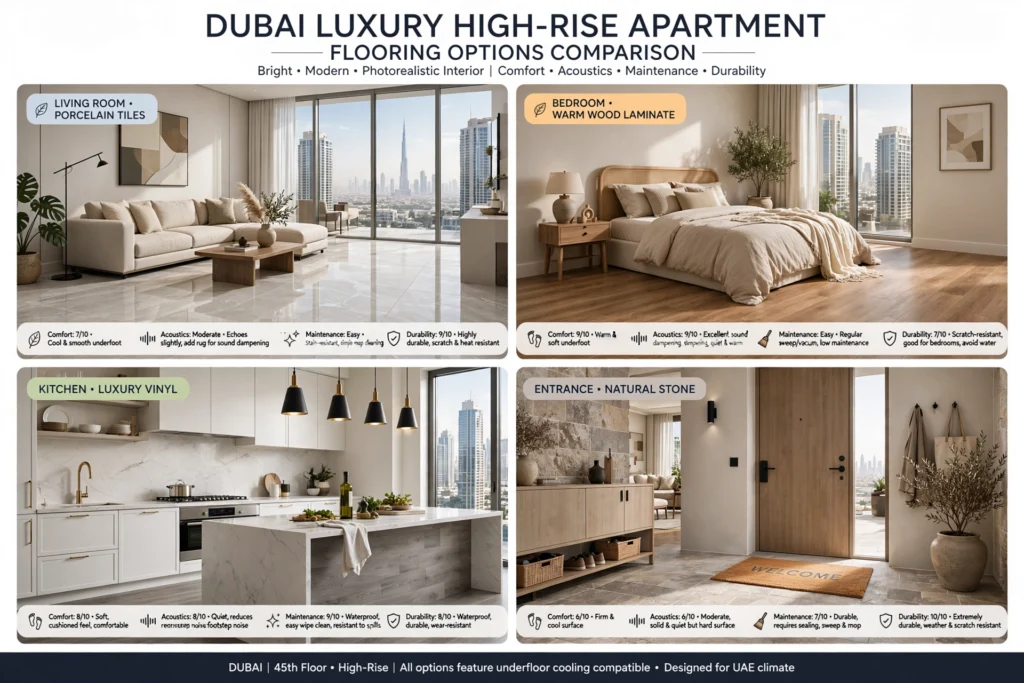
Ceramic and porcelain tiles are popular choices for apartment interiors because they offer durability, easy maintenance, and a wide range of colours, textures, patterns, and finishes.
Porcelain is particularly suitable for high-traffic areas because it is dense and durable. It can replicate the appearance of natural stone, timber, concrete, or other finishes while offering the practical characteristics of tile.
Tiles are often suitable for living rooms, kitchens, entrances, bathrooms, and corridors. They are also compatible with frequent cleaning, which can be useful in dusty environments.
However, tiled floors can feel hard and cold underfoot. Grout lines also require maintenance, particularly in areas exposed to spills and dirt.
Natural Stone Flooring
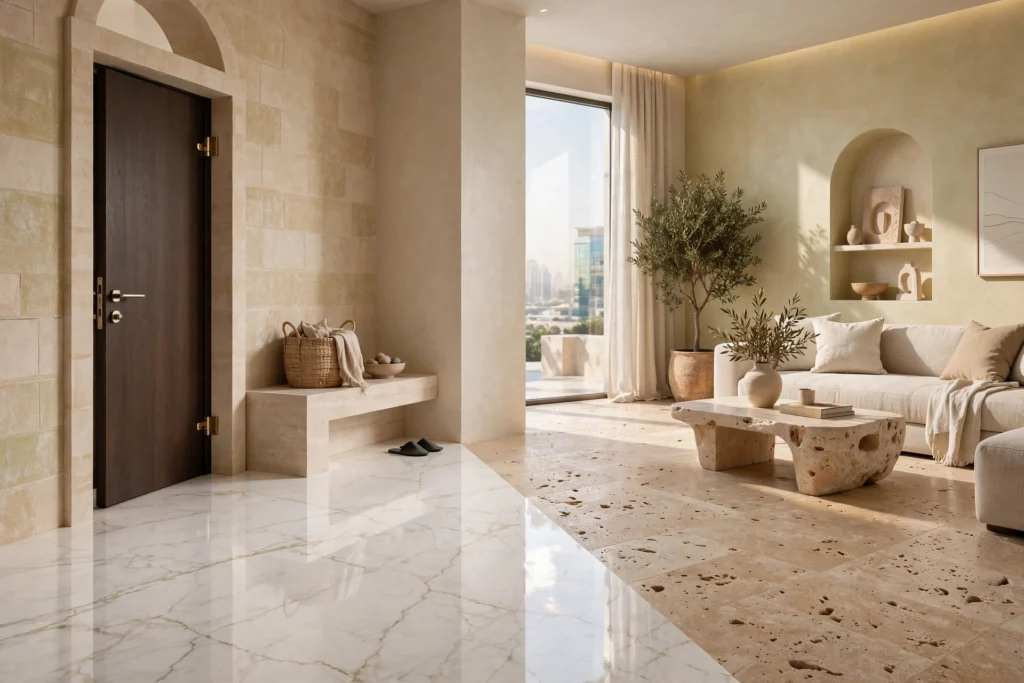
Natural stone can provide an elegant and high-end appearance. Marble, limestone, travertine, and other stone materials can create distinctive patterns because every piece has natural variations.
Marble flooring is commonly associated with luxury interiors and can work particularly well in spacious living areas, entrance halls, and high-end apartments. Stone can also complement contemporary, classic, Mediterranean, and minimalist design concepts.
However, natural stone requires appropriate sealing and maintenance. Some stone types are more porous and sensitive to staining than porcelain or ceramic alternatives.
The material should therefore be selected according to the room, expected traffic, maintenance requirements, and desired appearance rather than choosing stone solely because it looks luxurious.
Vinyl Flooring for Apartment Interiors
Luxury vinyl flooring, including luxury vinyl tile and luxury vinyl plank, is another practical option for apartments. Modern vinyl products can reproduce the appearance of timber, stone, or other materials while offering a softer walking surface.
Vinyl can be useful in bedrooms, living areas, corridors, and other residential spaces where comfort and easy maintenance are priorities.
Water-resistant products may also be suitable for selected areas, although the manufacturer’s specifications should always be checked before installation. Proper subfloor preparation is important because unevenness underneath can affect the appearance and performance of the finished floor.
Vinyl is also available in many colours and plank patterns, making it possible to create anything from a contemporary appearance to a warm wood-inspired interior.
Laminate Flooring for Residential Spaces
Laminate flooring can provide a timber-inspired appearance at a relatively accessible price point. It is constructed from multiple layers, with a decorative surface designed to replicate natural wood or other finishes.
Laminate is often selected for bedrooms, living rooms, studies, and other dry residential areas. It can create a warm and comfortable atmosphere without requiring the same maintenance associated with some natural materials.
Moisture resistance varies significantly between products. Standard laminate may not be appropriate for bathrooms or areas where standing water is common.
Installation quality also matters because moisture entering through poorly prepared joints or subfloors can affect the material.
Engineered Wood Flooring
Engineered wood flooring combines a real wood surface with a layered construction. It provides the natural appearance and tactile character of timber while offering greater dimensional stability than some traditional solid-wood applications.
Engineered wood can be an attractive choice for bedrooms, living rooms, dining areas, and premium residential interiors.
It is particularly suitable when the design concept emphasizes natural materials, warmth, and sophisticated detailing. Different wood species, stains, plank widths, and finishes can create very different visual results.
Because wood responds to environmental conditions, the installation should account for indoor temperature and humidity. Proper acclimatization, subfloor preparation, and installation procedures are important for long-term performance.
Carpet for Bedrooms and Comfortable Spaces
Carpet can provide softness, warmth, and acoustic benefits, making it suitable for bedrooms and selected living areas.
A carpeted bedroom can feel quieter and more comfortable underfoot, particularly during early mornings or late evenings. It can also help reduce the transmission of some impact sounds within the apartment.
However, carpet requires more attention to cleaning and stain management than many hard flooring materials. Dust and allergens can also accumulate if regular vacuuming is neglected.
For UAE apartments, carpet selection should consider indoor air-conditioning, cleaning requirements, household habits, and the manufacturer’s maintenance recommendations.
Flooring for Kitchens
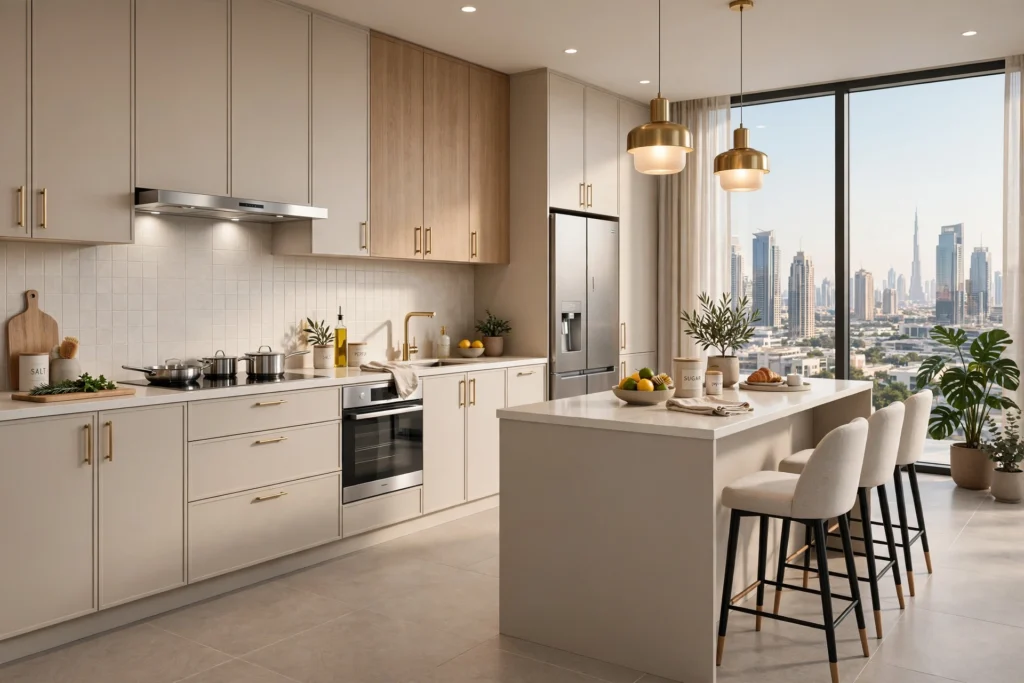
Kitchen flooring should be selected for durability, moisture resistance, stain resistance, and ease of cleaning. Spills, food particles, cooking oils, and frequent movement can place significant demands on the floor.
Porcelain and ceramic tiles are common choices because they are relatively easy to clean and available in many finishes. Certain vinyl products can also be appropriate when specifically rated for the application.
Surface texture should also be considered. Highly polished flooring may become slippery when wet, while excessively textured surfaces can be more difficult to clean.
The flooring should work visually with kitchen cabinets, countertops, splashbacks, appliances, and lighting.
Flooring for Apartment Bathrooms
Bathrooms require materials that can handle moisture and regular cleaning. Porcelain and ceramic tiles are commonly used for bathroom floors and walls.
Slip resistance is particularly important in wet areas. The appropriate tile surface should provide a suitable balance between safety, appearance, cleaning, and water resistance.
Floor falls toward drainage points also need to be considered during installation. Waterproofing beneath the finished surface is equally important because the tile itself should not be treated as the complete waterproofing system.
Natural stone may also be used in premium bathrooms, but the selected stone may require additional sealing and maintenance.
Flooring for Living Rooms
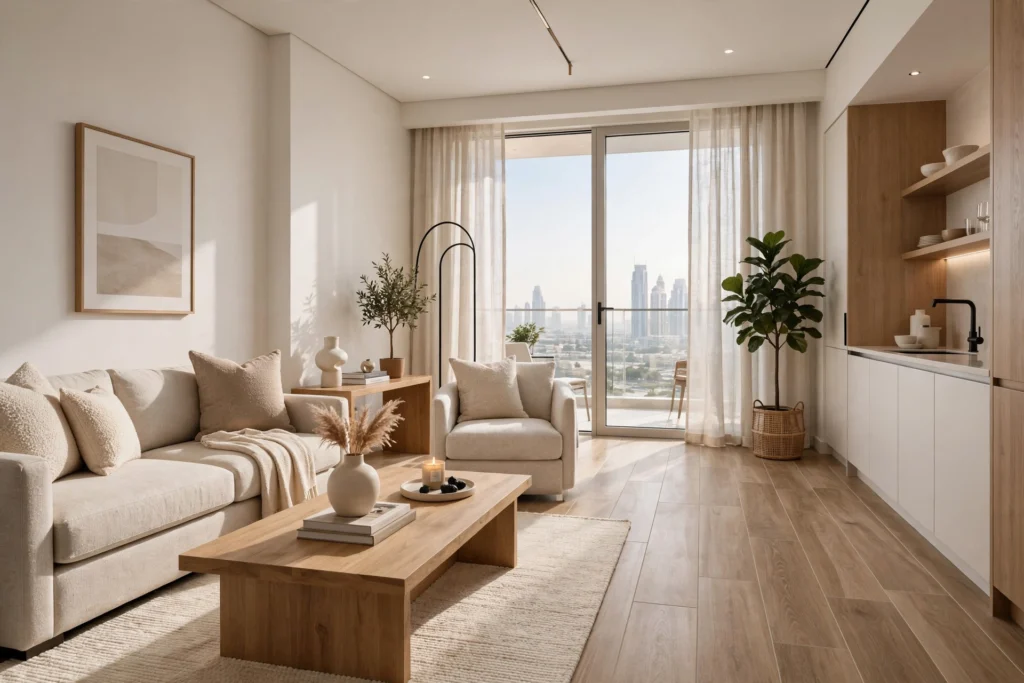
The living room is usually one of the most visually important areas of an apartment. Flooring should therefore complement the overall interior style while handling everyday traffic.
Large-format porcelain tiles can create a clean contemporary appearance, while wood-look porcelain, engineered timber, laminate, or vinyl can create a warmer atmosphere.
Colour is also important. Light flooring can make a smaller apartment appear more open and bright, while darker flooring can create a more intimate and sophisticated atmosphere.
Furniture size should be considered before selecting plank or tile dimensions. Large patterns can work beautifully in spacious rooms but may overwhelm smaller layouts.
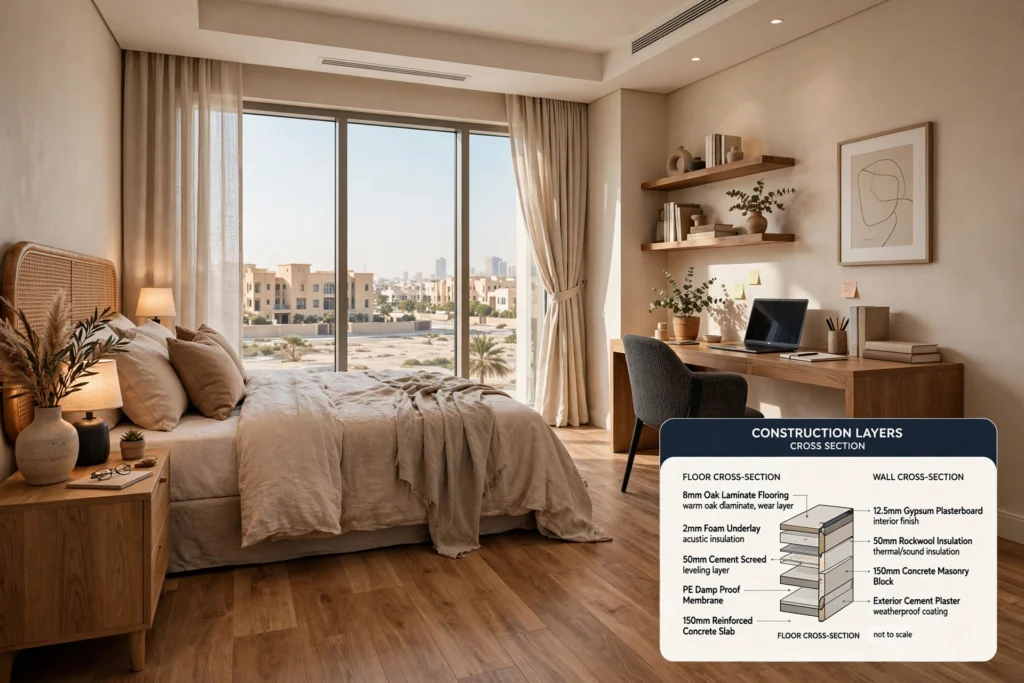
Flooring for Bedrooms
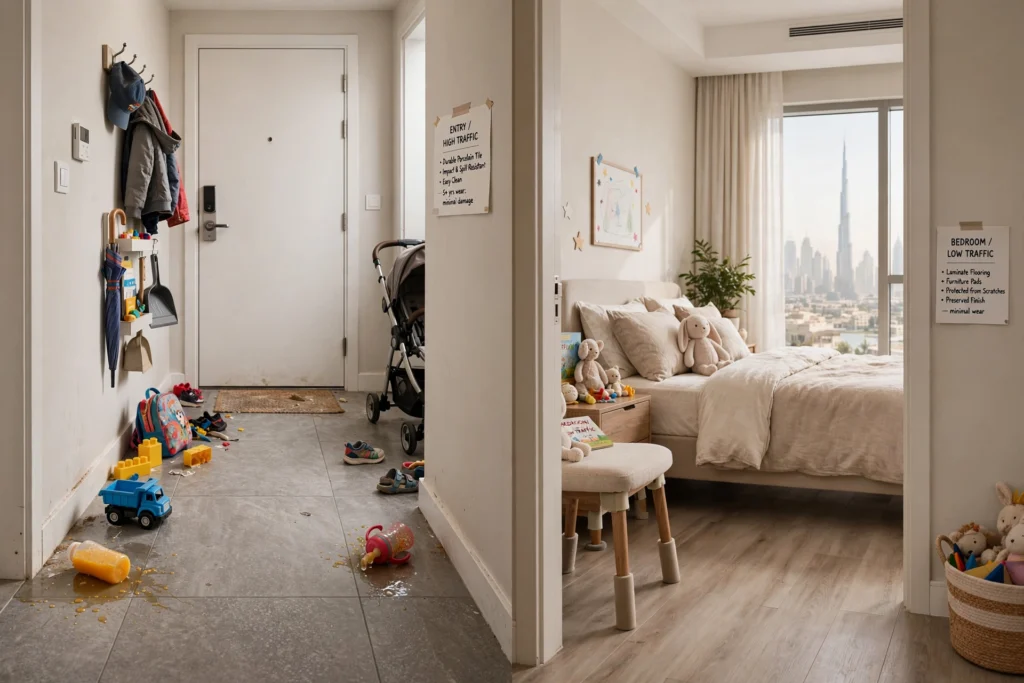
Bedrooms generally have lower traffic than entrances and living areas, so comfort can become a greater priority.
Engineered wood, laminate, luxury vinyl, and carpet can all create comfortable bedroom environments. Wood-inspired flooring can introduce warmth without requiring heavy visual decoration.
For minimalist bedrooms, neutral oak, beige, warm grey, or natural stone-inspired surfaces can create a calm foundation. More distinctive flooring can be used when the bedroom design is intended to become a stronger visual feature.
Flooring and Indoor Air Quality
Flooring materials can contribute to the overall indoor environment. Product selection should consider emissions, adhesives, finishes, cleaning chemicals, and installation materials.
Hard flooring can make dust visible and easy to remove, while carpets can retain particulate matter and therefore require regular vacuuming.
In air-conditioned apartments, maintaining suitable indoor humidity and cleaning HVAC filters can also influence the overall indoor environment.
When selecting flooring, homeowners should review manufacturer documentation and applicable product certifications rather than relying only on marketing descriptions.
Flooring and Acoustic Comfort in Apartments
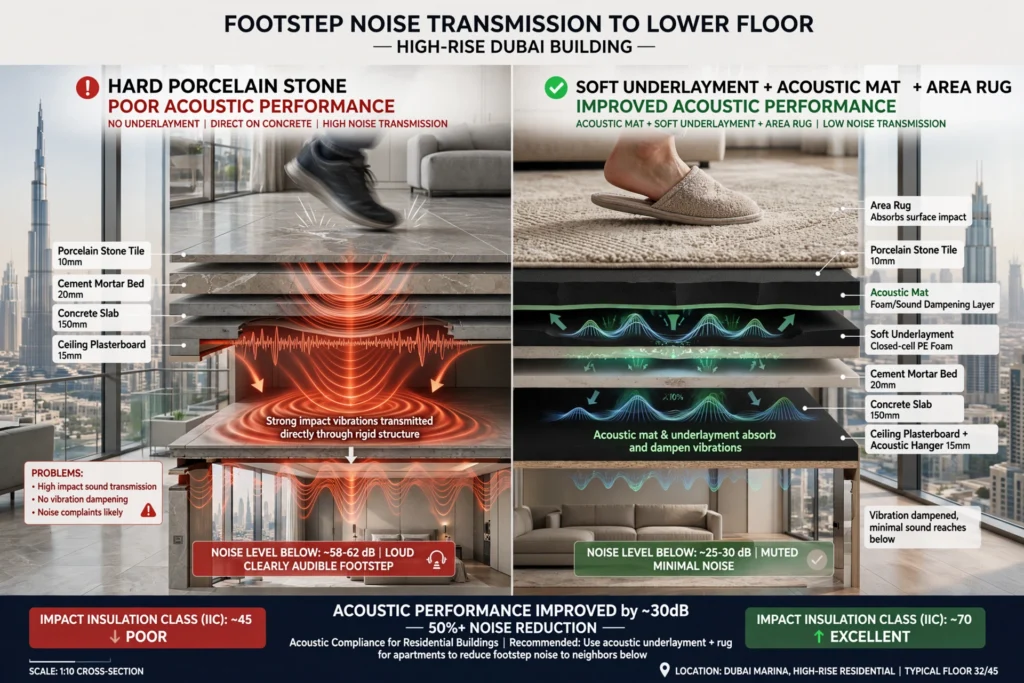
Noise transmission is an important consideration in multi-storey residential buildings.
Hard surfaces such as porcelain, ceramic, and stone can reflect sound and may create more noticeable footstep noise. Underlayments, area rugs, acoustic treatments, and appropriate installation systems can help improve acoustic comfort.
Apartment owners should also check building or community requirements regarding acoustic underlay, especially when replacing flooring in a high-rise building.
The flooring assembly, not simply the visible surface, determines much of the acoustic performance.
Flooring for Dubai’s Climate
Dubai’s climate creates particular considerations for apartment flooring. High outdoor temperatures, strong air-conditioning, dust, and occasional humidity can affect how residential materials perform.
Air-conditioning maintains indoor conditions, but transitions between indoor and outdoor environments can still expose flooring to changes in temperature and moisture.
Porcelain and ceramic tiles are generally dimensionally stable and therefore widely used in UAE residential interiors. Wood-based products can also perform well when correctly specified and installed according to manufacturer requirements.
Balconies and semi-outdoor areas require materials specifically designed for exposure to sunlight, moisture, and temperature changes.
Maintenance Requirements
Before choosing flooring, consider how much maintenance you are willing to perform.
Tile generally requires sweeping, mopping, and periodic grout cleaning. Natural stone may require sealing. Timber and engineered wood may have specific cleaning and refinishing requirements. Vinyl is generally easy to maintain but should still be cleaned using manufacturer-approved products.
Carpet requires regular vacuuming and occasional deep cleaning.
A flooring material that looks excellent but requires more maintenance than your lifestyle allows may not be the right long-term choice.
Durability and Apartment Traffic
Durability should be matched to actual use rather than simply selecting the hardest material available.
A family apartment with children may experience more impacts, spills, and furniture movement than a single-occupant property. Rental apartments may require surfaces that can withstand frequent tenant turnover.
Entryways and corridors typically experience higher traffic than bedrooms. Using highly durable materials in these areas can reduce visible wear.
Furniture pads and protective accessories can also reduce scratches and impact damage regardless of the flooring material.
Flooring Colour and Interior Design
Flooring colour can significantly influence how an apartment feels.
Light beige, cream, ivory, and soft grey floors can make spaces appear brighter and more open. Warm wood tones can make rooms feel more comfortable and residential. Dark flooring can provide contrast and sophistication but may make smaller spaces appear visually heavier.
The floor should be evaluated alongside wall colours, cabinetry, furniture, doors, skirting, lighting, and natural daylight.
A sample viewed in a showroom may look different when installed across a large floor area under the apartment’s actual lighting conditions. It is therefore useful to review physical samples in the intended space.
Large-Format Tiles and Small Apartments
Large-format tiles are increasingly popular in contemporary apartment interiors. Fewer grout joints can create a visually continuous surface and make a room appear more spacious.
However, large tiles require a sufficiently level substrate and accurate installation. Poorly prepared surfaces can create lippage, uneven joints, or installation difficulties.
The tile size should also be proportionate to the room and layout. A professional flooring installer can assess the substrate and recommend appropriate dimensions.
Flooring Installation Quality Matters
Even high-quality flooring can perform poorly when installation is inadequate.
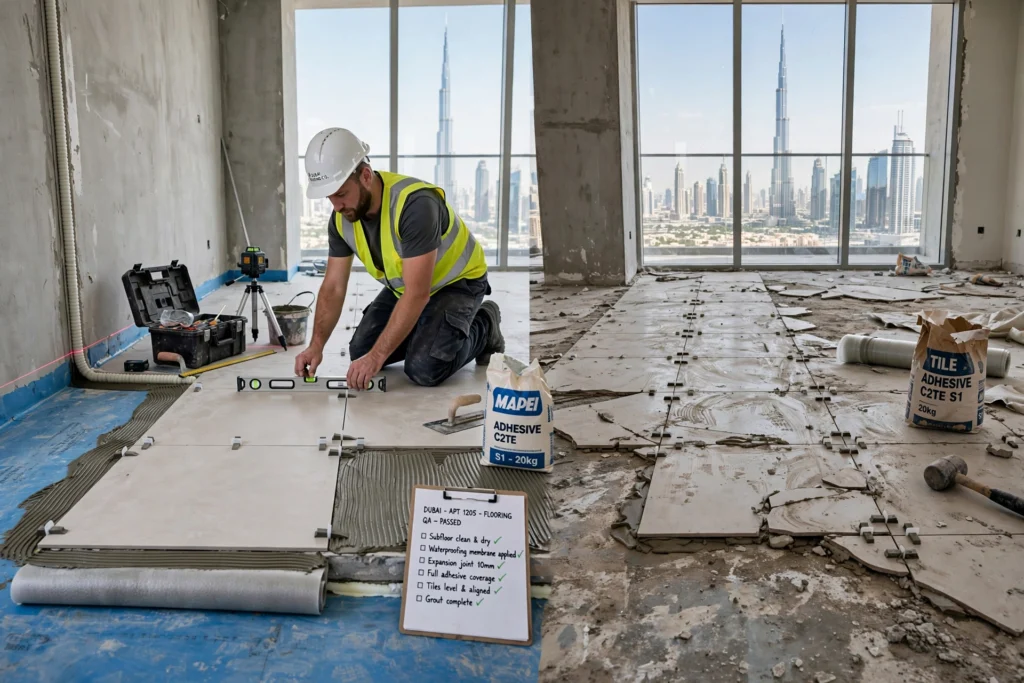
The subfloor should be clean, level, dry, and suitable for the selected material. Adhesives, underlayments, expansion gaps, grout, waterproofing, and movement joints should be installed according to the flooring manufacturer’s requirements.
For tile installations, correct adhesive coverage and joint alignment are important. For floating floors, expansion allowances and suitable underlayment are essential.
Good installation also reduces the risk of premature cracking, movement, hollow tiles, uneven surfaces, moisture damage, and visible gaps.
Flooring Selection for Apartments in Dubai, Abu Dhabi and Sharjah
Different UAE residential markets include everything from compact studio apartments to luxury penthouses and large family residences.
In Dubai Marina, high-rise apartments may benefit from durable, contemporary flooring that complements modern interiors. In Downtown Dubai, premium stone, porcelain, or engineered wood can suit luxury residential concepts. Family properties in Jumeirah, Al Barsha, Mirdif, and Arabian Ranches may prioritize durability, comfort, and easy maintenance.
In Abu Dhabi, areas such as Al Reem Island, Saadiyat Island, Yas Island, and Al Raha Beach include a wide variety of modern residential developments where flooring selection must coordinate with contemporary architecture.
Sharjah properties, including apartments around Al Majaz, Al Khan, Al Nahda, and Muwaileh, can similarly benefit from flooring solutions selected according to apartment size, family use, budget, and maintenance requirements.
These local considerations are useful, but the final material selection should always be based on the actual property conditions.
How to Compare Flooring Options
A practical comparison should consider several factors rather than focusing only on purchase price.
Appearance: Does the material complement the desired interior style?
Durability: Can it handle expected traffic and everyday use?
Maintenance: How much cleaning and periodic treatment will it require?
Moisture resistance: Is it suitable for kitchens, bathrooms, or other wet areas?
Comfort: Does it provide the desired underfoot feel?
Acoustics: Is impact-noise control important?
Installation: Does the existing subfloor support the material?
Lifecycle cost: How much will the flooring cost over its expected service life?
Availability: Can replacement pieces or matching products be obtained later?
Considering all these factors can produce a more balanced decision than selecting flooring based solely on appearance.
Sustainable Flooring Considerations
Sustainability is becoming increasingly important in residential interior design. Homeowners can consider products made with responsible materials, recycled content, long service lives, and appropriate environmental certifications.
Durability itself can be a sustainability advantage because flooring that lasts longer may not need to be replaced as frequently.
Natural materials, engineered products, ceramic tiles, and vinyl can all have different environmental characteristics depending on manufacturing processes, transportation, installation systems, and disposal.
The most useful approach is to review credible product information and consider the complete lifecycle rather than labeling one flooring category as automatically sustainable.
Flooring and Apartment Resale Value
Flooring can influence how potential buyers perceive an apartment. Worn, damaged, outdated flooring can make an otherwise attractive property appear neglected.
Neutral and durable materials often provide broader appeal because they allow future owners to adapt furniture and decorative styles more easily.
Premium flooring can contribute to the perceived quality of a high-end apartment, but expensive materials do not necessarily provide better resale value if they are difficult to maintain or unsuitable for the property.
The best investment is usually flooring that combines visual appeal, durability, practical maintenance, and compatibility with the apartment’s overall design.
Common Flooring Mistakes to Avoid
One common mistake is choosing flooring based only on colour or appearance. A beautiful material may not be appropriate for a wet or high-traffic area.
Another mistake is ignoring the existing subfloor. Uneven, damp, or damaged substrates can cause problems regardless of flooring quality.
Homeowners should also avoid assuming that every wood-look product performs in the same way. Laminate, engineered wood, vinyl, and porcelain wood-look tiles have very different construction and maintenance requirements.
Using the same flooring throughout an entire apartment can create visual continuity, but it is not always the best functional choice. Kitchens and bathrooms may require different materials from bedrooms and living spaces.
When to Consult an Interior Design Professional
Professional guidance can be valuable when flooring is part of a larger apartment renovation.
An interior designer can coordinate flooring with spatial planning, furniture, lighting, cabinetry, wall finishes, doors, ceilings, and colour schemes. This can be especially useful for luxury apartments, complete renovations, investment properties, and unusual layouts.
Professional planning also helps avoid costly mistakes caused by selecting materials before understanding the overall design direction.
For homeowners in the UAE, combining flooring expertise with Apartments Interior Design Services can create a more cohesive residential environment where practical performance and visual design are considered together.
Frequently Asked Questions
What is the best flooring for an apartment?
There is no single best option for every apartment. Porcelain, ceramic, vinyl, laminate, engineered wood, natural stone, and carpet can all be suitable depending on the room, lifestyle, budget, maintenance requirements, and design concept.
Is porcelain tile good for Dubai apartments?
Porcelain tile can be a practical choice for many Dubai apartments because it is durable, easy to clean, and available in numerous designs. The correct product should still be selected according to the specific room and installation requirements.
What flooring is best for bedrooms?
Bedrooms can use engineered wood, laminate, luxury vinyl, carpet, or other suitable materials. Comfort, acoustic performance, design preferences, and maintenance requirements should guide the selection.
Should the same flooring be used throughout an apartment?
Using one flooring material across several connected areas can create visual continuity. However, bathrooms, kitchens, balconies, and other specialized spaces may require different materials because of moisture and performance requirements.
How long should apartment flooring last?
Service life varies significantly by material, product quality, installation, traffic, cleaning, and maintenance. Proper installation and appropriate use can substantially extend the useful life of most flooring systems.
Conclusion
Choosing flooring for an apartment requires a balance between appearance, durability, comfort, maintenance, climate, acoustic performance, installation requirements, and budget. The right material should support the way the apartment is actually used rather than being selected purely for its appearance.
Porcelain and ceramic tiles can provide durable and easy-to-clean surfaces, natural stone can create a premium aesthetic, vinyl can offer practical comfort, laminate can provide a wood-inspired appearance, engineered wood can introduce natural warmth, and carpet can improve softness and acoustic comfort in appropriate spaces.
For apartments in Dubai, Abu Dhabi, Sharjah, and across the UAE, climate, air-conditioning, dust, humidity, traffic, and building requirements should also be considered. Most importantly, flooring should be coordinated with the wider interior concept.
A carefully selected and professionally installed floor can improve everyday comfort, simplify maintenance, complement the architecture, and contribute to the long-term value of an apartment. When flooring is considered alongside furniture, lighting, colour, space planning, and finishes, it becomes an integral part of a successful residential interior rather than simply a surface underfoot.
0 comments