
Custom Majlis Interior Design: Creating Elegant, Comfortable and Culturally Inspired Spaces in the UAE
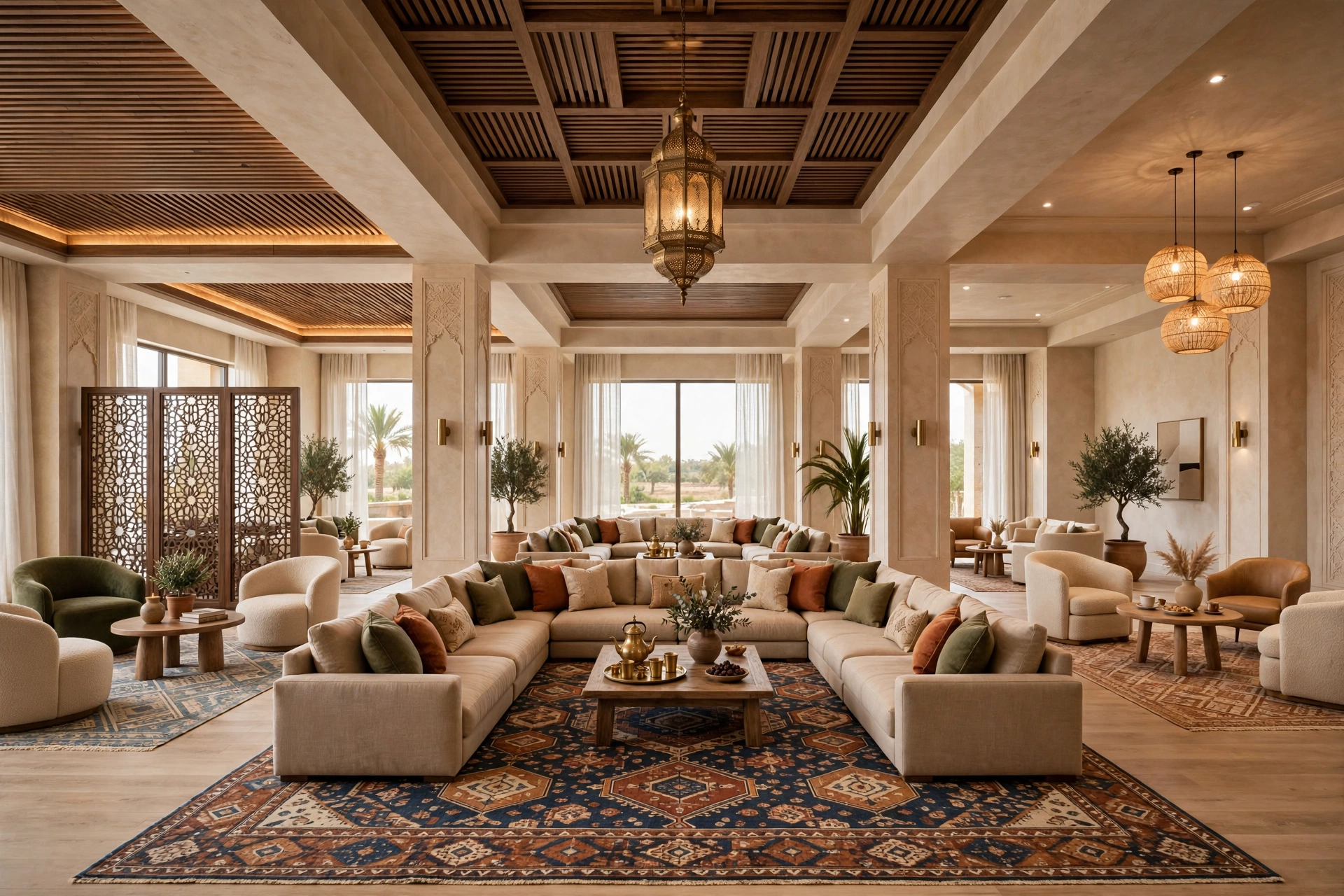
A majlis is more than a guest room. In UAE homes, it represents hospitality, privacy, conversation, family gatherings, and cultural identity. For this reason, designing a majlis requires a different approach from designing an ordinary living room. The space needs to feel welcoming while maintaining a sense of elegance, comfort, privacy, and connection to local architectural traditions.
Modern homeowners in Dubai, Abu Dhabi, and other parts of the UAE increasingly want majlis interiors that combine traditional Arabic influences with contemporary materials, comfortable furniture, sophisticated lighting, and practical technology. The result can be a space that respects cultural expectations while fitting naturally into a modern villa.
A successful majlis design therefore depends on more than decorative features. Seating proportions, circulation, acoustics, lighting, ventilation, materials, privacy, furniture placement, and the relationship between the majlis and the rest of the property all contribute to the final experience.
What Makes a Majlis Different From a Regular Living Room?
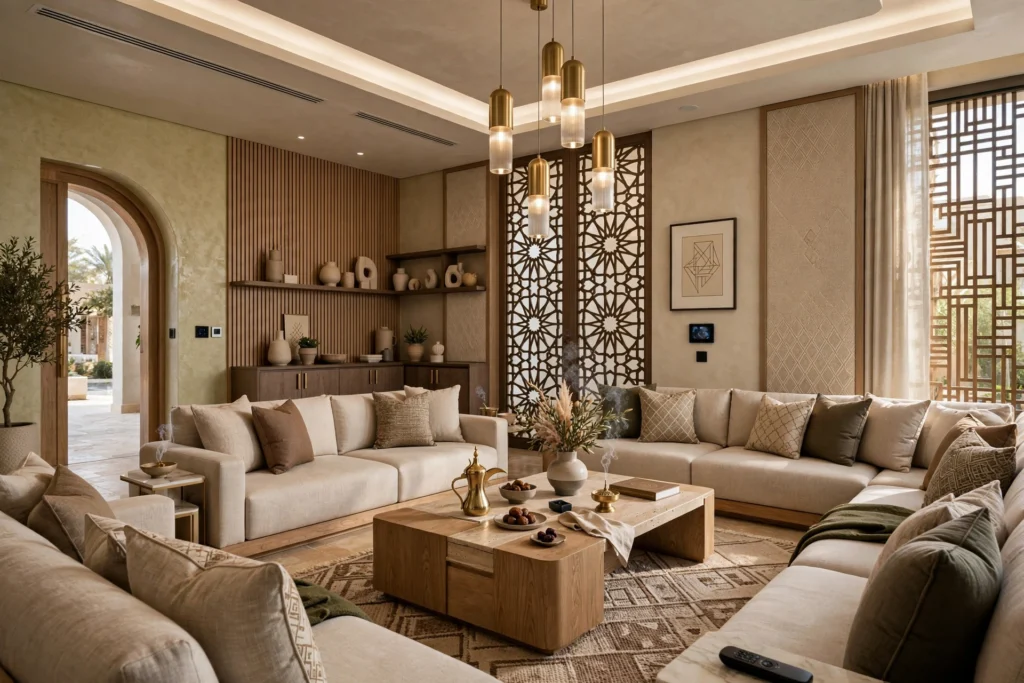
The fundamental difference between a majlis and a conventional living room is its purpose. A living room is often designed primarily around family relaxation, television viewing, and everyday activities, whereas a majlis traditionally provides a dedicated environment for receiving guests and social interaction.
This difference affects almost every design decision. Seating may be arranged around the perimeter of the room rather than facing a television. The center can remain relatively open for movement and conversation. Decorative elements may have greater cultural significance, while entrances and circulation routes are planned to provide an appropriate level of privacy.
A well-designed majlis should allow guests to enter comfortably, sit without disrupting circulation, and interact naturally with everyone in the room.
Understanding the Cultural Role of a Majlis in UAE Homes
The majlis has an important place in Emirati culture and remains relevant in contemporary residential architecture. It provides a dedicated setting for welcoming relatives, friends, neighbors, and business guests.
Traditional majlis spaces often feature generous seating, carpets, cushions, decorative textiles, and architectural details inspired by regional design. Contemporary interpretations may incorporate minimalist furniture, modern lighting, marble, timber, textured walls, and sophisticated neutral color palettes.
The objective is not necessarily to reproduce an old-fashioned interior. Instead, designers can interpret traditional principles through contemporary architecture and materials.
This approach allows a majlis to feel distinctly connected to UAE culture without compromising modern comfort.
How to Plan a Custom Majlis Interior
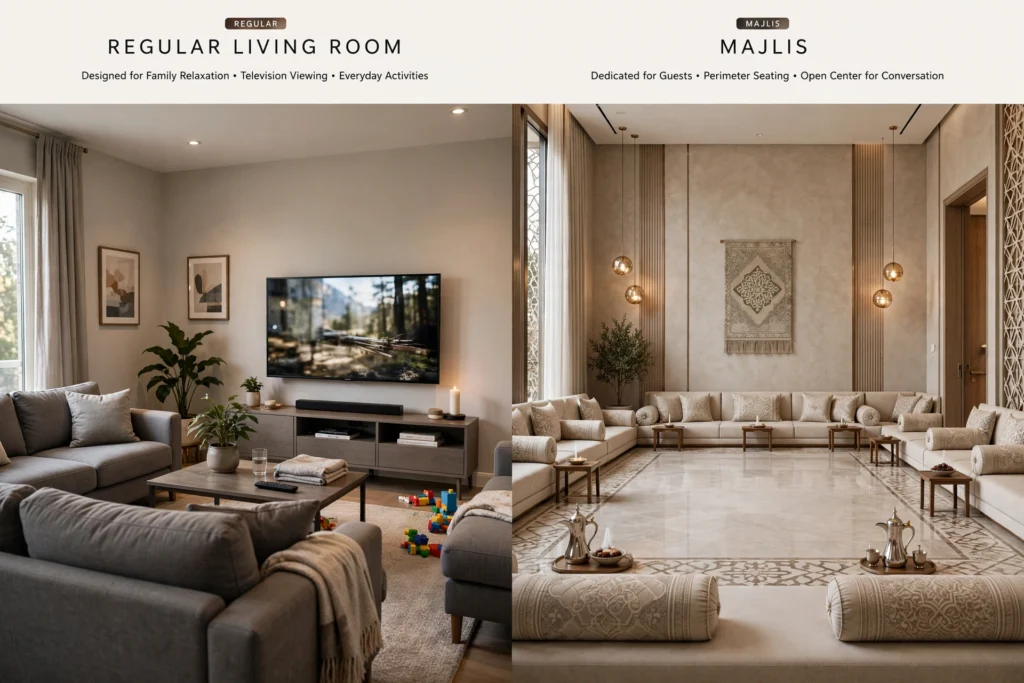
Planning should begin with the room itself.
The designer should assess the dimensions, ceiling height, windows, doors, columns, electrical points, HVAC outlets, natural lighting, and relationship with adjacent spaces.
The number of expected guests is also important. A majlis designed for occasional family gatherings will have different requirements from one regularly used for large social events.
The seating capacity should be calculated before selecting furniture. A room can look spacious when empty but become overcrowded once sofas, side tables, carpets, lighting fixtures, and decorative elements are installed.
Circulation should remain clear between the entrance, seating areas, serving points, and other parts of the home.
Traditional vs Modern Majlis Interior Design
Traditional majlis interiors often use rich fabrics, ornate details, patterned carpets, carved wood, brass accents, decorative arches, and strong Arabic influences.
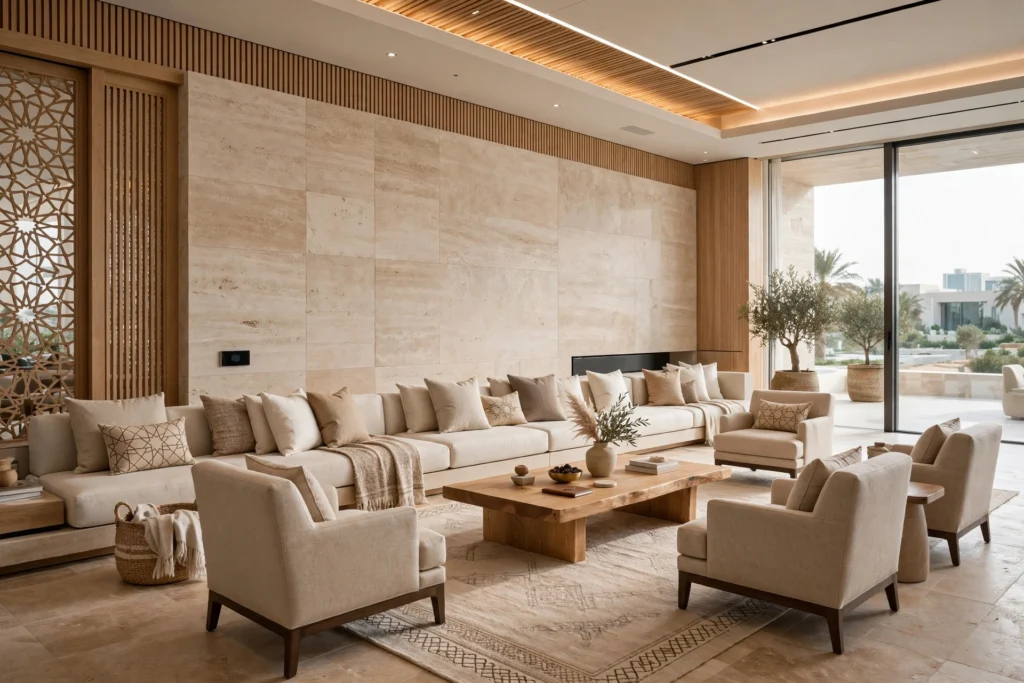
Modern majlis design tends to use cleaner lines, restrained colors, contemporary furniture, architectural lighting, large-format surfaces, and simplified decorative elements.
Neither approach is inherently better.
The right choice depends on the architecture of the villa and the homeowner’s preferences.
A contemporary villa in Dubai Hills Estate may benefit from a minimalist majlis featuring neutral upholstery, marble surfaces, concealed lighting, and subtle geometric patterns. A more traditional villa may work better with deeper colors, ornamental detailing, timber features, and classic Arabic furniture.
Hybrid design can combine both approaches effectively.
Choosing the Right Majlis Seating Arrangement
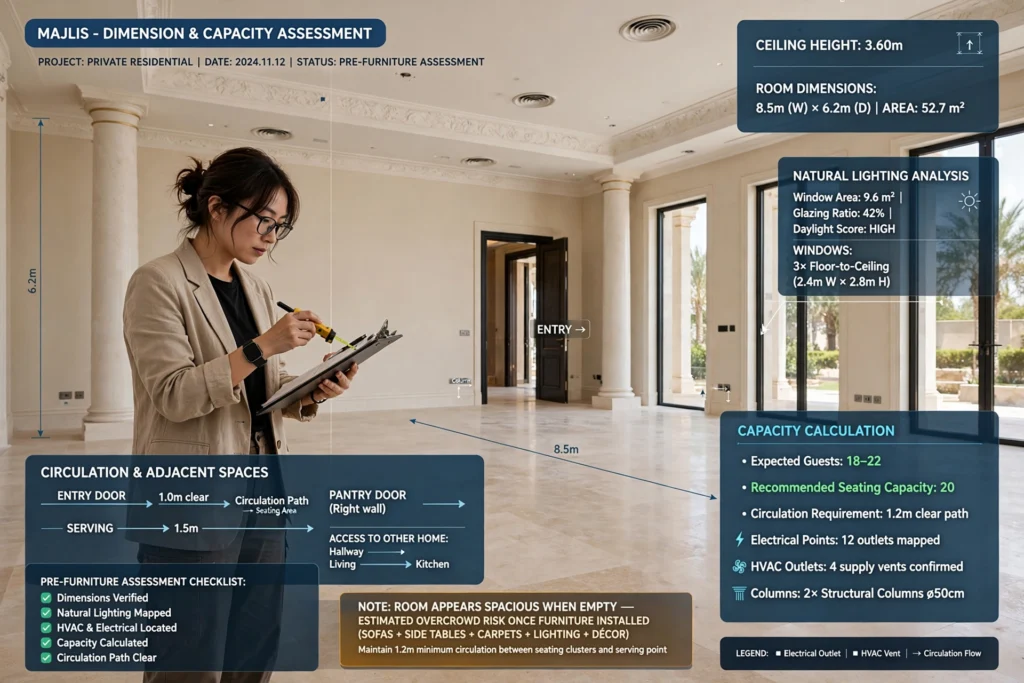
Seating is one of the most important components of a majlis.
Traditional layouts commonly place seating around the walls, leaving the central area relatively open. This arrangement supports conversation and allows guests to interact across the room.
Contemporary designs may combine built-in sofas with individual armchairs, occasional seating, benches, and floor cushions.
The seat height, depth, back support, and upholstery should be considered carefully because guests may remain seated for extended periods.
Furniture should also maintain appropriate circulation. Large sofas should not make the entrance feel narrow or force guests to walk through the center of a conversation area.
Custom Majlis Furniture and Upholstery
Bespoke furniture can help solve many of the proportion and layout challenges found in majlis interiors.
Custom sofas can be manufactured according to the exact dimensions of the room, allowing designers to maximize seating without making the space feel crowded.
Upholstery should be selected according to usage.
For a frequently used majlis, durable fabrics with suitable stain resistance can be more practical than delicate materials.
Luxury interiors may incorporate velvet, textured fabrics, leather, premium woven materials, or layered cushions.
The furniture does not need to be visually heavy. Contemporary bespoke seating can maintain generous capacity while creating a refined appearance.
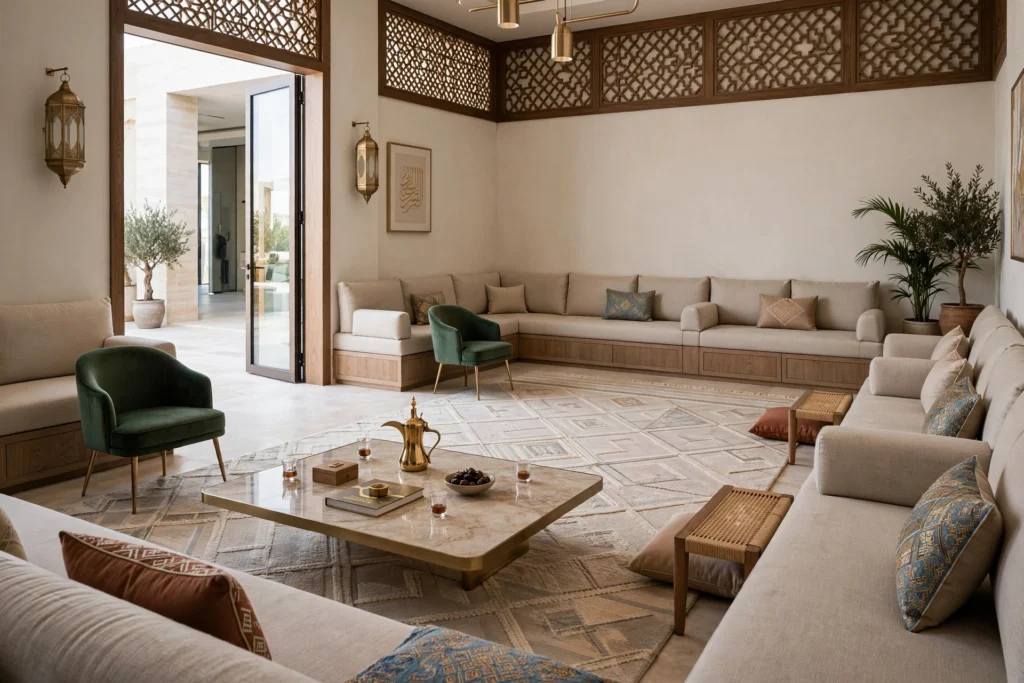
Majlis Color Schemes for Dubai Villas
Color has a strong influence on the atmosphere of a majlis.
Neutral palettes such as beige, cream, sand, taupe, warm gray, and off-white can create a calm and sophisticated environment.
Gold, bronze, brass, deep green, burgundy, navy, or charcoal can then be introduced as accent colors.
Traditional interiors may use richer tones, while contemporary spaces often use restrained palettes.
The size and natural lighting of the room should influence the color selection.
A smaller majlis may benefit from lighter walls and furniture, while a large room can accommodate deeper tones without appearing visually compressed.
Flooring Options for Elegant Majlis Interiors
Flooring should combine durability with comfort and visual quality.
Natural stone, marble, porcelain tiles, engineered wood, and other suitable interior materials can create a strong architectural foundation.
Large-format porcelain or marble can provide a clean contemporary appearance, while decorative rugs introduce warmth and help define seating areas.
A carpet can also improve acoustics by reducing reflected sound.
The flooring should be selected together with the furniture and wall finishes rather than treated as an isolated element.
For UAE homes, easy maintenance can also be important because dust and sand can enter through entrances and outdoor areas.
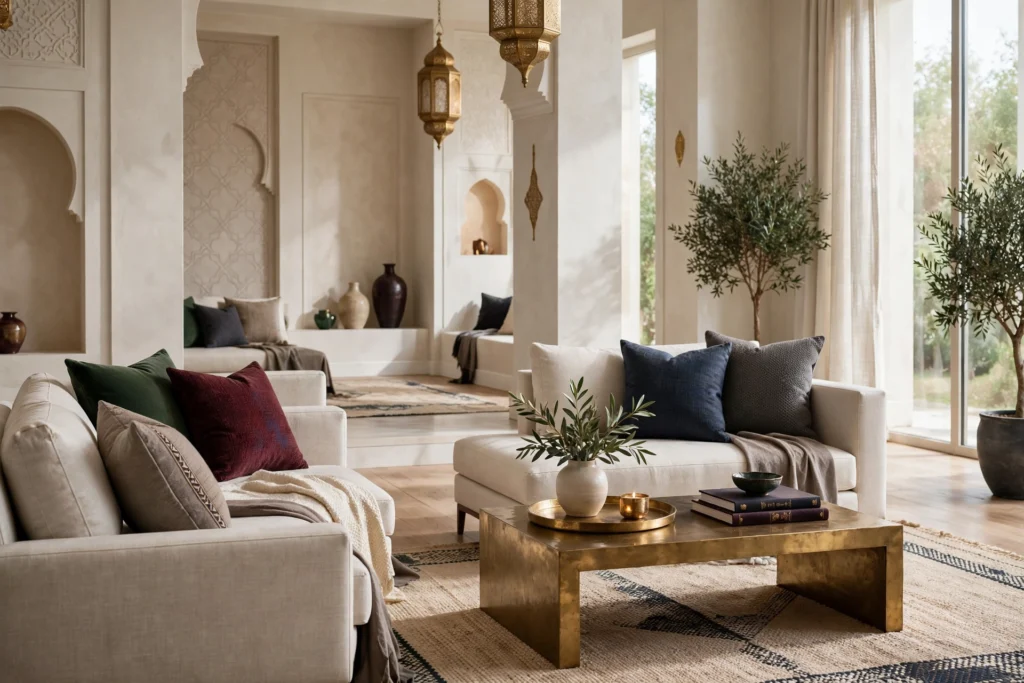
Wall Design and Decorative Finishes
Majlis walls offer substantial opportunities for architectural expression.
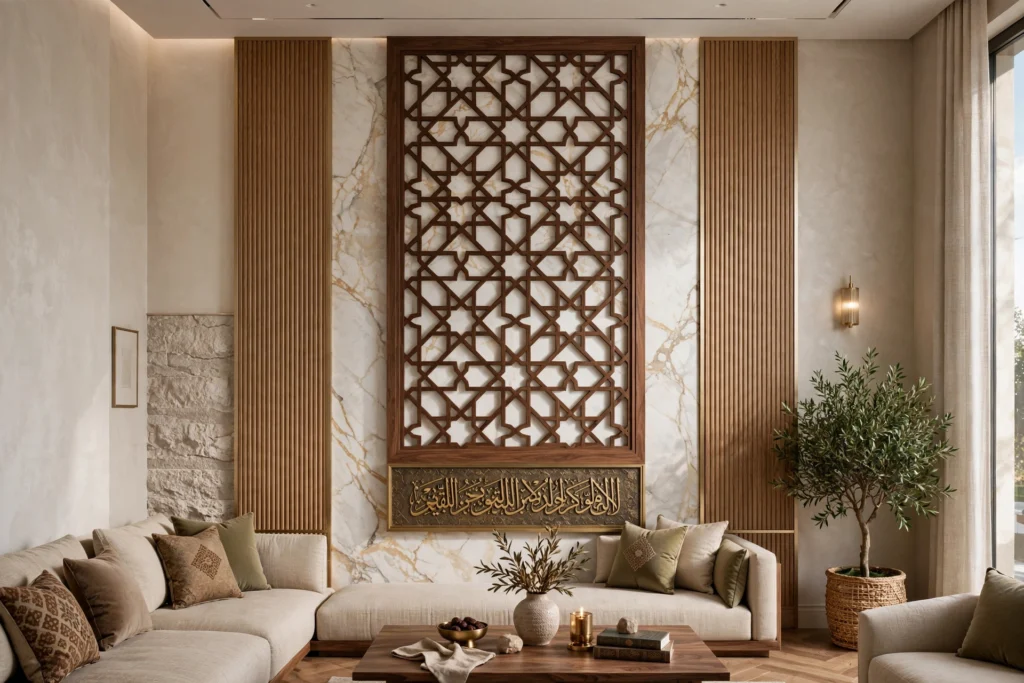
Common approaches include decorative wall panels, textured finishes, marble, wood veneer, fluted panels, stone, wallpaper, paint effects, and traditional geometric motifs.
Mashrabiya-inspired patterns can be incorporated into screens, partitions, wall panels, or decorative features.
Arabic calligraphy can also be used as artwork where it suits the homeowner’s aesthetic preferences.
The strongest interiors generally avoid decorating every wall equally. A feature wall can create a focal point while the remaining surfaces provide visual balance.
Majlis Ceiling Design and Architectural Details
The ceiling can influence the perceived scale and character of the room.
Contemporary majlis designs may use recessed ceilings, concealed LED lighting, linear details, or simple geometric forms.
More traditional interiors may incorporate decorative coffers, arches, ornamental gypsum work, or layered ceiling details.
Ceiling design should not become excessively complicated.
A sophisticated interior often uses architectural detailing selectively, allowing the furniture, lighting, walls, and decorative elements to work together.
The ceiling should also accommodate HVAC diffusers, smoke detectors, lighting fixtures, speakers, and other technical requirements without creating visual clutter.
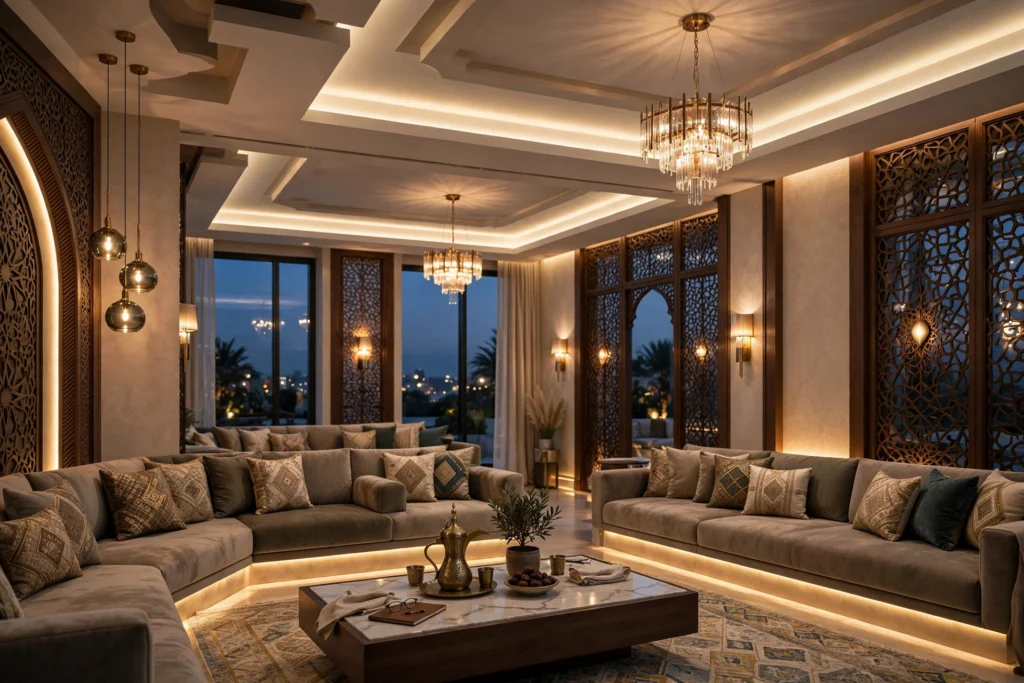
Lighting Design for a Comfortable Majlis
Lighting is critical because a majlis may be used during different times of the day.
Natural light can create an inviting daytime atmosphere, while layered artificial lighting provides flexibility after sunset.
A good lighting plan can combine ambient, task, accent, and decorative lighting.
Chandeliers can act as visual focal points in traditional or luxury interiors. Pendant fixtures may suit contemporary spaces. Wall sconces can provide softer illumination, while concealed LED strips can highlight architectural details.
Dimmable lighting allows the atmosphere to change according to the occasion.
A bright setting may be appropriate when welcoming guests, while softer lighting can create a more relaxed environment during evening gatherings.
Curtains, Privacy and Window Treatments
Privacy is an important consideration for many majlis spaces.
Curtains can control visibility from outside while also contributing to the interior design.
Layered window treatments can combine sheer curtains with heavier blackout or privacy fabrics.
The fabric should coordinate with the wall color, seating, and flooring.
Motorized curtains can be incorporated into smart home systems where appropriate.
In villas with large windows, window treatments also help control glare and solar heat.
This is particularly useful in Dubai, where direct sunlight can significantly affect interior comfort.
Creating Better Acoustics in a Majlis
Large rooms with hard floors, marble, glass, and reflective surfaces can produce excessive reverberation.
This can make conversations difficult, particularly when many people are present.
Acoustic comfort can be improved through carpets, upholstered furniture, curtains, wall treatments, acoustic panels, decorative textiles, and appropriate ceiling materials.
Acoustic design does not require the room to look like a recording studio.
Modern acoustic products can be integrated discreetly into decorative wall panels, ceilings, artwork, or architectural features.
A comfortable acoustic environment allows guests to speak naturally without raising their voices.
Arabic Patterns, Textures and Decorative Elements
Arabic geometric patterns can add cultural identity without overwhelming the interior.
Patterns can be introduced through carpets, screens, upholstery, wall panels, metalwork, tiles, or decorative accessories.
Traditional motifs can be interpreted through modern materials.
For example, an Islamic geometric pattern can become a laser-cut metal partition, a timber screen, a subtle wall texture, or a decorative lighting element.
Texture is equally important.
Combining smooth marble with natural wood, woven fabrics, brushed metal, and soft upholstery creates visual depth.
Luxury Majlis Design for Dubai Villas
Luxury majlis design is often characterized by proportion, craftsmanship, material quality, and attention to detail rather than simply using expensive finishes.
Large villas in areas such as Emirates Hills, Palm Jumeirah, and Dubai Hills Estate may have enough space for substantial majlis rooms with multiple seating zones.
Premium materials can include natural marble, engineered stone, high-quality wood veneers, brass details, bespoke upholstery, decorative plaster, custom joinery, and architectural lighting.
However, luxury should remain functional.
A room filled with decorative features but lacking comfortable seating or practical circulation will not provide a good guest experience.
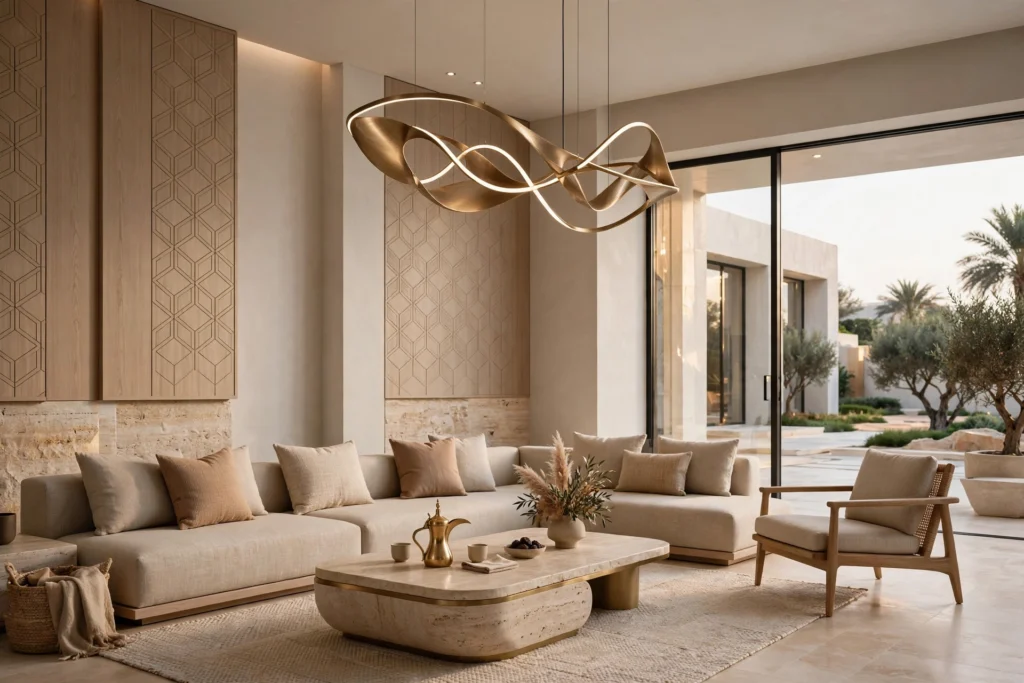
Modern Majlis Ideas for Contemporary Homes
Modern majlis design can retain cultural character while adopting contemporary architecture.
A neutral interior with a sculptural chandelier, minimalist seating, subtle geometric wall panels, and warm lighting can create an elegant contemporary environment.
Another approach is to use traditional materials in modern forms.
Natural wood, brass, stone, and textiles can provide cultural warmth without requiring ornate decoration.
The result can be a majlis that feels connected to its cultural purpose while fitting naturally into a modern Dubai villa.
Designing a Small Majlis Without Losing Elegance
A small majlis does not require excessive furniture.
Built-in seating can maximize available wall space while maintaining a clean layout.
Light colors can make the room feel more spacious.
Mirrors can be used selectively to reflect light and create visual depth.
Furniture should be appropriately scaled. Oversized sofas can quickly make a small majlis feel crowded.
A compact coffee table or a few flexible side tables may be more practical than a large central arrangement.
Vertical wall detailing can draw the eye upward and make the room appear taller.
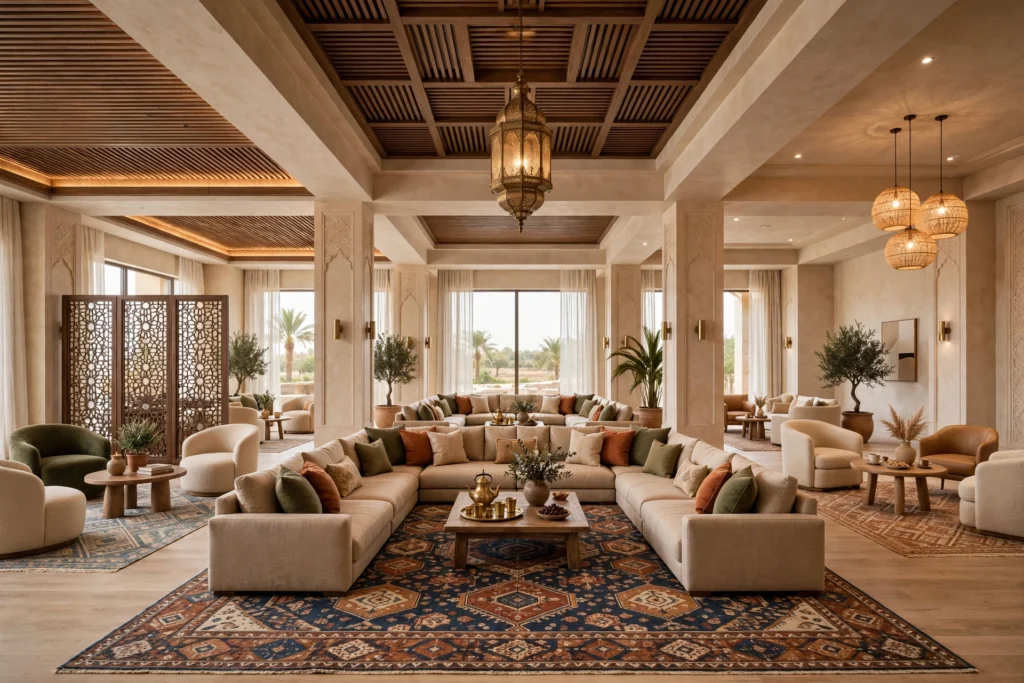
Majlis Design for Large Villas and Guest Areas
Large majlis spaces provide greater flexibility but can also create design challenges.
Simply filling a large room with furniture can make it feel visually disconnected.
Instead, designers can create several seating groups while maintaining a clear relationship between them.
A central carpet can establish the primary gathering area, while secondary seating can support smaller conversations.
Decorative screens, columns, lighting, or changes in ceiling treatment can subtly define zones without completely dividing the room.
This approach maintains the openness associated with a majlis while giving the large space a sense of organization.
Integrating Smart Home Technology
Modern technology can be incorporated without compromising the traditional character of a majlis.
Smart lighting allows homeowners to adjust brightness and scenes from a control system.
Motorized curtains can provide privacy and solar control.
Integrated audio systems can distribute sound without visible speakers dominating the walls.
Temperature control can also be automated through smart HVAC systems.
Technology should remain discreet.
The purpose is to improve comfort and convenience rather than turn the majlis into a showroom for electronic equipment.
HVAC and Indoor Comfort
Comfort in a UAE majlis depends heavily on temperature control.
The HVAC system should provide consistent cooling without creating uncomfortable drafts directly over seating areas.
Air-conditioning diffusers should be coordinated with furniture placement and ceiling design.
Ventilation also matters, particularly when many guests occupy the room.
During the design stage, the interior designer should coordinate with mechanical requirements so that air-conditioning grilles and access panels do not disrupt major decorative features.
Comfort should always take priority over purely visual considerations.
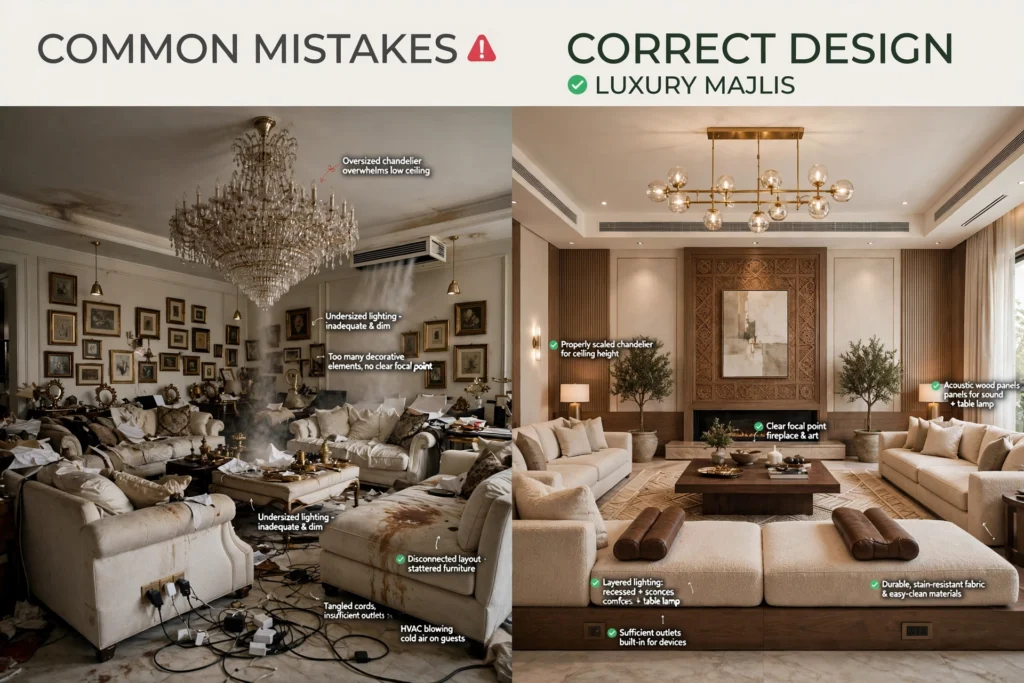
Common Majlis Interior Design Mistakes to Avoid
One common mistake is choosing furniture before establishing the layout.
Another is using too many decorative elements without a clear focal point.
Oversized chandeliers can overwhelm rooms with modest ceiling heights, while undersized lighting fixtures can look disconnected in large spaces.
Poor acoustic planning can make conversations uncomfortable.
Insufficient electrical outlets can create practical problems later.
Ignoring HVAC placement can result in uncomfortable airflow.
Another frequent issue is selecting materials based solely on appearance without considering cleaning, durability, and long-term maintenance.
Good design anticipates how the space will actually be used.
How Custom Design Improves Comfort and Functionality
Every villa has different dimensions, architectural conditions, family requirements, and cultural preferences.
A custom approach allows the design to respond to these specific factors.
Furniture can be proportioned to the room.
Lighting can be positioned according to seating.
Storage can be integrated into walls.
Screens can be designed around privacy requirements.
Acoustic treatments can be concealed within decorative features.
This is where Custom Majlis Interior Design becomes particularly valuable for homeowners who want a space that feels intentionally designed rather than assembled from unrelated furniture and decorative products.
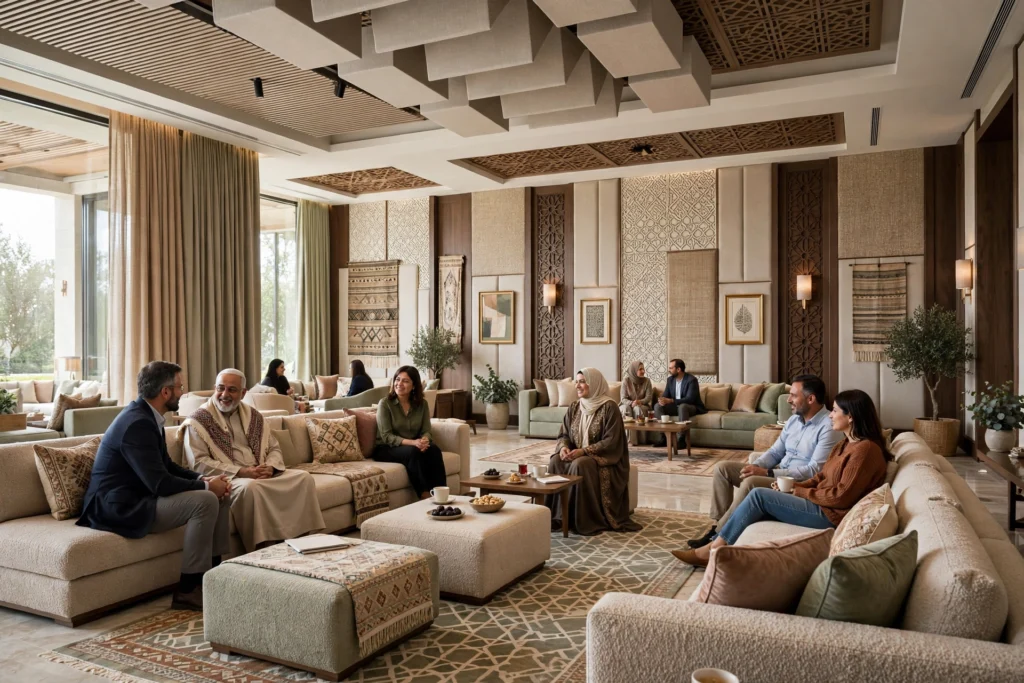
Majlis Interior Design Trends in Dubai and the UAE
Contemporary UAE interiors increasingly combine cultural identity with modern minimalism.
Warm neutral palettes, natural textures, architectural lighting, custom furniture, large-format stone surfaces, timber details, concealed technology, and carefully selected Arabic patterns are becoming common approaches.
Another trend is creating more flexible spaces.
Some homeowners want a majlis that can accommodate formal guests while remaining comfortable for family gatherings.
Movable furniture, adaptable lighting, integrated technology, and flexible seating can help achieve this balance.
The emphasis is increasingly on quality, comfort, proportion, and personalization rather than excessive decoration.
How to Choose a Professional Majlis Interior Design Company
The right design partner should understand both interior design and the functional requirements of UAE residential properties.
Review previous projects to assess the company’s ability to work with different architectural styles.
Ask how the design process handles furniture selection, material specifications, lighting, HVAC coordination, electrical planning, custom joinery, project management, and installation.
It is also useful to discuss the expected project timeline and how changes are managed during construction.
A professional team should be able to explain why particular materials, layouts, lighting systems, and finishes are appropriate rather than simply presenting attractive images.
Final Considerations for a Custom UAE Majlis
A majlis should reflect hospitality while providing genuine comfort.
Its success depends on how well the individual components work together.
Seating should support conversation. Lighting should create the right atmosphere. Flooring should be durable and comfortable. Wall and ceiling treatments should establish character without overwhelming the room. Curtains should support privacy. HVAC should maintain comfortable temperatures. Acoustic treatments should allow easy conversation.
At the same time, cultural elements should feel authentic and purposeful rather than decorative for the sake of decoration.
Whether the property is a contemporary villa in Dubai Hills Estate, a luxury residence in Emirates Hills, a family home in Jumeirah, or a large property in Abu Dhabi or Sharjah, the principles remain the same: understand the users, respect the architecture, plan the proportions carefully, select durable materials, and coordinate every design element.
A thoughtfully designed majlis becomes more than an impressive room. It becomes a comfortable environment for hospitality, conversation, family gatherings, and meaningful social interaction while expressing the character of the home and the cultural identity of the UAE.
0 comments