
Hotel Furniture Selection Guide
Choosing furniture for a hotel is not simply a matter of selecting attractive beds, sofas, tables, and chairs. Hotel furniture has to support guest comfort, interior design, brand identity, daily operations, durability, safety, cleaning, maintenance, and the overall experience of the property. Unlike residential furniture, hospitality furniture is exposed to frequent use and must perform reliably in busy environments.
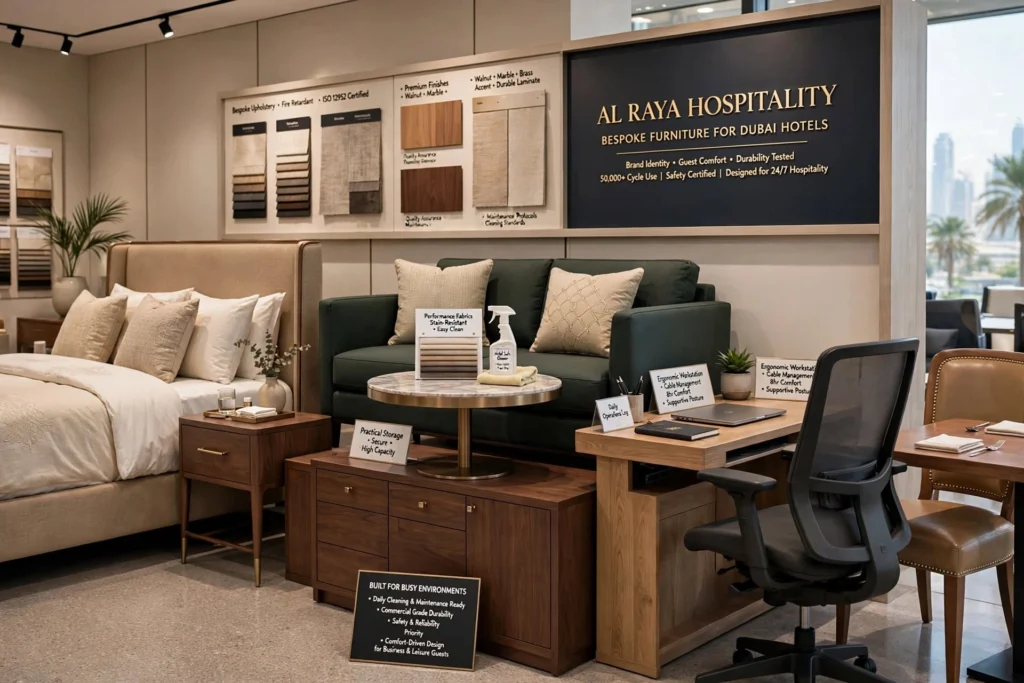
From hotel bedrooms and suites to reception areas, restaurants, lounges, meeting rooms, and outdoor spaces, every furniture selection contributes to the character of the property. A luxury hotel in Dubai may require bespoke furniture with premium finishes, while a business hotel in Abu Dhabi may prioritize ergonomic workstations and practical storage. Boutique hotels in Sharjah or resort properties in coastal destinations may require completely different solutions.
A thoughtful hotel furniture selection process considers the hotel’s category, target guests, architectural concept, available space, operating environment, budget, and long-term maintenance requirements.
Why Hotel Furniture Selection Matters
Furniture has a direct influence on how guests experience a hotel. A comfortable bed can improve sleep quality, an ergonomic desk can support business travellers, and well-designed lounge furniture can encourage guests to spend more time in public areas.
Furniture also contributes significantly to visual identity. Materials, colours, shapes, upholstery, wood finishes, metal details, and furniture proportions can reinforce a hotel’s interior design concept.
For hospitality operators, durability is equally important. Furniture that looks impressive during installation but quickly develops damaged upholstery, loose joints, scratched surfaces, or worn finishes can increase maintenance costs and affect guest satisfaction.
The right selection therefore balances aesthetics, comfort, functionality, durability, and lifecycle value.
Understanding the Hotel’s Design Concept
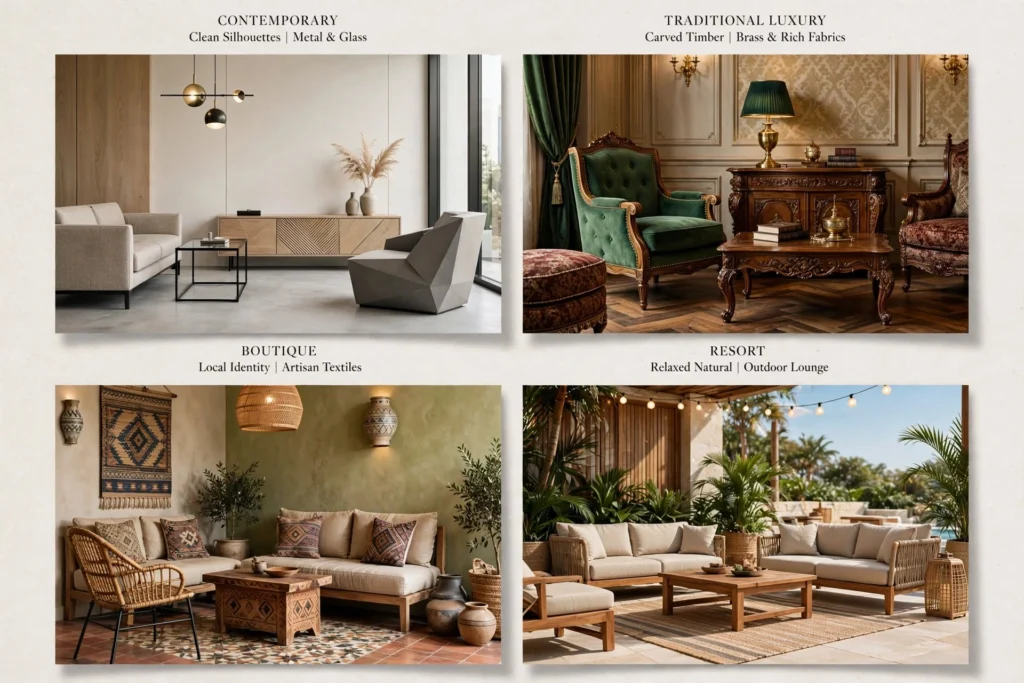
Furniture should be selected after establishing a clear interior design direction. Contemporary, classic, minimalist, industrial, boutique, resort, modern Arabian, and luxury hotel concepts each require different furniture characteristics.
A contemporary hotel may use clean silhouettes, neutral upholstery, metal accents, glass, engineered wood, and simple geometric forms. A traditional luxury property may incorporate carved timber, decorative details, rich fabrics, brass elements, and upholstered furniture.
Boutique hotels often have more freedom to use distinctive furniture that supports a particular story or local identity. Resort hotels may prioritize relaxed seating, natural materials, outdoor furniture, and furniture that complements landscaping and views.
The furniture should work with the architecture rather than compete with it. Flooring, wall finishes, lighting, ceiling design, artwork, and furniture should feel like parts of the same visual language.
Hotel Bedroom Furniture Selection
The guest bedroom is one of the most important areas for furniture planning. Guests spend a significant portion of their stay in the room, making comfort and functionality essential.
Typical hotel bedroom furniture includes beds, bedside tables, wardrobes, luggage benches, desks, chairs, sofas, coffee tables, dressing tables, mirrors, television consoles, minibars, and storage units.
The bed is usually the visual and functional centre of the room. Bed frames and headboards should complement the room’s architectural style while providing practical durability.
Bedside tables should provide enough space for lighting, phones, charging devices, personal items, and hotel information. Integrated electrical and USB charging solutions can be particularly useful for modern travellers.
Luggage benches should be positioned conveniently near the wardrobe or entrance without obstructing circulation. They should also be designed to withstand repeated use by guests placing heavy suitcases on them.
Choosing Hotel Beds and Mattresses
Beds and mattresses directly influence guest comfort and are therefore among the most important hotel furniture decisions. Mattress selection should consider firmness, support, durability, hygiene, and the hotel’s guest profile.
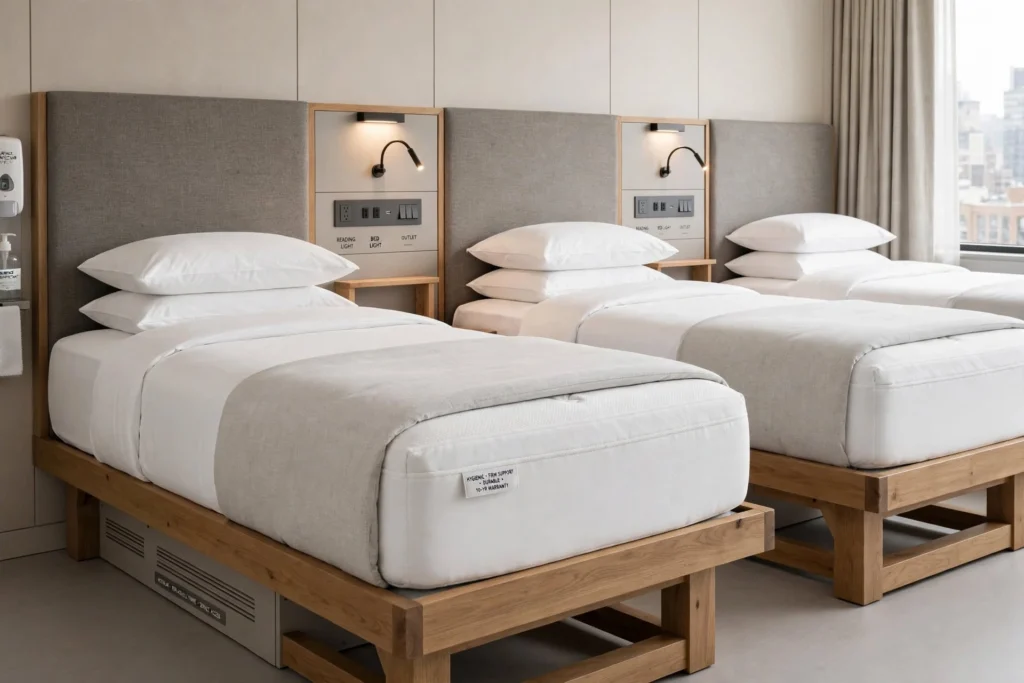
Bed frames should provide stable structural support and should be compatible with the selected mattress system. Upholstered headboards can create a luxurious appearance, while timber or minimalist bed frames may suit contemporary interiors.
Headboards can also provide opportunities for integrated lighting, electrical outlets, reading lights, switches, and USB charging. Combining these functions can reduce clutter around the bedside.
For high-occupancy properties, hotel operators should prioritize furniture components that can be cleaned, repaired, replaced, or refurbished efficiently.
Hotel Lobby and Reception Furniture
Lobby furniture creates the first impression after guests enter the property. Reception areas typically include lounge chairs, sofas, side tables, coffee tables, benches, occasional tables, and concierge seating.
The furniture arrangement should support different guest behaviours. Some visitors may want to sit privately, while others may be waiting with family members, meeting colleagues, or working on laptops.
Large hotels often benefit from creating several seating zones rather than one large furniture arrangement. This can improve circulation and make the lobby feel more dynamic.
Furniture scale is also important. Oversized sofas may look impressive in photographs but can make a small lobby feel crowded. Conversely, furniture that is too small for a large atrium may appear visually insignificant.
The reception furniture should complement the reception counter and feature wall. Upholstery, timber finishes, metal accents, and colours can be coordinated with the hotel’s brand identity.
Restaurant and Hotel Dining Furniture
Hotel restaurants experience heavy daily usage, making durability especially important. Dining chairs, tables, bar stools, banquettes, and lounge seating need to withstand frequent movement, cleaning, spills, and high occupancy.
Restaurant furniture should also support efficient table layouts. Tables must provide sufficient space for guests and service staff while maintaining practical circulation between seating areas.
Banquette seating can help maximize space and create a more intimate dining environment. Freestanding chairs provide flexibility because layouts can be changed for different group sizes and events.
Material selection should consider food and beverage environments. Surfaces should be easy to clean and resistant to stains and routine maintenance procedures.
The furniture should also support the restaurant’s identity. A fine-dining restaurant may use elegant upholstered chairs and sophisticated tables, while a casual all-day dining restaurant may use lighter, more flexible furniture.
Furniture for Hotel Meeting and Conference Areas
Business hotels require furniture that supports meetings, presentations, conferences, training sessions, and corporate events.
Conference tables, ergonomic chairs, podiums, side tables, storage units, and flexible seating systems should be selected according to room capacity and intended use.
Modular furniture can provide additional flexibility. Tables and chairs that can be rearranged allow one space to accommodate board meetings, classroom-style training, networking events, or presentations.
Technology should also be considered. Conference furniture may need integrated cable management, electrical outlets, USB charging, and connectivity solutions.
Ergonomics becomes particularly important in meeting spaces because guests may remain seated for several hours.
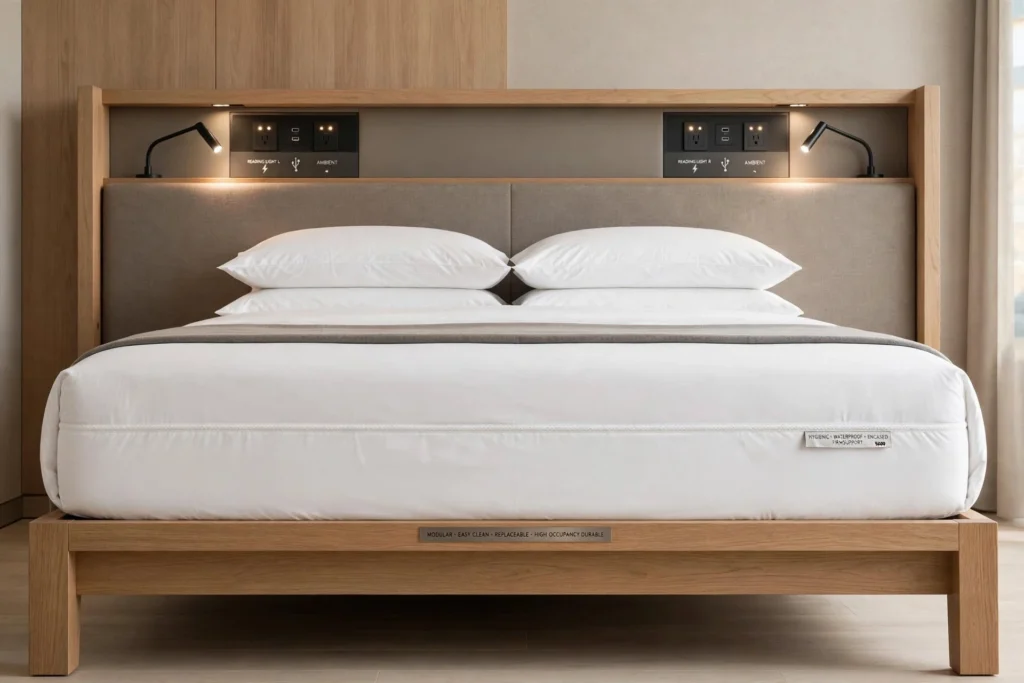
Hotel Lounge and Public Area Furniture
Public areas can significantly influence the atmosphere of a hotel. Lounges, waiting areas, corridors, executive lounges, and social spaces benefit from furniture that encourages comfortable interaction.
Different seating heights can create visual variety and support different activities. Lounge chairs may provide private seating, while sofas can accommodate groups.
Side tables and occasional tables should be positioned where guests can conveniently place drinks, phones, laptops, or personal items.
Furniture can also be used as a spatial planning tool. Sofas, benches, screens, shelving, and planters can subtly divide a large lobby into functional zones without constructing permanent walls.
Outdoor Hotel Furniture
Resorts, rooftop hotels, restaurants, pool decks, terraces, and landscaped hospitality spaces require furniture specifically designed for outdoor conditions.
Outdoor hotel furniture may include loungers, dining chairs, tables, sofas, umbrellas, benches, cabanas, and occasional tables.
Material selection should account for sunlight, humidity, temperature changes, moisture, dust, wind, and cleaning requirements. Materials and finishes should be appropriate for the property’s environmental conditions.
For hotels in Dubai, Abu Dhabi, Jeddah, and other Gulf locations, exposure to intense sunlight and high temperatures should be considered when selecting outdoor upholstery, coatings, plastics, metals, and synthetic materials.
Outdoor furniture should also coordinate with landscape architecture, pool design, façade materials, and the hotel’s overall visual identity.
Upholstery Selection for Hospitality Furniture
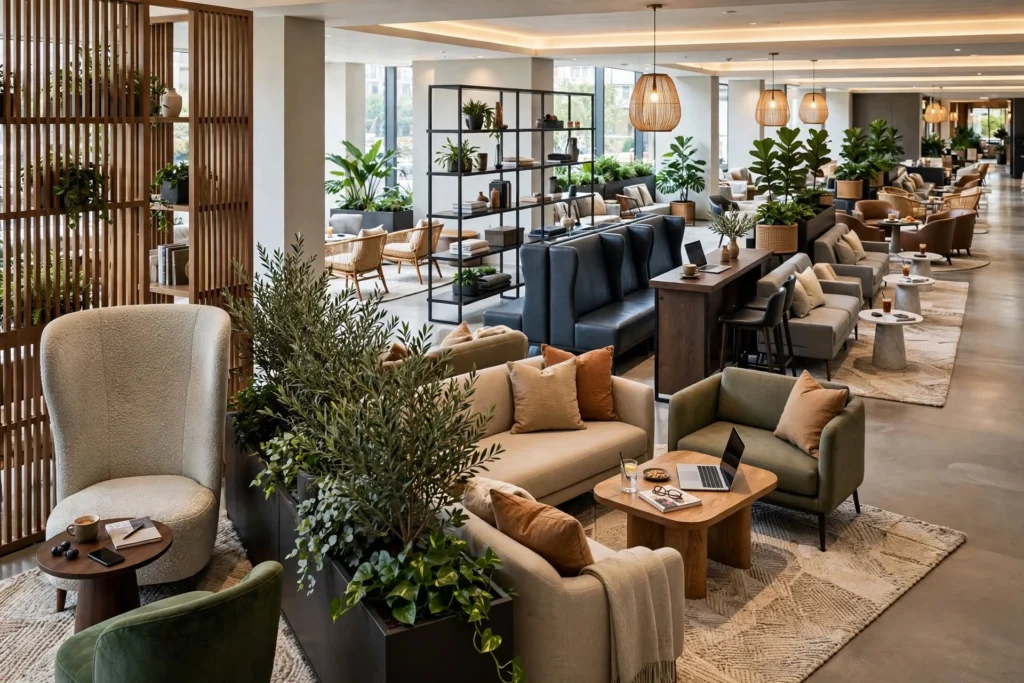
Upholstery can dramatically influence the appearance and comfort of hotel furniture. However, fabrics in hospitality environments must meet practical requirements that may not be as important in residential interiors.
Hotels should consider abrasion resistance, stain resistance, cleanability, colourfastness, fire-performance requirements where applicable, and maintenance procedures.
Different areas require different upholstery strategies. Guest bedrooms may use softer decorative fabrics, while restaurant chairs may need highly practical and easy-to-clean materials.
Leather and high-quality synthetic alternatives can work well in certain hospitality applications, particularly where easy maintenance is important. Fabric selections can provide greater flexibility in colour, texture, and pattern.
The chosen upholstery should also complement the hotel’s lighting because colours and textures can appear different under warm decorative lighting compared with daylight.
Hotel Furniture Materials
Common hotel furniture materials include solid wood, engineered wood, plywood, MDF, veneer, laminate, metal, glass, stone, engineered stone, acrylic, rattan, and various composite materials.
Solid timber can create warmth and natural character, while veneers provide opportunities to achieve premium wood appearances across larger furniture packages.
Metal can provide structural strength and contemporary detailing. Brass, bronze, stainless steel, aluminium, and powder-coated finishes can be incorporated into legs, handles, frames, decorative details, and furniture accents.
Engineered stone and porcelain surfaces may be suitable for selected tables and counters where durability and easy maintenance are priorities.
Material selection should always be evaluated based on the specific application rather than appearance alone.
Custom Hotel Furniture vs Ready-Made Furniture
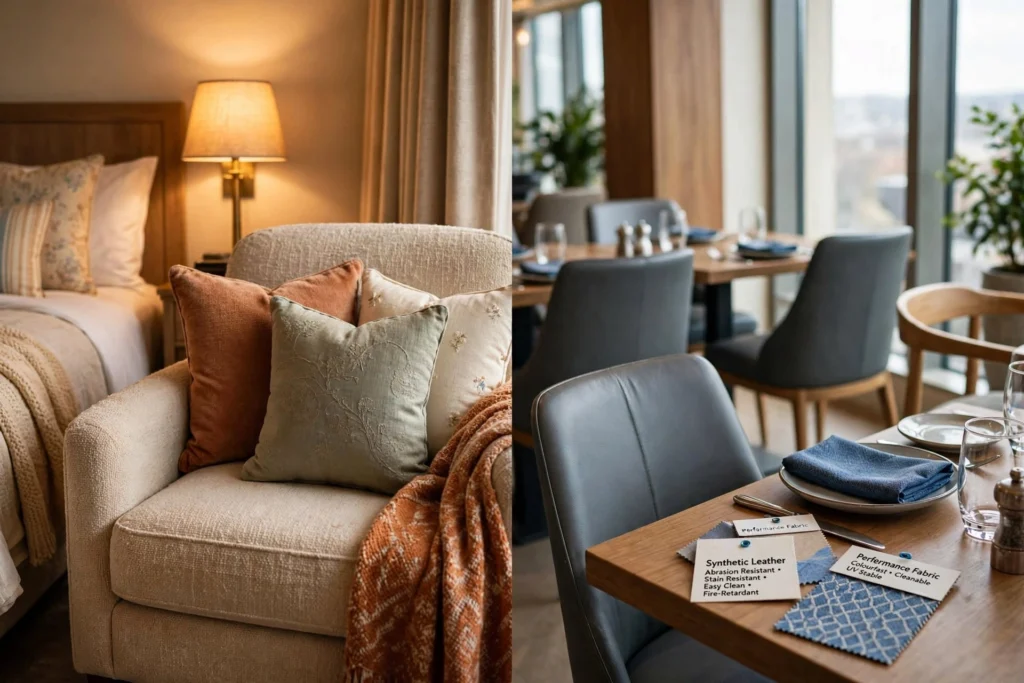
Hotels can choose between off-the-shelf furniture, semi-custom furniture, and fully bespoke pieces.
Ready-made furniture can simplify procurement and may be suitable for standard rooms or projects with tight schedules. Custom furniture provides greater control over dimensions, materials, finishes, branding, and architectural coordination.
Bespoke furniture is particularly useful for luxury hotels, boutique properties, signature suites, reception areas, restaurants, and other high-visibility spaces.
A hybrid strategy is often practical. Standardized furniture can be used in guest rooms while custom pieces are introduced in public areas where visual impact is more important.
Custom manufacturing should include detailed shop drawings, material samples, prototypes where necessary, quality control, and coordination with electrical and architectural requirements.
Ergonomics and Guest Comfort
Comfort should never be sacrificed for appearance. Hotel furniture needs to support real guest activities, including sleeping, working, dining, relaxing, reading, socializing, and waiting.
Chairs should provide appropriate back support and seat comfort. Desks should provide practical working height and legroom. Lounge seating should accommodate the intended duration of use.
Ergonomics is particularly important in business hotels and executive lounges where guests may work for extended periods.
Comfort also includes the relationship between furniture and surrounding space. Even high-quality furniture becomes uncomfortable when positioned too closely together or placed in areas with excessive noise, glare, or poor circulation.
Space Planning and Furniture Dimensions
Furniture dimensions should be coordinated with the room’s architectural dimensions. Designers should consider clearances around beds, desks, chairs, tables, doors, wardrobes, bathrooms, and circulation paths.
In public areas, furniture placement should maintain comfortable movement routes and support accessibility requirements.
Hotel furniture should never be selected purely from a catalogue image. Designers should review actual dimensions, ergonomics, material samples, and room layouts.
Three-dimensional visualization and furniture layout drawings can help stakeholders understand how selected pieces will work within the space before procurement.
Hotel Furniture Durability and Maintenance
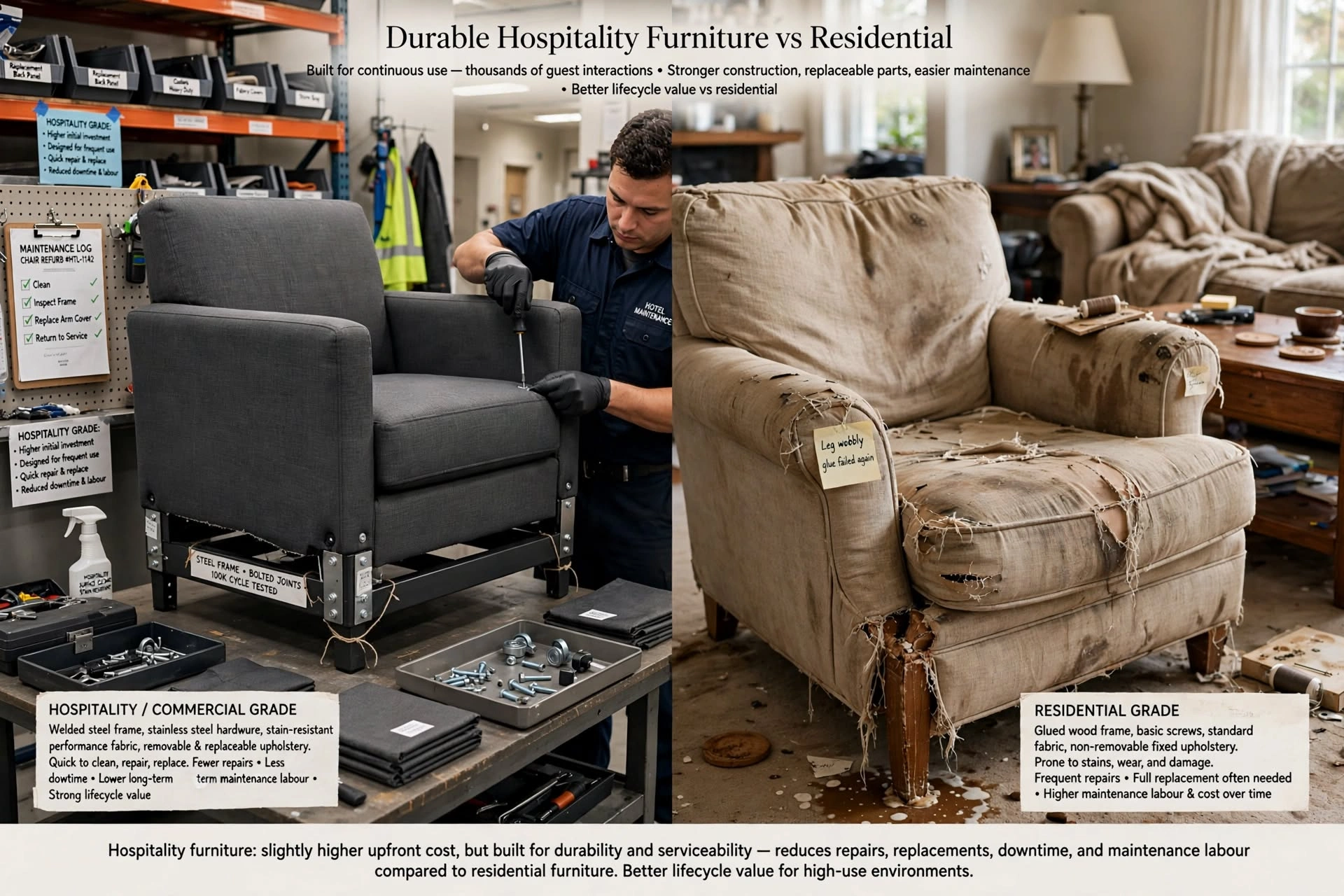
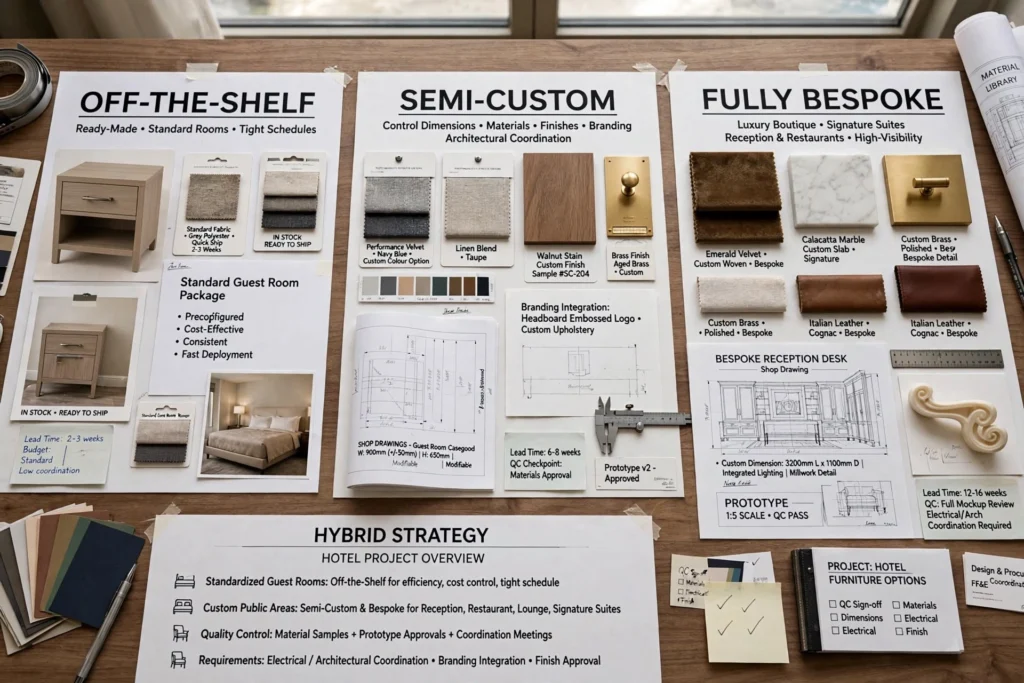
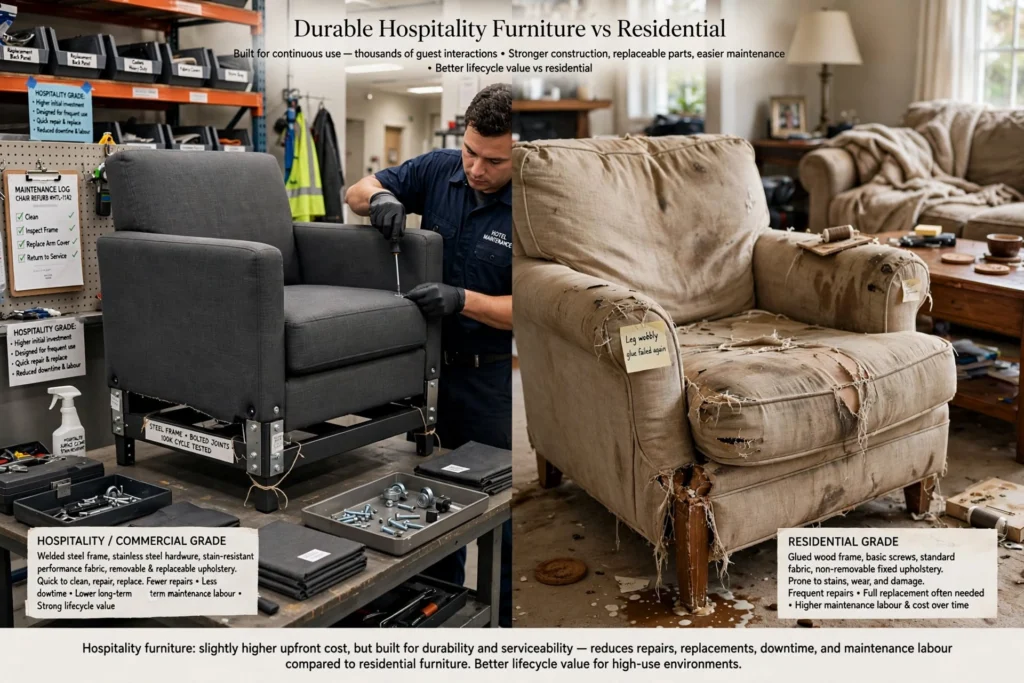
Durability is one of the biggest differences between residential and hospitality furniture. Hotels may operate continuously throughout the year, with furniture exposed to thousands of guest interactions.
Important considerations include joint construction, frame strength, hardware quality, surface durability, upholstery performance, and availability of replacement components.
Maintenance teams should be able to clean, repair, and replace components efficiently. Furniture with difficult-to-source hardware or specialized finishes can create long-term operational challenges.
A slightly higher initial investment in durable furniture may provide better lifecycle value if it reduces repairs, replacements, room downtime, and maintenance labour.
Fire Safety and Hospitality Furniture Standards
Hotel furniture must comply with applicable building, fire, safety, and hospitality requirements. Depending on the jurisdiction and application, furniture materials may need to meet specific fire-performance or safety criteria.
Project teams should verify requirements with the relevant authorities, consultants, hotel operator, and material manufacturers before procurement.
This is particularly important for upholstery, curtains, decorative materials, mattresses, wall finishes, and furniture used in public areas.
Compliance should be treated as part of the design process rather than a final-stage checklist.
Sustainable Hotel Furniture
Sustainability is becoming increasingly important across the hospitality industry. Hotels can consider furniture made with responsibly sourced timber, recycled materials, durable finishes, low-emission products, and repairable components.
Furniture longevity itself is an important sustainability factor. Products that remain attractive and functional for many years can reduce replacement waste.
Hotels can also consider modular furniture where individual components can be repaired or replaced rather than replacing an entire piece.
Local or regional manufacturing may also reduce transportation requirements depending on the project’s procurement strategy and supply chain.
Hotel Furniture Trends in the UAE and Saudi Arabia
Hospitality markets across the Gulf are experiencing significant development, particularly in Dubai, Abu Dhabi, Riyadh, Jeddah, and other tourism and business destinations.
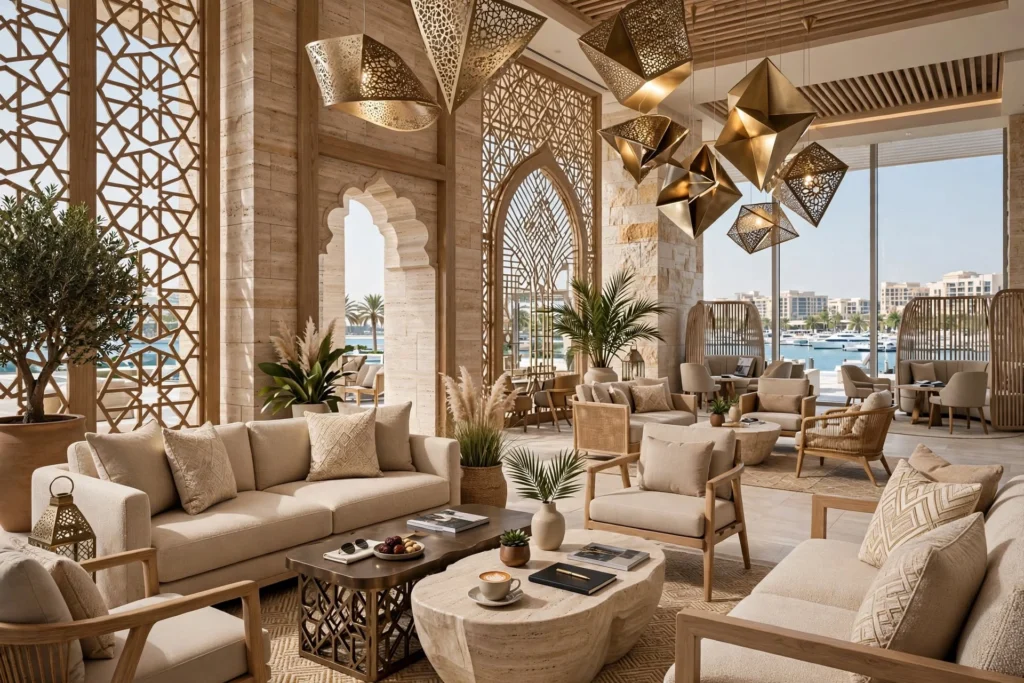
Hotel interiors in these markets increasingly combine international hospitality standards with regional influences. Warm neutral palettes, natural stone, timber textures, contemporary metalwork, geometric patterns, sculptural lighting, and comfortable lounge furniture are common elements in premium hospitality environments.
In Dubai, hotel furniture may need to support highly competitive luxury and lifestyle concepts. Riyadh’s expanding hospitality market creates opportunities for contemporary business, luxury, and mixed-use hotel interiors. Jeddah’s coastal environment can inspire lighter materials and resort-oriented furniture concepts.
The correct furniture strategy should always be based on the individual hotel’s location, category, target guests, architectural concept, and operating model.
How to Choose a Hotel Furniture Supplier
Selecting the right supplier is as important as selecting the furniture itself. Hotels should evaluate product quality, manufacturing capability, material options, customization, lead times, installation services, warranty support, and replacement availability.
A supplier should be able to provide technical information, finish samples, upholstery samples, dimensions, and product specifications.
For large projects, quality-control procedures are essential. Sample approval should take place before mass production, particularly when furniture is custom manufactured.
Procurement teams should also confirm packaging, transportation, storage, installation, snagging, and after-sales support.
A reliable supplier can help reduce project delays and ensure that the furniture delivered to the hotel matches the approved design.
Hotel Furniture Designs and Overall Interior Identity
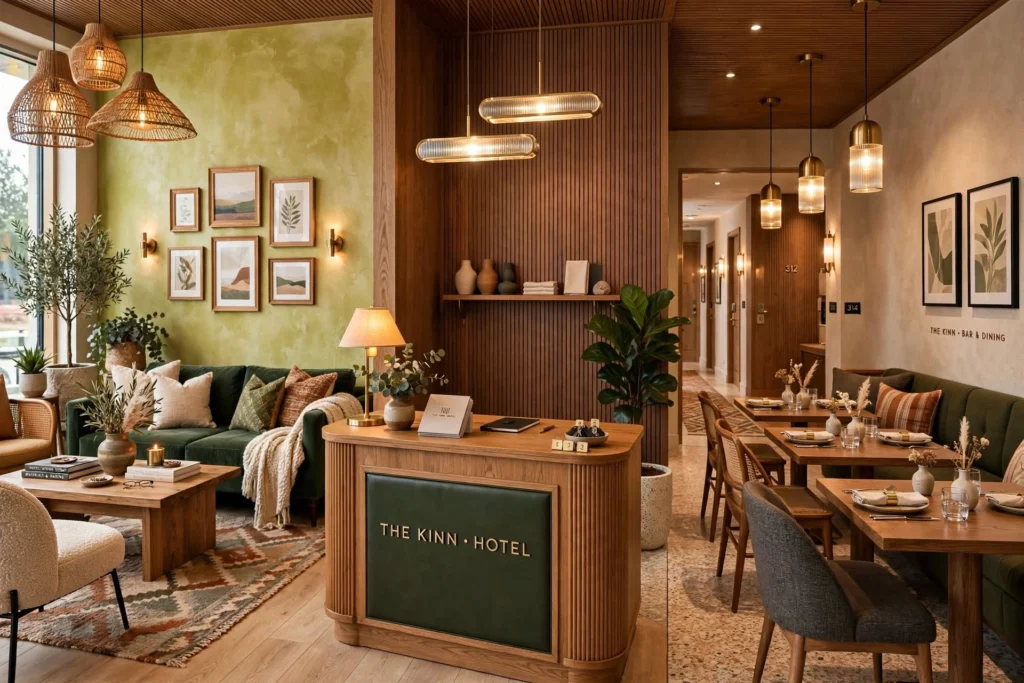
Furniture should be considered as part of the complete interior rather than an isolated product category. The relationship between furniture, architecture, lighting, flooring, wall finishes, artwork, accessories, and branding determines how cohesive the hotel feels.
Well-selected Hotel Furniture Designs can establish the visual character of guest rooms, lobbies, restaurants, lounges, and other hospitality spaces while maintaining practical functionality.
The strongest hotel interiors usually combine consistency with variety. Furniture throughout the property should share a recognizable design language, but different spaces can have their own atmosphere and functional requirements.
This approach allows the hotel to feel like one complete brand while ensuring that each guest environment has a distinct purpose.
Frequently Asked Questions About Hotel Furniture Selection
What furniture is essential for a hotel room?
Essential furniture typically includes a bed, bedside tables, wardrobe or storage, luggage bench, desk or work surface, chair, mirror, and suitable tables or seating depending on the room category. Suites may require additional sofas, dining tables, lounge chairs, and storage.
What makes hotel furniture different from residential furniture?
Hotel furniture is designed for significantly higher usage. It generally needs stronger construction, durable finishes, commercial-grade upholstery where appropriate, easier maintenance, and compliance with relevant hospitality and safety requirements.
What is the best material for hotel furniture?
There is no single best material. Timber, veneer, laminate, metal, engineered stone, glass, and other materials can be appropriate depending on the application, design concept, durability requirements, maintenance strategy, and budget.
Should hotels use custom furniture?
Custom furniture can be valuable for reception areas, luxury suites, restaurants, boutiques, and other high-visibility spaces. Standard or semi-custom furniture can be more efficient for repetitive guest-room requirements.
How do you choose furniture for a luxury hotel?
Start with the hotel’s design concept and target guest experience. Then evaluate comfort, proportions, materials, durability, upholstery, lighting interaction, maintenance, branding, safety requirements, and lifecycle cost.
What should hotels consider when buying outdoor furniture?
Hotels should evaluate sunlight exposure, heat, moisture, wind, dust, cleaning requirements, corrosion resistance, upholstery performance, storage requirements, and the specific environmental conditions of the property.
Conclusion
Hotel furniture selection requires much more than choosing attractive pieces from a catalogue. Every bed, chair, table, sofa, desk, cabinet, and outdoor furnishing should contribute to guest comfort, operational efficiency, durability, safety, and the hotel’s visual identity.
The best approach begins with the property’s architecture and hospitality concept before moving into space planning, material selection, ergonomics, customization, procurement, and installation. Guest rooms require comfort and practicality, reception areas need strong visual impact, restaurants require durable and easy-to-maintain furniture, and outdoor areas demand materials suited to local environmental conditions.
For hotels across Dubai, Abu Dhabi, Sharjah, Riyadh, Jeddah, and other Gulf destinations, furniture selection should also respond to local climate, cultural context, hospitality expectations, and the specific needs of the target market.
When architecture, interior design, lighting, furniture, technology, and branding are planned together, hotel furniture becomes more than a functional requirement. It becomes an important part of the guest experience and a long-term investment in the property’s identity and performance.
0 comments