
Space-Saving Furniture Ideas for Small UAE Homes: Smart Solutions for Apartments and Villas
Space is one of the most important considerations when designing a modern home. Whether you live in a compact apartment in Dubai Marina, a studio in Business Bay, a family apartment in Jumeirah Lakes Towers, or a villa in Dubai Hills Estate, the right furniture can make a significant difference to how comfortable and functional your home feels.
Limited space does not necessarily mean compromising on style. The real challenge is selecting furniture that performs multiple functions, fits the proportions of the room, provides sufficient storage, and maintains comfortable circulation.
This is where space-saving furniture becomes particularly useful. Multifunctional furniture, built-in storage, modular seating, folding tables, wall-mounted desks, storage beds, sliding wardrobes, and custom joinery can help homeowners use available floor area more efficiently.
For UAE homes, this approach is especially relevant because residential properties range from compact studios and apartments to large villas with rooms that require careful zoning. A well-planned furniture layout can make a small room feel larger while also improving organization and everyday usability.
Why Space-Saving Furniture Matters in Modern UAE Homes
Furniture should support the way people actually use their homes. A sofa should provide comfortable seating, a dining table should accommodate meals without permanently occupying excessive floor space, and storage should keep everyday belongings organized without making rooms feel crowded.
In a smaller home, every piece of furniture occupies valuable floor area. Choosing oversized furniture can restrict movement and make an otherwise adequate room feel uncomfortable.
Space-saving design focuses on achieving the required functionality with a more efficient footprint.
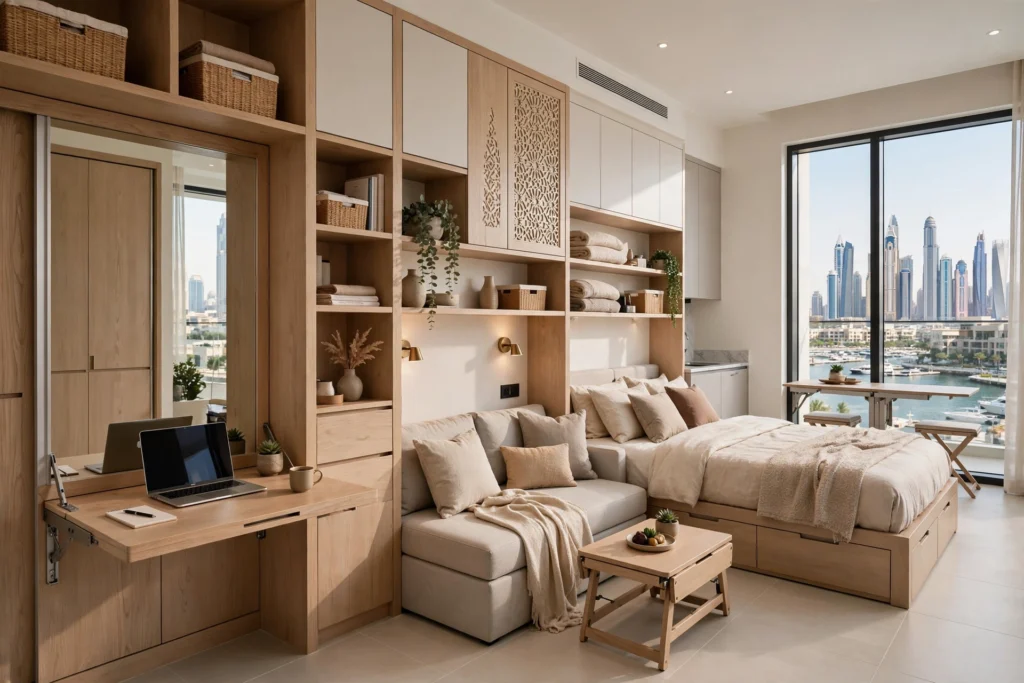
For example, a bed with integrated drawers can combine sleeping and storage functions. A dining table with an extendable mechanism can remain compact during everyday use and accommodate additional guests when necessary. A wall-mounted desk can provide a dedicated workspace without requiring a large office room.
The goal is not simply to buy smaller furniture. It is to select furniture that uses space intelligently.
Multifunctional Furniture for Small Apartments
Multifunctional furniture is particularly valuable in apartments where rooms may need to perform several roles.
A living room may function as a family lounge, entertainment area, workspace, and occasional guest room. A bedroom may include a study desk, wardrobe, dressing area, and storage.
Furniture that serves multiple purposes can reduce the number of individual pieces required.
A sofa bed, for example, can provide everyday seating while creating an additional sleeping area when guests arrive. An ottoman can provide seating, a footrest, and concealed storage.
Nesting tables can be separated when additional surfaces are required and stacked together when floor space needs to remain open.
The best multifunctional furniture does not look complicated. Its additional functions should be integrated into the design.
Built-In Storage Furniture for Compact Spaces
Built-in furniture can be one of the most effective solutions for homes with limited storage.
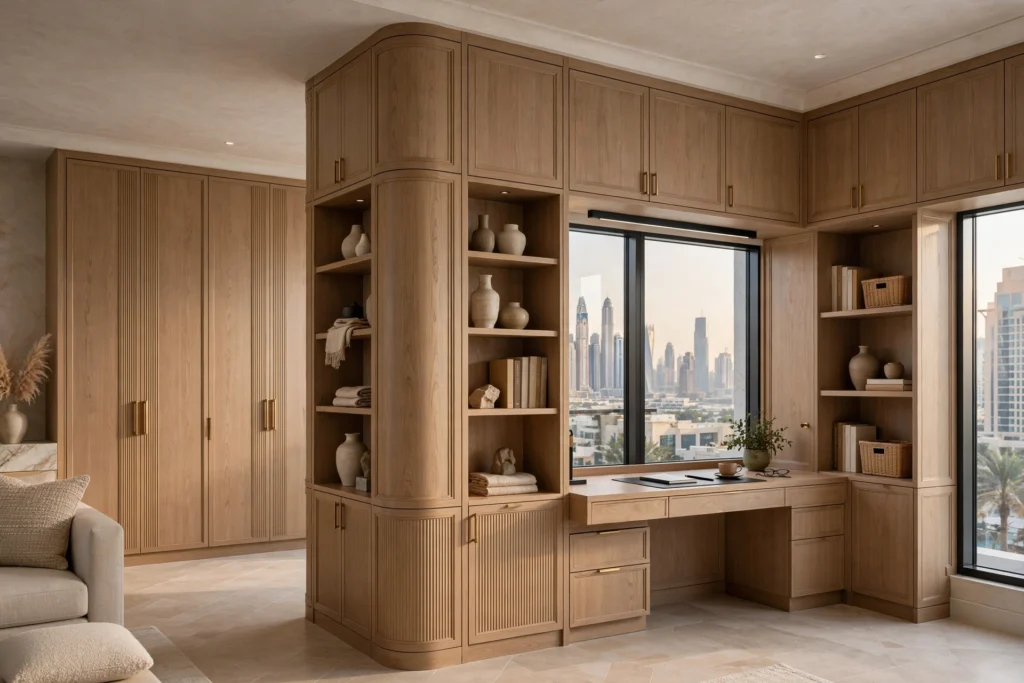
Unlike freestanding furniture, custom cabinetry can be designed around the exact dimensions of a room.
Floor-to-ceiling wardrobes can maximize vertical space. Built-in shelving can occupy otherwise unused wall areas. Cabinets can be designed around structural columns, corners, windows, or awkward recesses.
This is particularly useful in apartments where standard furniture dimensions may leave gaps between the furniture and walls.
Custom joinery can also create a consistent visual language throughout the home.
Instead of having multiple unrelated storage units, wardrobes, shelves, desks, and cabinets can be designed as part of one coordinated interior.
Space-Saving Bedroom Furniture Ideas
Bedrooms can quickly become overcrowded because they need to accommodate several essential functions.
A typical bedroom may require a bed, wardrobe, bedside tables, dressing area, study desk, chair, and storage.
The bed usually occupies the largest amount of floor space, making it an important starting point.
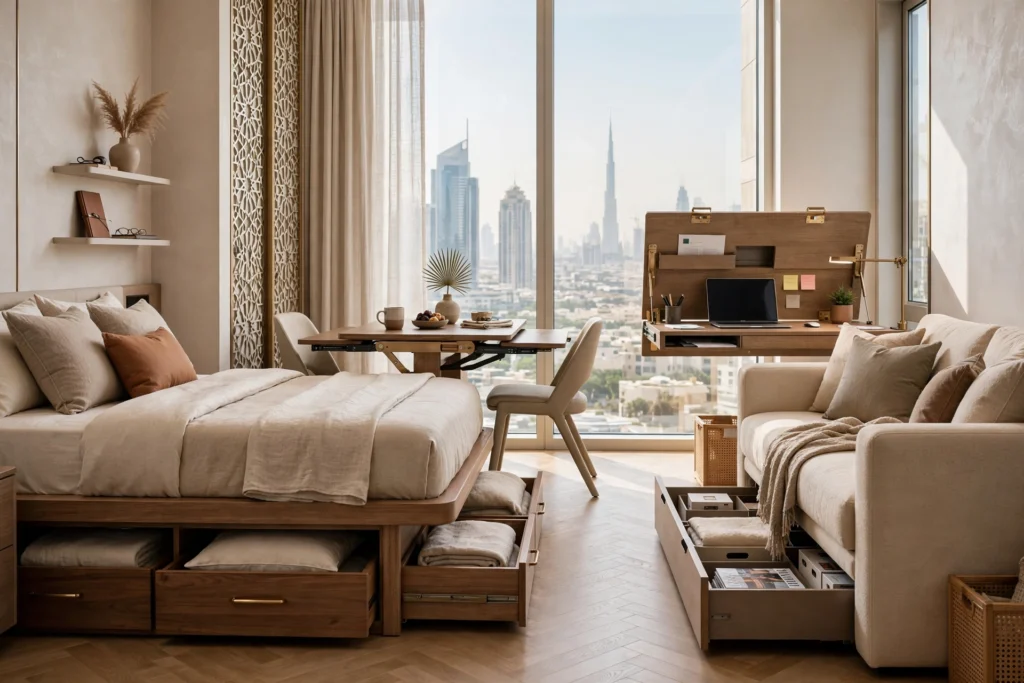
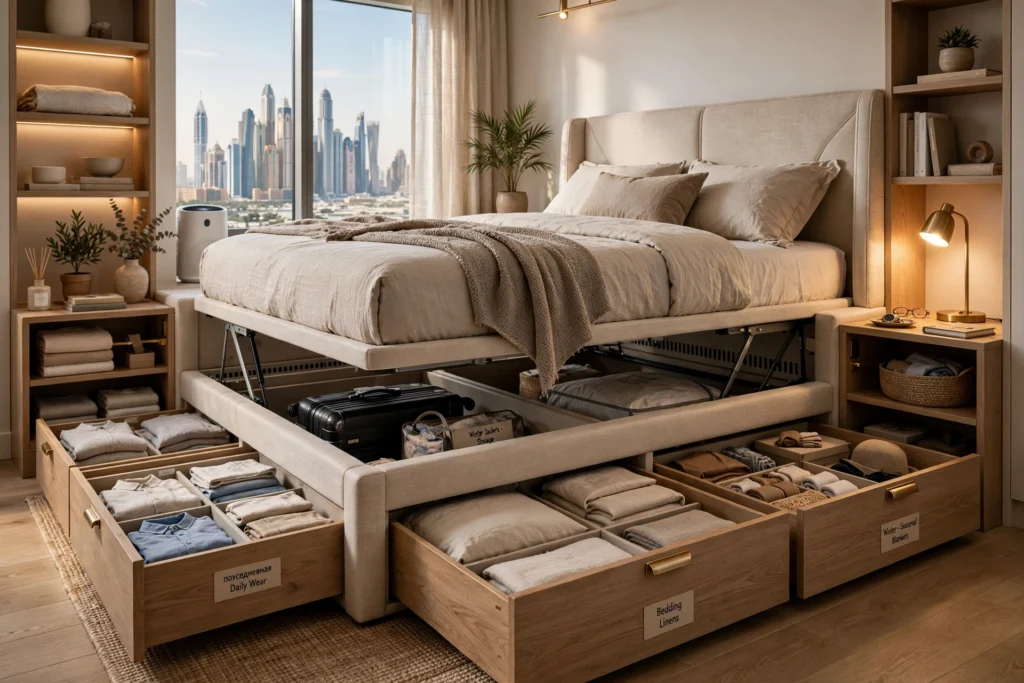
Storage beds can provide drawers or lift-up compartments beneath the mattress.
Platform beds can also incorporate integrated storage into the surrounding joinery.
For smaller bedrooms, floating bedside tables can reduce visual and physical clutter.
Wall-mounted shelves can replace larger bookcases.
A compact dressing table can double as a work desk when carefully designed.
The objective is to maintain sufficient circulation around the bed while providing the necessary storage.
Storage Beds and Platform Beds
Under-bed space is often underutilized.
Storage beds convert this unused area into practical space for clothing, bedding, luggage, seasonal items, and other belongings.
Drawer-based systems are convenient for frequently accessed items, while lift-up storage can provide access to larger objects.
Platform beds can also integrate bedside tables, shelving, lighting, and storage into a single structure.
This can be particularly effective in compact apartments in Dubai and Abu Dhabi where bedroom floor area may be limited.
However, storage should not compromise mattress ventilation or make daily cleaning difficult.
The mechanism and construction quality should also be appropriate for regular use.
Foldable and Extendable Dining Tables
Dining furniture can occupy significant floor space, particularly when a dining room is not available and the table is located within the living area.
An extendable dining table offers a practical solution.
During normal daily use, it can remain relatively compact. When guests arrive, the extension mechanism can increase the seating capacity.
Drop-leaf and folding tables can provide even greater flexibility in very small homes.
Wall-mounted folding tables may work well in kitchens, utility spaces, or compact dining corners.
The surrounding circulation should be considered when the table is fully extended. A table that technically fits the room may still create a problem if chairs block pathways.
Wall-Mounted Desks for Small Rooms
The demand for home workspaces has increased the importance of compact office furniture.
A full-size office desk is not always necessary.
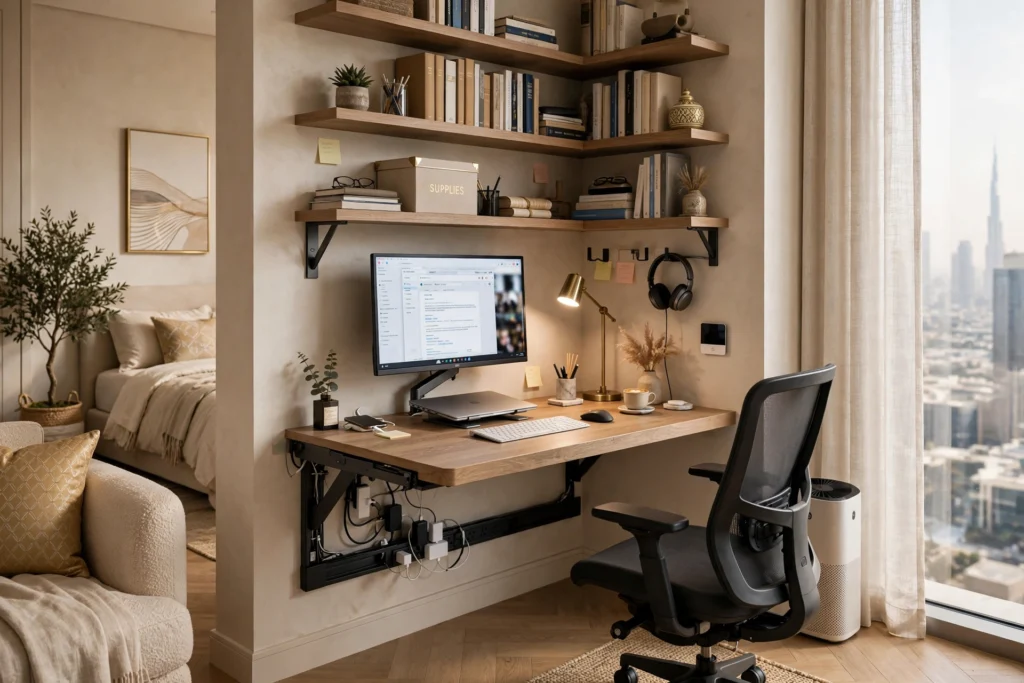
Wall-mounted desks can create functional workstations in bedrooms, living rooms, hallways, or unused corners.
Shelving above the desk can provide storage for books and office supplies without consuming floor area.
Cable management should be incorporated during planning so chargers and electrical connections remain organized.
For people who work from home regularly, ergonomic requirements should not be sacrificed for compactness.
The chair, desk height, screen position, lighting, and legroom should all be appropriate for extended use.
Modular Sofas for Flexible Living Spaces
Sofas can dominate smaller living rooms.
A modular sofa provides flexibility because its sections can often be rearranged according to the room layout.
A compact configuration may work during everyday use, while additional modules can be repositioned when entertaining guests.
Corner sofas can also use otherwise underutilized corners.
However, sectional furniture should be selected according to room dimensions rather than simply choosing the largest available sofa.
There should be sufficient clearance around doors, pathways, coffee tables, TV units, and other furniture.
Ottoman and Bench Storage Solutions
Ottomans and storage benches are highly practical because they can serve multiple functions.
An upholstered ottoman can act as a footrest, occasional seating, coffee table alternative, or storage container.
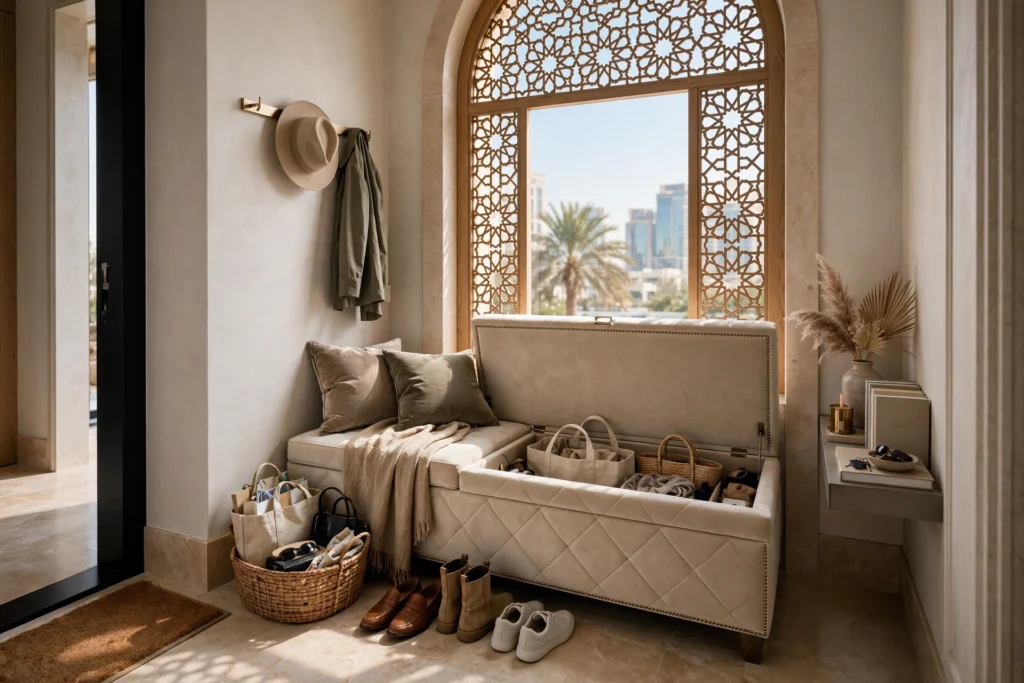
A bench placed beneath a window can create a comfortable reading area while providing hidden storage.
In entryways, a storage bench can provide seating for putting on shoes while storing bags, footwear, or accessories.
These solutions are particularly useful where floor area is limited but additional storage is required.
Sliding Wardrobes for Small Bedrooms
Traditional wardrobe doors require space to open outward.
Sliding wardrobes eliminate much of this clearance requirement.
This makes them particularly useful in compact bedrooms where the wardrobe is positioned close to a bed or narrow passage.
Full-height sliding wardrobes can maximize storage while creating a clean visual appearance.
Internal organization is equally important.
A wardrobe can include hanging sections, drawers, adjustable shelves, shoe storage, accessory compartments, and dedicated areas for luggage.
Mirrored panels can also reflect light and create a greater sense of visual depth, although mirrors should be used according to the overall design style.
Space-Saving Furniture for Kids’ Bedrooms
Children’s bedrooms need to accommodate sleeping, studying, playing, clothing, books, and toys.
This makes efficient furniture particularly valuable.
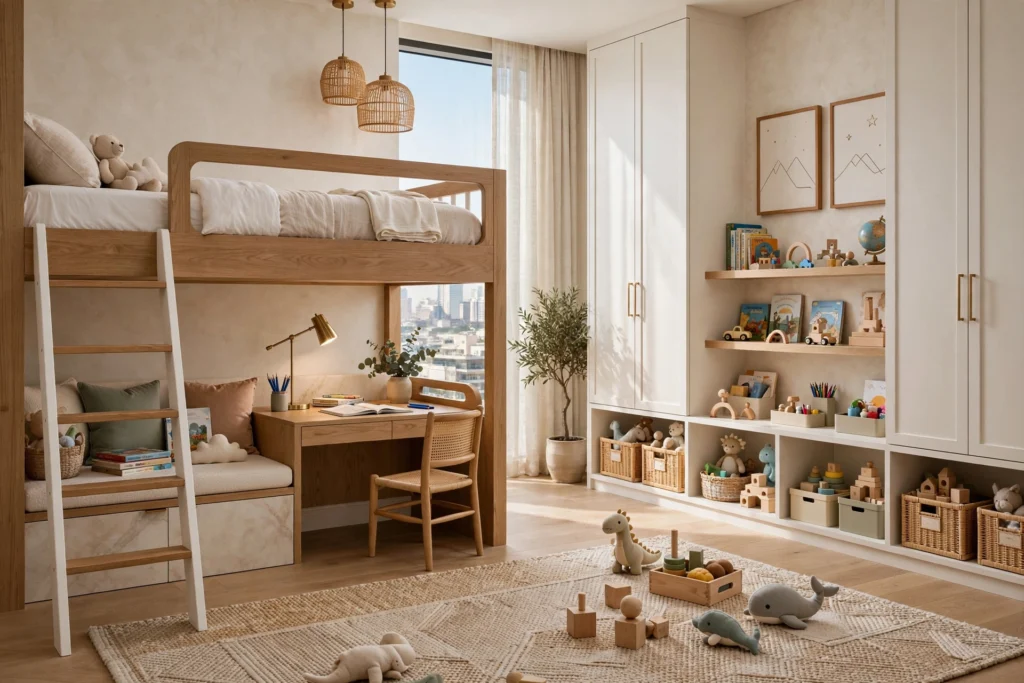
A loft bed can create usable space underneath for a desk, reading area, storage, or play zone where appropriate.
Bunk beds can maximize sleeping capacity in shared bedrooms, provided the furniture is suitable for the children’s ages and safety requirements.
Built-in wardrobes can incorporate desks and shelves.
Toy storage can be positioned at child-friendly heights.
As children grow, the furniture should remain adaptable.
Parents should avoid filling every available area with permanent furniture because children also require open space for movement and play.
Smart Home Office Furniture for Small Spaces
A dedicated home office is not always possible in an apartment.
Instead, furniture can create a work zone within an existing room.
A built-in desk inside a wardrobe can disappear when not in use.
A narrow console can become a compact workstation.
Floating shelves can provide document and equipment storage without taking floor space.
For remote workers, acoustic considerations may also be important.
Soft furnishings, rugs, curtains, and appropriate wall treatments can help reduce sound reflections.
Lighting should also be planned around the working position to minimize glare and shadows.
Small Living Room Furniture Layout Ideas
Furniture layout can sometimes make a greater difference than furniture size.
A small living room can feel larger when the main circulation path remains clear.
Furniture should generally be positioned according to the room’s architectural features, including doors, windows, balconies, and built-in elements.
A wall-mounted television can reduce the need for a large media console.
A compact sofa combined with movable side tables can provide greater flexibility than a large fixed arrangement.
Glass or visually lightweight coffee tables can reduce the perceived visual weight of the furniture, although safety and practicality should always be considered.
The objective is to create usable zones without blocking movement.
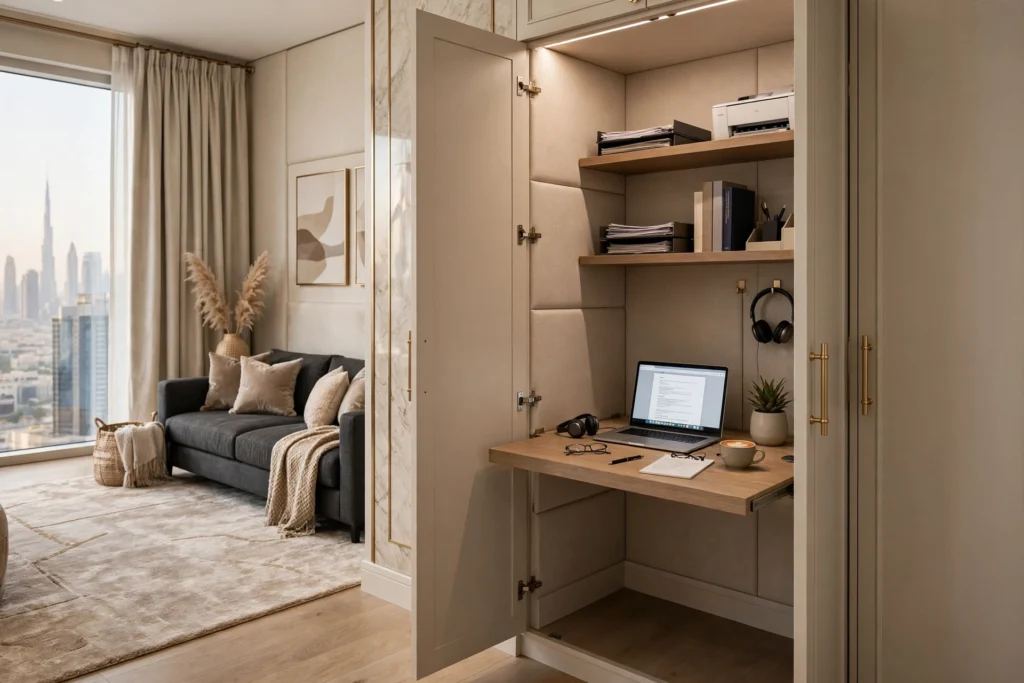
Custom Joinery for Apartments and Villas
Custom joinery is particularly useful when standard furniture cannot fully utilize the available space.
An awkward corner can become a built-in bookshelf.
The space beneath stairs can become storage.
A hallway can incorporate a shallow cabinet.
A bedroom wall can combine wardrobes, shelving, a study desk, and decorative niches.
In larger UAE villas, custom joinery can also help create consistent interiors across multiple rooms.
A coordinated approach to storage and furniture can make the property feel more intentional.
For homeowners undertaking broader interior projects, carefully coordinating individual spaces can help create a cohesive home rather than a collection of unrelated rooms. A well-planned approach to Multi Room interior designs can ensure that furniture proportions, storage systems, materials, lighting, and color palettes work together throughout the property.
Vertical Storage Solutions for UAE Homes
When floor space is limited, look upward.
Vertical storage makes use of wall height rather than additional floor area.
Floor-to-ceiling bookcases, wardrobes, kitchen cabinets, display shelving, and built-in storage can significantly increase capacity.
Tall storage is particularly effective in rooms with high ceilings.
Frequently used items should remain at accessible heights, while seasonal or less frequently used belongings can occupy higher compartments.
A small step stool or appropriate access solution may be required for upper storage.
Vertical design can also make a room feel taller by emphasizing its full height.
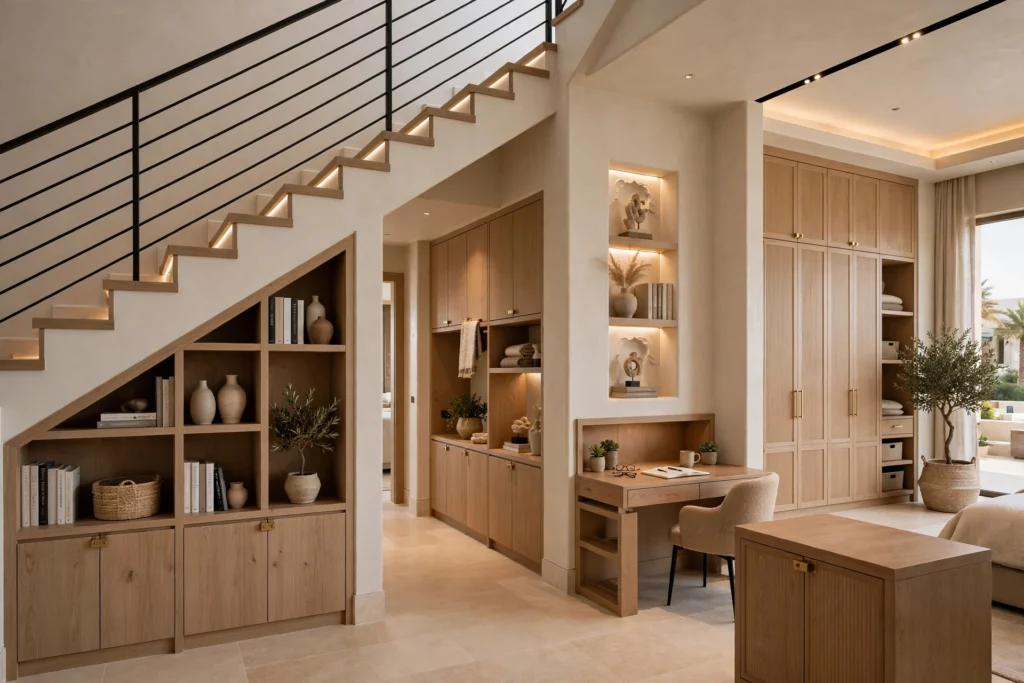
Space-Saving Furniture for Dubai Apartments
Dubai has a wide range of apartment configurations, from compact studios to large premium residences.
Properties in Dubai Marina, JLT, Business Bay, Downtown Dubai, Al Barsha, and Jumeirah can have very different layouts.
Compact apartments benefit from furniture that can change function throughout the day.
A living room might require a workspace during the morning, an entertainment area in the evening, and additional sleeping capacity when guests arrive.
This is where modular furniture and concealed storage become especially valuable.
The design should respond to the actual floor plan rather than following generic furniture arrangements.
Luxury Space-Saving Furniture for Dubai Villas
Space-saving furniture is not limited to small homes.
Even large villas can benefit from efficient furniture planning.
In luxury properties in Emirates Hills, Palm Jumeirah, Dubai Hills Estate, Arabian Ranches, Jumeirah, and Nad Al Sheba, custom furniture can improve functionality while maintaining a premium appearance.
Large homes may have rooms that require multiple functions.
A guest bedroom can incorporate a study area.
A family room can include concealed entertainment storage.
A dressing room can combine wardrobes, seating, mirrors, and display areas.
The objective is not necessarily to make the room smaller. Instead, the furniture should make the available space more useful.
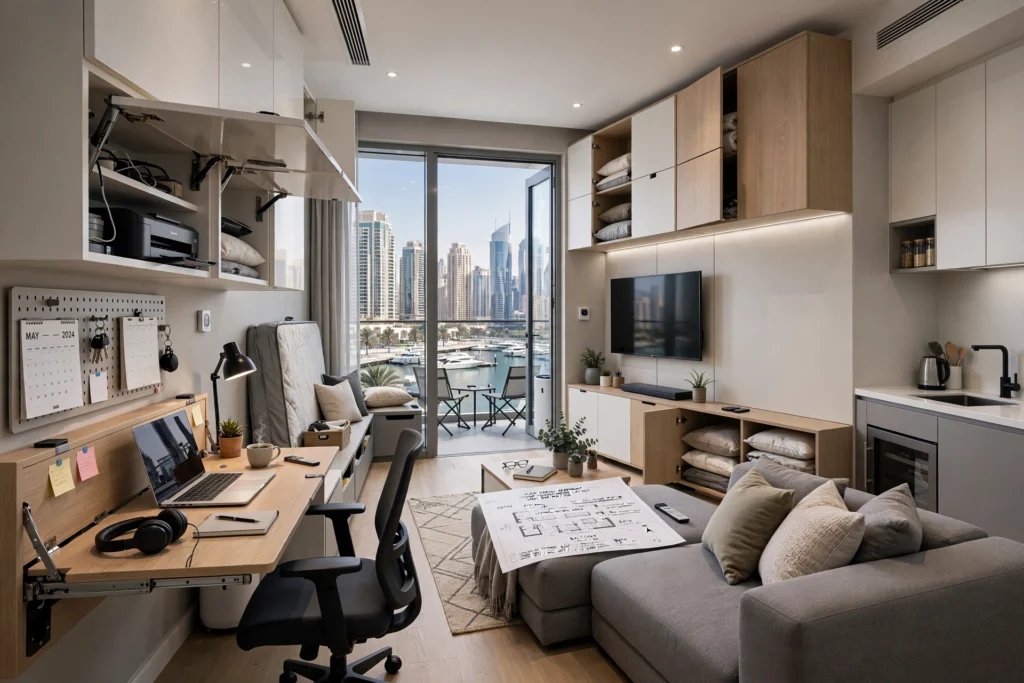
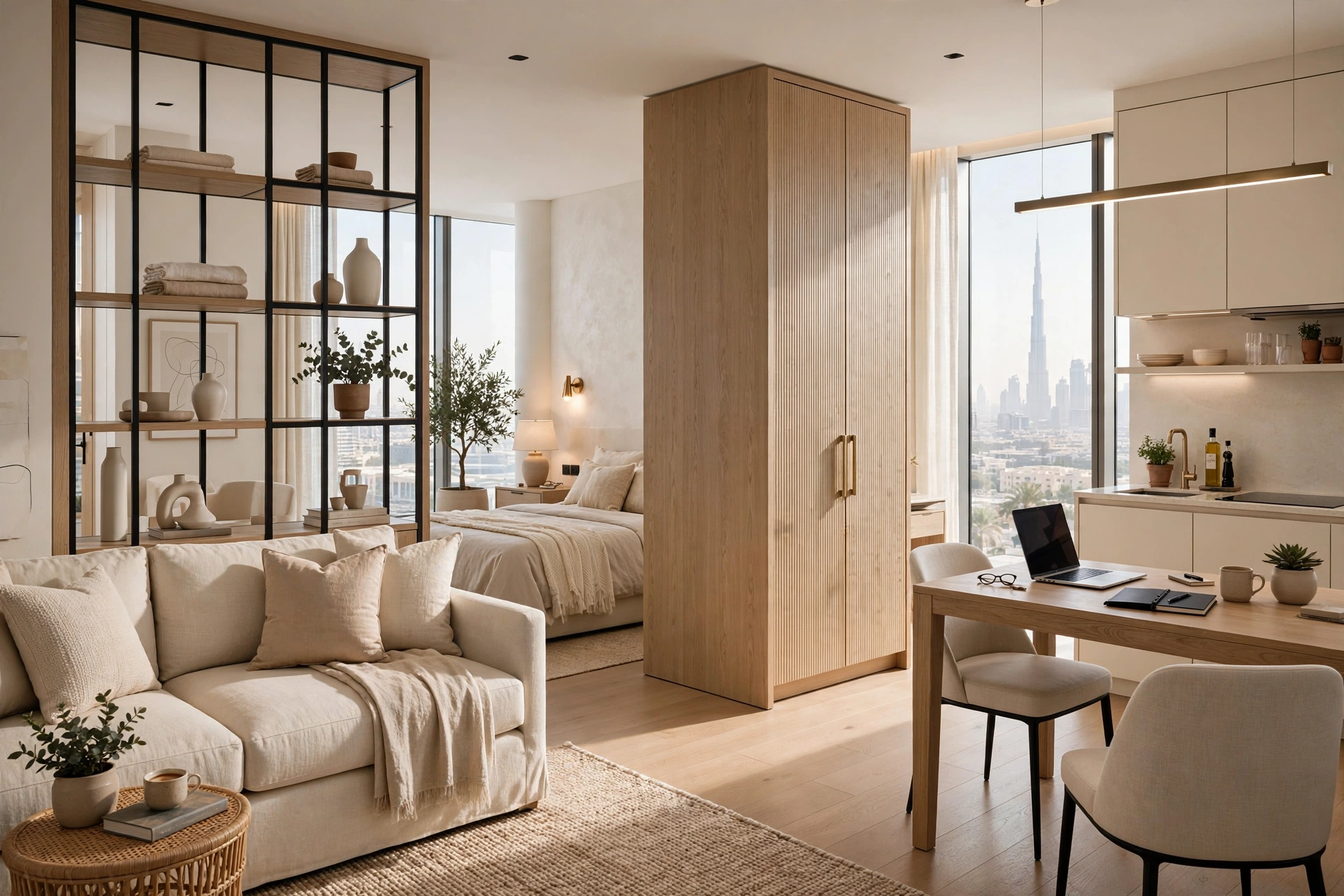
Furniture Ideas for Studio Apartments
Studio apartments require particularly careful planning because the sleeping, living, dining, and working areas may occupy one open room.
A sofa bed can separate daytime and nighttime functions.
A compact dining table can double as a workspace.
Open shelving can create subtle visual zoning without completely closing the space.
A wardrobe can act as a divider between the sleeping and living areas.
Furniture should be positioned to maintain clear circulation and avoid making the studio feel like one large storage area.
Light colors, appropriate lighting, and visually consistent furniture can further enhance the sense of openness.
How to Choose Furniture Based on Room Size
Furniture should be selected after measuring the room.
Important dimensions include wall length, ceiling height, door swings, window positions, electrical outlets, HVAC locations, and circulation paths.
The dimensions of the furniture should then be compared with the available space.
A common mistake is purchasing furniture based on showroom appearance without checking whether it will fit comfortably in the home.
Scale matters.
A large sofa may look impressive in a furniture showroom but overwhelm a compact apartment.
Similarly, very small furniture can make a large room feel unfinished.
Good interior planning finds the appropriate relationship between furniture and architecture.
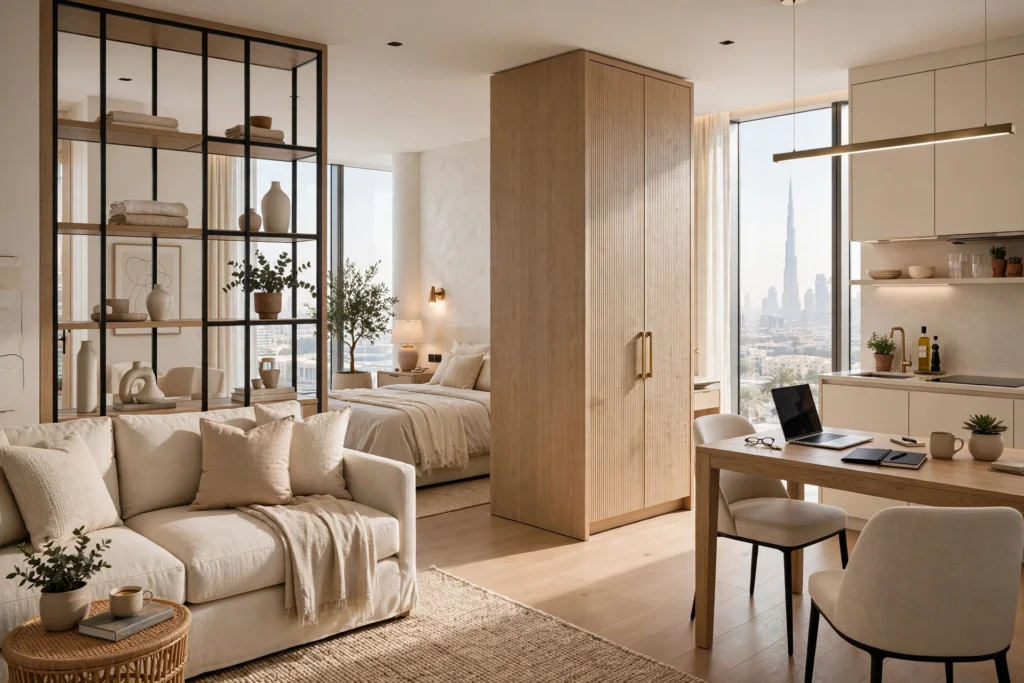
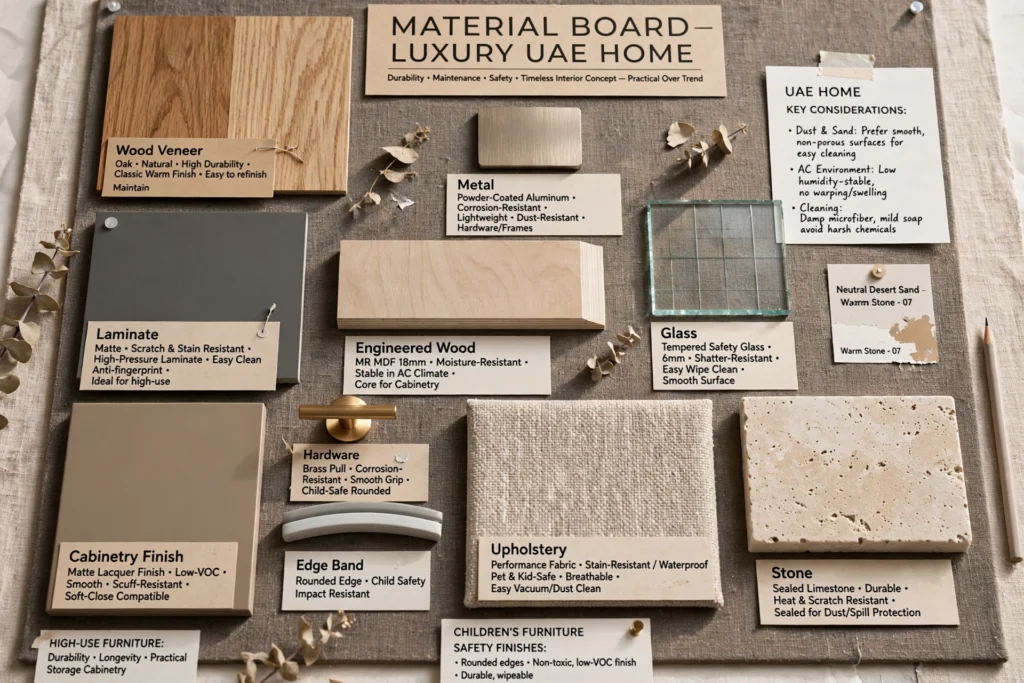
Choosing Materials for Space-Saving Furniture
Materials influence both appearance and longevity.
Wood veneer, laminate, engineered wood, metal, glass, stone surfaces, and upholstery can all be used depending on the application.
High-use furniture should be selected with durability and maintenance in mind.
In UAE homes, dust and frequent air-conditioning can influence cleaning requirements.
Smooth, easy-to-maintain surfaces can be practical for storage cabinetry.
For furniture used by children, finishes should also be selected with safety and durability in mind.
Material selection should support the overall interior concept rather than simply being chosen because it is currently fashionable.
Common Space-Saving Furniture Mistakes to Avoid
One common mistake is trying to fit too many functions into one room.
Multifunctional furniture is useful, but every room still needs breathing space.
Another mistake is sacrificing comfort for compactness.
A sofa that saves 20 centimeters but is uncomfortable to sit on is not a successful solution.
Poor-quality mechanisms can also create problems with folding tables, storage beds, and convertible furniture.
Another issue is inadequate storage planning.
Adding more shelves does not automatically create better organization.
Storage should be divided according to how the household actually uses its belongings.
Finally, homeowners should avoid buying furniture before understanding the complete room layout.
How Custom Furniture Can Maximize Available Space
Custom furniture provides the greatest flexibility when a room has unusual dimensions or multiple requirements.
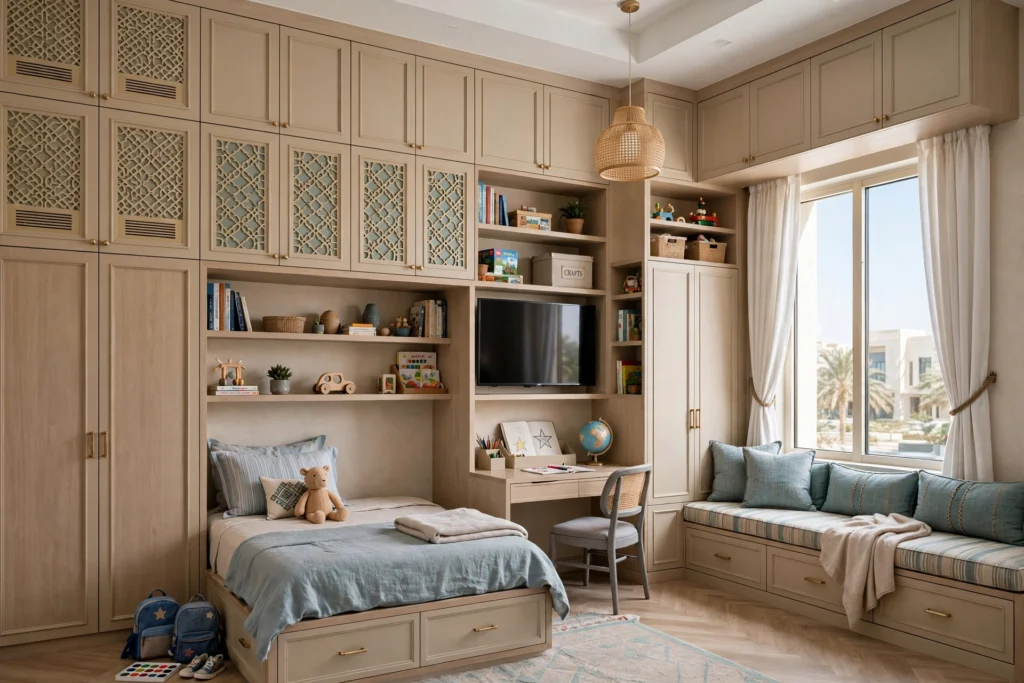
A single wall can potentially accommodate a wardrobe, desk, shelves, television, and storage cabinets.
A narrow corridor can become useful storage without significantly reducing circulation.
A window wall can incorporate a bench with drawers.
A child’s bedroom can combine a bed, wardrobe, study desk, and shelving into one coordinated system.
This level of customization is particularly useful when standard furniture leaves awkward gaps or fails to meet the household’s requirements.
Creating Flexible Interiors for the Future
A good space-saving strategy should consider future changes.
Families grow. Children become teenagers. People begin working from home. Guests arrive. Furniture requirements change.
Rather than creating a rigid layout, homeowners can select furniture that can be moved, expanded, folded, or repurposed.
An extendable table can support changing family sizes.
Modular seating can adapt to different layouts.
A bedroom desk can later become a dressing table.
A guest room can incorporate a sofa bed and become a home office when required.
Flexibility increases the long-term value of the furniture investment.
Final Thoughts on Space-Saving Furniture Ideas
Space-saving furniture is fundamentally about better planning rather than simply purchasing smaller products.
The most effective solutions combine multifunctional furniture, custom joinery, vertical storage, modular seating, integrated wardrobes, storage beds, folding tables, wall-mounted desks, and carefully planned layouts.
For smaller apartments in Dubai Marina, Business Bay, JLT, Downtown Dubai, Al Barsha, and Jumeirah, these solutions can make limited floor space considerably more functional.
For larger homes and villas in Dubai Hills Estate, Emirates Hills, Arabian Ranches, Palm Jumeirah, and Nad Al Sheba, efficient furniture planning can help create flexible rooms without compromising luxury or comfort.
The most important principle is to design around the people who use the home. Furniture should support everyday activities, provide sufficient storage, maintain comfortable circulation, and adapt when household requirements change.
When furniture, lighting, storage, materials, and room planning are considered together, even a compact home can feel organized, comfortable, spacious, and sophisticated. The objective is not to make a home look empty. It is to ensure that every piece has a purpose and that the available space works as efficiently as possible.
0 comments