
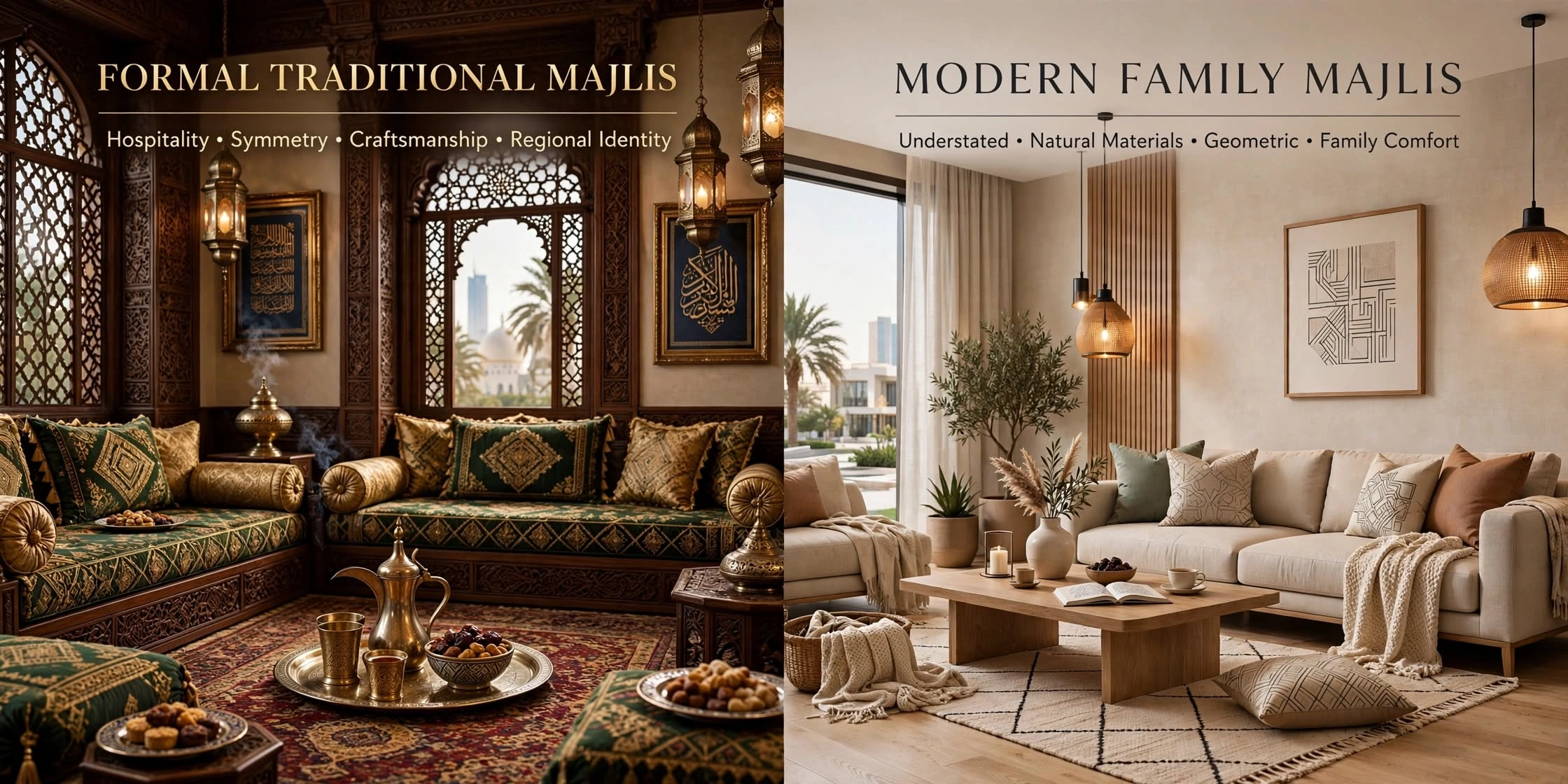
Traditional vs Modern Majlis Design: Which Style Is Right for Your UAE Home?
The Majlis has always held a special place in Arabian homes and hospitality culture. Traditionally used to welcome guests, hold family gatherings, conduct conversations, and provide a comfortable space for social interaction, the Majlis represents much more than an ordinary living room. In the UAE, its design continues to evolve as homeowners combine cultural heritage with contemporary architecture and modern lifestyles.
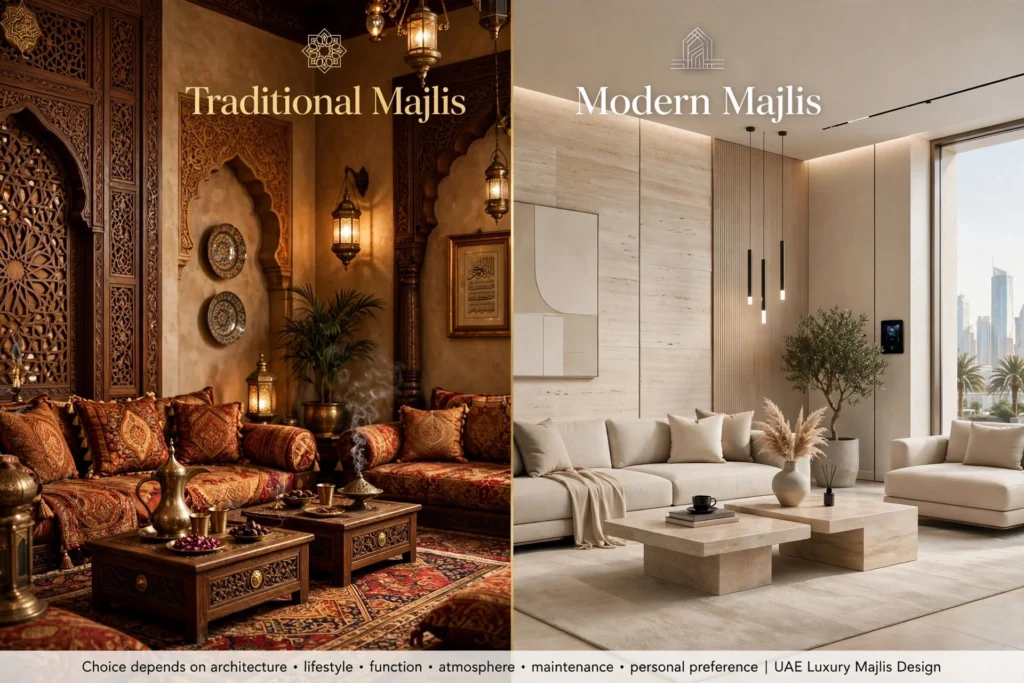
Today, two major approaches are particularly popular: traditional Majlis design and modern Majlis design. A traditional Majlis may feature ornate detailing, rich textiles, carved wood, Arabic patterns, arches, floor seating, decorative carpets, and warm colours. A modern Majlis may use clean architectural lines, minimalist furniture, natural stone, neutral colours, contemporary lighting, bespoke wall panels, and smart-home technology.
Neither approach is universally better. The right choice depends on the architecture of the property, lifestyle of the residents, intended use of the room, desired atmosphere, maintenance requirements, and personal preferences. Understanding the differences between the two styles can help homeowners, villa developers, hospitality businesses, and commercial property owners create a Majlis that feels both functional and distinctive.
What Defines a Traditional Majlis?
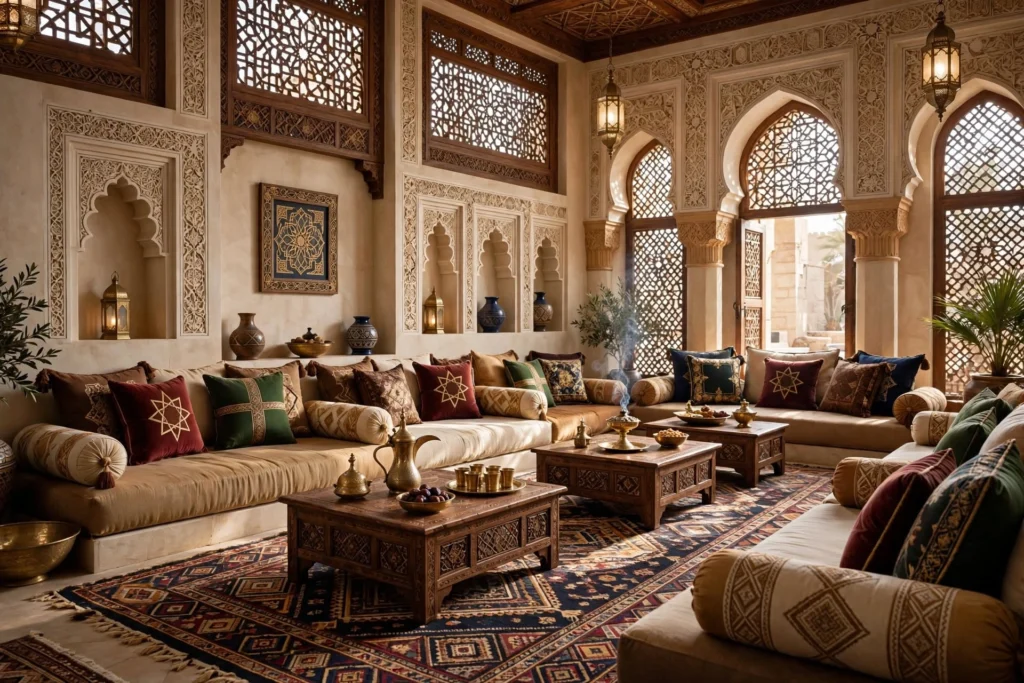
A traditional Majlis draws inspiration from Arabian hospitality, regional architecture, craftsmanship, and established social customs. Its layout is usually designed around conversation and hospitality rather than entertainment-focused furniture arrangements.
Traditional seating may consist of long upholstered mattresses positioned around the walls, supported by cushions and bolsters. Low tables, decorative carpets, carved wooden elements, brass accessories, and ornamental details can complete the setting.
Colour palettes often include warm beige, cream, brown, gold, burgundy, deep green, navy, and other rich tones. Decorative patterns may incorporate geometric motifs and traditional Arabian influences.
Architectural details can include arches, columns, ornamental gypsum work, decorative niches, wood screens, Arabic-inspired artwork, and handcrafted elements.
The overall objective is to create a welcoming environment with a strong cultural identity.
What Defines a Modern Majlis?
A modern Majlis takes the traditional concept of hospitality and interprets it through contemporary interior architecture. Instead of reproducing historical design elements, modern interiors often simplify them and combine cultural references with clean forms.
Modern Majlis spaces may include contemporary sofas, lounge chairs, custom-built seating, marble or porcelain flooring, wood veneer panels, fluted wall treatments, minimalist furniture, statement lighting, concealed LED strips, and large decorative artwork.
The colour palette is frequently based on neutral tones such as ivory, beige, taupe, grey, sand, cream, and natural wood. Metallic accents such as brushed brass, bronze, or black metal can introduce contrast.
Technology can also play a larger role. Smart lighting, motorized curtains, integrated audiovisual systems, concealed speakers, and automated climate controls can be incorporated without dominating the visual appearance.
Traditional and Modern Majlis Design Compared
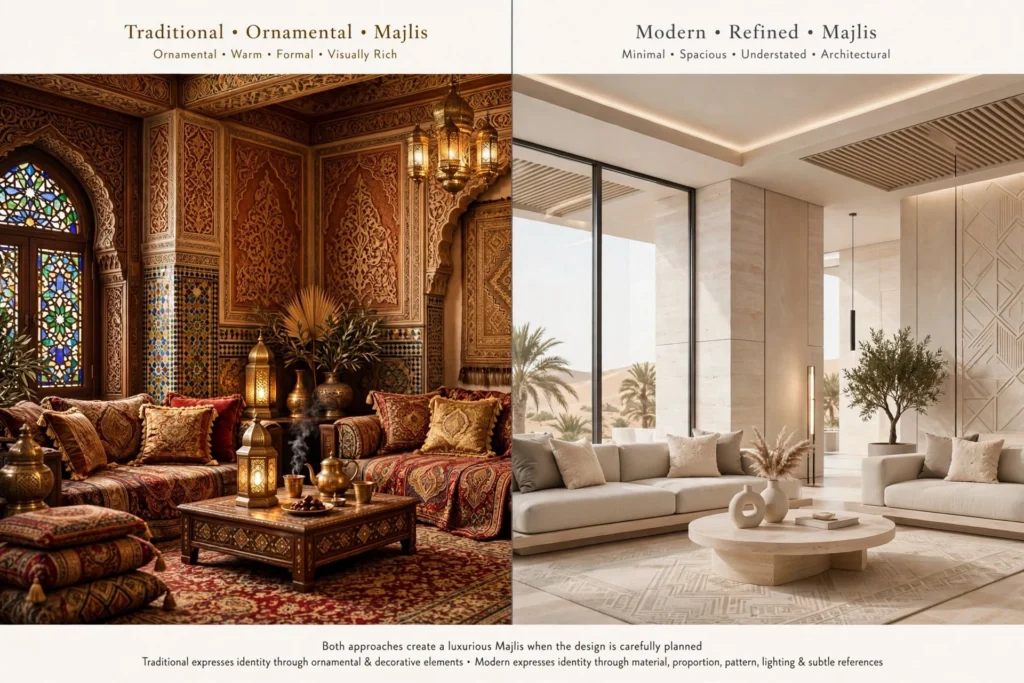
The biggest difference between the two styles is how they interpret Arabian identity.
Traditional design expresses cultural identity through recognizable architectural and decorative elements. Modern design tends to express the same identity through material selection, proportions, patterns, lighting, and subtle references.
Traditional Majlis interiors often feel ornamental, warm, formal, and visually rich. Modern Majlis interiors tend to feel refined, spacious, understated, and architectural.
Traditional spaces may rely heavily on textiles and decorative furniture, while modern interiors often give greater importance to the relationship between architecture, lighting, surfaces, and furniture.
Both approaches can create a luxurious Majlis when the design is carefully planned.
Seating Arrangements and Guest Experience
Seating is one of the most important differences between traditional and modern Majlis interiors.
Traditional Majlis seating commonly uses continuous sofas or mattresses positioned around the perimeter. This arrangement supports face-to-face conversation and can accommodate larger groups.
Modern Majlis designs may combine traditional perimeter seating with contemporary sofas, lounge chairs, occasional chairs, ottomans, and custom furniture.
For a large UAE villa, a hybrid seating arrangement can provide the best of both worlds. Traditional low seating can maintain cultural character while contemporary armchairs and tables provide additional comfort and flexibility.
The intended audience also matters. A formal guest Majlis may benefit from a symmetrical arrangement, while a family-oriented space may use a more relaxed layout.
Flooring Choices for Traditional and Modern Majlis Interiors
Flooring has a major effect on the atmosphere of a Majlis.
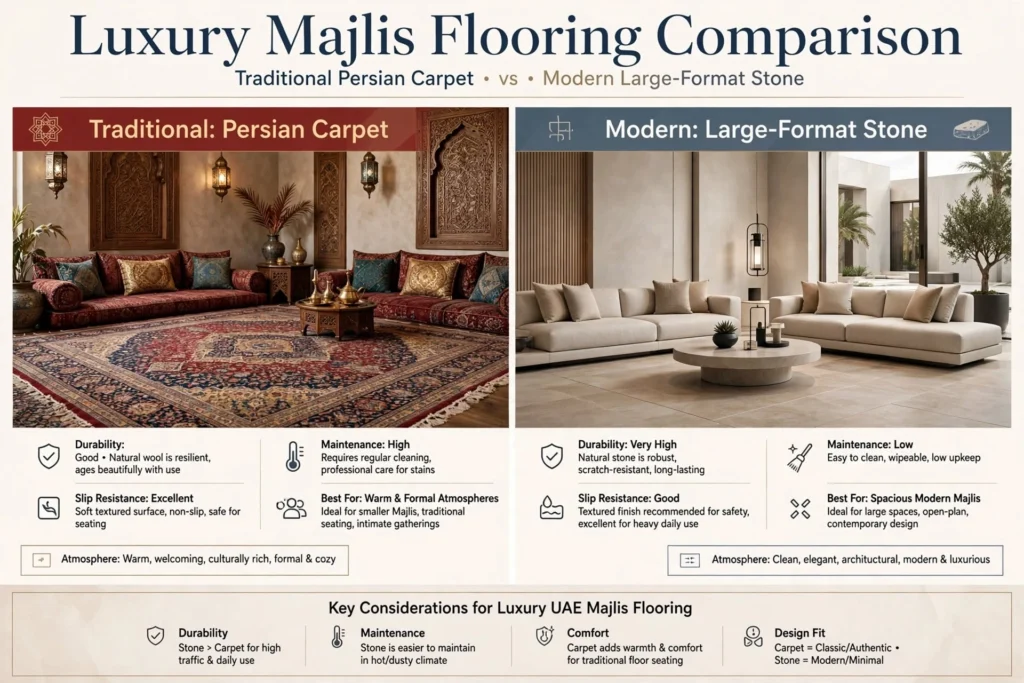
Traditional interiors often use Persian-style carpets, Oriental rugs, patterned textiles, marble, or decorative stone. Large carpets can create a warm and formal environment while supporting the traditional seating arrangement.
Modern Majlis interiors frequently use large-format marble, porcelain slabs, limestone, travertine, or contemporary engineered flooring. Large surfaces with fewer joints can create a clean architectural appearance.
Natural stone remains particularly popular in luxury UAE interiors because it can provide an elegant foundation for both traditional and modern furniture.
The best flooring choice should also consider durability, maintenance, slip resistance, room size, and the level of daily use.
Wall Treatments and Decorative Features
Traditional Majlis walls often feature decorative plaster, arches, wood carving, ornamental niches, Arabic artwork, traditional patterns, and textured finishes.
Modern designs may use fluted wood, marble slabs, microcement, Venetian plaster, upholstered wall panels, large-format porcelain, decorative paint, and minimalist mouldings.
However, the distinction is not absolute. A modern Majlis can incorporate an Arabian geometric pattern into a contemporary wall panel. Similarly, a traditional Majlis can use modern lighting or contemporary stone.
This flexibility allows designers to create transitional interiors that feel culturally authentic without appearing dated.
Woodwork and Joinery
Wood is a material that works exceptionally well in both styles.
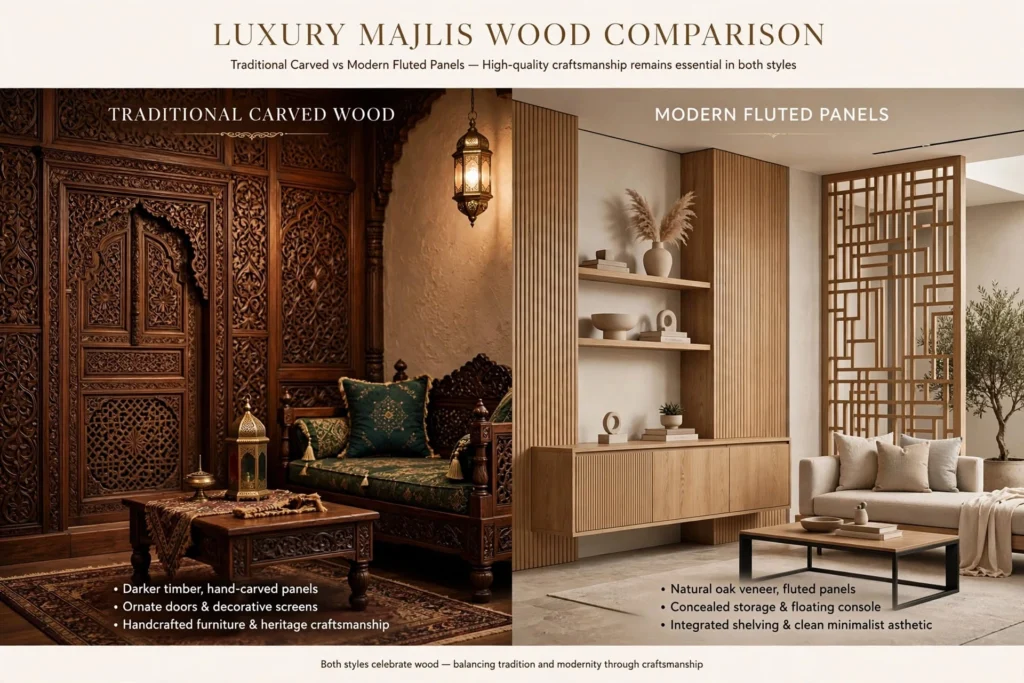
Traditional Majlis interiors may use darker timber, carved panels, ornate doors, decorative screens, and handcrafted furniture.
Modern interiors may use walnut, oak, natural veneer, or engineered wood in cleaner forms. Fluted panels, concealed storage, floating consoles, integrated shelving, and bespoke cabinetry can introduce warmth without excessive ornamentation.
Mashrabiya-inspired screens can also be redesigned using modern manufacturing techniques. Laser-cut metal, CNC-cut timber, and geometric panels can reinterpret traditional patterns for contemporary interiors.
High-quality craftsmanship remains important regardless of the chosen style.
Lighting Differences Between Traditional and Modern Majlis
Lighting can completely change the character of a Majlis.
Traditional interiors may feature decorative chandeliers, lantern-style fixtures, wall sconces, warm accent lights, and ornamental ceiling details.
Modern Majlis spaces frequently use recessed downlights, linear LED lighting, concealed cove lighting, wall washers, pendant fixtures, and architectural accent lighting.
Layered lighting is valuable in both styles. General illumination can provide comfortable visibility, accent lighting can highlight artwork or architectural features, and decorative lighting can become a visual focal point.
Smart dimming systems can also allow homeowners to adjust lighting for different occasions.
The Role of Colour in Majlis Design
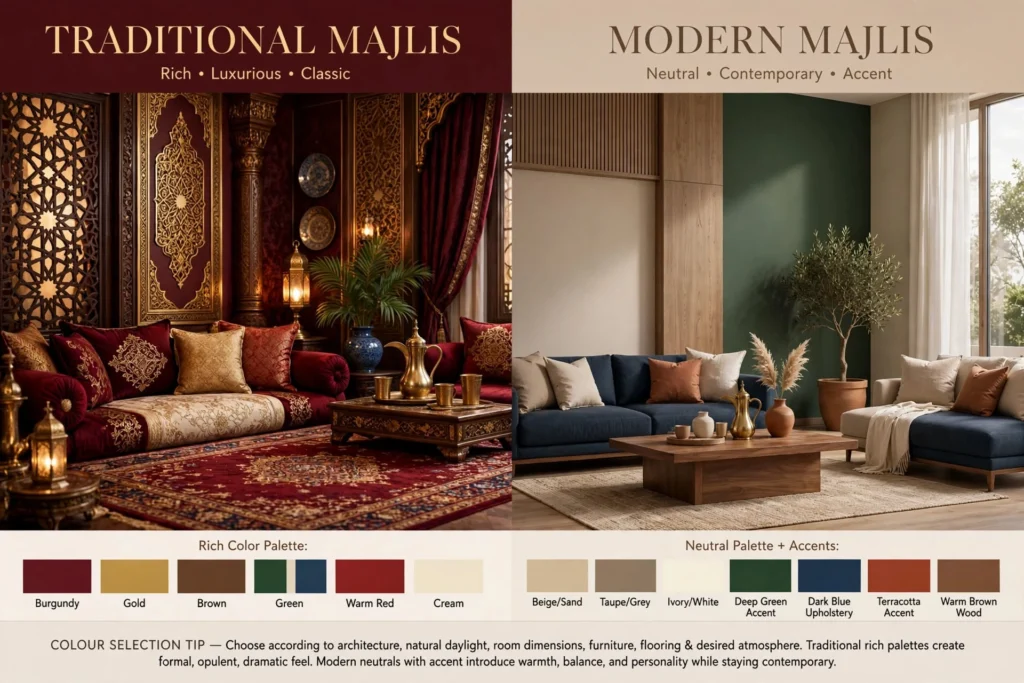
Traditional Majlis interiors often use richer colour combinations. Burgundy, gold, brown, cream, green, blue, and warm red tones can create a formal and luxurious atmosphere.
Modern Majlis interiors generally favour neutral palettes. Beige, sand, ivory, taupe, grey, white, natural wood, and muted earth tones are common choices.
However, modern design does not have to mean completely neutral. A deep green feature wall, dark blue upholstery, terracotta accents, or warm brown furniture can introduce personality.
Colour should be selected according to the architecture, natural daylight, room dimensions, furniture, flooring, and desired atmosphere.
Fabrics, Curtains, and Upholstery
Textiles are essential to creating comfort in a Majlis.
Traditional designs may use richly patterned upholstery, decorative cushions, velvet, brocade-inspired fabrics, embroidered textiles, and heavy curtains.
Modern interiors may favour linen, textured cotton, chenille, performance fabrics, and subtle patterns.
Floor-to-ceiling curtains can enhance the height of a modern Majlis, while layered drapery can provide a more traditional atmosphere.
In high-use properties, performance fabrics can provide a practical combination of elegance and durability.
Traditional Arabian Patterns in Modern Interiors
One of the most effective ways to combine old and new is through patterns.
Geometric Arabian patterns can be incorporated into wall panels, carpets, screens, cushions, metalwork, ceiling details, and decorative artwork.
Rather than covering the entire room with traditional patterns, modern designers often use one or two carefully selected motifs.
For example, a geometric screen behind a seating area can create a cultural focal point without making the room feel overly decorative.
This approach works particularly well in contemporary villas where the architecture is already minimalist.
Smart Technology in a Modern Majlis
Technology is one of the clearest differences between traditional and modern interiors.
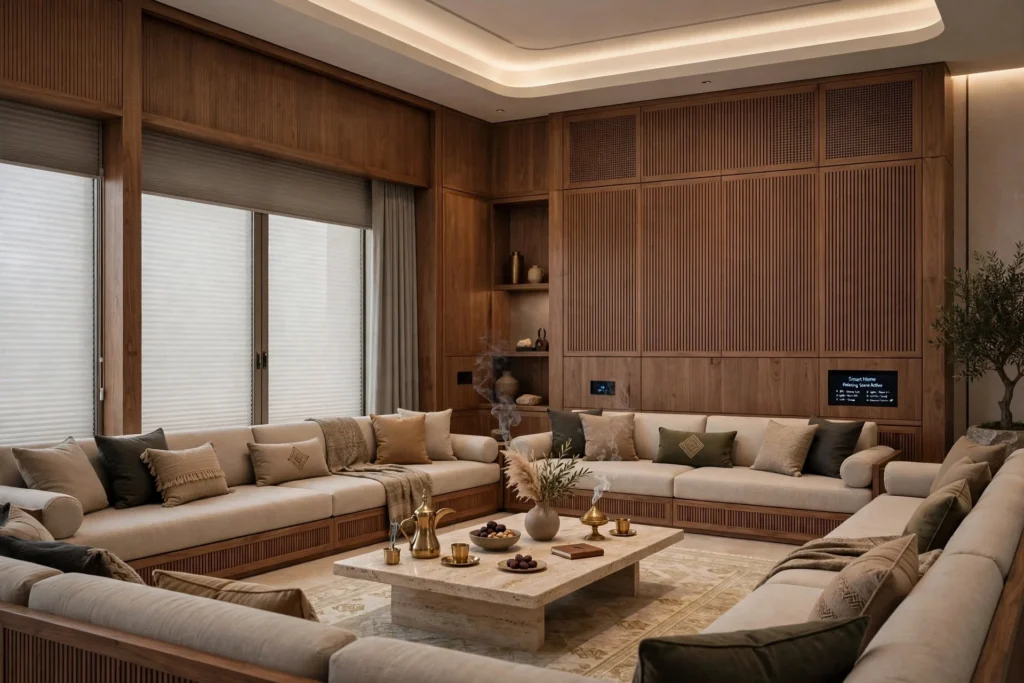
A contemporary Majlis can integrate smart lighting, automated curtains, climate control, audiovisual systems, concealed speakers, motorized blinds, and home automation.
A smart-home system can allow homeowners to create preset scenes for entertaining, relaxing, watching television, or hosting formal gatherings.
Technology should ideally be integrated into the architecture. Visible cables, oversized equipment, and poorly positioned screens can interrupt the design.
Concealed equipment and built-in joinery can help maintain a clean appearance.
Acoustic Comfort in Traditional and Modern Majlis Spaces
Acoustics are often overlooked when designing luxury interiors. A Majlis may accommodate several people talking simultaneously, making sound management particularly important.
Traditional interiors naturally contain many soft materials, including carpets, curtains, cushions, upholstered seating, and textiles. These surfaces can help absorb sound.
Modern interiors may contain more hard surfaces such as marble, glass, porcelain, and timber. While these materials create a sophisticated appearance, excessive hard surfaces can increase sound reflection.
Acoustic wall panels, upholstered surfaces, carpets, curtains, and acoustic ceiling elements can therefore be integrated into contemporary Majlis interiors.
Traditional vs Modern Materials
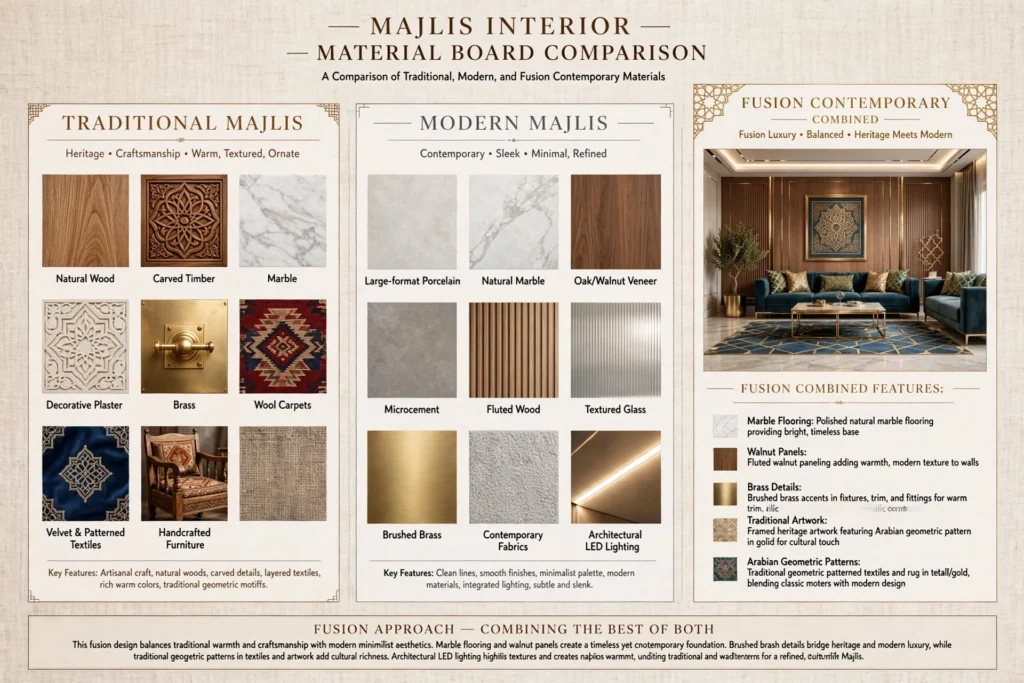
Traditional Majlis materials often include:
- Natural wood
- Carved timber
- Marble
- Decorative plaster
- Brass
- Wool carpets
- Velvet and patterned textiles
- Handcrafted furniture
Modern Majlis interiors may incorporate:
- Large-format porcelain
- Natural marble
- Oak or walnut veneer
- Microcement
- Fluted wood
- Textured glass
- Brushed brass
- Contemporary fabrics
- Architectural LED lighting
The two approaches can also be combined. A contemporary Majlis with marble flooring, walnut panels, brass details, traditional artwork, and Arabian geometric patterns can achieve a sophisticated transitional appearance.
Majlis Design for Luxury Villas in Dubai
Dubai’s luxury residential areas provide a diverse architectural environment for Majlis design. Villas in Emirates Hills, Palm Jumeirah, Jumeirah, Dubai Hills Estate, Arabian Ranches, Al Barari, and Umm Suqeim can feature very different architectural styles.
A traditional Majlis may suit a villa with Arabian architectural influences, arches, courtyards, and ornamental details.
A contemporary villa with large windows, open-plan spaces, high ceilings, and minimalist architecture may benefit from a modern Majlis with natural stone, bespoke joinery, neutral fabrics, and integrated lighting.
The design should respond to the existing architecture instead of treating the Majlis as an isolated room.
Majlis Design in Abu Dhabi
Abu Dhabi has a strong cultural connection with the Majlis, making both traditional and contemporary approaches relevant for residential and formal settings.
Properties in Saadiyat Island, Al Bateen, Khalifa City, Yas Island, and Al Raha may use different interior styles depending on their architecture and intended use.
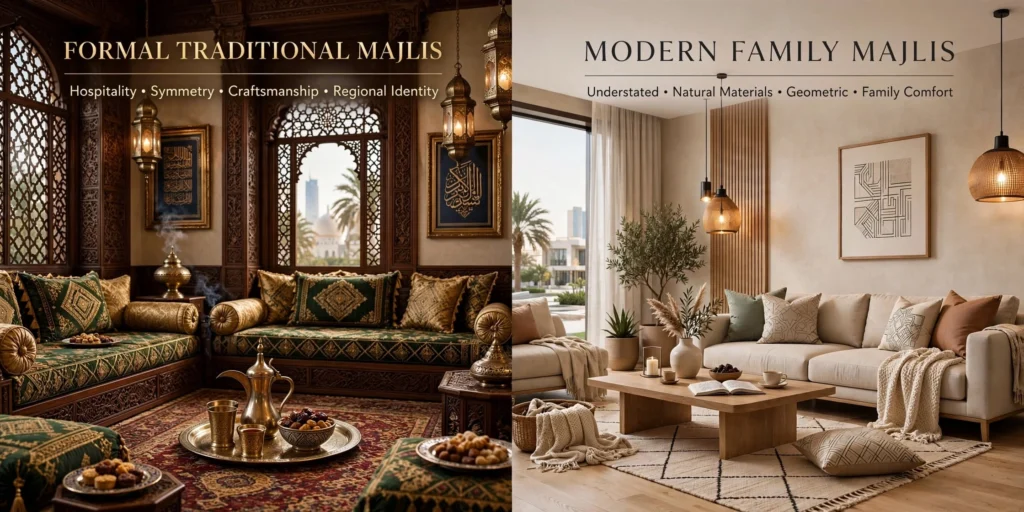
A formal traditional Majlis can emphasize hospitality, symmetry, craftsmanship, and regional identity.
A modern Majlis can create a more understated environment while still incorporating Arabic artwork, geometric patterns, natural materials, and warm lighting.
For large properties, designers can also create separate formal and family Majlis spaces.
Majlis Design in Sharjah and Other Emirates
Majlis interiors are not limited to Dubai and Abu Dhabi. Sharjah, Ajman, Ras Al Khaimah, Fujairah, and Umm Al Quwain also have homes and hospitality properties where the Majlis remains an important part of the interior.
Traditional designs can work particularly well in properties where cultural architectural details are already present.
Modern interiors can be adapted to villas, apartments, private residences, hotels, offices, and other contemporary spaces.
The local climate and building orientation should also be considered when selecting materials, window treatments, lighting, and furniture.
Which Style Is Better for a Large Majlis?
Large rooms can accommodate either traditional or modern design, but the layout needs to be carefully considered.
A traditional large Majlis can use continuous seating, carpets, decorative columns, architectural niches, and statement chandeliers to prevent the room from feeling empty.
A modern large Majlis can use zoning. Different seating groups, feature walls, lighting areas, rugs, furniture arrangements, and architectural ceiling elements can visually divide the space.
Large-format materials can also emphasize the scale of the architecture.
The goal is to create visual balance without filling every available area with furniture.
Which Style Is Easier to Maintain?
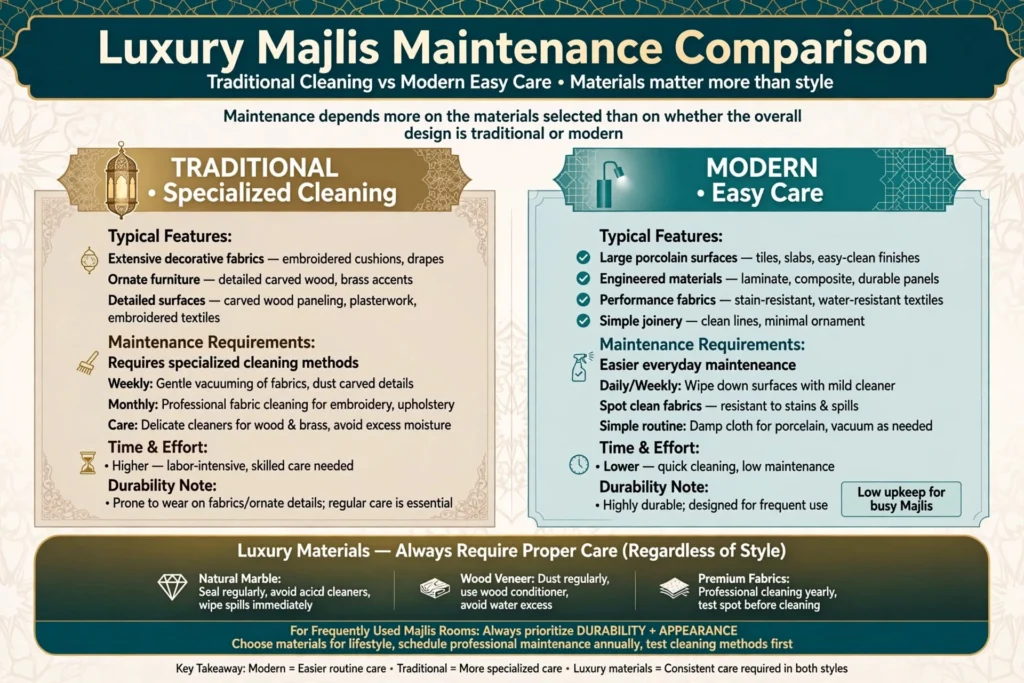
Maintenance depends more on the materials selected than on whether the overall design is traditional or modern.
Traditional interiors with extensive decorative fabrics, ornate furniture, and detailed surfaces may require more specialized cleaning.
Modern interiors with large porcelain surfaces, engineered materials, performance fabrics, and simple joinery can sometimes be easier to maintain.
However, natural marble, wood veneer, premium fabrics, and other luxury materials require appropriate care regardless of design style.
For frequently used Majlis rooms, durability should always be considered alongside appearance.
Combining Traditional and Modern Majlis Design
Homeowners do not have to choose one style exclusively. A transitional Majlis can combine traditional cultural elements with modern architecture.
For example, a room could feature contemporary sofas, marble flooring, concealed LED lighting, and minimalist wall panels while incorporating an Arabian carpet, brass lanterns, Arabic artwork, and a mashrabiya-inspired screen.
This approach can create a timeless interior because it respects the cultural purpose of the Majlis while responding to modern expectations of comfort and functionality.
The balance should be intentional. Too many unrelated decorative elements can make the room feel inconsistent.
How to Choose the Right Majlis Style
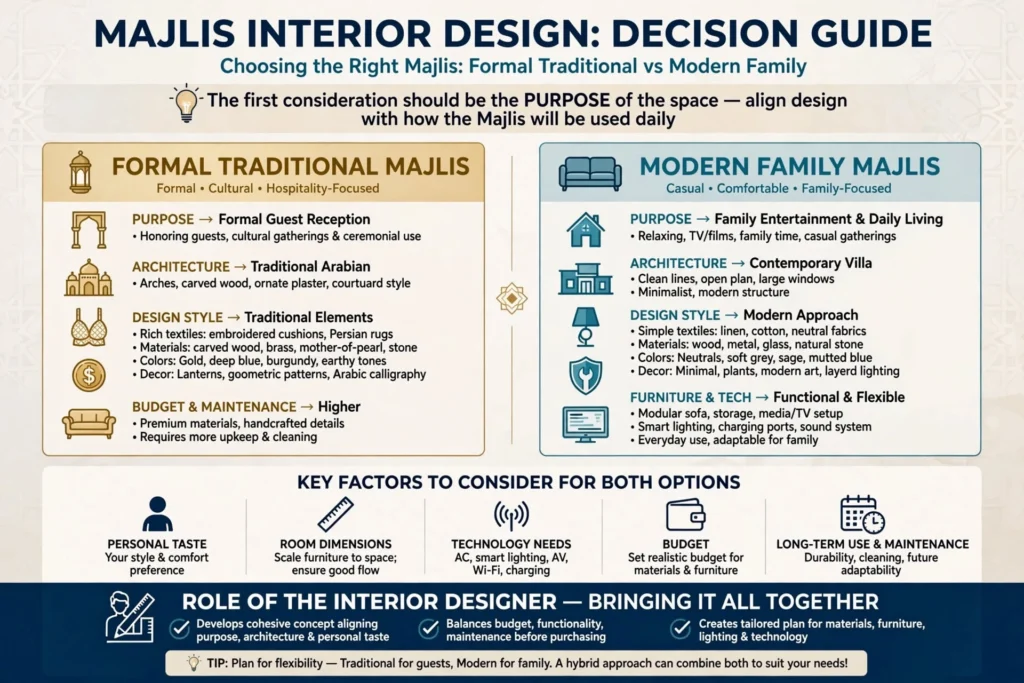
The first consideration should be the purpose of the space. A formal guest Majlis may benefit from traditional elements, while a family entertainment space may suit a modern approach.
The architecture of the property should also influence the decision. Contemporary villas generally work naturally with modern interiors, while properties with traditional Arabian architecture can support a more decorative Majlis.
Personal taste, maintenance expectations, budget, room dimensions, furniture requirements, technology, and long-term use should also be considered.
A professional interior designer can develop a concept that brings these factors together before materials and furniture are purchased.
Why Professional Majlis Planning Matters
Majlis design involves much more than selecting sofas and decorative accessories. Floor plans, circulation, seating capacity, lighting, electrical points, HVAC diffusers, ceiling design, wall finishes, acoustics, storage, window treatments, and furniture dimensions all need to work together.
Professional Modern Majlis Design Services can help homeowners create a contemporary space that maintains the cultural purpose of the Majlis while incorporating modern materials, technology, lighting, and furniture.
For luxury villas and large hospitality spaces, professional planning can also help coordinate architects, joinery contractors, lighting suppliers, furniture manufacturers, and other specialists.
Traditional vs Modern Majlis: A Simple Decision Guide
A traditional Majlis may be the better choice when cultural authenticity, formal hospitality, ornate detailing, rich textiles, and classic Arabian aesthetics are the main priorities.
A modern Majlis may be preferable when clean lines, contemporary materials, smart technology, minimalist styling, easy visual maintenance, and modern architectural integration are more important.
A transitional design can be ideal for homeowners who want both. It allows traditional patterns, materials, artwork, and cultural details to exist alongside modern furniture, lighting, technology, and architectural surfaces.
Ultimately, the best design is the one that reflects the property and the people who use it.
Frequently Asked Questions About Traditional and Modern Majlis Design
What is the difference between a traditional and modern Majlis?
A traditional Majlis emphasizes Arabian heritage through floor seating, decorative textiles, carpets, woodwork, arches, patterns, and ornamental details. A modern Majlis interprets the same hospitality concept through contemporary furniture, clean lines, natural stone, neutral colours, modern lighting, and integrated technology.
Can a modern Majlis still look Arabic?
Yes. Arabic and Arabian influences can be incorporated through geometric patterns, mashrabiya-inspired screens, Arabic artwork, brass details, traditional carpets, natural materials, and carefully selected architectural forms without creating an overly traditional interior.
Is traditional Majlis design outdated?
No. Traditional Majlis design remains culturally relevant throughout the UAE. It can also be updated with contemporary materials, lighting, furniture, and technology while retaining its traditional character.
Which Majlis style is better for a luxury villa?
Both styles can work well. The architecture of the villa, personal preferences, intended use, room size, and desired level of formality should determine the final design.
Can traditional and modern styles be combined?
Yes. A transitional Majlis can combine traditional Arabian patterns, carpets, artwork, brass, and woodwork with modern marble, contemporary furniture, architectural lighting, and smart-home technology.
What materials work in both traditional and modern Majlis interiors?
Marble, natural wood, premium fabrics, brass, stone, decorative plaster, carpets, and quality lighting can be adapted to both styles. The difference comes largely from how these materials are shaped, combined, and detailed.
Conclusion
Traditional and modern Majlis design represent two different ways of expressing the same fundamental idea: hospitality, comfort, cultural identity, and social connection.
Traditional Majlis interiors create their character through Arabian craftsmanship, rich textiles, decorative patterns, carpets, woodwork, arches, brass details, and formal seating arrangements. Modern Majlis interiors reinterpret these values using contemporary architecture, natural stone, clean furniture, neutral palettes, bespoke joinery, layered lighting, and smart technology.
For homeowners in Dubai, Abu Dhabi, Sharjah, and other UAE emirates, the decision should be based on the property’s architecture, lifestyle, guest requirements, maintenance expectations, and personal taste.
The most successful interiors often avoid treating traditional and modern design as opposites. Instead, they combine the warmth and cultural identity of the traditional Majlis with the comfort, technology, functionality, and refined simplicity of contemporary interior design.
Whether the final result is classic Arabian, contemporary, minimalist, or transitional, careful planning ensures that the Majlis remains a welcoming and meaningful space while meeting the expectations of modern UAE living.
0 comments