
Premium Materials for Majlis Interiors
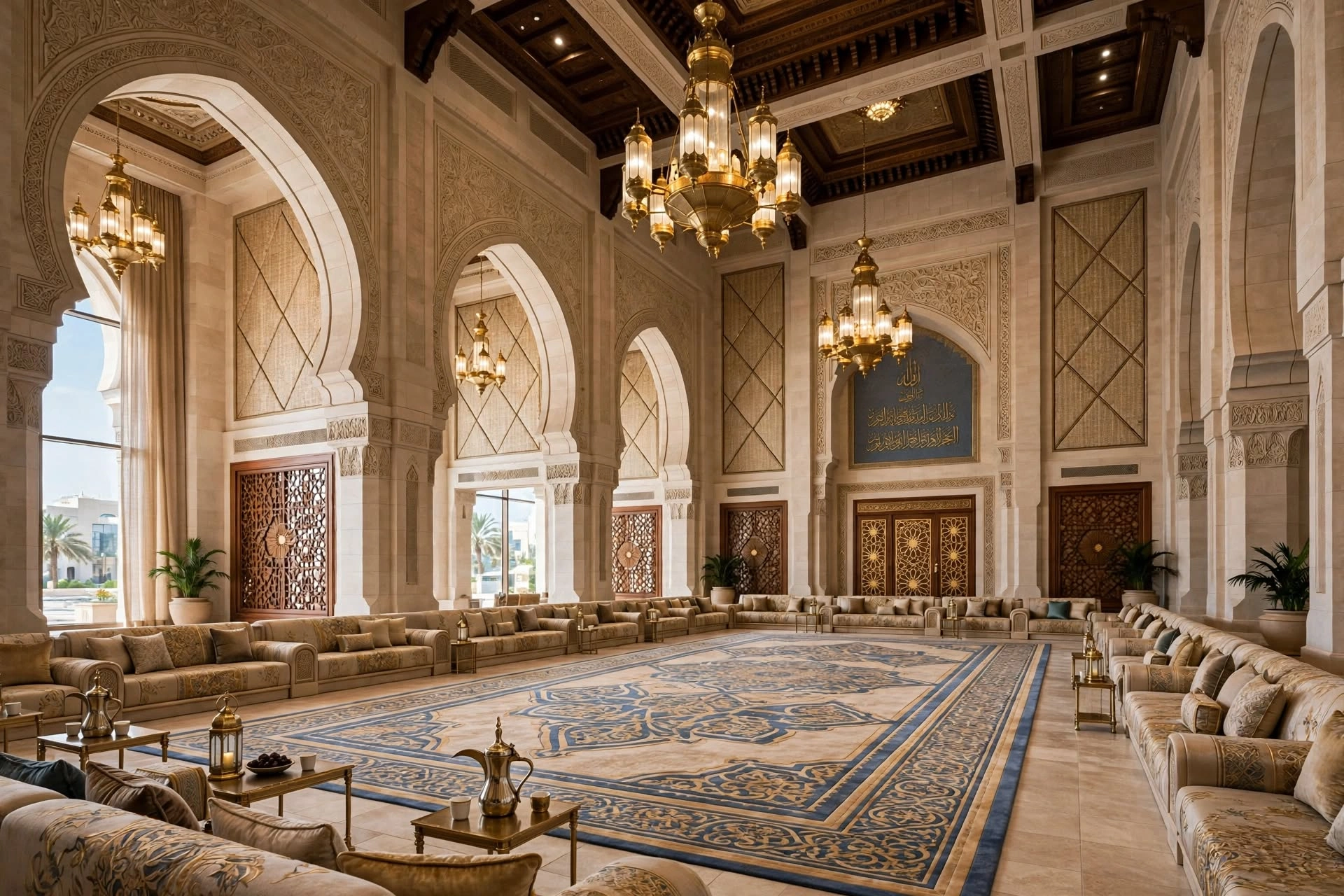
A Majlis is more than a formal sitting room. In the UAE, it represents hospitality, cultural identity, family gatherings, business meetings, and an important part of residential and commercial architecture. Because of this, the materials selected for a Majlis interior need to provide more than visual beauty. They should create warmth, comfort, durability, acoustic privacy, and a sense of refined Arabian hospitality.
Premium Majlis interiors often combine natural stone, hardwood, luxury fabrics, decorative plaster, handcrafted metalwork, premium carpets, glass, veneers, and carefully selected lighting. The right combination creates a sophisticated environment without losing the traditional character that makes a Majlis distinctive.
For homeowners, villa developers, hospitality businesses, and commercial property owners in Dubai and across the UAE, understanding the characteristics of different materials can make it easier to create a Majlis that feels luxurious, practical, and appropriate for the building.
Understanding the Material Language of a Modern Majlis
A successful Majlis interior usually balances traditional Arabian design with contemporary interior architecture. Traditional elements may include floor seating, upholstered mattresses, decorative cushions, geometric patterns, carved details, arches, mashrabiya-inspired screens, brass accents, and ornamental ceilings.
Modern Majlis designs may introduce cleaner furniture profiles, neutral colour palettes, minimalist wall treatments, concealed lighting, large-format porcelain, natural stone, acoustic panels, and contemporary joinery.
Premium materials help connect these two design approaches. For example, natural marble can provide a contemporary luxury appearance while traditional brass detailing and custom upholstery add cultural character. Similarly, walnut or oak veneer can create a sophisticated backdrop for a Majlis while maintaining a warm and welcoming atmosphere.
The objective is not to use expensive materials everywhere. Instead, premium design comes from selecting the right materials for the right architectural surfaces and combining them with craftsmanship, proportion, lighting, and functionality.
Natural Stone for Floors and Feature Walls
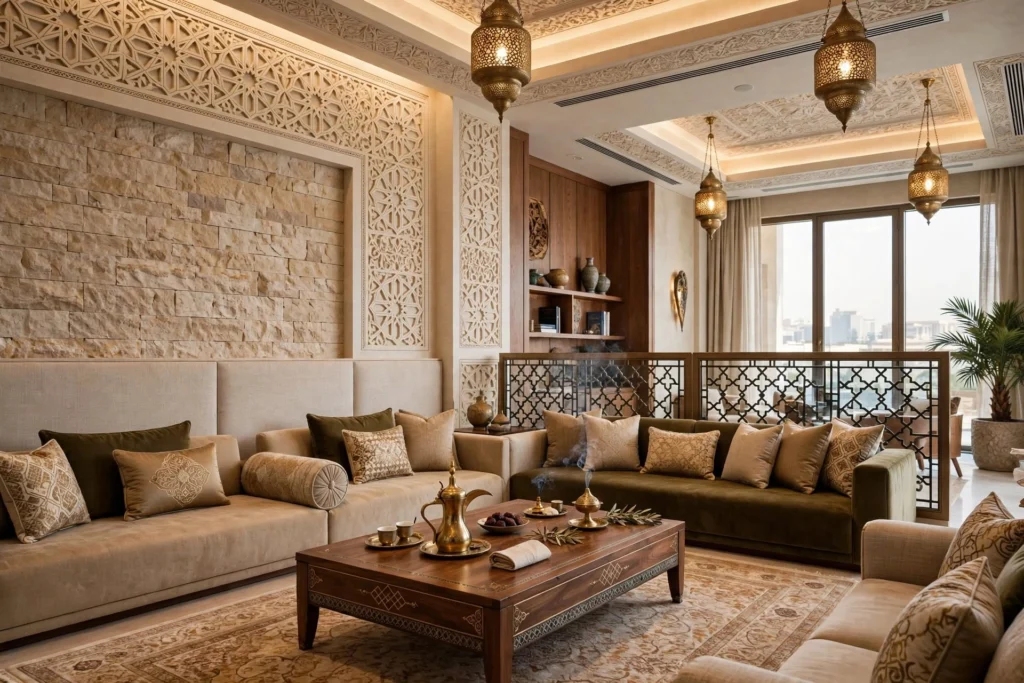
Natural stone is one of the most effective materials for creating a luxurious Majlis environment. Marble, limestone, travertine, and selected varieties of granite can introduce texture, depth, and visual sophistication.
Marble is particularly popular in high-end UAE interiors because of its distinctive veining and polished appearance. White, beige, cream, grey, and warm-toned marble can complement different Majlis colour schemes.
A marble floor can establish a formal foundation for the room, while a carefully selected marble feature wall can become an architectural focal point. Stone can also be used around fireplaces, TV walls, entrance areas, columns, or decorative niches.
However, stone selection should consider slip resistance, maintenance, porosity, staining, and the amount of traffic expected in the Majlis. A material that looks beautiful in a sample may require different treatment when used across a large floor.
Premium Porcelain and Large-Format Surfaces
Large-format porcelain slabs provide another premium option for contemporary Majlis interiors. They can replicate the appearance of marble, stone, concrete, or other natural surfaces while offering practical advantages.
Large-format surfaces reduce the number of visible joints and can create a cleaner architectural appearance. They may be suitable for feature walls, flooring, reception areas, built-in furniture, and decorative panels.
Porcelain is also available in a wide variety of finishes, allowing designers to coordinate the floor with wall treatments and furniture.
In modern villas in areas such as Dubai Hills Estate, Emirates Hills, Palm Jumeirah, Arabian Ranches, and Jumeirah, large-format surfaces can work particularly well with minimalist architecture and expansive Majlis rooms.
Hardwood and Premium Wood Veneers
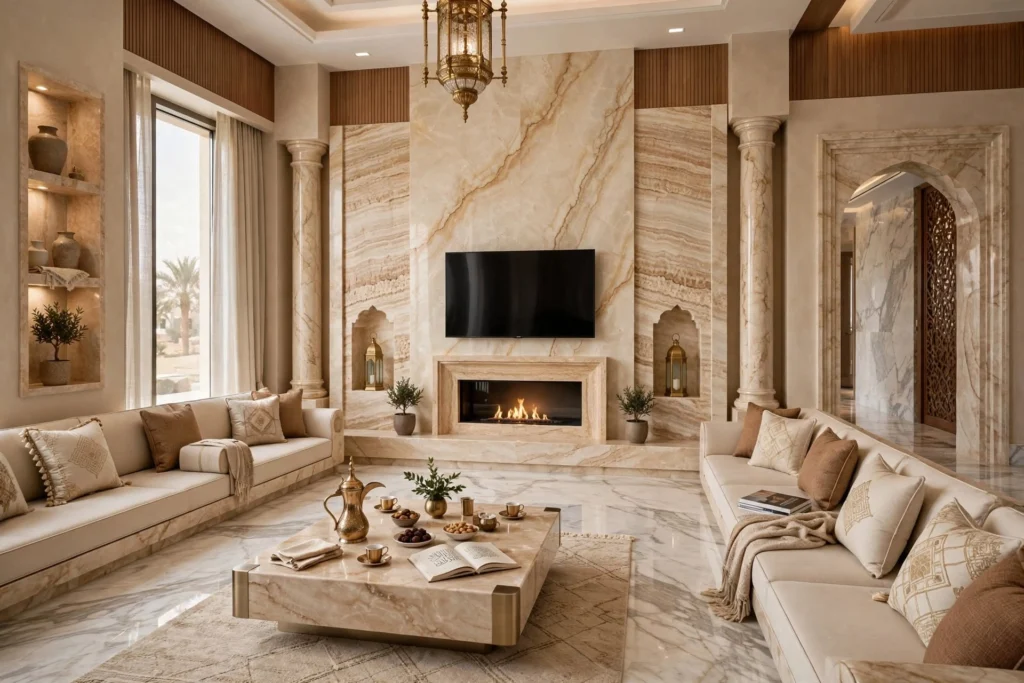
Wood introduces warmth into a Majlis and prevents a luxurious interior from feeling excessively cold or formal. Natural hardwood, engineered wood, and premium wood veneers can be used for doors, wall panels, cabinetry, ceilings, screens, and custom furniture.
Walnut is known for its rich colour and elegant grain, while oak can provide a lighter and more contemporary appearance. Darker timber tones can create a dramatic traditional atmosphere, whereas natural oak and warm veneer finishes suit modern Arabian interiors.
Wood can also be incorporated into geometric screens inspired by traditional mashrabiya. These screens can separate areas without completely blocking light or creating a heavy visual barrier.
Premium joinery is particularly valuable because the quality of craftsmanship is often as important as the material itself.
Luxury Upholstery for Majlis Seating
Seating is one of the most important elements in a Majlis because guests may spend extended periods sitting and socialising. Premium upholstery therefore needs to balance appearance, softness, durability, and ease of maintenance.
Velvet, linen blends, chenille, high-quality cotton, wool blends, and performance fabrics can all be considered depending on the desired style.
Traditional Majlis seating may use long upholstered mattresses arranged along the perimeter of the room. Contemporary designs may combine these with armchairs, occasional chairs, sofas, and custom-built seating.
The fabric colour can influence the entire atmosphere. Cream, beige, sand, taupe, warm grey, olive, deep brown, burgundy, navy, and muted gold can create different levels of formality.
For frequently used Majlis rooms, stain-resistant and durable upholstery fabrics can provide a practical alternative to delicate decorative textiles.
Persian, Oriental, and Custom Majlis Carpets
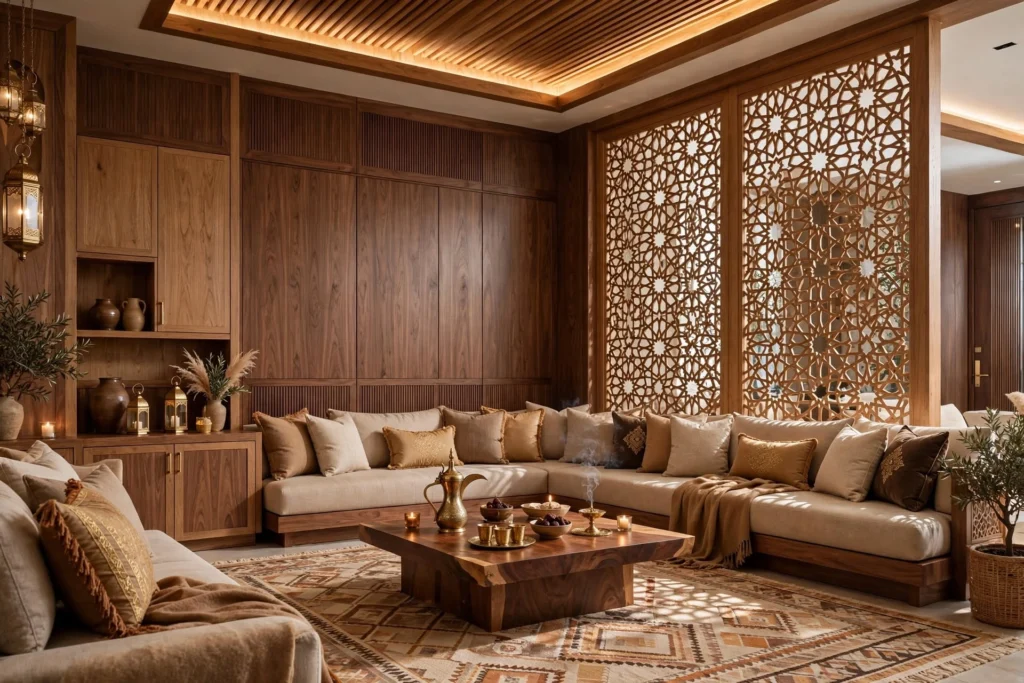
A premium carpet can visually connect the seating arrangement and establish a sense of comfort. Traditional Persian and Oriental-inspired patterns can complement an Arabian Majlis, while contemporary carpets with subtle geometric patterns can work with modern interiors.
Wool is widely valued for premium carpets because of its durability, texture, and natural appearance. Silk details may be used in highly decorative carpets where visual refinement is the primary objective.
Custom carpets can also be designed to match the dimensions and architectural geometry of a particular Majlis.
The size of the carpet matters as much as its pattern. An undersized carpet can make a large room feel disconnected, while a correctly proportioned carpet can visually unify seating, tables, and surrounding architectural elements.
Decorative Wall Panels and Bespoke Joinery
Walls provide a major opportunity to introduce premium materials into a Majlis. Bespoke wall panels can combine wood veneer, fabric, stone, metal, glass, and decorative mouldings.
Fluted wood panels can create vertical rhythm, while upholstered wall panels can contribute to acoustic comfort. Stone panels can establish a strong focal point behind a television, artwork, or decorative console.
Custom joinery may also incorporate concealed storage, display niches, shelving, beverage stations, bookshelves, and integrated lighting.
For high-end residential interiors, bespoke joinery allows the designer to work around the exact proportions of the room instead of relying entirely on standard furniture.
Brass, Bronze, and Decorative Metal Details
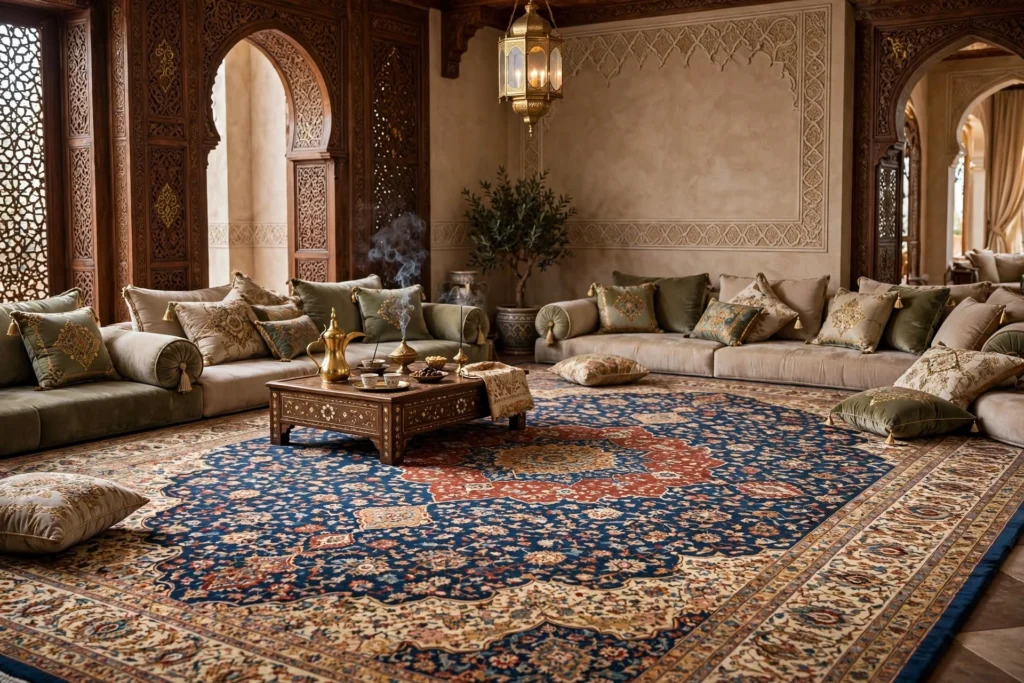
Metal accents can introduce subtle luxury without overwhelming the room. Brass, bronze, brushed metal, blackened metal, and stainless steel can be used for door handles, furniture details, lighting fixtures, screens, trims, tables, and decorative objects.
Brass is particularly effective in Arabian-inspired interiors because its warm golden appearance works naturally with beige, cream, brown, marble, and dark wood.
A premium Majlis does not necessarily need large quantities of metallic finishes. Small details can have a significant visual effect when they are repeated consistently across the room.
For example, brass lighting fixtures can coordinate with brass furniture legs, cabinet handles, decorative screens, and table accessories.
Glass and Decorative Screens
Glass can help modern Majlis interiors feel spacious while allowing designers to establish separation between different zones.
Clear glass, tinted glass, fluted glass, textured glass, and decorative glass can be incorporated into doors, partitions, display cabinets, and architectural features.
Fluted or textured glass is particularly useful when some visual privacy is required. It can allow light to pass through while reducing direct visibility.
Glass can also be combined with brass or dark metal frames to create a sophisticated contemporary Arabian aesthetic.
Decorative Plaster and Wall Finishes
Premium Majlis interiors can benefit from handcrafted wall finishes rather than relying exclusively on conventional painted surfaces.
Decorative plaster, microcement, Venetian plaster, lime-based finishes, textured coatings, and custom paint techniques can add depth to walls and ceilings.
Venetian plaster can create a polished, stone-like appearance, while textured plaster can provide a softer handcrafted character.
Neutral finishes are particularly effective when combined with natural materials. A warm plaster wall can sit comfortably beside walnut joinery, marble flooring, brass lighting, and neutral upholstery.
The final appearance depends heavily on preparation and application quality. Premium finishes require skilled workmanship to achieve consistent texture, colour, and transitions.
Ceiling Materials and Architectural Details
The ceiling is often overlooked when selecting materials for a Majlis, yet it can dramatically influence the room’s atmosphere.
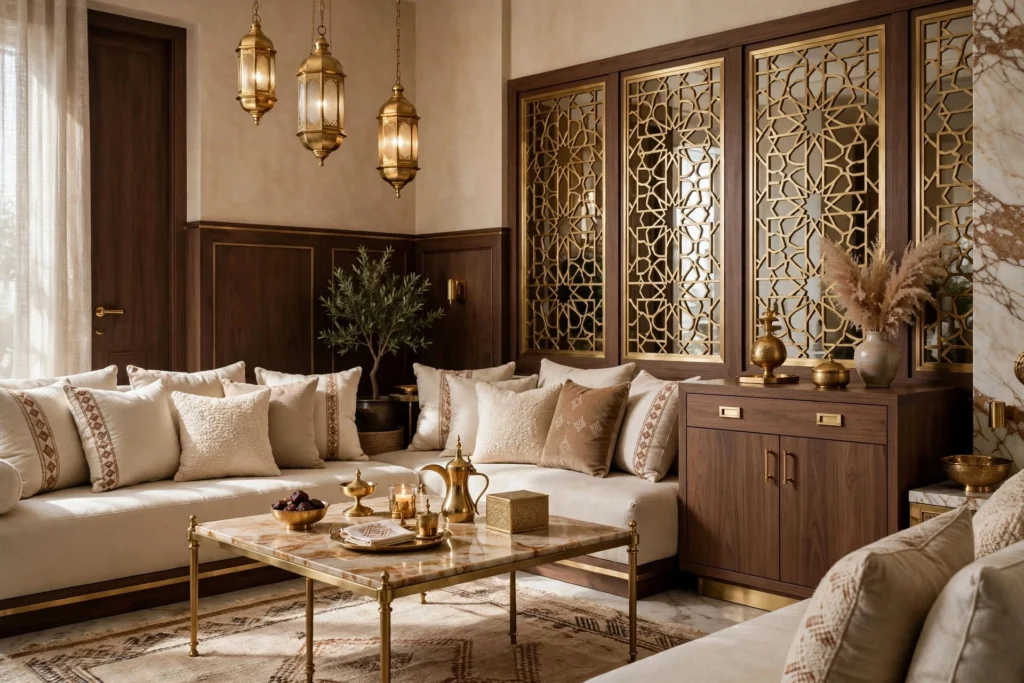
Timber ceiling details, decorative gypsum, recessed profiles, fabric panels, coffers, curved forms, and concealed LED lighting can transform an ordinary ceiling into an architectural feature.
Traditional Majlis interiors may incorporate ornamental gypsum work, arches, and decorative patterns. Contemporary interiors may use linear profiles, floating ceiling elements, recessed lighting, and simple geometric forms.
A carefully designed ceiling can also help define different areas within a large open-plan Majlis.
Premium Lighting Materials and Fixtures
Lighting should be considered alongside material selection because it changes how every surface is perceived.
Decorative chandeliers, pendant lights, wall sconces, recessed downlights, linear LED lighting, concealed cove lighting, and accent lighting can be combined to create layers of illumination.
Warm colour temperatures generally work well with wood, brass, beige upholstery, and natural stone because they create a welcoming environment.
Architectural lighting can highlight a marble feature wall, artwork, decorative screen, ceiling detail, or textured plaster surface.
In large Majlis rooms, dimming and scene control can allow the lighting atmosphere to change between daytime gatherings, evening entertaining, formal meetings, and special occasions.
Acoustic Materials for Comfortable Gatherings
Luxury is not only visual. Acoustic comfort is an important consideration in a Majlis because conversations, multiple guests, television audio, and background noise can create excessive reverberation in rooms with hard surfaces.
Marble, porcelain, glass, and stone are reflective materials. When used extensively, they can increase sound reflection.
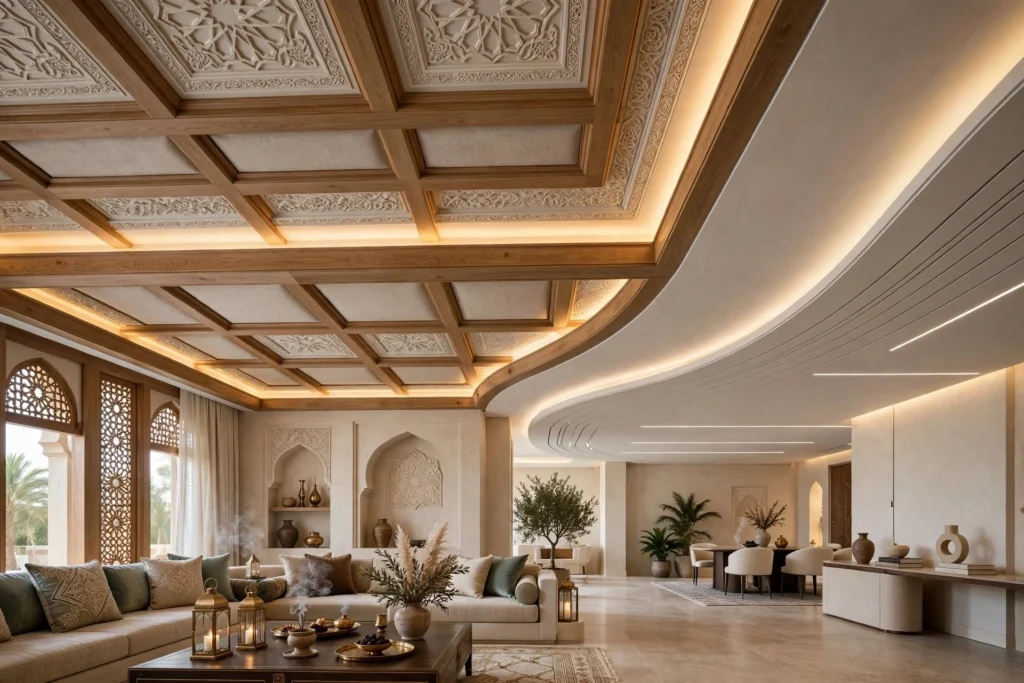
Soft furnishings, carpets, curtains, upholstered wall panels, acoustic ceiling elements, and fabric-covered surfaces can help balance these reflections.
Acoustic treatment can be integrated discreetly into the interior design rather than appearing like conventional commercial acoustic equipment.
This approach is particularly useful for large villa Majlis rooms, hospitality spaces, executive lounges, and corporate reception areas.
Premium Curtains and Window Treatments
Curtains contribute significantly to the comfort and visual character of a Majlis. High-quality linen, velvet, silk-look fabrics, wool blends, and other premium textiles can provide different levels of elegance and privacy.
Floor-to-ceiling curtains can emphasize architectural height, while layered curtains can combine decorative fabric with functional privacy or light control.
Motorized curtain systems are increasingly suitable for contemporary luxury interiors. They can be integrated with smart home systems and operated according to time, lighting conditions, or user preference.
For villas with large glazed openings, appropriate window treatments can also contribute to solar control and indoor comfort.
Leather and Luxury Accent Materials
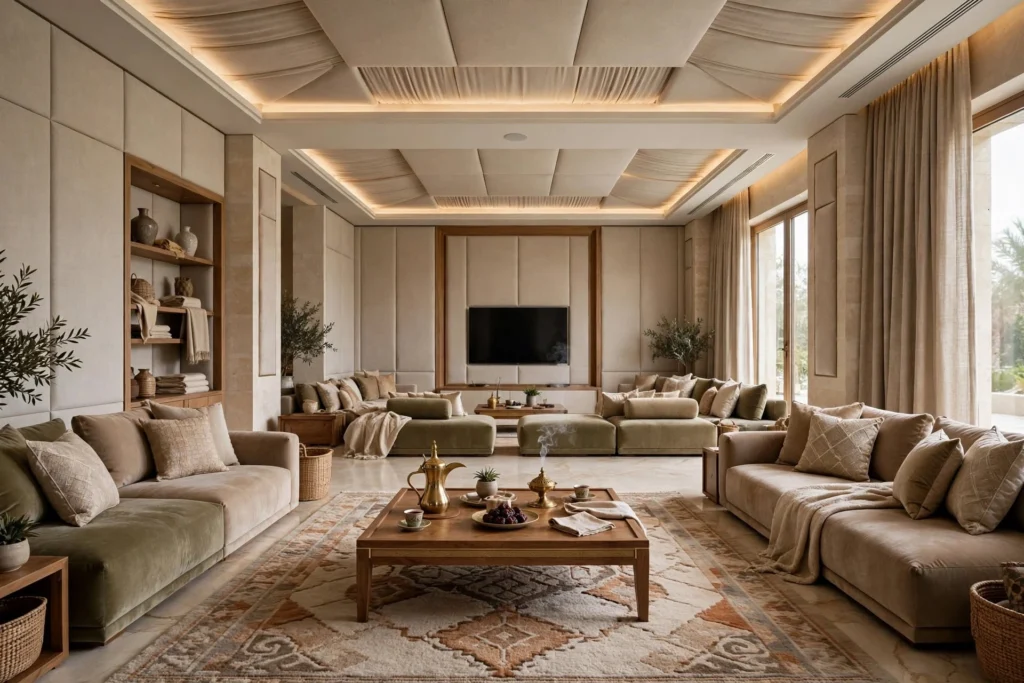
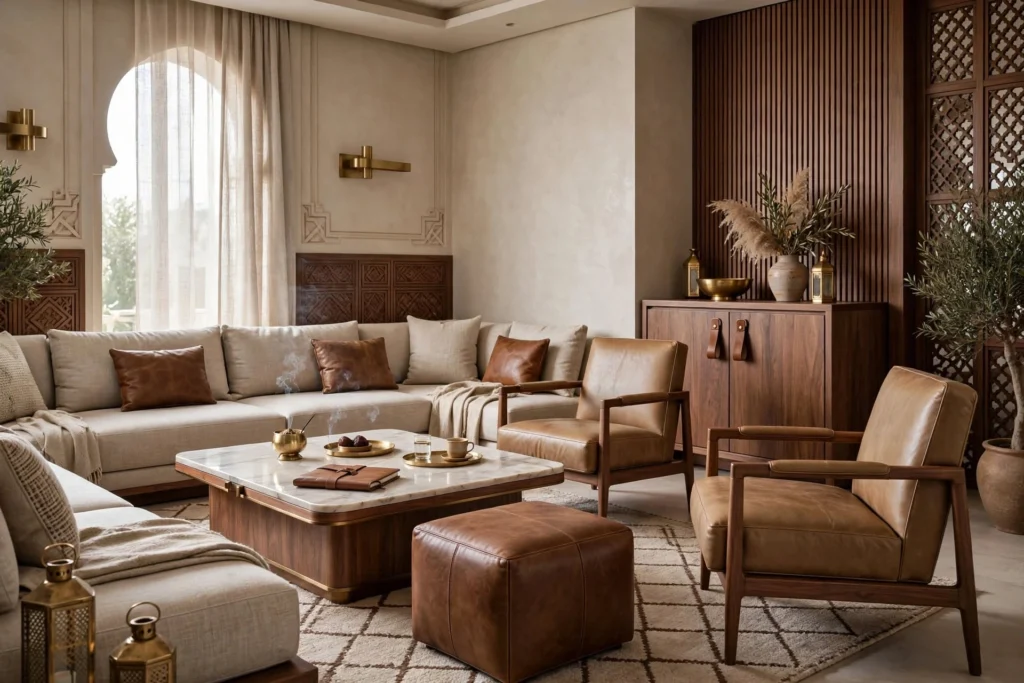
Leather can be used selectively for armchairs, ottomans, handles, tables, cushions, or decorative details. Natural leather introduces texture and a sophisticated tactile quality.
In a contemporary Majlis, leather furniture can be combined with walnut, marble, brass, and neutral textiles. In a more traditional room, darker leather can complement carved wood and decorative metalwork.
The material should be selected according to the expected usage and maintenance requirements. Premium interior design is not simply about choosing the most expensive product; it is about matching the material to its application.
Handcrafted Details and Arabian Design Elements
Handcrafted details can give a Majlis its strongest sense of identity. Custom carving, geometric patterns, calligraphy-inspired artwork, brass inlay, traditional motifs, decorative screens, and handcrafted furniture can connect contemporary interiors with regional design heritage.
These details are especially valuable when the goal is to create a Majlis that feels distinctly Arabian rather than simply luxurious.
A modern UAE Majlis does not have to replicate historical interiors. Instead, designers can reinterpret traditional elements using contemporary materials and cleaner forms.
For example, a traditional geometric motif can be transformed into a laser-cut metal partition, timber screen, wall pattern, or decorative ceiling detail.
Materials for Majlis Interiors in Dubai Villas
Dubai’s luxury residential market includes a wide range of architectural styles, from contemporary villas to more traditional Arabian residences. Areas such as Emirates Hills, Palm Jumeirah, Jumeirah, Umm Suqeim, Dubai Hills Estate, Arabian Ranches, and Al Barari feature properties where bespoke Majlis interiors can become a significant part of the overall interior architecture.
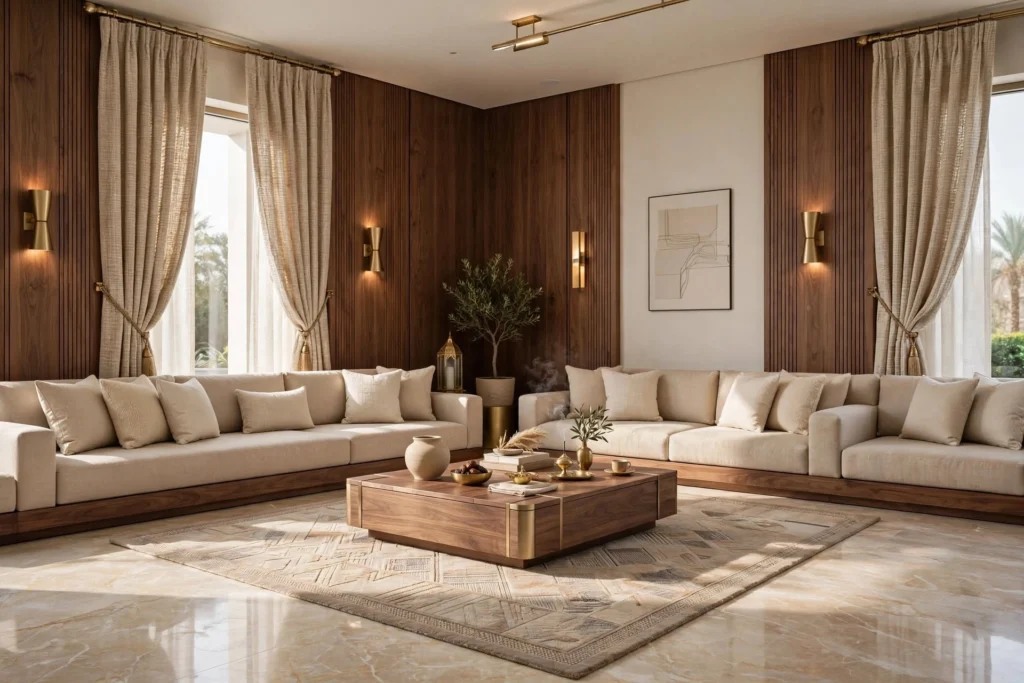
Material selection should consider the villa’s existing architecture. A minimalist villa may benefit from large-format stone, natural oak, fluted panels, neutral fabrics, and architectural lighting.
A more traditional property may suit carved wood, patterned textiles, brass, ornamental plaster, and richer colour combinations.
The best results come from creating continuity between the Majlis and the rest of the property.
Materials for Majlis Interiors in Abu Dhabi
Abu Dhabi has a strong tradition of formal hospitality spaces in villas, palaces, hotels, government facilities, and corporate environments.
Majlis interiors in areas such as Saadiyat Island, Yas Island, Al Bateen, Khalifa City, and Al Raha can range from highly traditional rooms to contemporary luxury spaces.
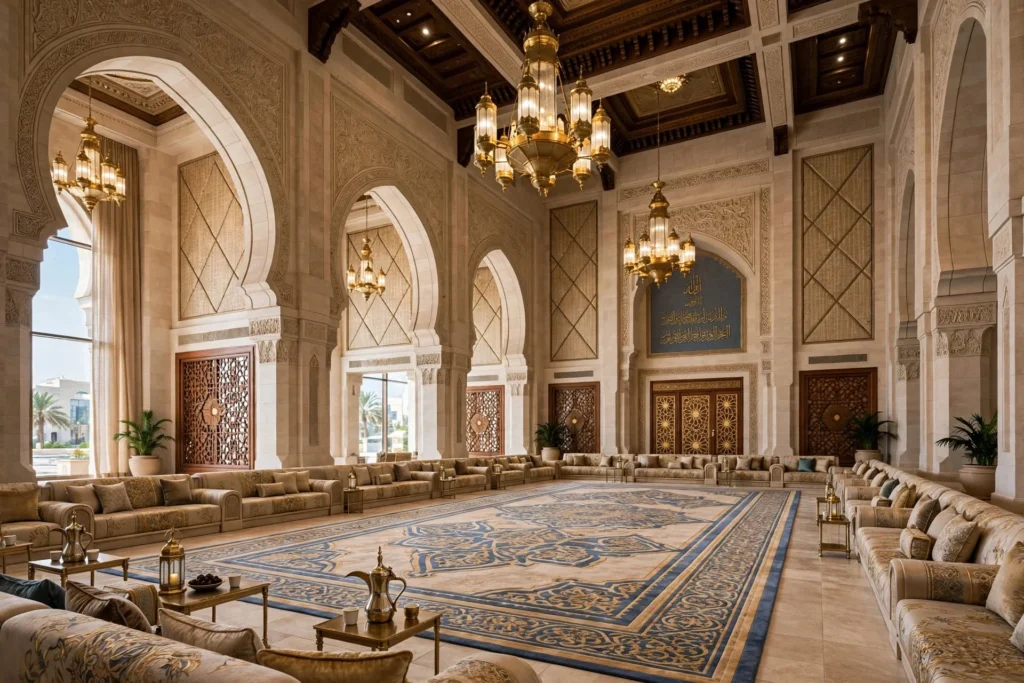
Large rooms often benefit from durable flooring, premium upholstery, acoustic treatments, custom carpets, and carefully designed lighting.
Natural stone and high-quality porcelain can handle busy spaces, while timber and textiles can add warmth and improve acoustic balance.
The material palette should also reflect the scale of the room. Oversized architectural elements can become more effective in large formal Majlis spaces.
Sustainable Materials for Contemporary Majlis Design
Premium design and sustainability can work together. Designers can consider responsibly sourced timber, low-emission finishes, durable materials, recycled-content products, locally sourced materials where practical, and furniture designed for long-term use.
Durability itself is an important sustainability consideration. A material that maintains its appearance for many years can reduce the need for frequent replacement.
Natural materials can also provide timeless visual qualities that remain relevant even when interior trends change.
In the UAE, where cooling demand is high, interior design should also consider solar exposure, glazing, shading, insulation, and thermal comfort. Material selection is therefore part of a wider building-performance strategy.
How to Combine Premium Materials Without Overdesigning
Using many expensive materials does not automatically create a luxury Majlis. In fact, combining too many competing textures can make the room visually confusing.
A stronger approach is to establish a controlled material palette.
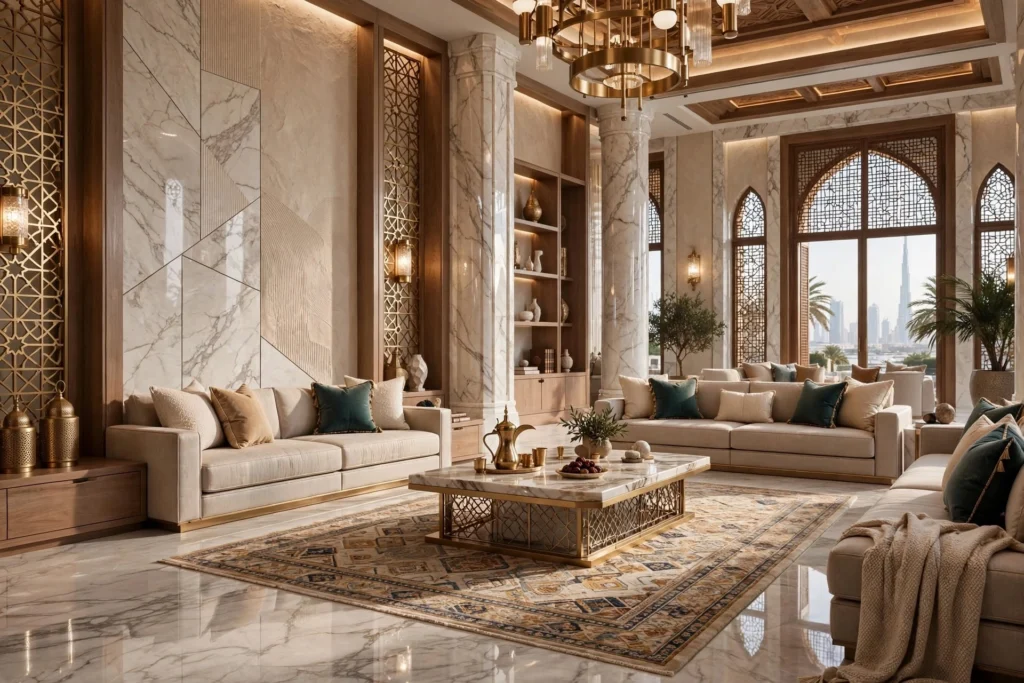
For example, a designer may combine warm marble flooring, walnut wall panels, beige upholstery, brushed brass details, textured curtains, and a custom wool carpet. Each material has a different function, but the colours and textures remain connected.
Another approach might combine light porcelain, oak veneer, neutral linen, blackened metal, and contemporary lighting.
The key is balance. Premium interiors depend on proportion, repetition, contrast, craftsmanship, and visual hierarchy.
Why Craftsmanship Is as Important as Material Quality
A premium material can lose its impact when installation quality is poor. Uneven stone joints, poorly aligned timber panels, inconsistent paint finishes, visible fasteners, weak upholstery detailing, or badly integrated lighting can reduce the overall quality of an interior.
For this reason, material selection should always be considered together with installation and fabrication.
Bespoke joinery, stone fabrication, upholstery, metalwork, gypsum detailing, flooring installation, and lighting integration all require skilled workmanship.
This is particularly important in luxury Majlis projects, where guests may closely experience the space and notice details that would be overlooked in a standard interior.
Creating a Majlis That Reflects UAE Hospitality
The strongest Majlis interiors combine aesthetics with cultural understanding. The room should feel welcoming rather than simply expensive.
Comfortable seating, appropriate circulation, convenient side tables, privacy, acoustic balance, lighting control, ventilation, and carefully selected materials all contribute to the experience.
A formal Majlis may require a more symmetrical layout, while a family Majlis can adopt a relaxed arrangement.
The materials should support the intended use. A frequently used family space requires durable and easy-to-maintain surfaces, whereas a formal guest Majlis may prioritize decorative finishes and statement materials.
When Professional Interior Planning Makes a Difference
Selecting premium materials becomes easier when the entire interior is planned before construction or renovation begins. A professional design process can establish the room’s layout, material palette, lighting concept, furniture arrangement, ceiling design, wall treatments, colour scheme, and architectural details.
Professional Majlis Interiors Design Services can help coordinate these elements so that materials work together rather than being selected independently.
This is especially important for large villas, luxury apartments, hospitality projects, executive spaces, and commercial properties where multiple contractors and suppliers may be involved.
A coordinated design approach can also reduce material waste and prevent expensive changes during installation.
Frequently Asked Questions About Premium Majlis Materials
What is the best flooring material for a luxury Majlis?
Natural marble, premium porcelain, limestone, and selected stone products can all work well. The best choice depends on the desired appearance, maintenance requirements, traffic level, and overall interior concept.
Which materials make a Majlis look luxurious?
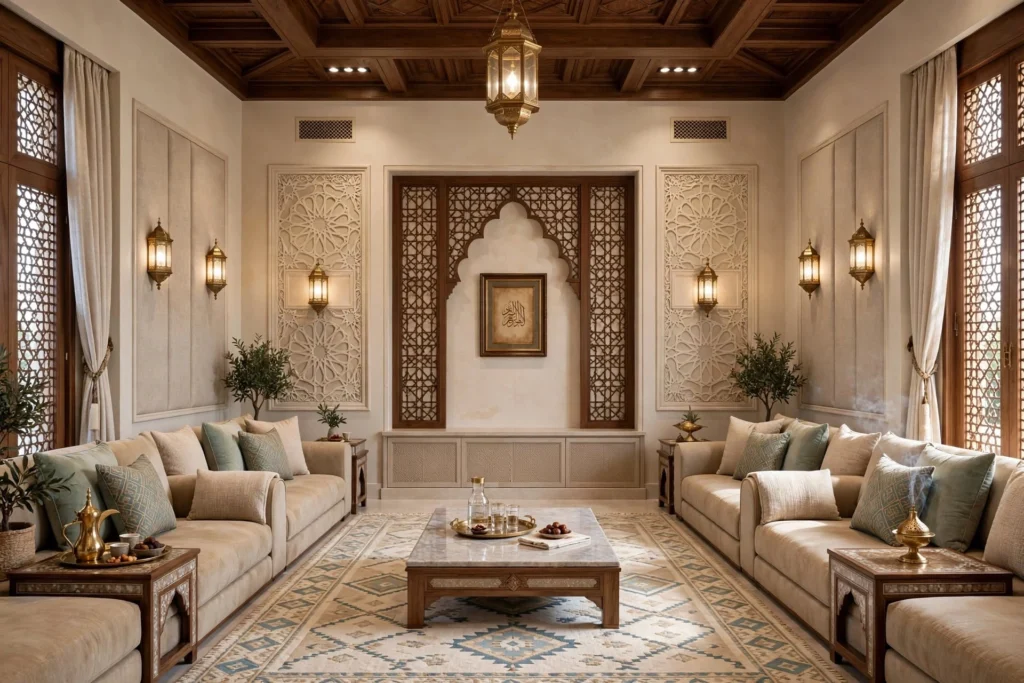
Natural stone, premium wood, high-quality upholstery, custom carpets, decorative metal, textured wall finishes, bespoke joinery, architectural lighting, and carefully crafted details can all contribute to a luxurious appearance.
Is marble suitable for Majlis interiors in Dubai?
Yes. Marble can be an excellent choice for Dubai Majlis interiors when the correct type, finish, installation method, and maintenance approach are selected. It can be used for floors, walls, tables, columns, and other architectural features.
How can a modern Majlis retain Arabian character?
Traditional influences can be introduced through geometric patterns, mashrabiya-inspired screens, brass details, Arabic artwork, decorative plaster, custom carpets, arches, woodwork, and carefully selected colour palettes while maintaining contemporary furniture and architectural forms.
What materials can improve Majlis acoustics?
Carpets, curtains, upholstered seating, fabric wall panels, acoustic ceiling treatments, and other soft surfaces can help control sound reflections from hard materials such as stone, glass, and porcelain.
Are premium materials suitable for frequently used Majlis rooms?
Yes, but durability and maintenance should be considered alongside appearance. Performance fabrics, durable stone, quality porcelain, robust wood finishes, and easy-to-maintain surfaces can provide a practical combination of luxury and longevity.
Final Thoughts
Premium Majlis interiors are created through thoughtful material selection rather than simply using the most expensive finishes available. Natural stone can establish elegance, wood can introduce warmth, textiles can improve comfort, metal can provide refined detailing, carpets can define the seating environment, and architectural lighting can reveal the character of every surface.
For properties across Dubai, Abu Dhabi, Sharjah, and the wider UAE, the best Majlis designs combine regional identity with contemporary interior architecture. Local climate, building use, maintenance requirements, privacy, acoustics, lighting, and guest experience should all influence the final material palette.
Whether the design is traditional, contemporary, minimalist, or inspired by modern Arabian architecture, premium materials should work together to create a space that feels welcoming, sophisticated, durable, and culturally meaningful.
A well-designed Majlis is ultimately not defined by the price of individual materials. Its quality comes from the relationship between architecture, materials, craftsmanship, furniture, lighting, acoustics, comfort, and UAE hospitality. When these elements are carefully coordinated, the Majlis can become one of the most memorable and valuable spaces within a home, hotel, office, or luxury development.
0 comments