
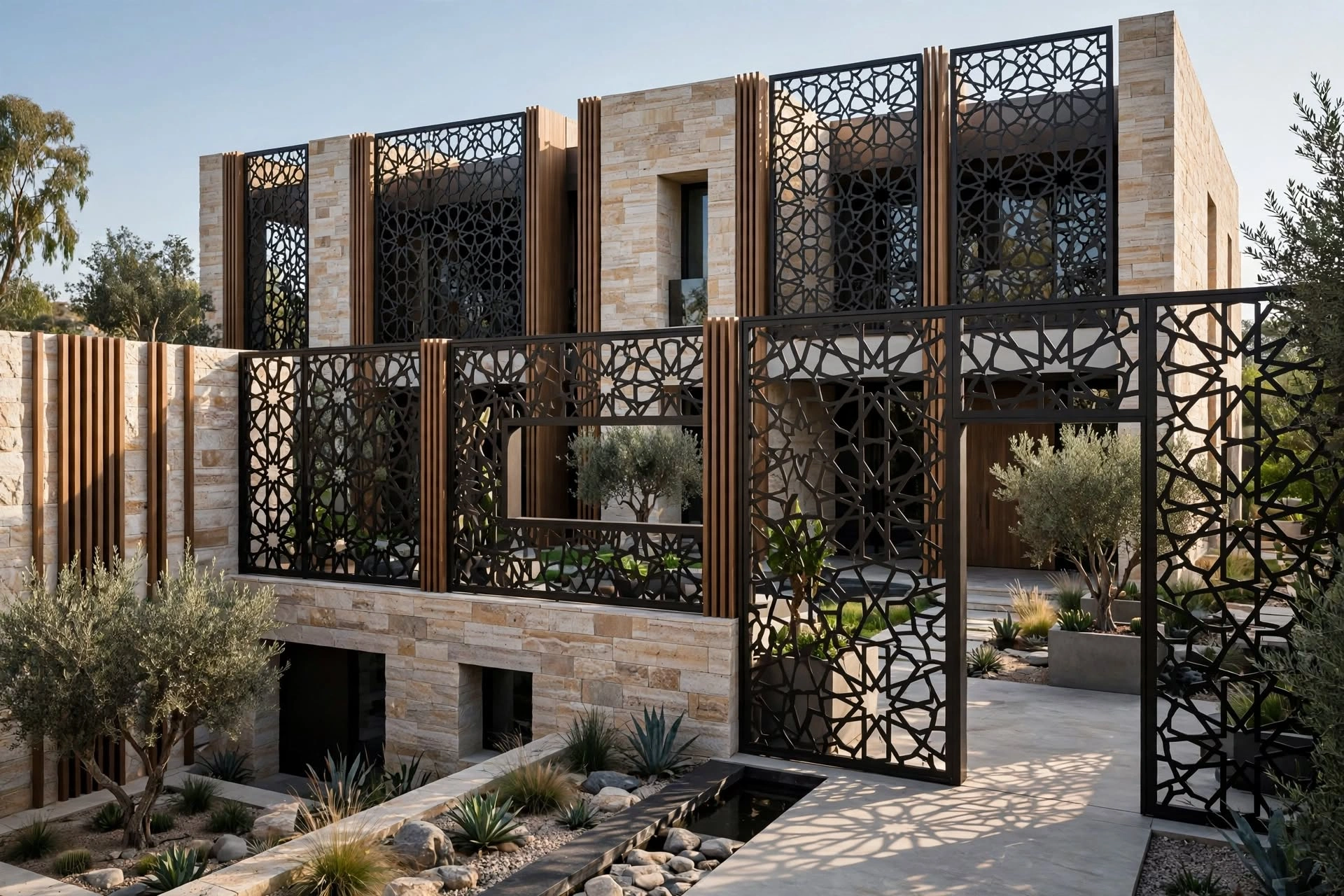
Exterior Design Trends for Luxury Homes
Luxury home exterior design is evolving beyond large façades and expensive materials. Today, homeowners are looking for architectural character, outdoor comfort, energy efficiency, privacy, landscaping, smart technology, and a strong connection between indoor and outdoor spaces. A well-designed exterior should reflect the personality of the property while responding to the surrounding environment, climate, architecture, and lifestyle.
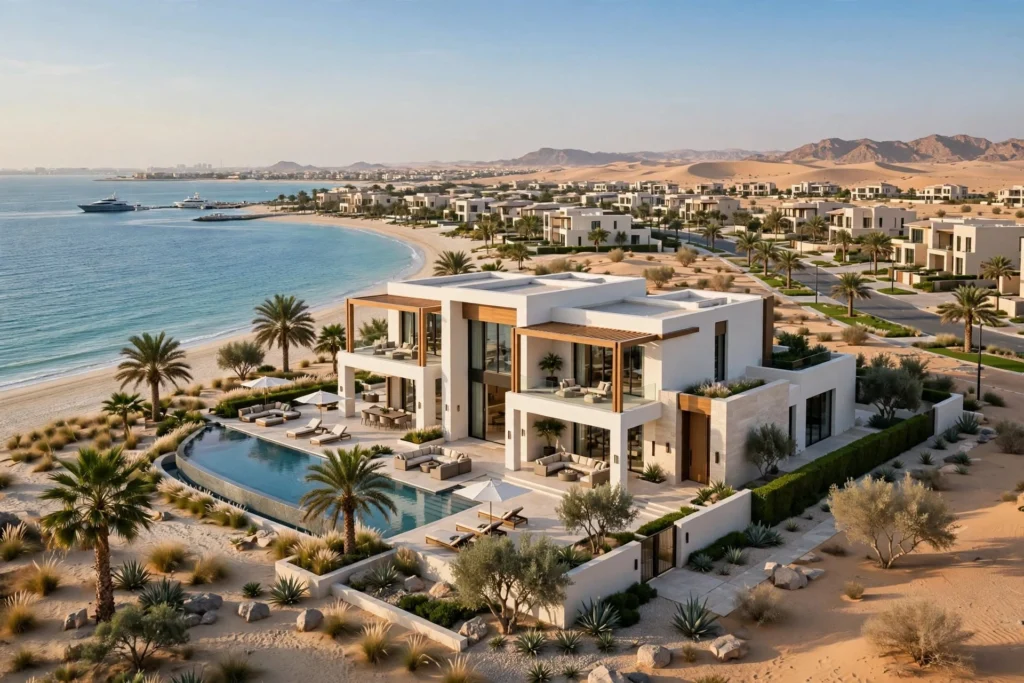
In locations such as Dubai, Abu Dhabi, Riyadh, Jeddah, Doha, and other Gulf cities, luxury residential architecture is increasingly combining contemporary forms with natural materials, sophisticated landscaping, shaded outdoor areas, and smart-home technology. From minimalist villas to Mediterranean-inspired residences and modern Arabian homes, exterior design is becoming an important part of the overall luxury living experience.
What Defines a Luxury Home Exterior in Modern Residential Design?
A luxury home exterior is not simply defined by its size or construction cost. Proportion, material selection, architectural detailing, landscaping, lighting, privacy, functionality, and consistency all contribute to a premium appearance. The strongest residential designs create visual harmony between the building, entrance, garden, boundary walls, driveway, pool area, and outdoor living spaces.
Modern luxury architecture often uses clean lines, large windows, textured surfaces, natural stone, wood-look finishes, architectural concrete, aluminium, glass, and carefully positioned lighting. Instead of adding too many decorative elements, designers increasingly focus on a limited number of high-quality materials that create depth and visual interest.
The exterior should also complement the interior. A contemporary façade, for example, should transition naturally into contemporary living spaces, while a Mediterranean villa may use arches, warm colours, stone textures, and handcrafted details throughout the property. This relationship between architecture and interiors is one reason homeowners increasingly consider a complete Luxury Homes home interior design service when planning a high-end residence.
Minimalist Architecture With Strong Architectural Forms
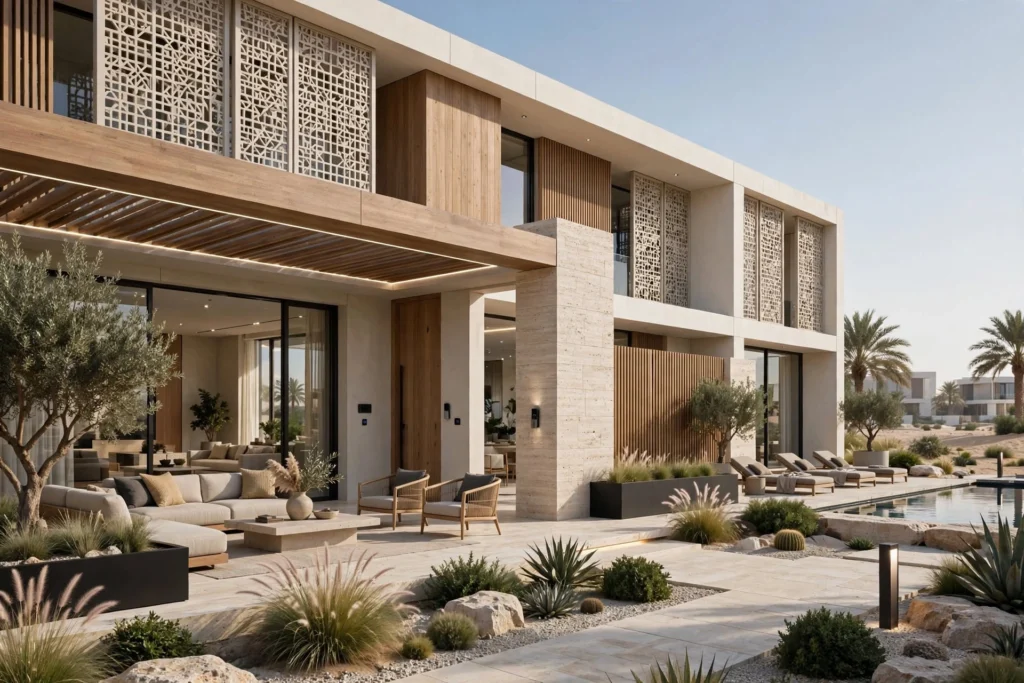
Minimalism remains one of the strongest exterior design trends for luxury homes. However, modern minimalism is becoming warmer and more sophisticated than the stark white-box architecture associated with earlier contemporary designs.
Luxury villas are increasingly using geometric forms, cantilevered volumes, recessed balconies, clean rooflines, large openings, and layered façades. Instead of relying on excessive ornamentation, designers use shadow, texture, proportions, and material contrast to create architectural interest.
A minimalist façade can combine smooth stucco with natural stone, timber-effect cladding, dark aluminium frames, and expansive glazing. Recessed entrances and concealed lighting can further emphasize the architectural structure at night.
This approach is particularly effective for contemporary villas in Dubai, Abu Dhabi, Riyadh, and other rapidly developing residential areas where modern architectural styles are increasingly popular.
Natural Stone and Earth-Inspired Materials
Natural materials are becoming increasingly important in luxury residential architecture. Travertine, limestone, marble, granite, sandstone, slate, and other stone finishes can give a villa a timeless appearance while creating a strong connection with its environment.
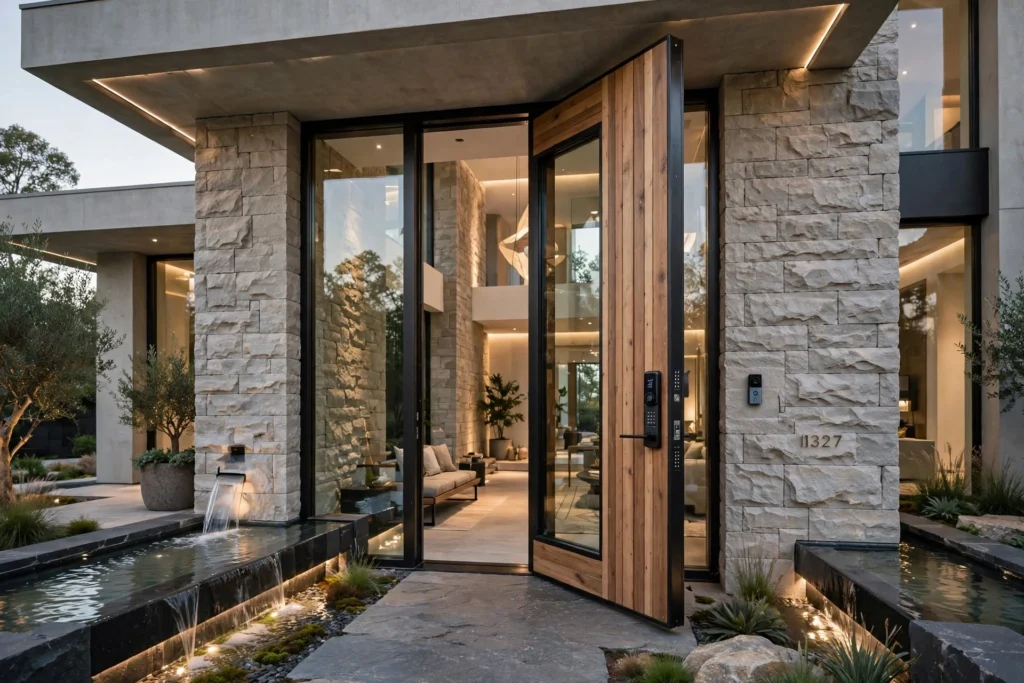
Rather than covering an entire façade with one material, designers are using stone selectively around entrance walls, columns, boundary features, water elements, and architectural volumes. This creates contrast without making the property appear visually heavy.
Warm beige, cream, taupe, sand, grey, and earthy colours work particularly well with contemporary luxury architecture. These tones can also complement desert landscapes and the natural colour palette commonly found across the Middle East.
For homeowners in the UAE and Saudi Arabia, material selection should also consider heat exposure, dust, maintenance requirements, moisture, and long-term durability.
Large Glass Windows and Indoor-Outdoor Connection
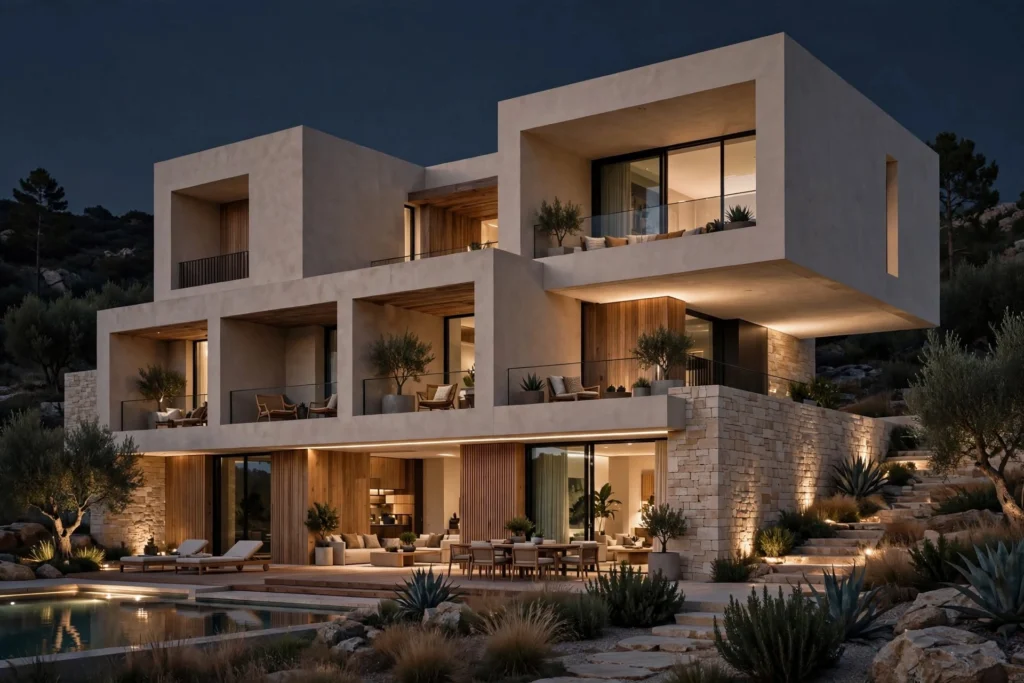
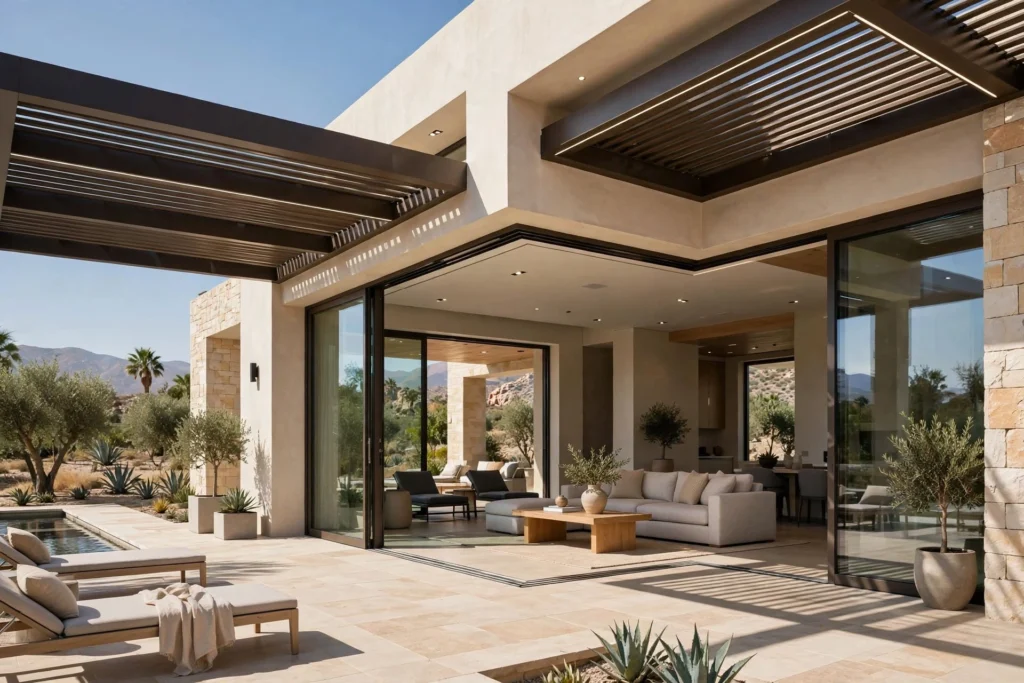
Large windows and expansive glazing continue to transform luxury home exteriors. Floor-to-ceiling glass, sliding glass doors, corner windows, and panoramic openings can connect living rooms, dining spaces, kitchens, terraces, gardens, and swimming pools.
The trend is not simply about making homes look modern. It is about creating a stronger relationship between indoor and outdoor living. A living room can visually extend toward a landscaped garden, while a bedroom may open toward a private terrace or pool.
In hot climates, however, large glazing should be designed carefully. Solar-control glass, low-emissivity glazing, shading systems, recessed openings, pergolas, and external screens can help manage heat gain while maintaining natural light and views.
Warm Minimalism and Textured Façades
One of the most important developments in contemporary luxury architecture is the shift from cold minimalism toward warm minimalism. Homeowners increasingly want modern architecture without making their properties feel sterile.
Designers are introducing textured plaster, timber-effect panels, natural stone, warm lighting, bronze or dark metal accents, and earthy colours. Vertical fins and horizontal architectural lines can also add depth to otherwise simple façades.
Texture becomes particularly important when a home uses a restrained colour palette. Instead of adding multiple colours, designers can create visual variation through different surface finishes.
This trend works especially well for luxury villas where the architectural concept needs to look sophisticated during the day while creating a dramatic appearance after sunset.
Statement Entrance Doors and Grand Entryways
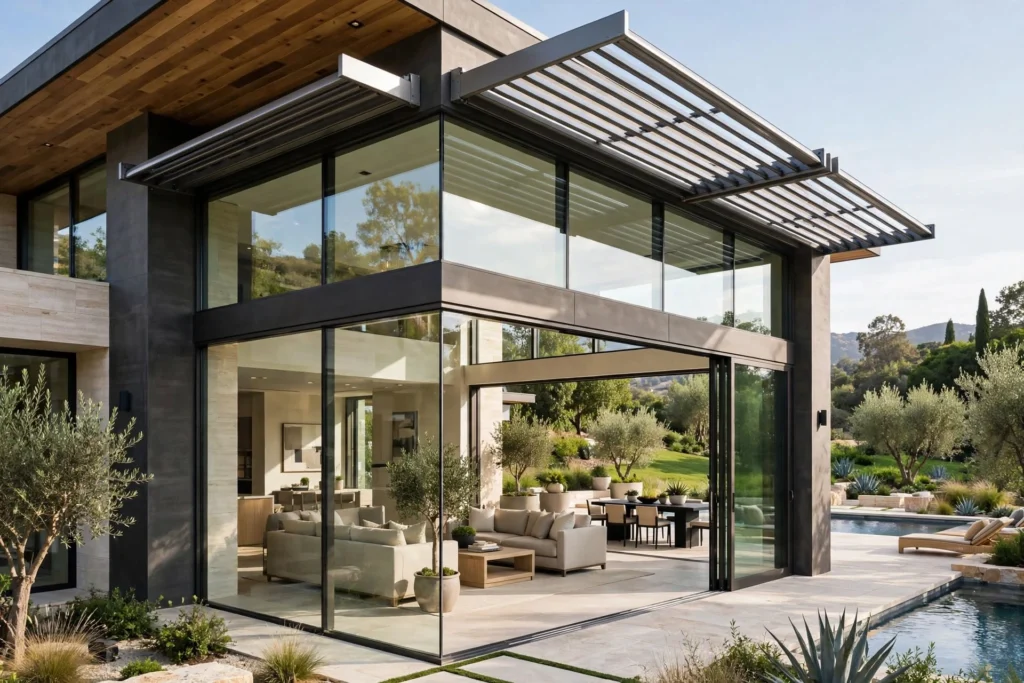
The entrance is one of the most important elements of a luxury home’s exterior. It creates the first impression and establishes the architectural character of the entire property.
Oversized pivot doors are increasingly popular in contemporary villas. These doors may use natural timber, engineered wood finishes, metal, glass, or combinations of materials. Large entrance portals, double-height foyers, stone-clad walls, water features, and integrated lighting can further strengthen the arrival experience.
Luxury entrance design is also becoming more functional. Smart locks, video doorbells, access-control systems, concealed cameras, intercom systems, and automated gates can be integrated without disrupting the visual appearance of the architecture.
Outdoor Living Rooms and Covered Terraces
Luxury home exteriors are increasingly designed around outdoor living. Instead of treating gardens as decorative spaces, homeowners want functional areas for dining, relaxing, entertaining, cooking, and socializing.
Covered terraces can include outdoor kitchens, dining tables, comfortable seating, fireplaces or fire features, ceiling fans, televisions, integrated speakers, and weather-resistant furniture. Pergolas and architectural canopies provide shade while defining outdoor rooms.
In the Gulf region, shaded outdoor spaces are particularly important because temperatures can be extremely high during parts of the year. A well-planned terrace can therefore extend the usability of a garden while improving the overall functionality of the property.
Resort-Style Swimming Pools and Water Features
Swimming pools remain a major feature of luxury villa exterior design, but contemporary pool design is becoming more architectural. Infinity edges, narrow linear pools, sun shelves, integrated seating, waterfalls, reflecting pools, and illuminated water features can transform a garden into a private resort.
The relationship between the pool and the architecture is especially important. A pool positioned along a major axis of the house can create a strong visual connection from the interior. In other designs, landscaping and privacy screens can make the pool area feel like a secluded retreat.
Water features should be planned with climate, maintenance, safety, filtration, and energy consumption in mind. In desert environments, efficient water management and appropriate landscaping are particularly important.
Biophilic Landscaping for Luxury Villas
Biophilic design is becoming a major trend in high-end residential architecture. It focuses on strengthening the relationship between people and nature through plants, natural materials, daylight, water, views, and outdoor spaces.
Luxury villa landscaping may incorporate mature trees, layered planting, ornamental grasses, palms, shrubs, vertical gardens, planter walls, natural stone pathways, and shaded seating areas. The objective is to create a landscape that feels intentional rather than simply filling available space with plants.
In Dubai, Abu Dhabi, Riyadh, Jeddah, and other Middle Eastern cities, plant selection should account for heat, water availability, soil conditions, and maintenance requirements. Native and climate-appropriate species can reduce maintenance while creating a more sustainable landscape.
Smart Exterior Lighting and Architectural Illumination
Exterior lighting can completely change the appearance of a luxury property after sunset. Modern residential lighting design focuses on architectural illumination rather than simply installing bright floodlights.
Wall washers can emphasize textured façades, linear LED lighting can highlight steps and pathways, recessed fixtures can illuminate entrances, and uplighting can emphasize trees and landscape features. Pool lighting, garden lighting, driveway lighting, and gate illumination can also be integrated into the overall design.
Smart lighting systems allow homeowners to control scenes, schedules, brightness, and zones through centralized systems or mobile applications. Motion sensors and automation can improve both convenience and energy management.
Good lighting should create atmosphere while maintaining safety and avoiding excessive glare.
Sustainable Exterior Design for Luxury Homes
Sustainability is becoming increasingly relevant to luxury residential design. Homeowners are looking for ways to reduce energy consumption without compromising aesthetics or comfort.
Solar panels, energy-efficient glazing, external shading, high-performance insulation, LED lighting, efficient air-conditioning systems, smart thermostats, rainwater management, and water-efficient landscaping can all contribute to a more sustainable home.
Passive design principles are also important. Orientation, shading, window placement, cross ventilation where appropriate, thermal mass, and landscape positioning can influence the property’s environmental performance.
Sustainable design does not have to look technical. Solar technology, shading devices, efficient lighting, and smart controls can be integrated into contemporary architecture with minimal visual impact.
Privacy-Focused Exterior Architecture
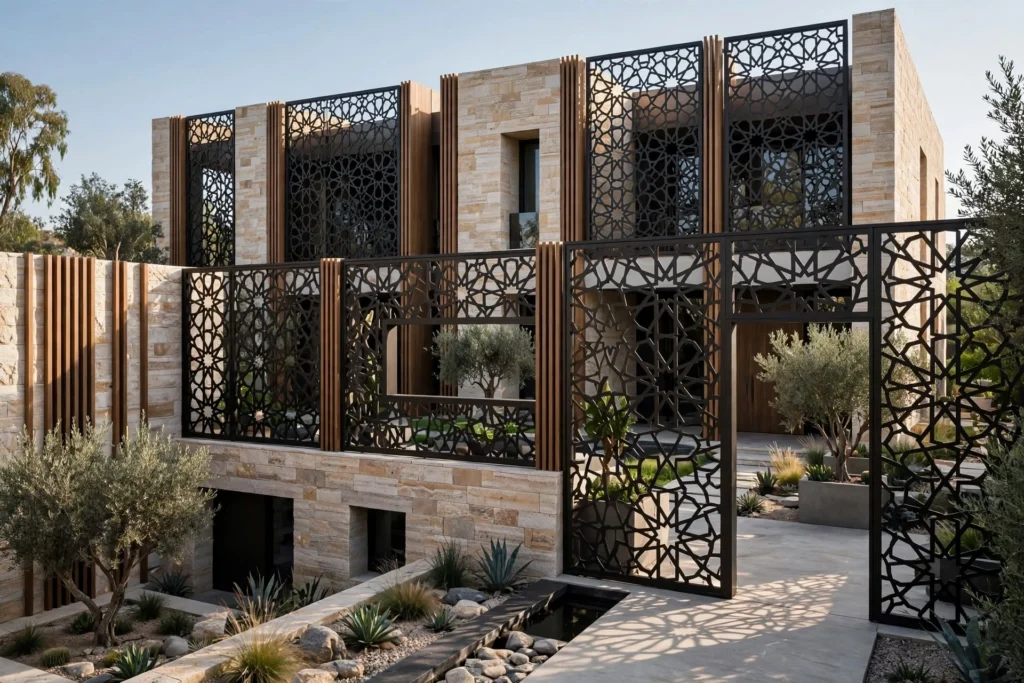
Privacy is an important consideration in luxury residential design, particularly for villas located in dense urban neighbourhoods. Modern architects are using architectural screens, boundary walls, landscaping, courtyards, recessed windows, vertical fins, and strategically positioned openings to provide privacy without creating an enclosed appearance.
Mashrabiya-inspired screens are particularly interesting in Middle Eastern architecture. Contemporary interpretations can combine traditional geometric patterns with aluminium, wood-look materials, stone, or metal to create sophisticated façades.
Privacy design should consider neighbouring properties, streets, entrances, swimming pools, gardens, and internal sightlines. A carefully planned façade can provide privacy while still allowing natural light and ventilation.
Modern Boundary Walls and Gates
Boundary walls are becoming an extension of the home’s architecture rather than a separate security feature. Designers increasingly coordinate wall materials, gates, landscaping, lighting, and the main façade to create a cohesive street presence.
Contemporary boundary walls may combine stone, textured plaster, aluminium screens, timber-effect panels, concrete, and landscaping. Automated gates can be integrated with smart access control, intercoms, cameras, and vehicle recognition systems.
The entrance sequence should feel intentional from the street to the front door. Driveway paving, planting, lighting, gate design, and pedestrian access can all contribute to the property’s perceived quality.
Natural Pools, Courtyards, and Private Garden Spaces
Courtyard architecture is experiencing renewed interest in luxury homes. A courtyard can provide privacy, natural light, ventilation, greenery, and a protected outdoor environment.
Modern courtyards may include sculptural trees, water features, seating areas, fire features, stone paving, or minimalist gardens. They can also create a transition between private indoor rooms and larger outdoor areas.
For properties with limited garden space, a carefully designed courtyard can provide many of the benefits of traditional landscaping without requiring a large plot.
Contemporary Arabian Architecture With Modern Details
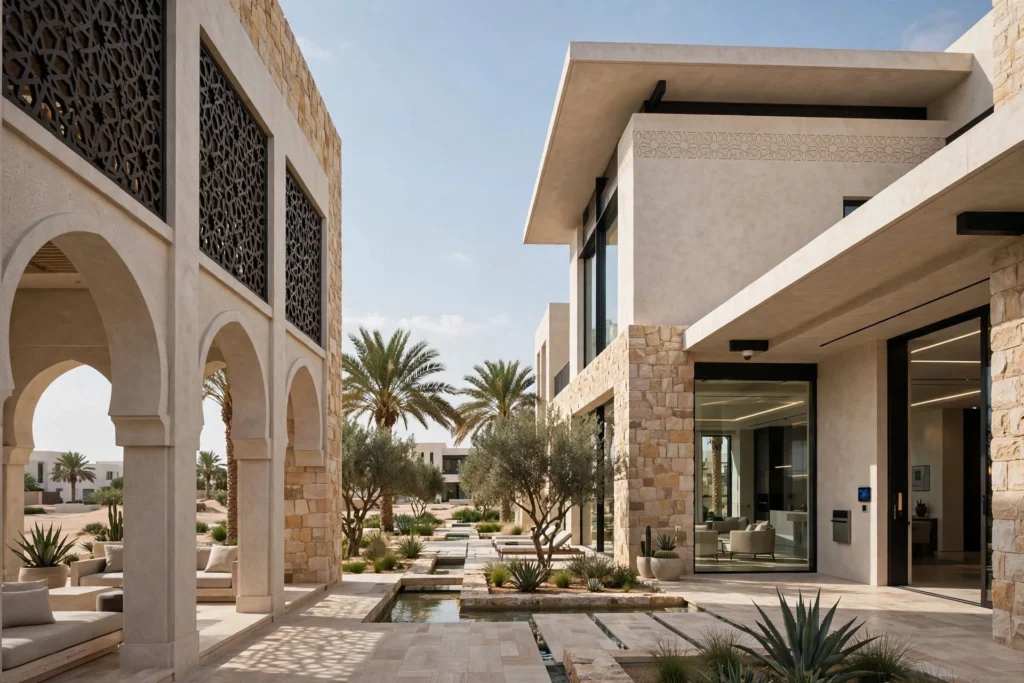
Luxury residential architecture in the Gulf is increasingly combining regional architectural traditions with contemporary design. Arches, courtyards, shaded walkways, geometric screens, textured plaster, stone, and decorative patterns can be reinterpreted through modern proportions and materials.
Rather than copying historical architecture, contemporary Arabian design often takes inspiration from traditional principles and simplifies them for modern lifestyles.
This approach can produce villas that feel connected to their location while still offering contemporary interiors, smart-home technology, large glazing, modern kitchens, luxurious bathrooms, and sophisticated outdoor spaces.
Designing for Dubai, Abu Dhabi, Riyadh, and Jeddah Climates
Exterior design must respond to the local environment. Dubai and Abu Dhabi properties may require careful consideration of intense sunlight, humidity, dust, and coastal conditions. Riyadh has a different climatic profile, with very hot summers and a more arid environment, while Jeddah combines high temperatures with coastal humidity.
These differences influence façade materials, outdoor furniture, planting, glazing, shading, waterproofing, drainage, lighting, and maintenance strategies.
For luxury homeowners, selecting materials purely for appearance can create long-term problems. Professional design should consider the full lifecycle of each material, including cleaning, weathering, fading, corrosion, repairs, and replacement.
Luxury Home Exteriors in Emerging Residential Communities
The growth of premium residential communities across the Gulf is creating new opportunities for sophisticated exterior architecture. Areas such as Dubai Hills Estate, Palm Jumeirah, Emirates Hills, Arabian Ranches, Al Barari, and other upscale communities demonstrate how landscaping, architecture, amenities, and urban planning influence the visual identity of luxury residences.
In Saudi Arabia, Riyadh’s expanding villa communities and major developments are also encouraging homeowners and developers to explore contemporary architecture, high-quality landscaping, smart-home integration, and premium outdoor spaces.
Local architectural context should always be considered. A design that works for a beachfront property may not be appropriate for an inland desert environment.
How to Choose the Right Exterior Design Style
The best exterior style depends on the architecture of the property, plot size, surrounding environment, lifestyle, maintenance expectations, and relationship with the interior design.
Contemporary villas may benefit from geometric forms, neutral palettes, glass, stone, metal, and linear lighting. Mediterranean properties can incorporate arches, textured walls, warm colours, terracotta-inspired elements, and landscaped courtyards. Modern Arabian villas can combine privacy screens, courtyards, natural materials, and contemporary architectural forms.
Rather than following every design trend, homeowners should identify a long-term architectural direction. Trends can provide inspiration, but proportion, functionality, material quality, and timeless detailing generally have a greater impact on the property’s lasting appeal.
The Future of Luxury Home Exterior Design
The future of luxury residential exterior design is likely to focus on personalization, sustainability, technology, wellness, and stronger indoor-outdoor connections. Smart irrigation, automated lighting, intelligent access control, solar energy, energy monitoring, outdoor kitchens, wellness gardens, climate-responsive shading, and integrated entertainment systems are becoming increasingly common.
At the same time, homeowners are moving toward more natural materials, softer colour palettes, biophilic landscaping, and comfortable outdoor spaces. The result is a more holistic approach in which architecture, landscape design, lighting, technology, and interior spaces work together.
For luxury homes, the exterior is no longer simply the shell of the building. It is an extension of the homeowner’s lifestyle and an important part of the property’s identity.
Frequently Asked Questions About Luxury Home Exterior Design
What are the biggest exterior design trends for luxury homes?
Some of the strongest trends include minimalist architecture, natural stone, warm neutral palettes, large glazing, outdoor living rooms, resort-style swimming pools, biophilic landscaping, smart lighting, privacy screens, sustainable materials, and integrated smart-home technology.
Which materials work best for luxury villa exteriors?
Natural stone, high-quality stucco, architectural concrete, aluminium, glass, timber-effect finishes, porcelain, and other durable exterior materials can work well. The right choice depends on climate, exposure, maintenance requirements, architectural style, and the manufacturer’s technical specifications.
How can I make a luxury home exterior look more modern?
Clean architectural lines, restrained colours, large windows, recessed entrances, natural textures, architectural lighting, minimalist landscaping, contemporary gates, and carefully selected materials can create a modern appearance without excessive decoration.
How important is landscaping in luxury home exterior design?
Landscaping is extremely important because it connects the architecture with the surrounding environment. Trees, planting, pathways, outdoor seating, water features, privacy screens, and lighting can significantly influence the appearance and usability of the property.
Should exterior and interior design match?
They do not need to be identical, but they should feel visually connected. Materials, colours, architectural details, lighting, and spatial transitions can create a consistent design language between indoor and outdoor areas.
What exterior trends are suitable for villas in the Gulf?
Warm minimalism, shaded terraces, natural stone, architectural screens, climate-appropriate landscaping, smart lighting, large but carefully controlled glazing, outdoor kitchens, private courtyards, and resort-style pools are particularly relevant to luxury villas in Dubai, Abu Dhabi, Riyadh, and Jeddah.
Conclusion
Exterior design for luxury homes is moving toward a more thoughtful combination of architecture, landscape, technology, comfort, sustainability, and personalization. Modern luxury is not necessarily about adding more decorative features. It is about selecting the right materials, creating balanced proportions, designing functional outdoor spaces, controlling sunlight and privacy, and ensuring that every part of the property contributes to a cohesive experience.
From minimalist façades and natural stone to smart lighting, biophilic landscaping, outdoor living rooms, contemporary Arabian influences, and resort-style pools, today’s luxury home exterior can be both visually impressive and highly functional. When exterior architecture is carefully coordinated with interior spaces and the local climate, the result is a residence that feels sophisticated, comfortable, and timeless.
0 comments